Research & guides
Threat Intelligence Blog
Threat research, attack analysis and integration guides from the isMalicious team.
- Articles
- 263
- Categories
- 24
- Latest

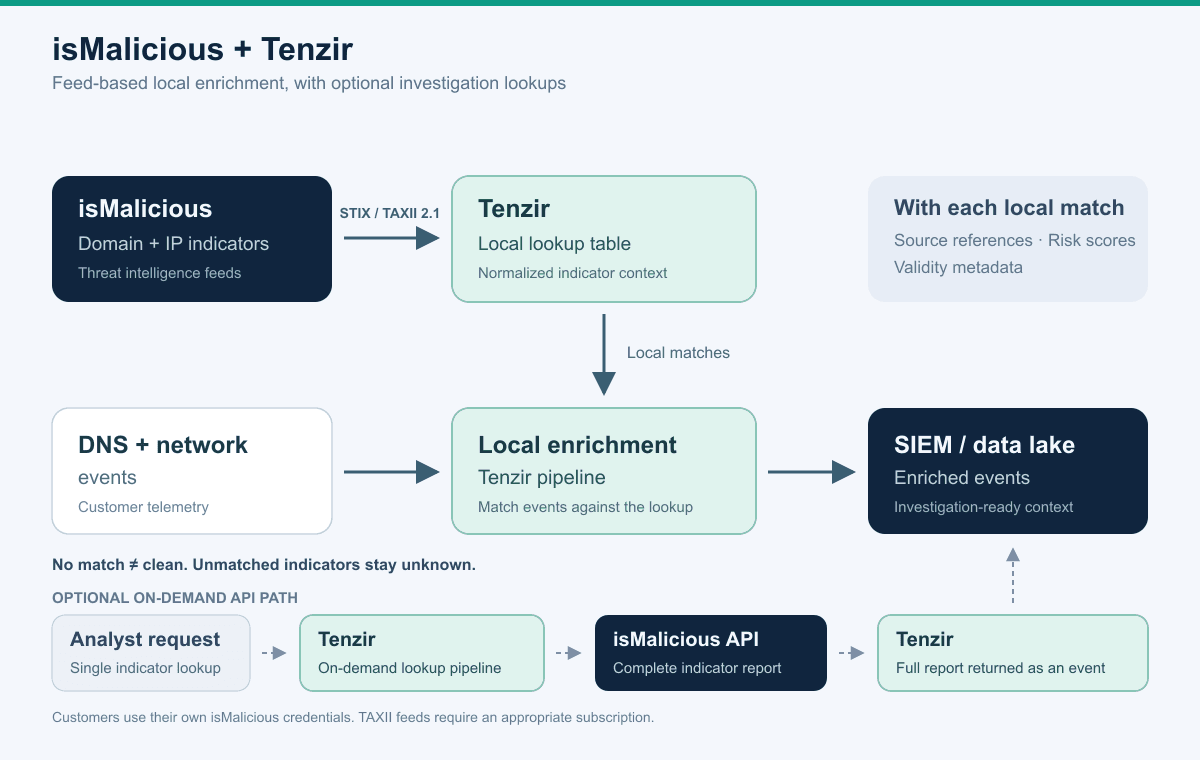
isMalicious + Tenzir: Threat Intel in Your Pipeline
Connect isMalicious domain and IP feeds to Tenzir over STIX/TAXII for local DNS and network enrichment, with optional API lookups for investigations.
TAXII Pagination: Sync Without Losing Feed Additions
Separate added_after, date_added, and modified, then test cursors, object versions, and crash recovery in a TAXII 2.1 client.
STIX: Indicator vs Observed Data
Separate a detection pattern, an observed fact, and a STIX Sighting so your IOC pipeline does not turn every recorded event into a threat.
Defang and Refang: Handle hxxp and IOCs Correctly
Share defanged IOCs while retaining usable evidence: separate display, conversion, validation and submission to external services.
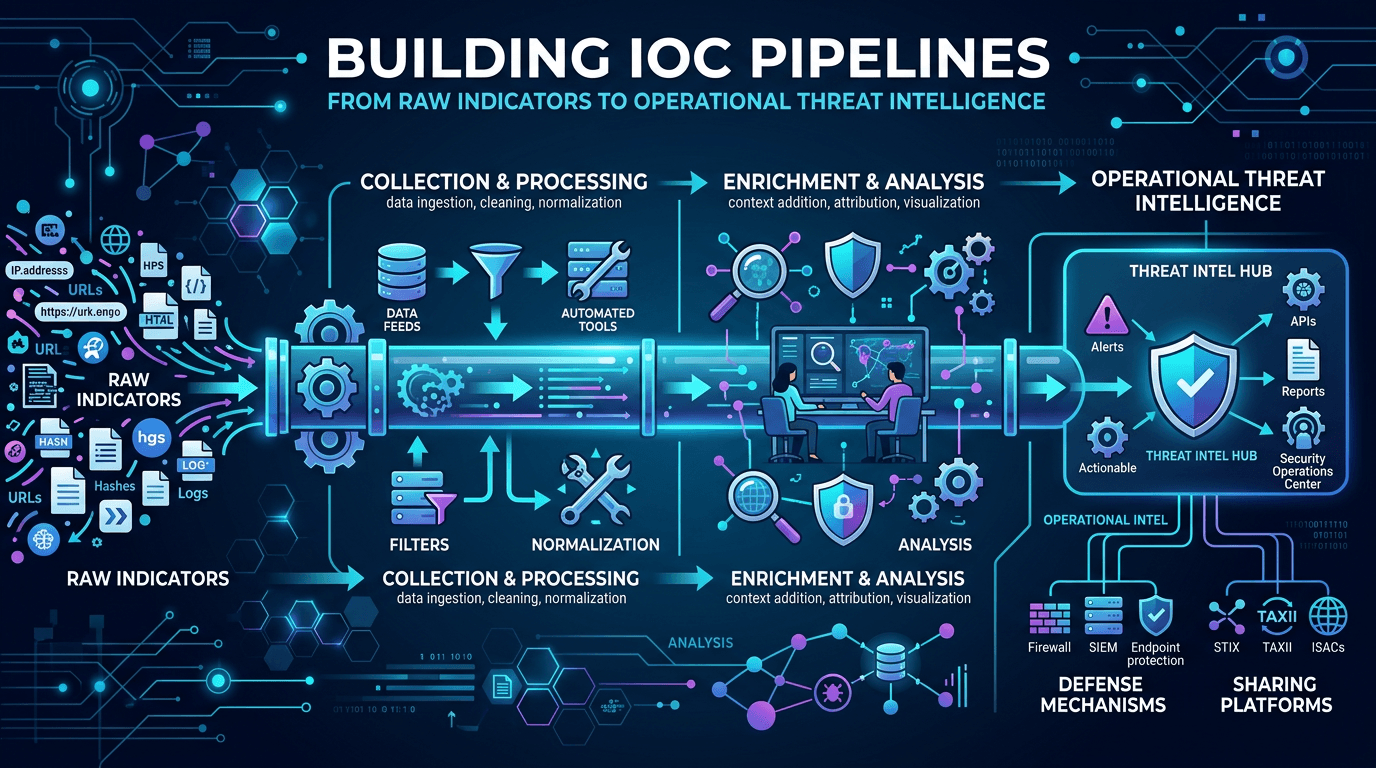
URL Normalization: Avoid Incorrect IOC Matches
Compare URLs while preserving evidence: case, encoding, parameters and fragments need explicit rules and tests for values that must stay distinct.
IP Allowlists: Control the Scope of CIDR Ranges
Verify an IP exception’s scope, test CIDR boundaries and IPv6, then document its owner, review date and conditions for removal.
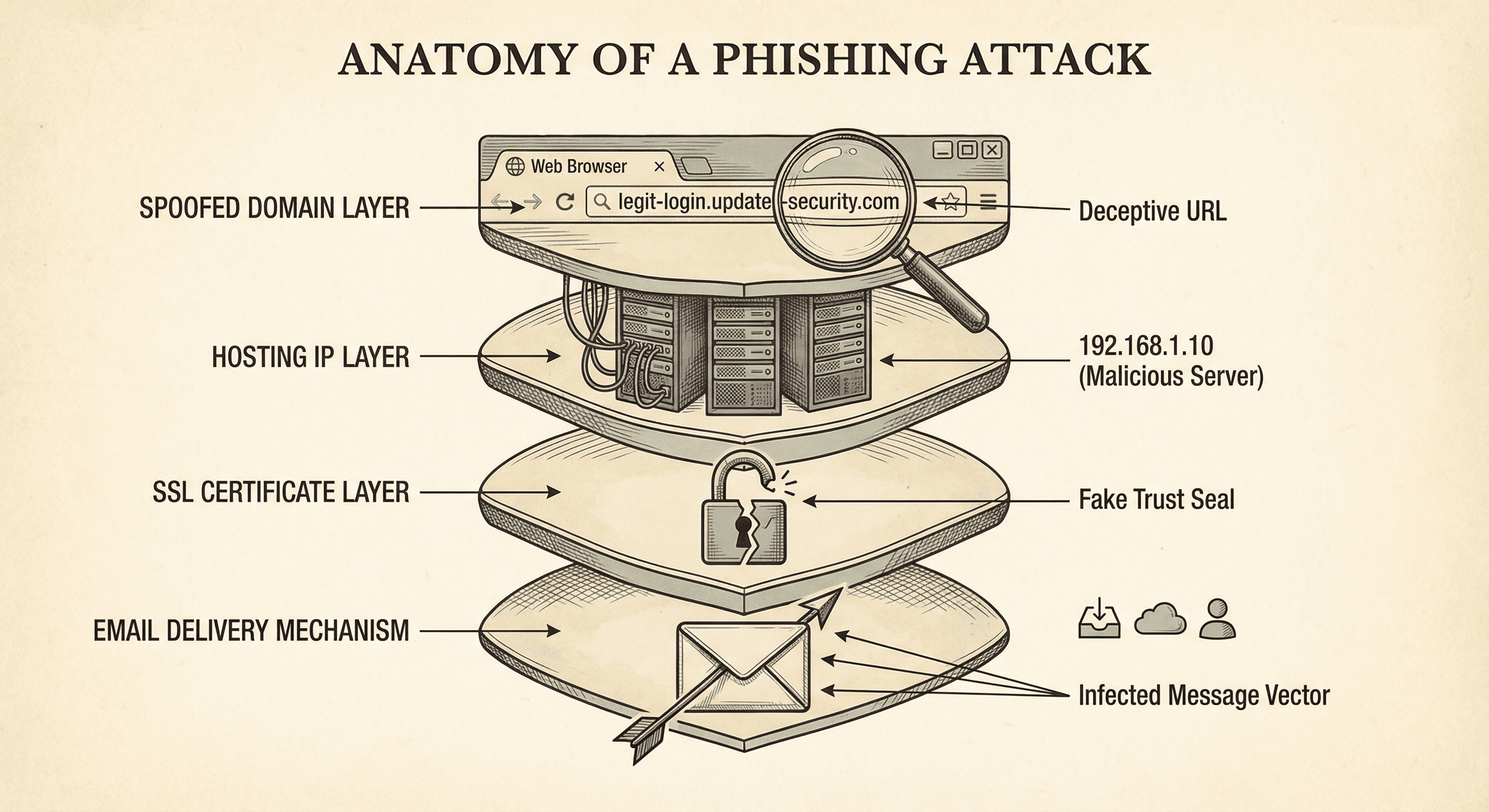
RDAP: Read Domain Data During an Investigation
Use RDAP events, statuses, and contacts to document a suspicious domain without misattributing an identity or claiming an unproven compromise.

Government Threat Intelligence Procurement: A Practical Guide
Specify a public-sector threat intelligence service with clear evidence, data-handling rules, acceptance tests and an exit plan for UK and European teams.
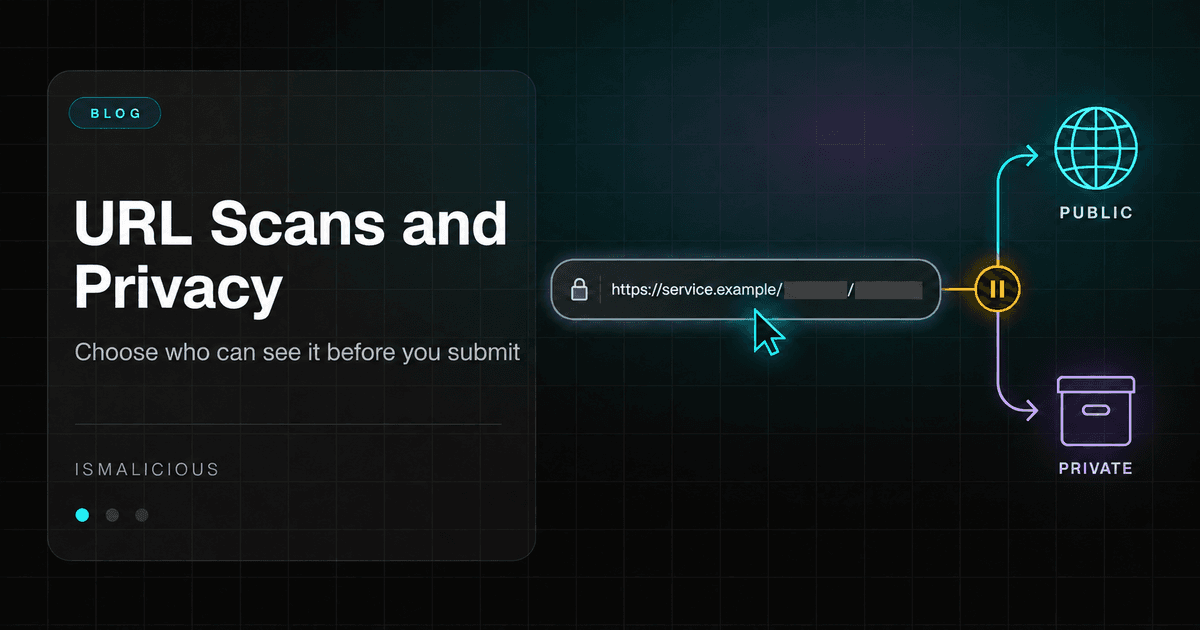
CTI Analyst OPSEC: Scan URLs Without Exposing Secrets
Protect CTI investigations before scanning URLs or files: assess public visibility, signed links, hash lookups, and the right environment for sensitive evidence.
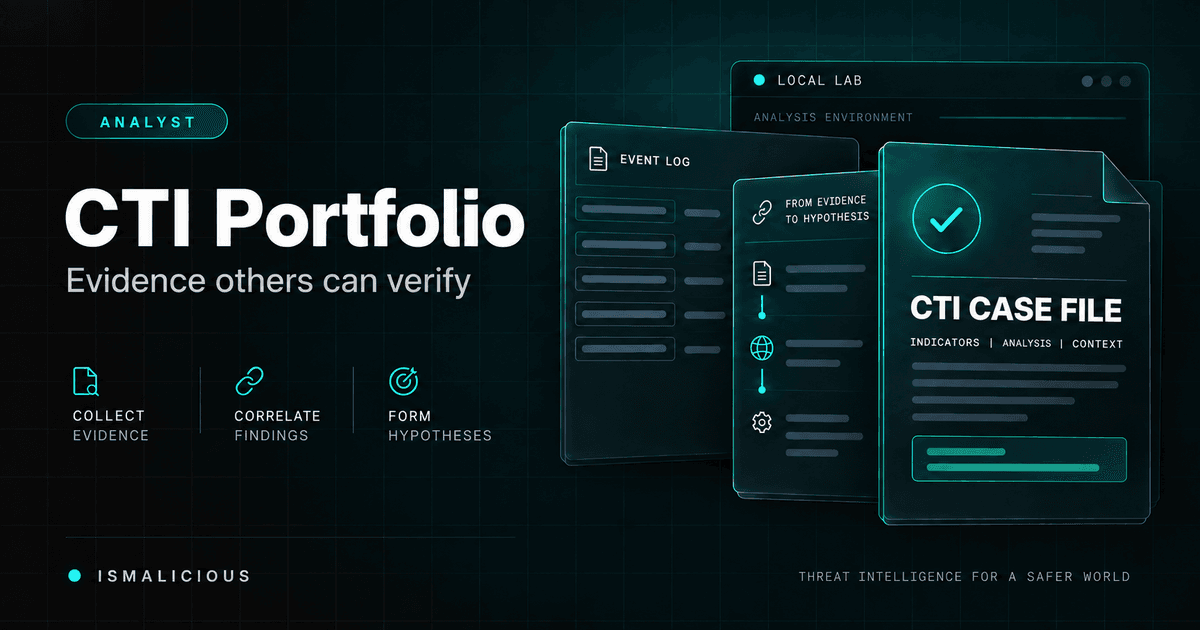
CTI Analyst Portfolio: Build a Safe, Reproducible Lab
Build a CTI analyst portfolio with offline datasets, evidence-led assessments, reproducible results, and a review rubric that shows how you make decisions.
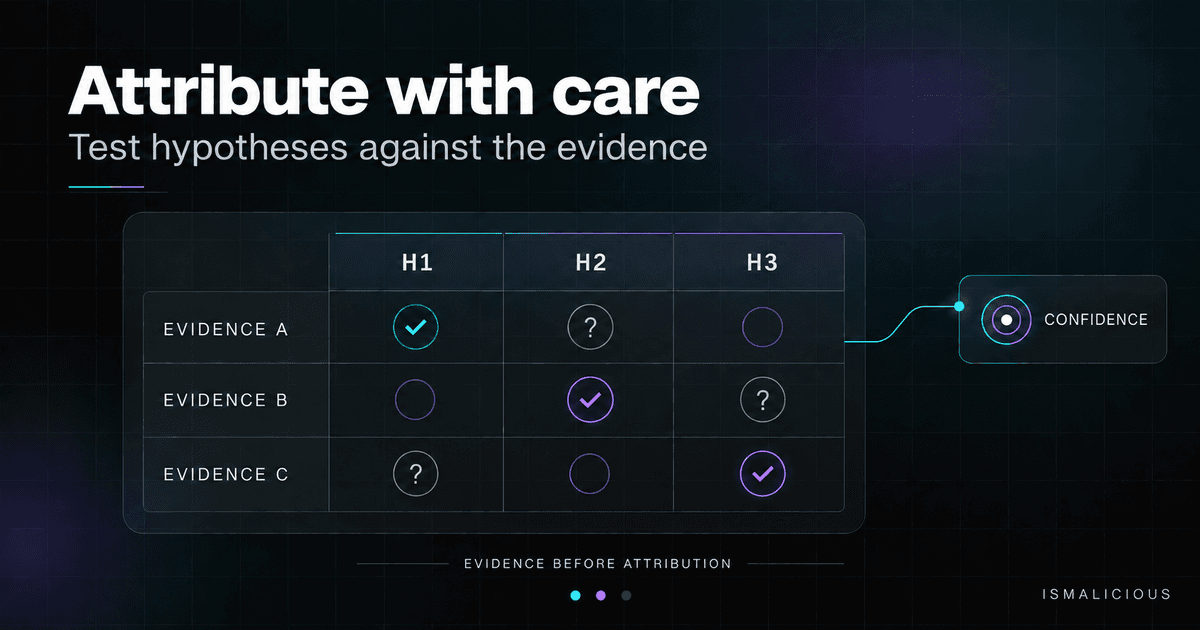
Cyber Attribution: Confidence and Competing Hypotheses
Assess cyber attribution with evidence, competing hypotheses, and explicit confidence. Use a practical judgment record without treating an IOC as an identity.
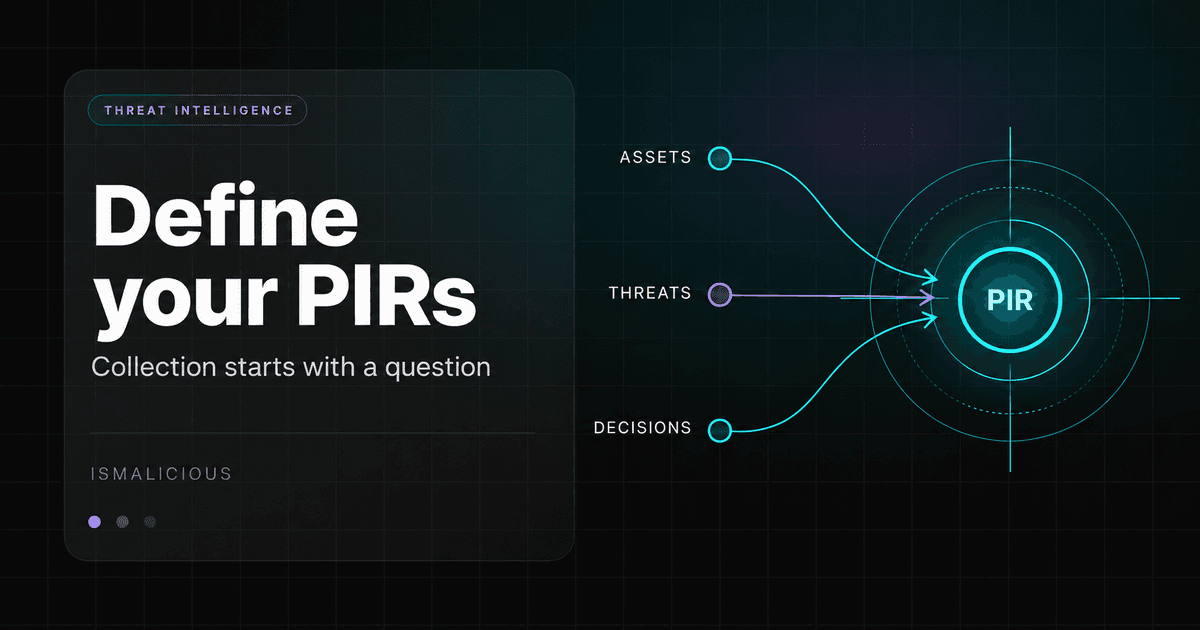
Threat Intelligence PIRs: A Workbook and Collection Plan
Turn threat intelligence requests into useful PIRs with a decision worksheet, collection plan, evidence requirements, ownership, and practical stopping rules.
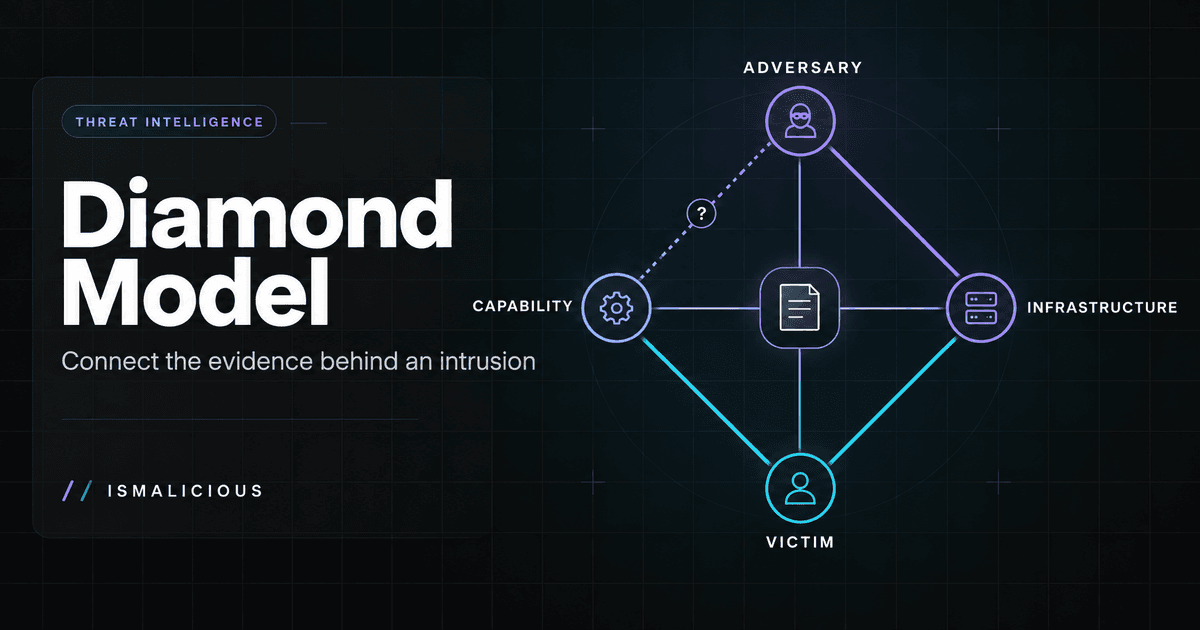
Diamond Model: A Practical CTI Investigation Walkthrough
Use the Diamond Model to connect evidence, test competing explanations, build activity threads, and turn a phishing investigation into defensible decisions.
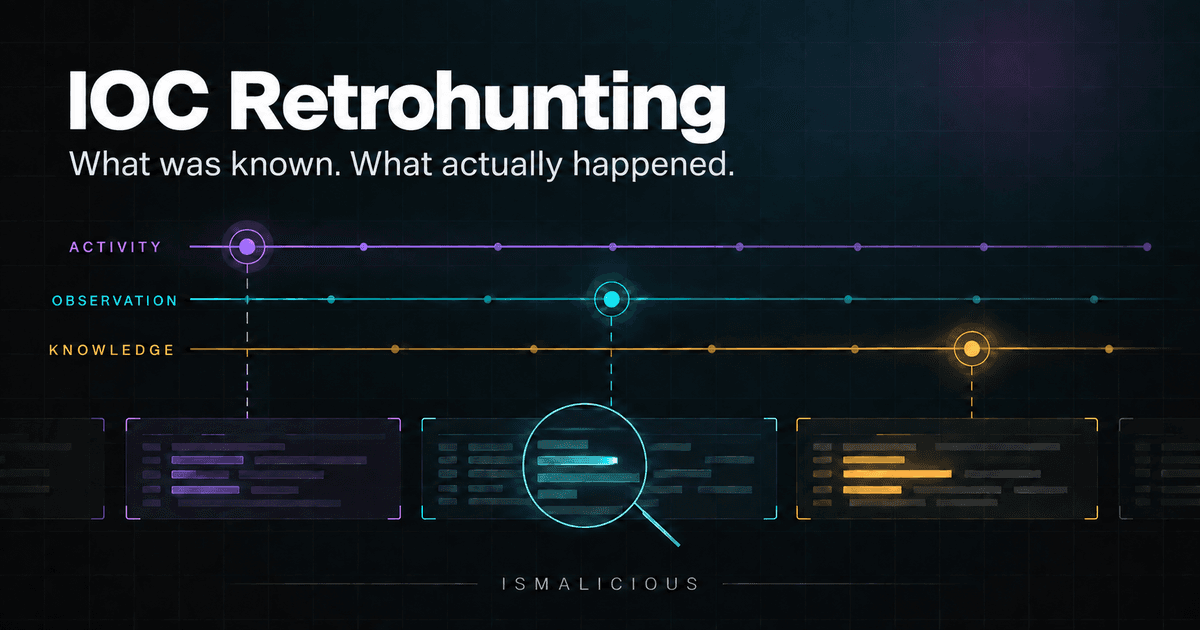
IOC Retrohunting: Investigating Historical Logs Reliably
Run reliable IOC retrohunts by separating event time, intelligence availability, and validity, then document historical evidence and the limits of negative results.
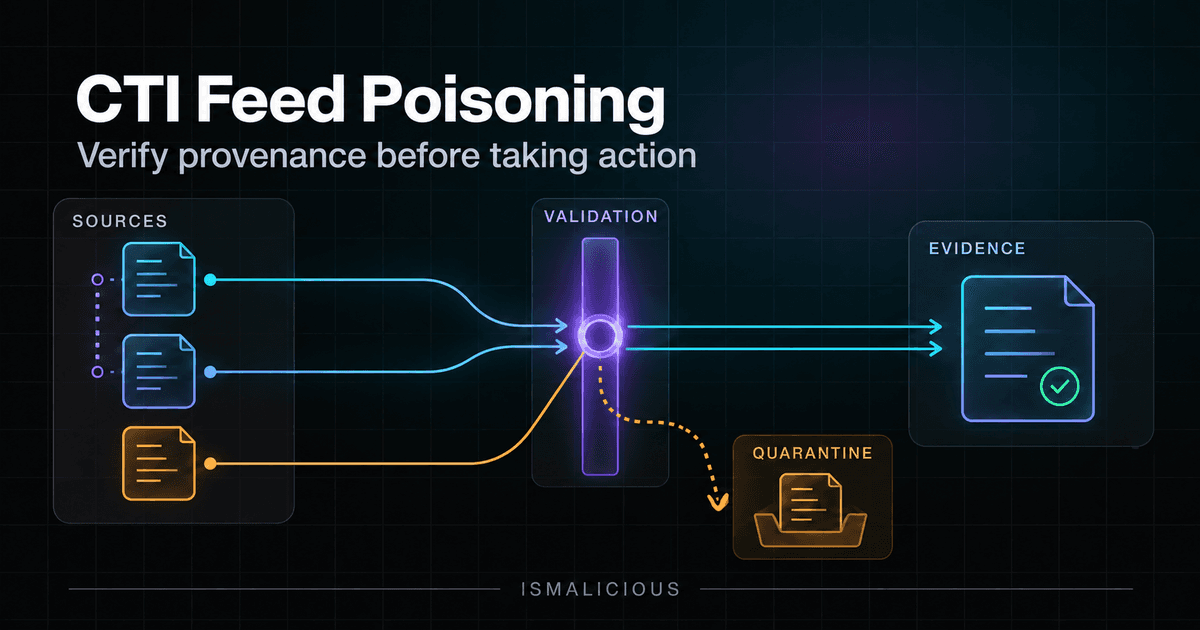
Threat Intelligence Feed Poisoning: Protect Your Evidence
Protect CTI decisions from misleading data with source provenance, mirror detection, contradiction handling, safe ingestion, human review, and tested rollback.
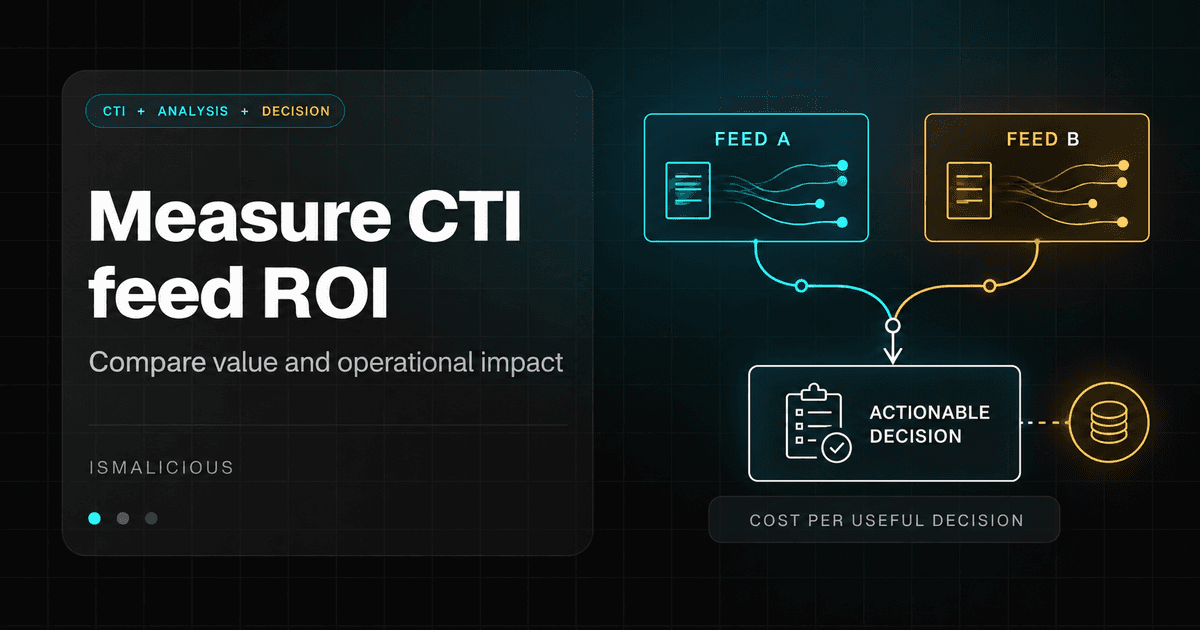
Threat Intelligence Feed ROI: Build a Reliable Benchmark
Evaluate threat intelligence feeds with an independent sample, complete operating costs, and a measure of incremental value before buying or renewing a contract.
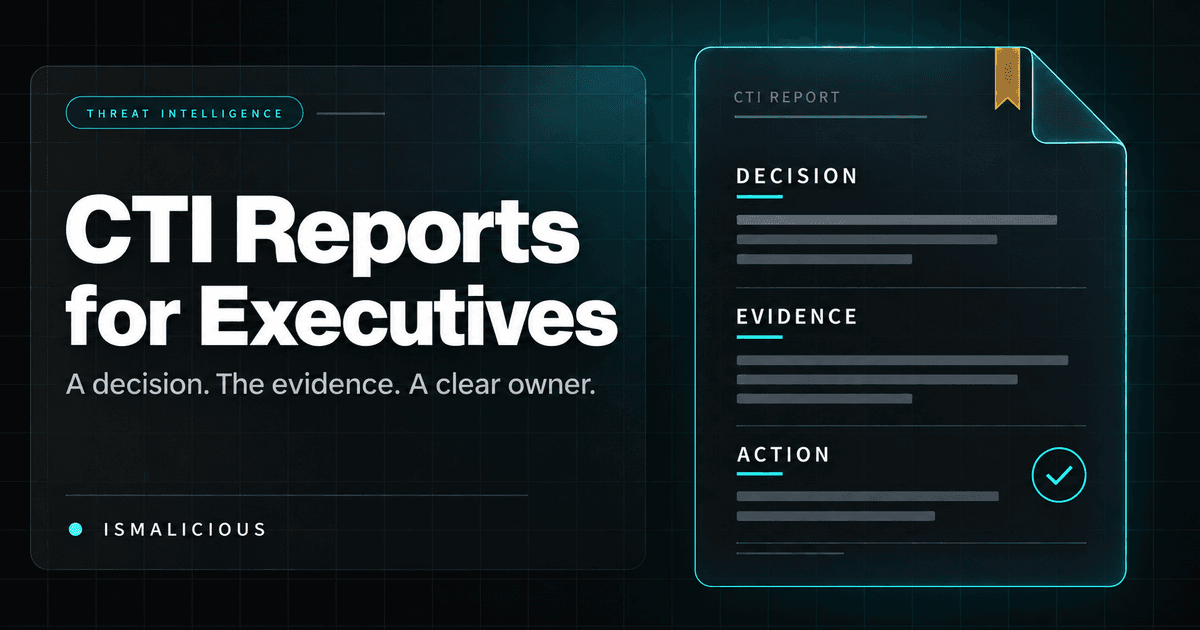
Threat Intelligence Reports for Executives: A Practical Template
Write a CTI brief executives can use: the required decision, business impact, evidence, uncertainties, options, and follow-up, with a template and worked example.
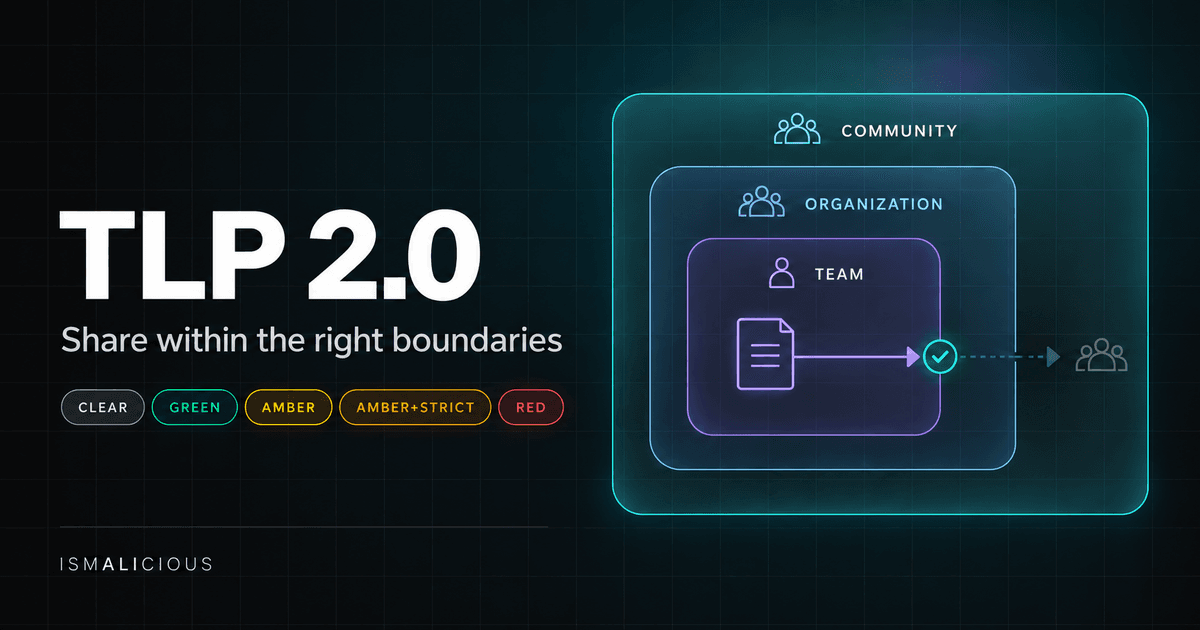
TLP 2.0: Share Threat Intelligence Without Leaking Data
Apply TLP 2.0 to CTI reports, indicators, and supplier exchanges with practical sharing boundaries, permission checks, data minimization, and export controls.
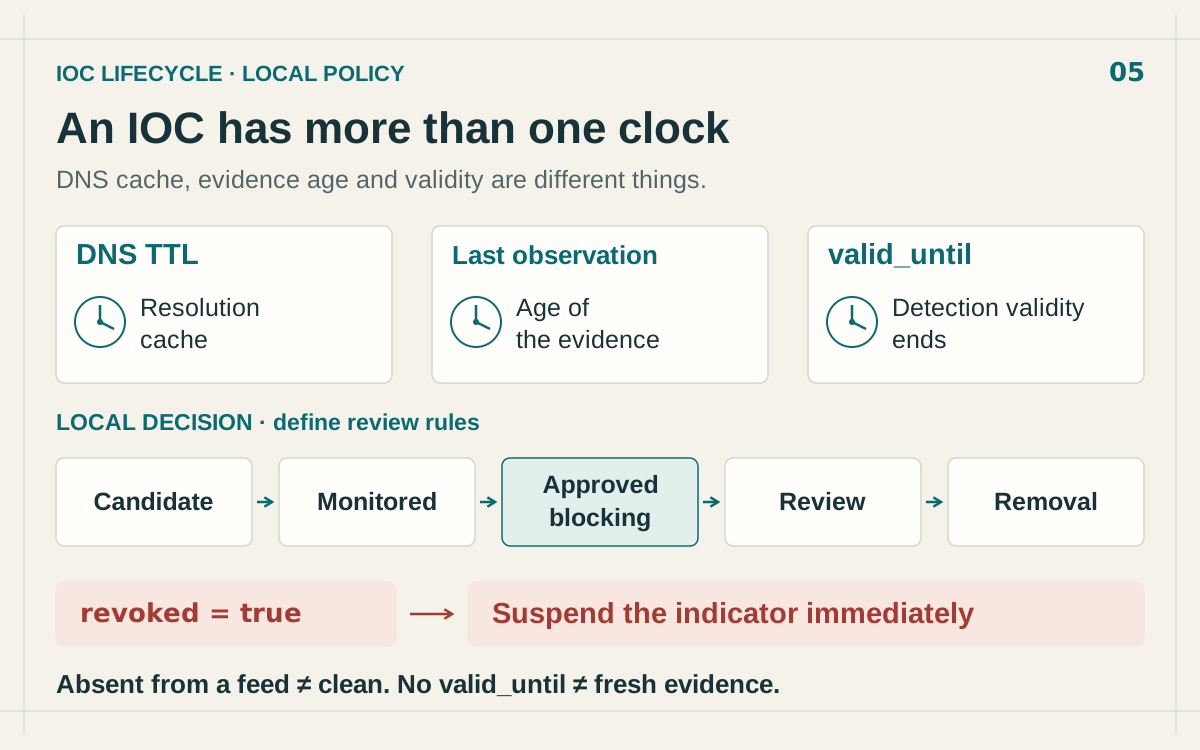
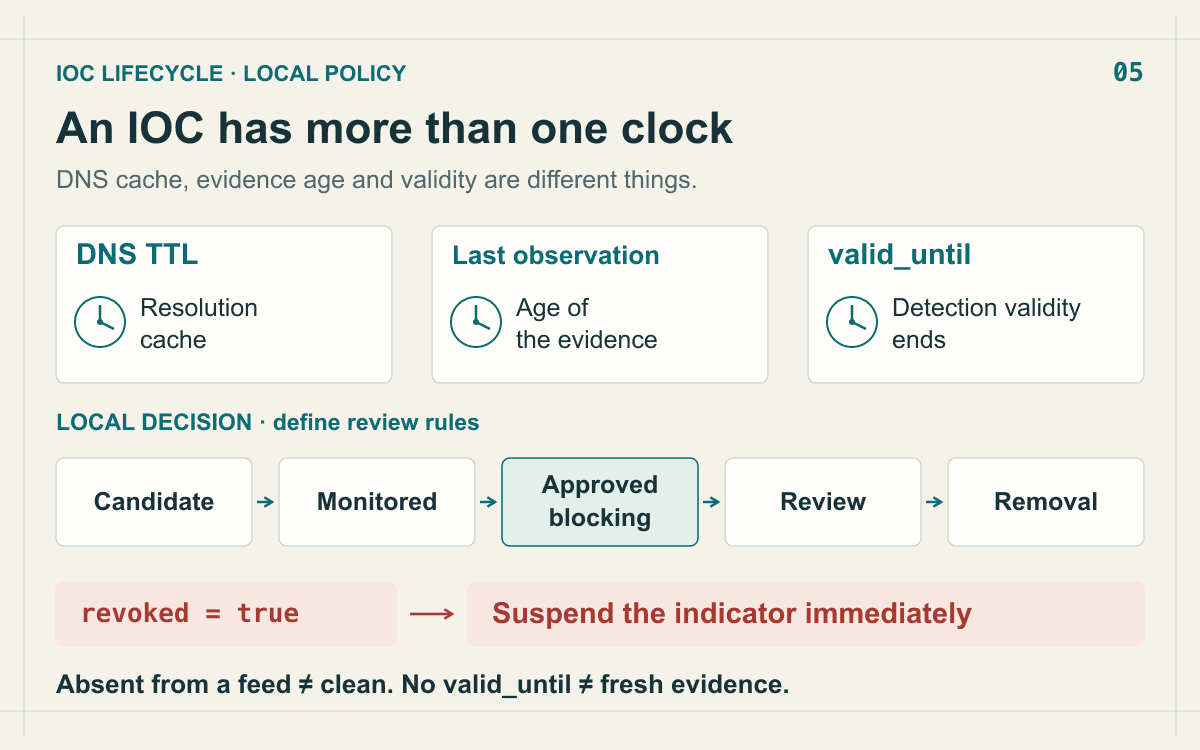
IOC Expiration: When to Remove an IP From a Blocklist
Manage IOC expiration with separate DNS, evidence and STIX validity clocks. Review stale IP blocks, process withdrawals and preserve the audit trail.
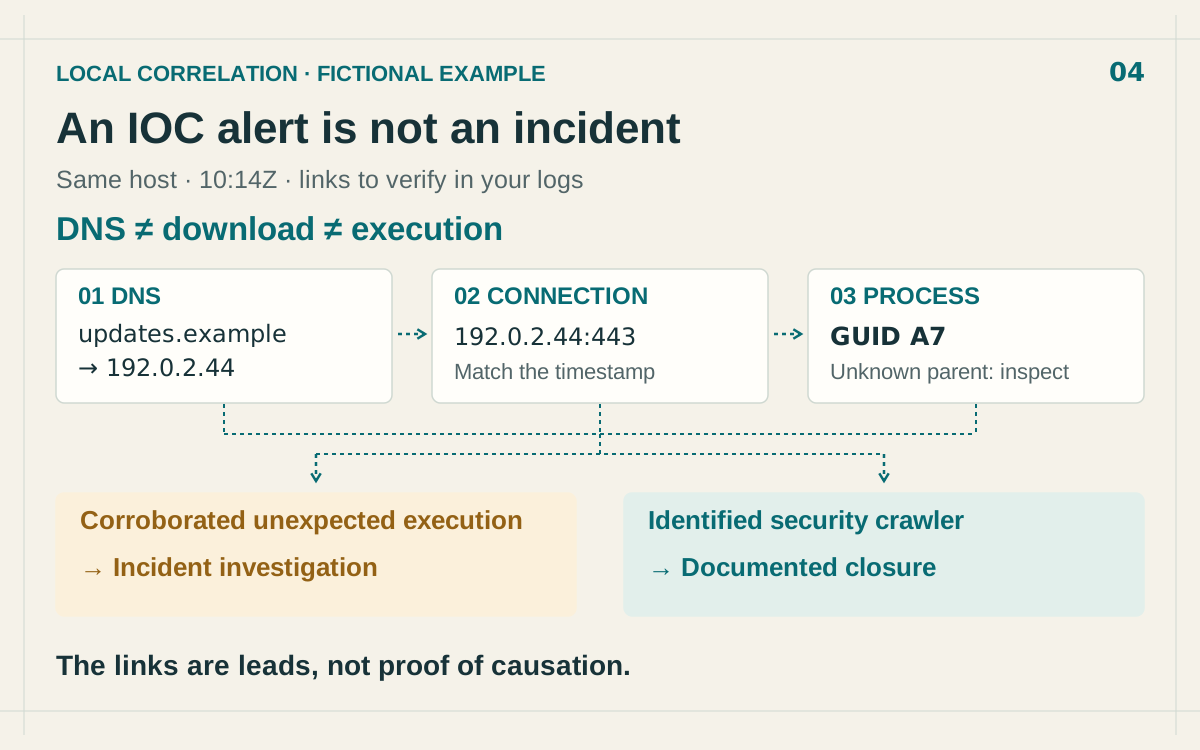
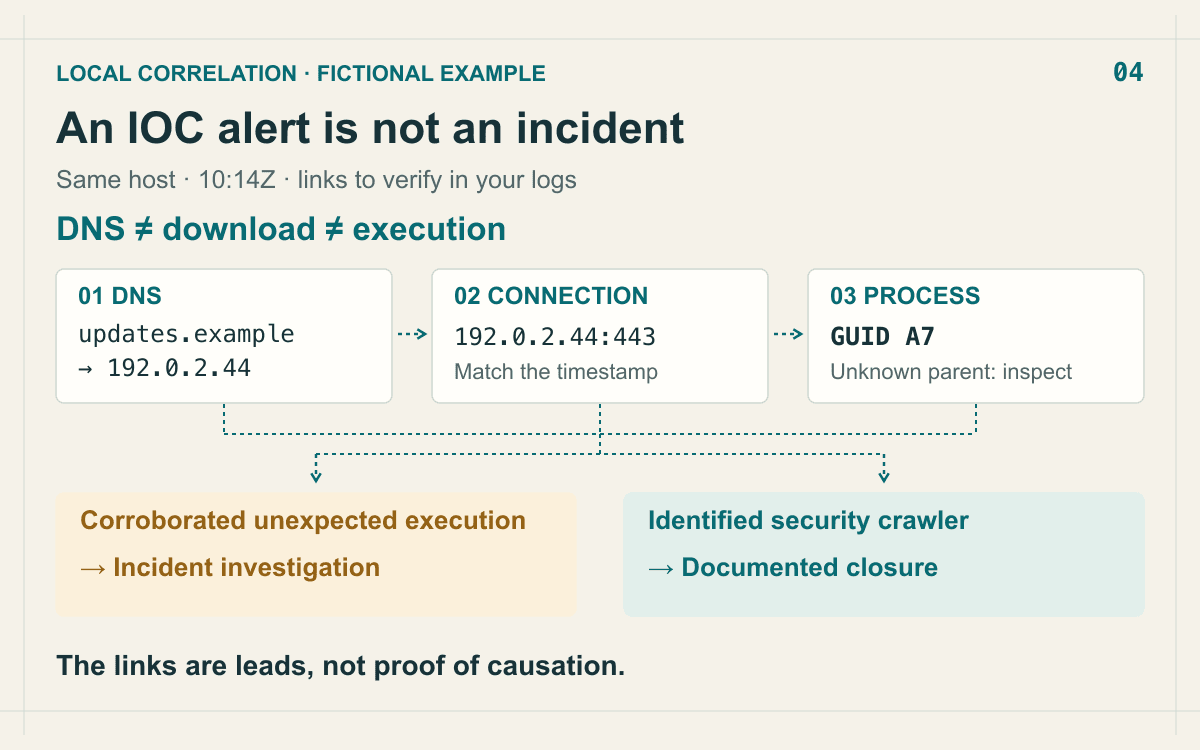
Investigate an IOC Alert: Link IP, DNS and Process Logs
An IOC match is an investigation lead. Correlate DNS, network connections and process records to establish what happened on the endpoint.
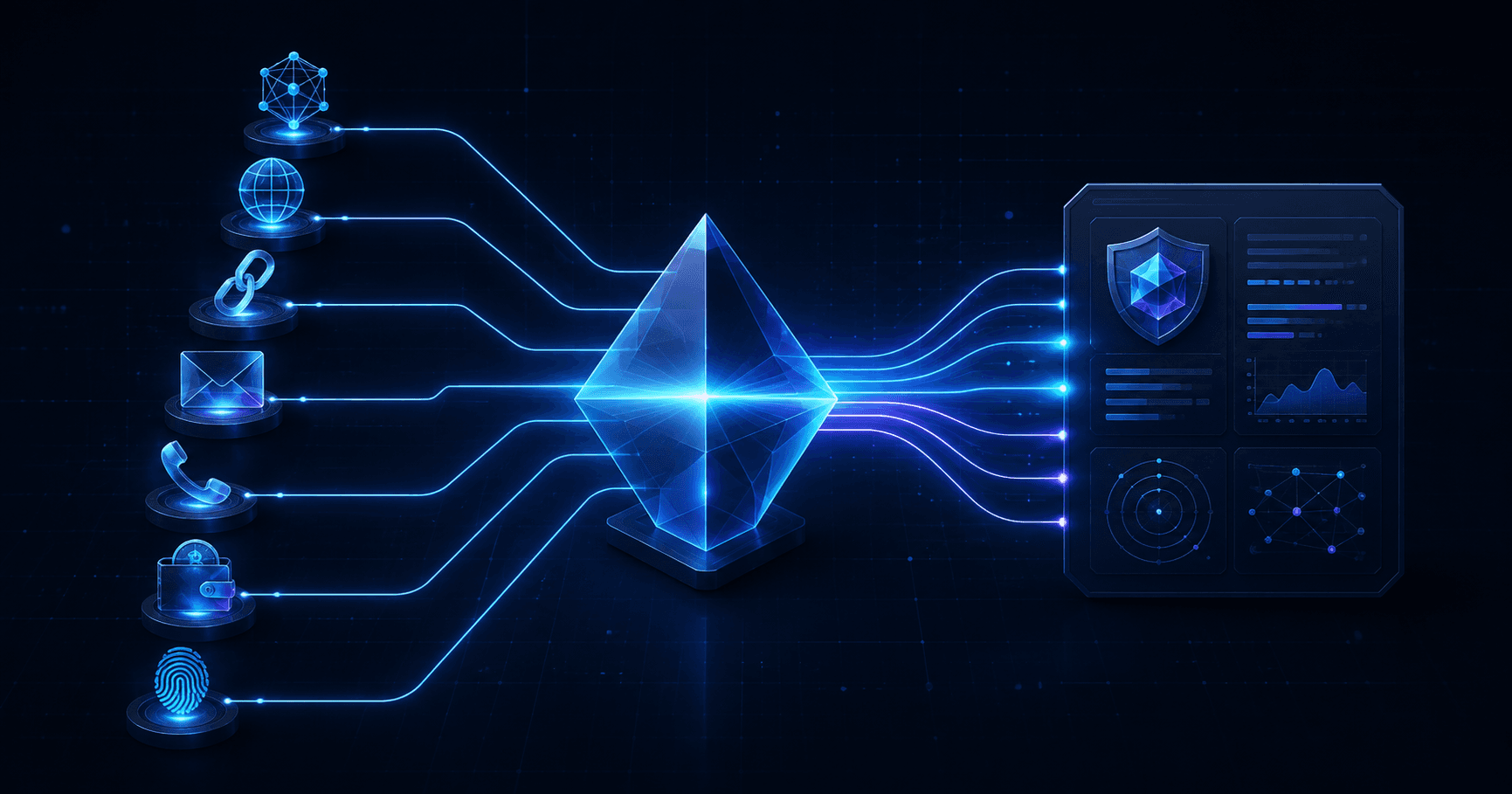
Smart Lookup: Check Any Threat Indicator from One Search
Paste an IP, domain, URL, email, phone number, wallet, file hash, or a complete suspicious message. Smart Lookup routes each indicator to the right threat report.
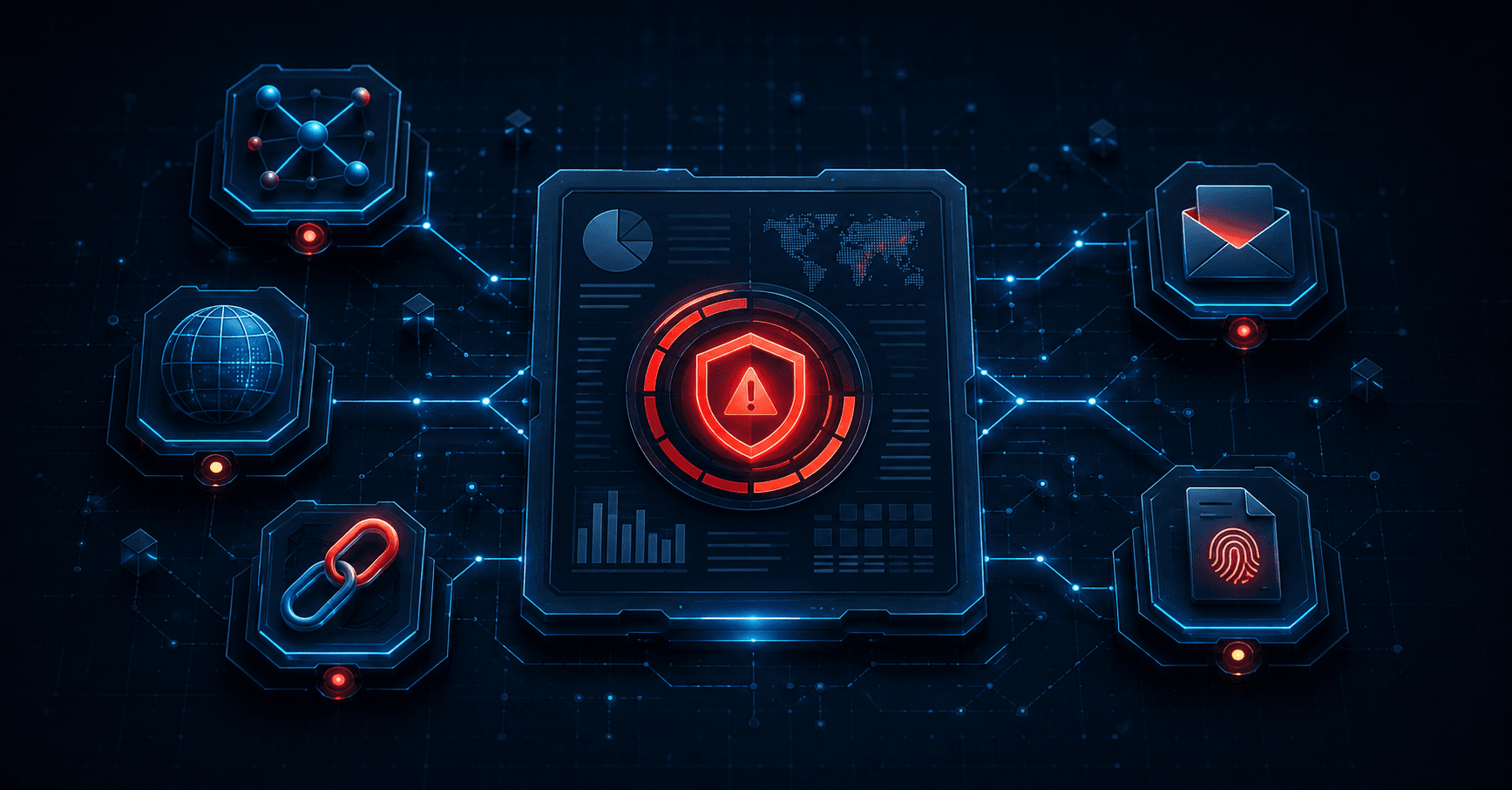
Composite Threat Reports: Triage Multiple IOCs Together
A phishing message or security alert rarely contains one indicator. Use a composite threat report to scope several IOCs without losing the evidence behind each result.

Threats Dashboard: Turn Current Intelligence into Priorities
Use the isMalicious Threats dashboard to move from a broad threat picture to the sectors, ransomware groups, malware, victims, and evidence that matter to your team.
TAXII Threat Feeds: Build a Continuous SIEM Integration
Connect an isMalicious TAXII collection to your SIEM with safe pagination, durable checkpoints, validation, monitoring, and recovery.
Topics
Browse by topic. One hub per subject.
- threat intelligence90 articles
- SOC56 articles
- incident response47 articles
- IOC enrichment31 articles
- threat intelligence API26 articles
- CVE21 articles
- phishing20 articles
- SIEM16 articles
- vulnerability management14 articles
- KEV12 articles
- patch management11 articles
- identity security10 articles
- CVE Watch9 articles
- EPSS9 articles
- malware detection8 articles
- ransomware8 articles
- file hash7 articles
- SOAR7 articles
- ransomware intelligence6 articles
- MITRE ATT&CK5 articles
Expert Threat Intelligence Analysis
Our blog features in-depth analysis from our threat research team. Each article is backed by real data from our analysis of millions of malicious domains, IPs, and URLs across the global threat landscape. Topics include ransomware campaigns, phishing techniques, malware distribution networks, and emerging threat trends. We publish specific intelligence that security teams can immediately use to improve their defenses.
Practical Security Guidance
Beyond threat analysis, we share practical guidance for security practitioners. Our tutorials cover API integration, SIEM configuration, threat hunting techniques, and building effective threat intelligence programs. Whether you're a SOC analyst, security engineer, or CISO, you'll find content tailored to your role and experience level.
Stay Ahead of Emerging Threats
The threat landscape evolves constantly. Our blog keeps you informed about the latest attack techniques, newly discovered vulnerabilities, and emerging threat actors. Subscribe to our newsletter for weekly digests of the most important developments in cybersecurity.
Get new research by email
New articles and product news, straight to your inbox.