isMalicious vs Censys: Internet Discovery and Reputation Verdicts Are Different Jobs
Censys maps what exists on the internet — hosts, certificates, open ports. isMalicious assesses what is malicious. Most teams comparing the two need the second question answered, not the first.
 IsMalicious Team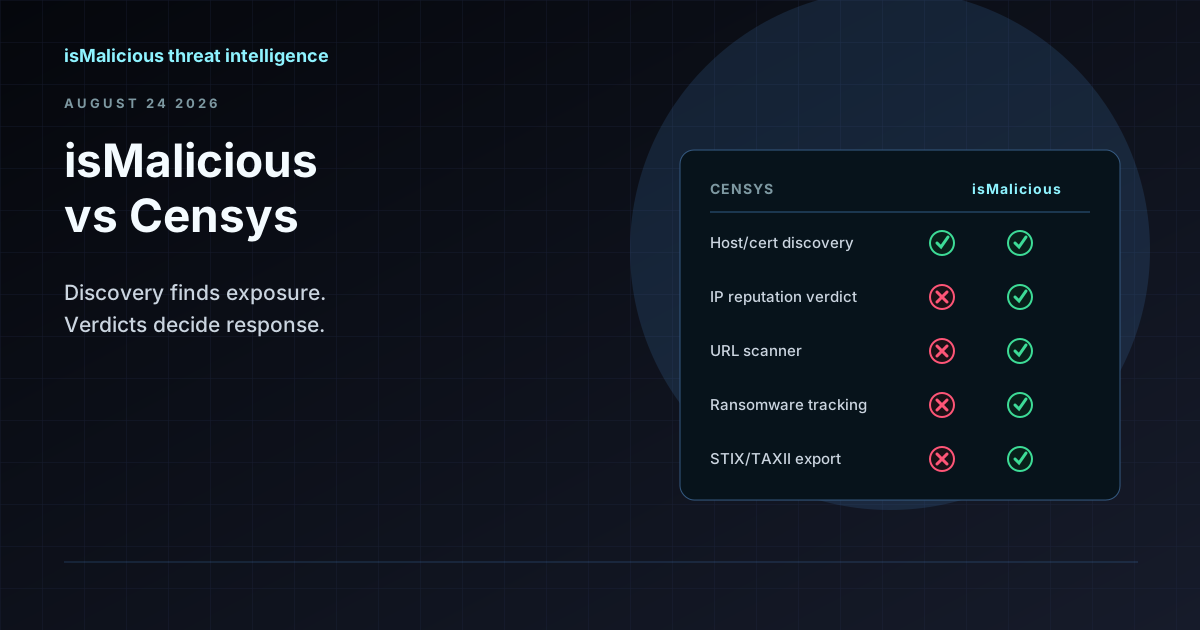
Censys built a strong product around a specific question: what is reachable on the internet, and what does it expose? Host discovery, certificate transparency search, port and service enumeration, software fingerprinting. If that is the question you have, Censys answers it with internet-wide scope that few tools match.
The reason this comparison comes up is that discovery data does not close a security decision. Knowing a host runs an outdated TLS certificate on port 443 is useful context, and it does not tell you whether that host is part of a phishing infrastructure, a C2 channel, or a legitimate CDN node. That gap — between what exists and what is dangerous — is where the two products separate.
What Censys Does Well
- Internet-wide host and service discovery, scanning billions of observations to map what is exposed.
- Certificate transparency search with deep historical coverage for tracking issuance patterns and mis-issuance.
- Software and protocol fingerprinting, identifying what runs on discovered services without needing direct access.
- Attack surface enumeration for organizations mapping their external footprint or researching adversary infrastructure.
- Research-grade data access for security researchers doing large-scale internet measurement.
For reconnaissance, asset discovery, and infrastructure research, this is specialist tooling.
Where the Gap Shows Up
The limitations are on the assessment side:
- No reputation verdicts. Censys returns observations, not judgments. An analyst still must determine whether a discovered host is malicious.
- No phishing URL scoring. There is no endpoint that fetches a page, follows redirects, and assesses content — so link triage requires a separate tool.
- No ransomware group tracking tying an indicator to an extortion campaign.
- No dark web monitoring for credential or data exposure signals.
- No CVE exploitation context beyond what you infer from exposed software versions.
- Not tuned for blocklist automation. The data model serves research and discovery, not pushing confirmed-malicious infrastructure into firewalls and DNS resolvers on a schedule.
Teams rarely search for a Censys alternative because the scanning data disappointed them. They search because they completed discovery and still need verdicts, feeds, and enforcement — and found themselves without an assessment layer.
What isMalicious Provides
isMalicious is built around the assessment question:
- Multi-source reputation verdicts for IPs, domains, and URLs, with threat classification rather than raw scan data.
- URL scanning with redirect-chain tracking for triaging reported links.
- CVE intelligence with CVSS, EPSS, and KEV status connecting an exposed service to whether its vulnerability is actively exploited.
- Ransomware group tracking and dark web exposure signals.
- Blocklist exports and STIX/TAXII collections so verdicts reach firewall and SIEM controls.
- A self-serve free tier and transparent pricing for evaluation without a procurement cycle.
On the discovery side, isMalicious provides DNS records, WHOIS, subdomain visibility, and domain age as part of a threat report. That covers the enrichment needs of most SOC workflows after you have a list of assets. It does not match Censys for internet-wide scanning depth, and if large-scale host enumeration is a core part of your job, that difference is real.
Partial CTI coverage on isMalicious means you get tactical enrichment and feeds, not a strategic intelligence program with analyst-written reports. That is an honest scope boundary, not a hidden limitation.
Feature Comparison
| Capability | Censys | isMalicious | | :------------------------------------- | :-------------- | :---------- | | Internet-wide host discovery | Yes, specialist | No | | Certificate transparency search | Yes, deep | No | | Port / service enumeration | Yes | No | | Software fingerprinting | Yes | Partial | | WHOIS / DNS context | Partial | Yes | | IP reputation verdict | No | Yes | | Domain reputation | No | Yes | | URL scanner | No | Yes | | Multi-source threat correlation | No | Yes | | Ransomware group tracking | No | Yes | | CVE intelligence (CVSS, EPSS, KEV) | No | Yes | | Dark web monitoring | No | Yes | | Blocklist / STIX-TAXII export | No | Yes | | Bulk API enrichment | Partial | Yes | | Self-serve free tier | Limited | Yes |
The Split That Works in Practice
Rather than replacing one with the other, most mature workflows divide by question:
- Discovery first. Enumerating external assets, researching adversary infrastructure, or searching certificate history is a discovery problem. Censys wins here.
- Assessment second. Once you have hosts, domains, and certificates, the operative question is which carry malicious reputation, active exploitation, or campaign association. That is a verdict problem.
- Enforcement third. Whatever is confirmed malicious needs to reach the controls that block it — a feed, not a search interface.
The failure mode is treating step one as the whole job. A Censys export listing 200 exposed services with no risk assessment generates work rather than reducing it.
That assessment step is where bulk lookups matter. Discovery output — domains, IPs, certificate subjects — feeds directly into bulk enrichment, returning reputation and CVE context per entry. Wiring the same call into SIEM workflows through the API turns recurring attack surface reviews into a diff of what changed and what is newly flagged.
Getting Started
If your work is internet-wide discovery, certificate research, and attack surface enumeration at scan depth, Censys is the specialist and this comparison should send you back to it. If you need verdicts, exploitation context, and feeds that enforcement controls can consume, see the side-by-side on the Censys comparison page.
The practical next step is to take an existing discovery output — a host list, a certificate search result, a subdomain enumeration — and run it through bulk lookups. The useful comparison is not feature tables; it is how many entries come back with a verdict attached versus how many you would still assess by hand.
Frequently asked questions
- Is isMalicious a Censys alternative?
- For reputation scoring and threat enrichment, yes. For internet-wide host discovery, certificate transparency search, and attack surface enumeration at Censys depth, Censys remains the specialist and isMalicious does not attempt to match that breadth. The right answer depends on whether your workflow needs discovery or a malicious verdict.
- Does Censys provide reputation verdicts?
- No. Censys returns observable data — open ports, certificate details, software banners, host associations. It does not classify an IP or domain as malicious, track phishing campaigns, or score URL risk. That assessment layer requires a separate tool.
- Does isMalicious replace Censys for attack surface management?
- Partially. isMalicious provides DNS records, subdomain visibility, WHOIS, and domain age as part of threat reports, which covers enrichment for many SOC workflows. It does not perform internet-wide scanning or certificate search at the scale Censys built its product around.
- Can the two be used together?
- Yes, and that is the mature pattern. Censys discovers what is exposed; isMalicious assesses which discovered assets carry malicious reputation, vulnerability exploitation context, or ransomware association. Discovery output feeds directly into bulk enrichment.
- Which is better for phishing URL triage?
- isMalicious. Censys has no URL malware scanning or redirect-chain analysis. For triaging a reported link rather than mapping infrastructure, reputation and URL scanning tools are the appropriate category.
Related articles
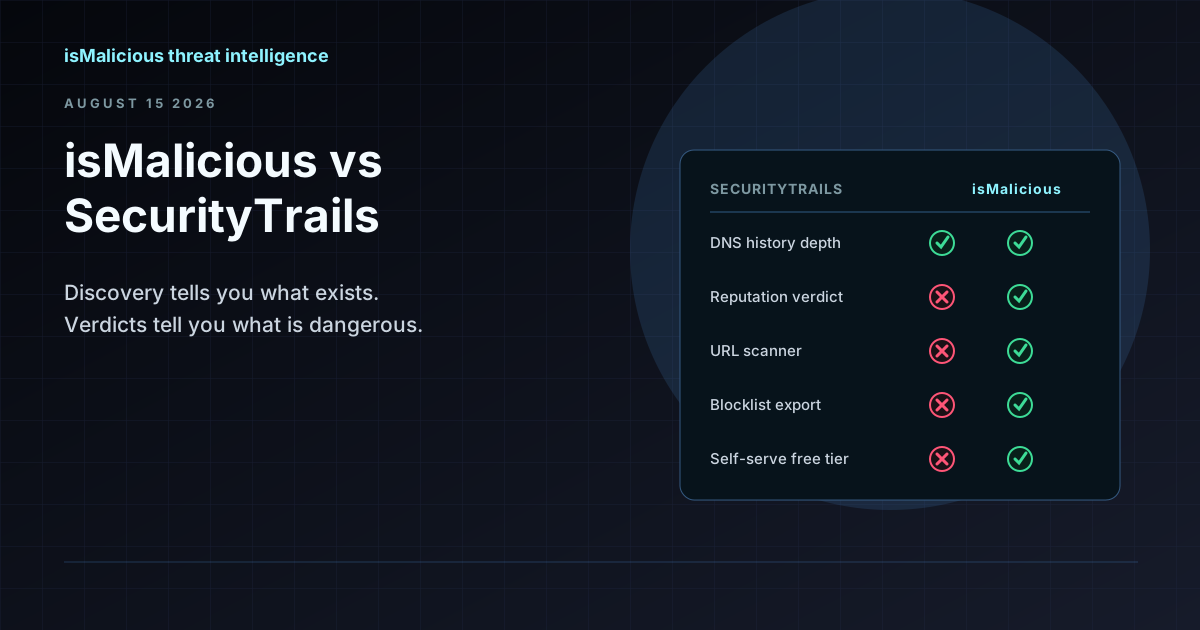 isMalicious vs SecurityTrails: Discovery Data and Reputation Verdicts Are Not the Same Product
SecurityTrails tells you what exists — every subdomain, every historical DNS record. isMalicious tells you what is dangerous. Most teams searching for a SecurityTrails alternative want the second half.
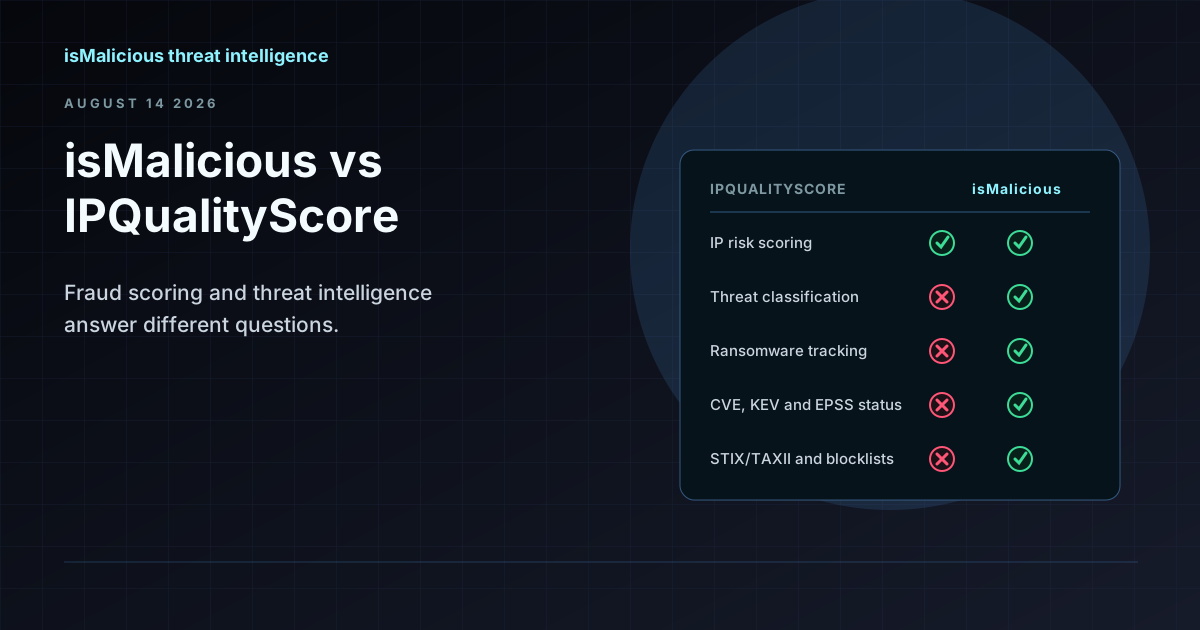 isMalicious vs IPQualityScore: Fraud Scoring and Threat Intelligence Are Different Jobs
IPQS scores whether a signup is fraudulent. isMalicious scores whether infrastructure is malicious. The two get compared constantly because both return a number about an IP address — and they answer different questions.
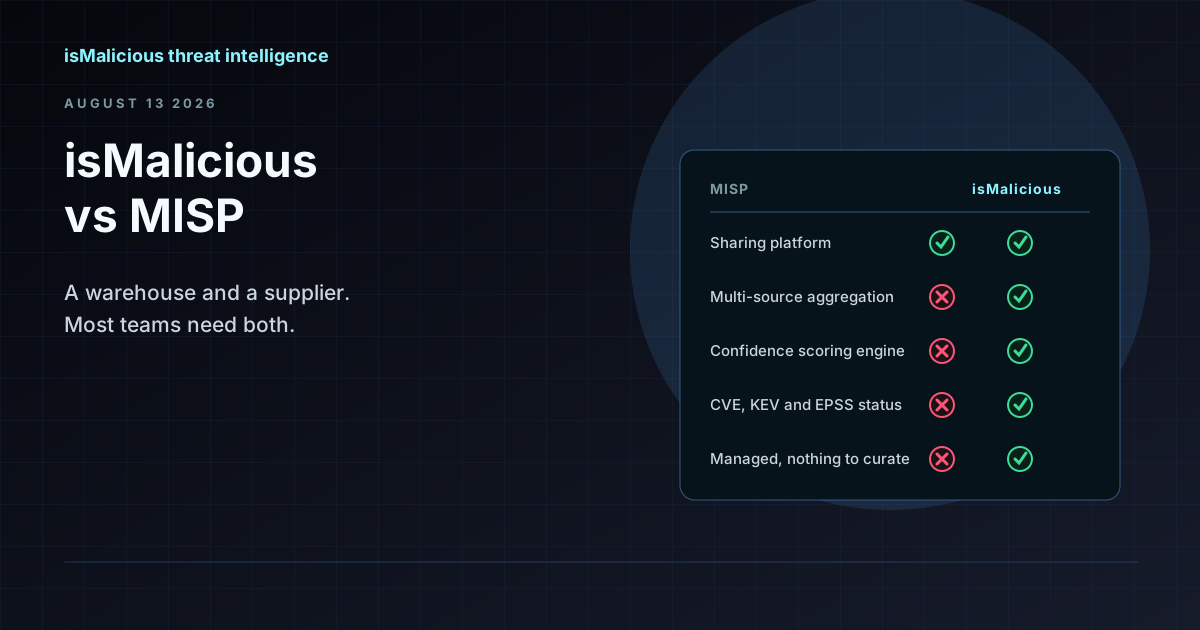 isMalicious vs MISP: Why This Is the Wrong Comparison (and What to Compare Instead)
MISP is where you store and share indicators. isMalicious is where indicators come from. Teams searching for a MISP alternative are usually looking for a feed, not a replacement platform.
Protect Your Infrastructure
Check any IP or domain against our threat intelligence database with indexed records.
Try the IP / Domain Checker