isMalicious vs Spamhaus: DNSBL Blocklists and Threat Enrichment Serve Different Layers
Spamhaus DROP and SBL are the standard for mail and network DNSBL blocking. isMalicious adds REST enrichment, URL scoring, CVE context, and STIX feeds. Most mature stacks use both at different layers.
 IsMalicious Team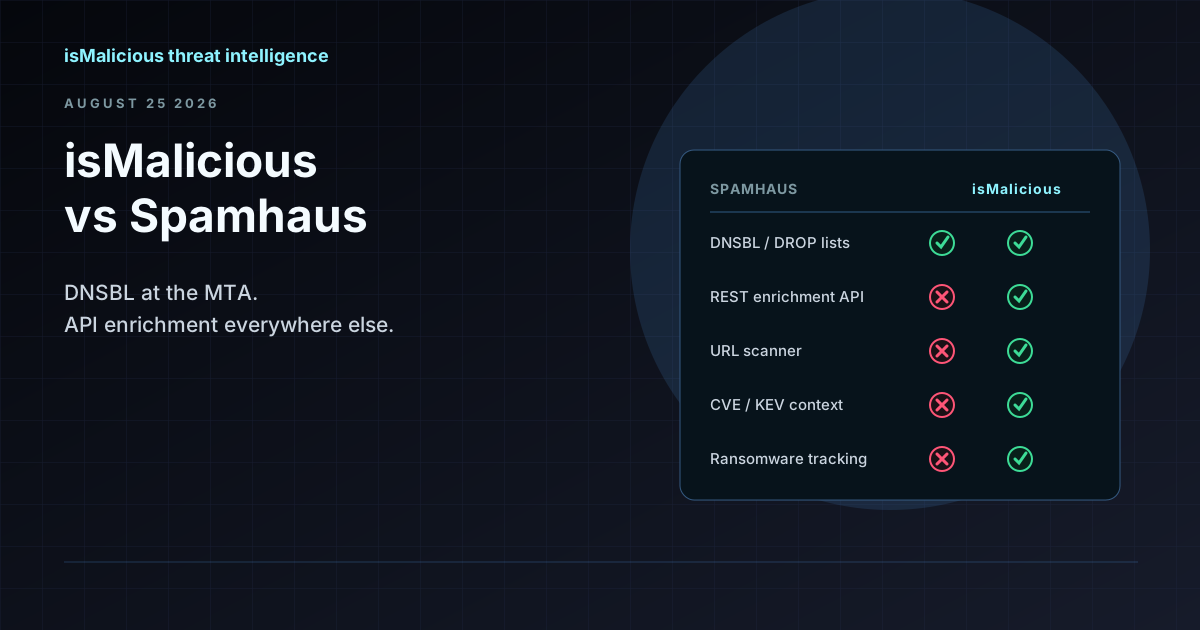
Spamhaus has been the reference name in DNS-based blocklists for longer than most security products have existed. DROP, EDROP, SBL, and the Zen composite list are wired into mail transfer agents, DNS resolvers, and BGP filtering pipelines worldwide. When an organization needs to block known-malicious IP space at the network edge with a list the industry trusts, Spamhaus is often the first name on the shortlist.
The comparison with isMalicious comes up for a different reason. Teams searching for a "Spamhaus alternative" are sometimes looking to replace a DNSBL entirely — which is usually the wrong move — and sometimes looking for capabilities Spamhaus was never designed to provide: REST enrichment, URL malware scanning, CVE context, ransomware tracking, and STIX feeds into a SIEM. Those are different requirements, and conflating them leads to gaps in either direction.
What Spamhaus Does Well
- Industry-standard DNSBL lists (SBL, XBL, PBL, DROP, EDROP) with long-standing trust in email and network filtering.
- Designed for MTA and resolver integration, where a DNS lookup against a zone returns a block decision with minimal latency overhead.
- Authoritative abuse reporting and listing criteria maintained by a dedicated research team.
- Data feed products (DNS Blocklists, Threat Intel feeds) for organizations that consume lists programmatically rather than querying public resolvers.
- Low operational complexity at the enforcement point — subscribe to the zone, query it, block on match.
For mail security and network-level IP blocking, this is foundational infrastructure.
Where the Gap Shows Up
Spamhaus scope is deliberately narrow, and the gaps appear when workflows move beyond DNSBL:
- No REST enrichment API returning WHOIS, DNS context, CVE data, and multi-source reputation in one call.
- No URL malware scanning or redirect-chain analysis for phishing triage.
- No ransomware group tracking associating an indicator with an extortion campaign.
- No dark web monitoring for credential or data exposure signals.
- No CVE intelligence with CVSS, EPSS, or KEV status alongside an indicator.
- Limited domain-level context beyond listing decisions — no registration age analysis, subdomain visibility, or hosting pivot data in an enrichment response.
- Not a SIEM enrichment source in the sense of structured JSON per indicator for SOAR playbooks; the primary interface is the blocklist, not an investigation API.
None of that is a flaw. A DNSBL is supposed to be fast, authoritative, and narrow. The problem arises when a team treats it as their entire threat intelligence stack and then discovers that alert triage, URL investigation, and vulnerability correlation all need separate tooling.
What isMalicious Provides
isMalicious operates at the enrichment and assessment layer:
- Multi-source reputation verdicts for IPs, domains, and URLs through a REST API.
- URL scanning with redirect-chain tracking for phishing and malware link triage.
- CVE intelligence with CVSS, EPSS, and KEV status connecting indicators to active exploitation.
- Ransomware group tracking and dark web exposure signals.
- Blocklist exports and STIX/TAXII collections for firewall, DNS filtering, and SIEM ingestion.
- Bulk lookups for processing large indicator lists from incident response or threat hunting.
- A self-serve free tier and transparent pricing for evaluation.
What isMalicious does not provide is the decades of DNSBL trust that Spamhaus carries at the MTA layer. Replacing SBL or DROP on a production mail gateway with an unproven list without deliverability testing is a migration that most email teams correctly avoid. isMalicious blocklists are a strong fit for firewalls, DNS resolvers in non-MTA contexts, and SIEM correlation — not necessarily a drop-in replacement for Spamhaus Zen on a busy mail server.
Feature Comparison
| Capability | Spamhaus | isMalicious | | :------------------------------------- | :--------------------- | :------------------------- | | DNSBL (SBL, DROP, EDROP) | Yes, industry standard | Partial (blocklist export) | | MTA / mail gateway integration | Yes, primary use case | Not primary | | Network edge IP blocking | Yes | Yes (via blocklist) | | REST enrichment API | No | Yes | | URL malware scanning | No | Yes | | Multi-source reputation scoring | No | Yes | | WHOIS / DNS context in API | No | Yes | | CVE intelligence (CVSS, EPSS, KEV) | No | Yes | | Ransomware group tracking | No | Yes | | Dark web monitoring | No | Yes | | STIX/TAXII export | Partial | Yes | | Bulk API enrichment | No | Yes | | Self-serve free tier | Partial (public DNSBL) | Yes |
The Stack That Works in Practice
Rather than choosing one, most mature deployments layer both:
- Spamhaus at the mail and network edge. MTAs query SBL and Zen; BGP filters consume DROP and EDROP. This is proven, low-latency blocking for known-bad IP space.
- isMalicious in the investigation and enrichment layer. When an alert fires, analysts and SOAR playbooks call the API for verdict context, URL scanning, and CVE correlation — data a DNSBL lookup cannot return.
- isMalicious feeds into SIEM and TIP. STIX/TAXII collections and blocklist exports supply structured intelligence to OpenCTI and firewall policies beyond what DNSBL zones provide.
- Bulk processing for incident response. Indicator lists from a case get run through bulk checks rather than sequential DNSBL queries that return only a binary block decision.
The failure mode is expecting a DNSBL to answer investigation questions. "Is this IP listed?" is a valid question for Spamhaus. "What is the registration history, hosting context, associated CVE exploitation, and ransomware campaign link for this domain?" is an enrichment question — and that is where isMalicious belongs.
For email-specific workflows, see also email security solutions and blocklist data for how isMalicious lists complement rather than replace MTA DNSBL policies.
Getting Started
If your requirement is mail gateway DNSBL blocking with industry-trusted lists, Spamhaus remains the reference and isMalicious is not pretending to replace SBL on your MTA. If your requirement is API enrichment, URL triage, CVE context, and STIX feeds for your SOC stack, see the side-by-side on the Spamhaus comparison page.
The practical next step is to map your workflows by layer: which decisions happen at the DNSBL edge versus which need an enrichment call. Run a recent alert indicator through the API and compare the response depth against a DNSBL lookup alone. That test clarifies where each tool belongs faster than any feature table.
Frequently asked questions
- Is isMalicious a Spamhaus replacement?
- Not for mail and network DNSBL blocking at the MTA or resolver layer. Spamhaus DROP, EDROP, and SBL are industry-standard lists with decades of trust in email and BGP filtering workflows. isMalicious is a better fit for REST enrichment, URL and domain verdicts, CVE context, and STIX/TAXII distribution to SIEM and SOAR tools.
- Should we use both Spamhaus and isMalicious?
- In most cases, yes. Spamhaus at the MTA or network edge for proven DNSBL blocking, and isMalicious for API enrichment of domains and URLs, bulk checks, ransomware context, and STIX feeds into your security stack. They operate at different layers and complement rather than duplicate each other.
- Does Spamhaus provide REST API enrichment?
- Spamhaus offers DNSBL lookup and data feed products designed for blocklist consumption, not a full enrichment API that returns WHOIS, DNS history, CVE context, and multi-source reputation in one structured response. Workflows that need that context require a separate enrichment provider.
- Does isMalicious replace Spamhaus on email gateways?
- Not as a direct swap. isMalicious blocklists work well for firewalls, DNS filtering, and SIEM correlation, but Spamhaus SBL and Zen remain the default reference for MTA DNSBL integration. Replacing a trusted DNSBL without testing deliverability impact is a risky migration.
- Which covers phishing URLs better?
- isMalicious. Spamhaus lists focus on IP and domain reputation for mail and network abuse. Phishing URL triage with redirect-chain analysis requires a URL scanner and enrichment API, which is outside Spamhaus core product scope.
Related articles
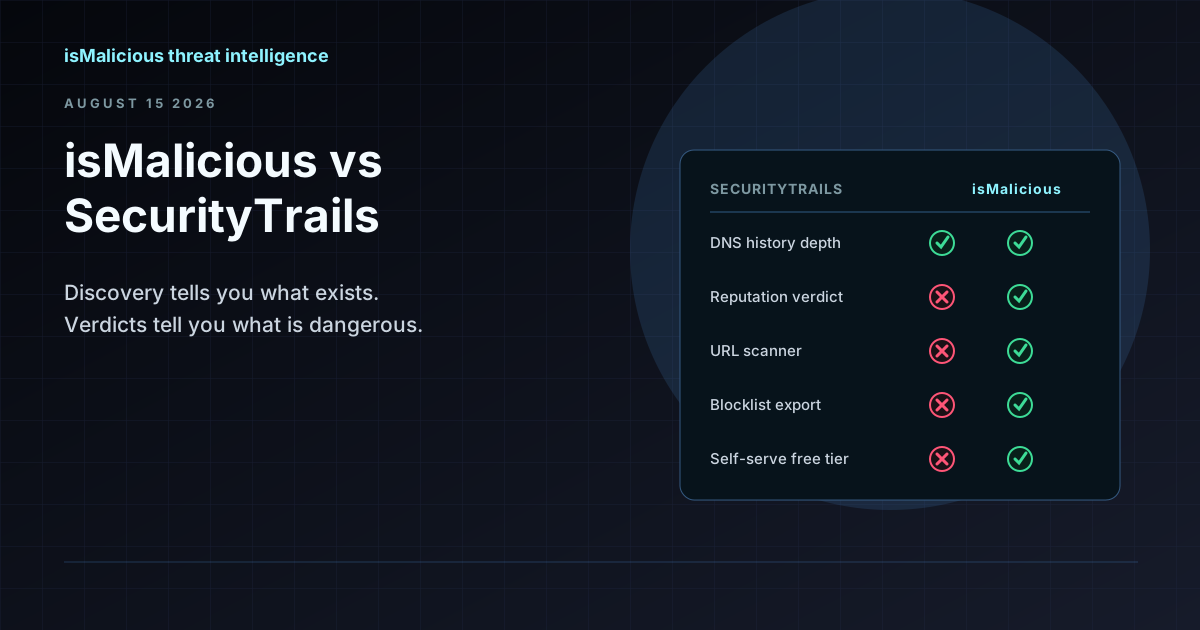 isMalicious vs SecurityTrails: Discovery Data and Reputation Verdicts Are Not the Same Product
SecurityTrails tells you what exists — every subdomain, every historical DNS record. isMalicious tells you what is dangerous. Most teams searching for a SecurityTrails alternative want the second half.
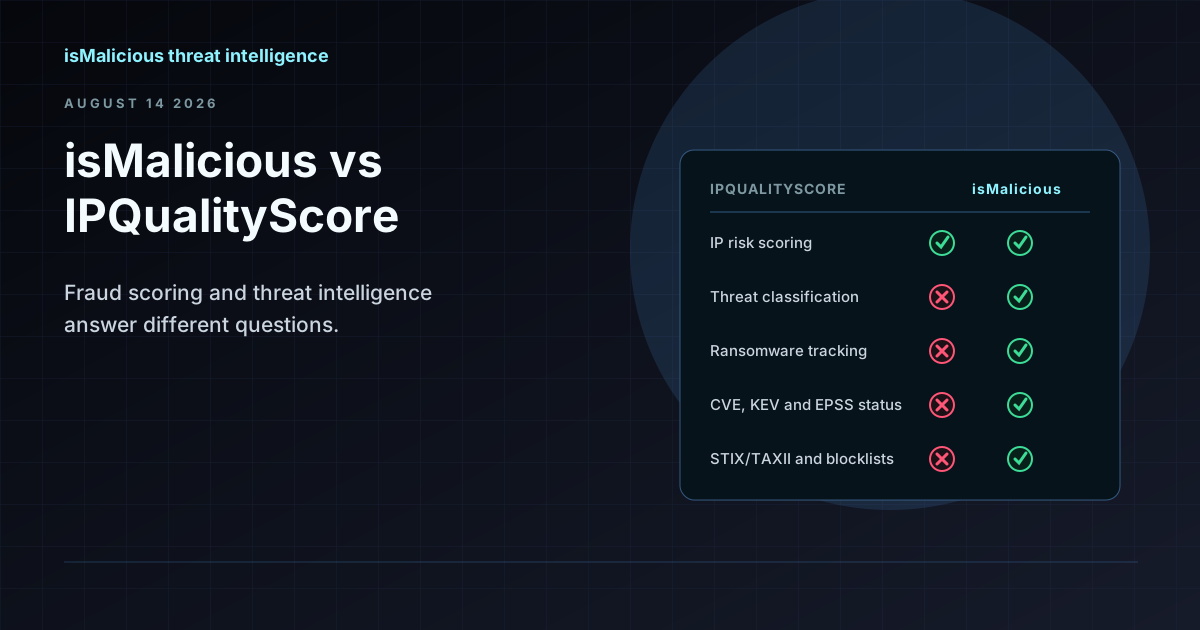 isMalicious vs IPQualityScore: Fraud Scoring and Threat Intelligence Are Different Jobs
IPQS scores whether a signup is fraudulent. isMalicious scores whether infrastructure is malicious. The two get compared constantly because both return a number about an IP address — and they answer different questions.
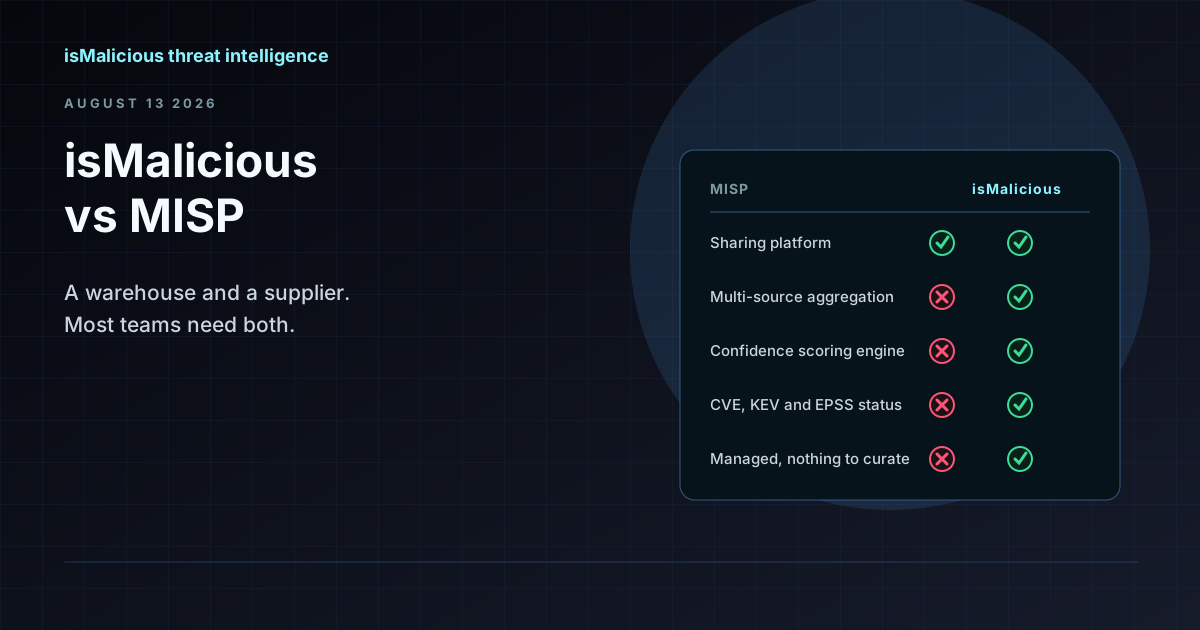 isMalicious vs MISP: Why This Is the Wrong Comparison (and What to Compare Instead)
MISP is where you store and share indicators. isMalicious is where indicators come from. Teams searching for a MISP alternative are usually looking for a feed, not a replacement platform.
Protect Your Infrastructure
Check any IP or domain against our threat intelligence database with indexed records.
Try the IP / Domain Checker