
Détection DGA : repérer les domaines générés
Détectez les DGA grâce aux signaux lexicaux, DNS, endpoint et de réputation, tout en maîtrisant les faux positifs en production.
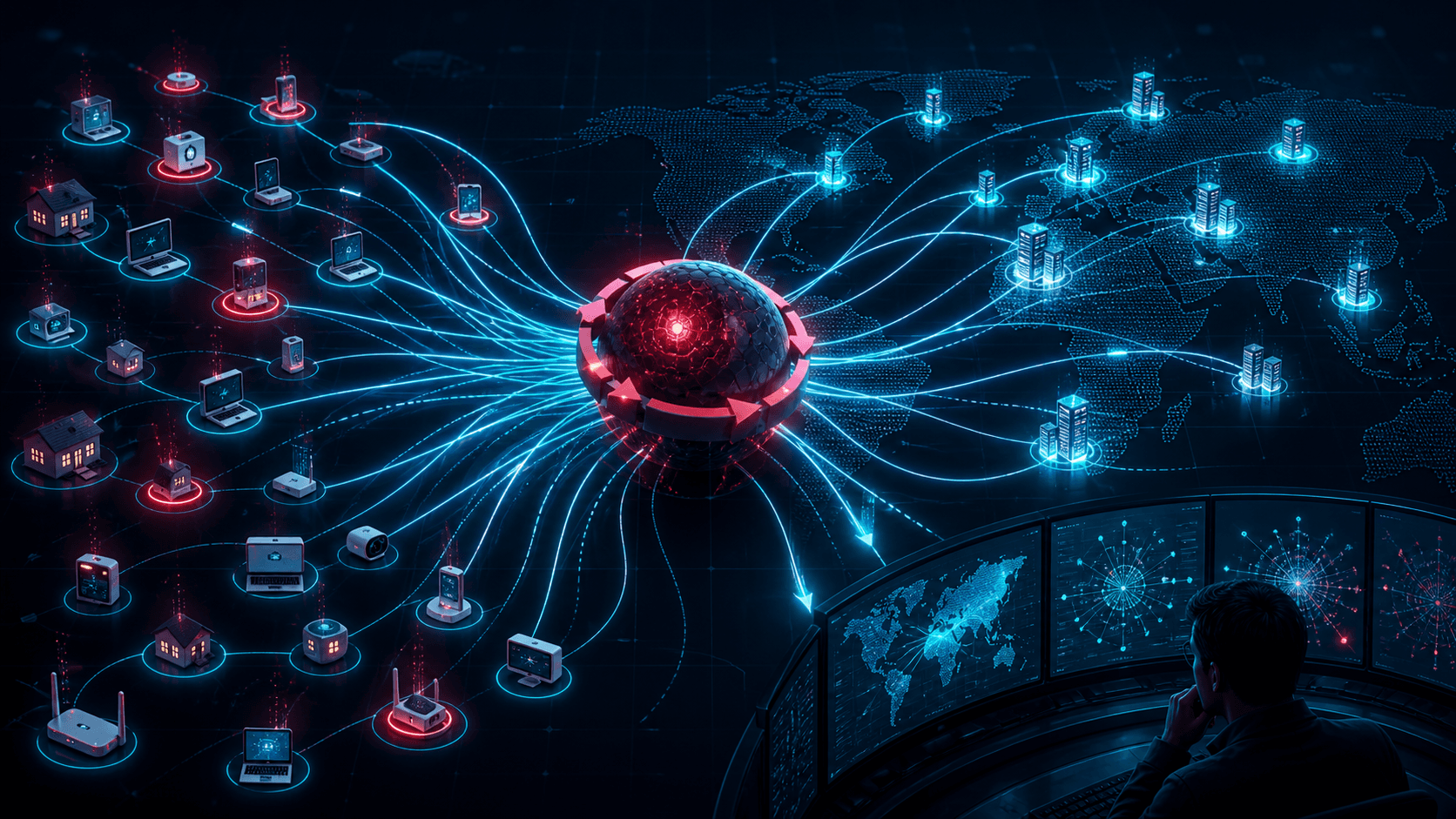
Fast flux DNS : détecter les infrastructures mouvantes
Détectez le fast flux DNS grâce au TTL, au DNS passif, aux ASN, à la réputation et à un workflow reproductible pour le SOC.
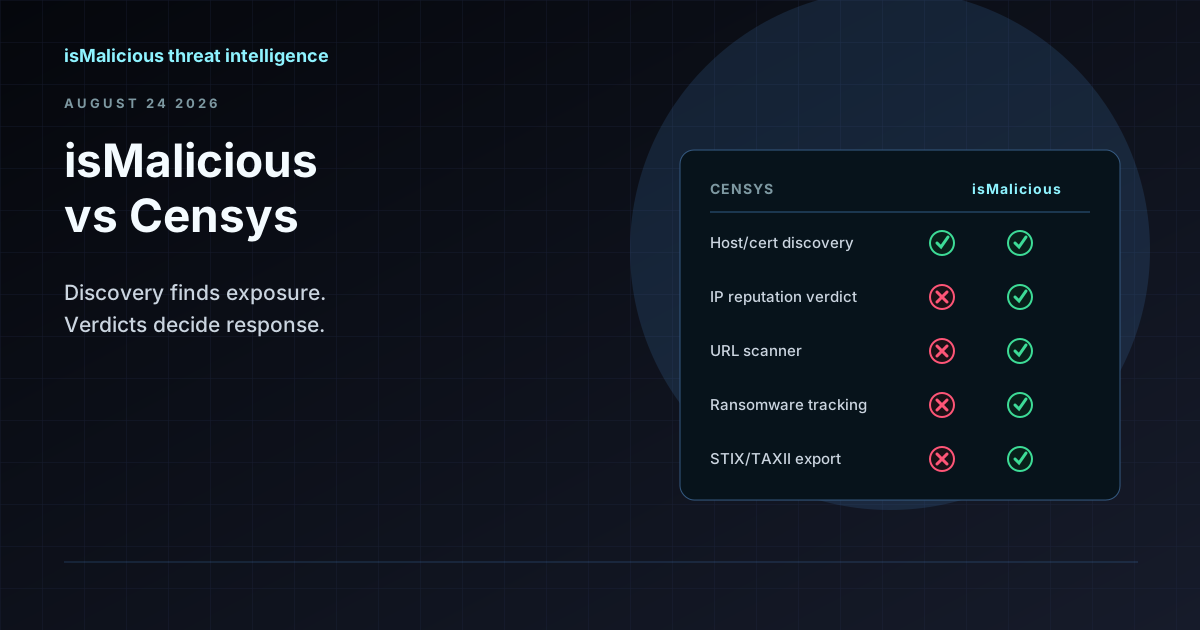
isMalicious vs Censys : la découverte Internet et les verdicts de réputation sont des métiers différents
Censys cartographie ce qui existe sur Internet — hôtes, certificats, ports ouverts. isMalicious évalue ce qui est malveillant. La plupart des équipes qui comparent les deux ont besoin de la seconde question, pas de la première.
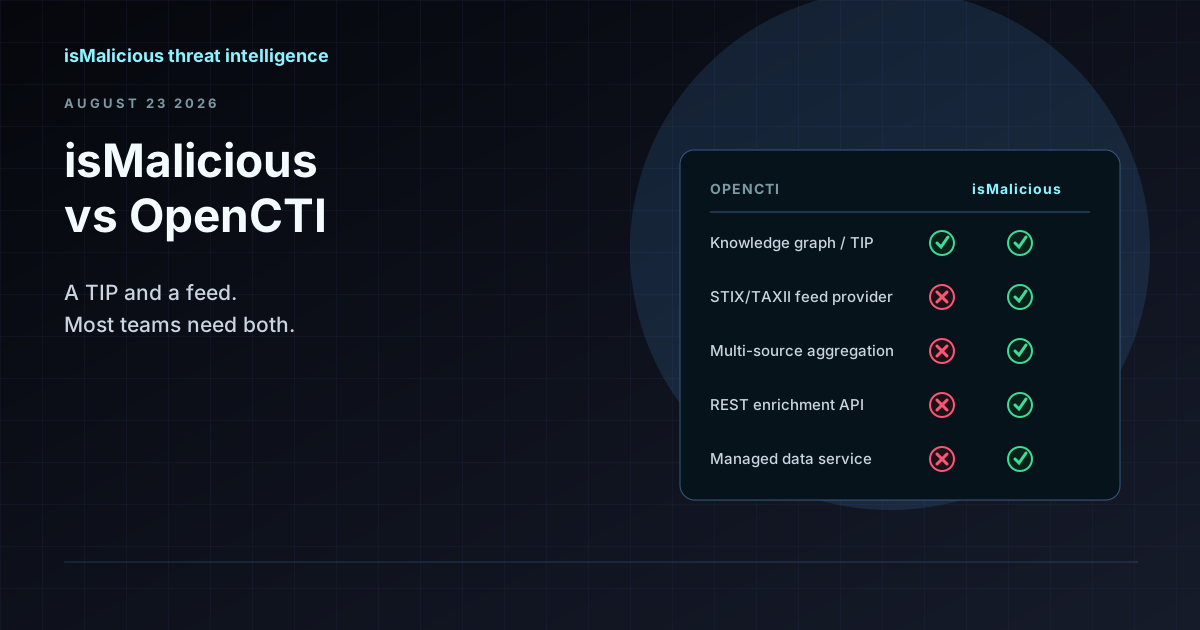
isMalicious vs OpenCTI : pourquoi c'est la mauvaise comparaison (et comment ils fonctionnent ensemble)
OpenCTI est une plateforme de renseignement sur les menaces et un graphe de connaissances. isMalicious est un fournisseur de données qui l'alimente. Les équipes qui cherchent une alternative à OpenCTI ont généralement besoin d'un flux, pas d'un TIP de remplacement.
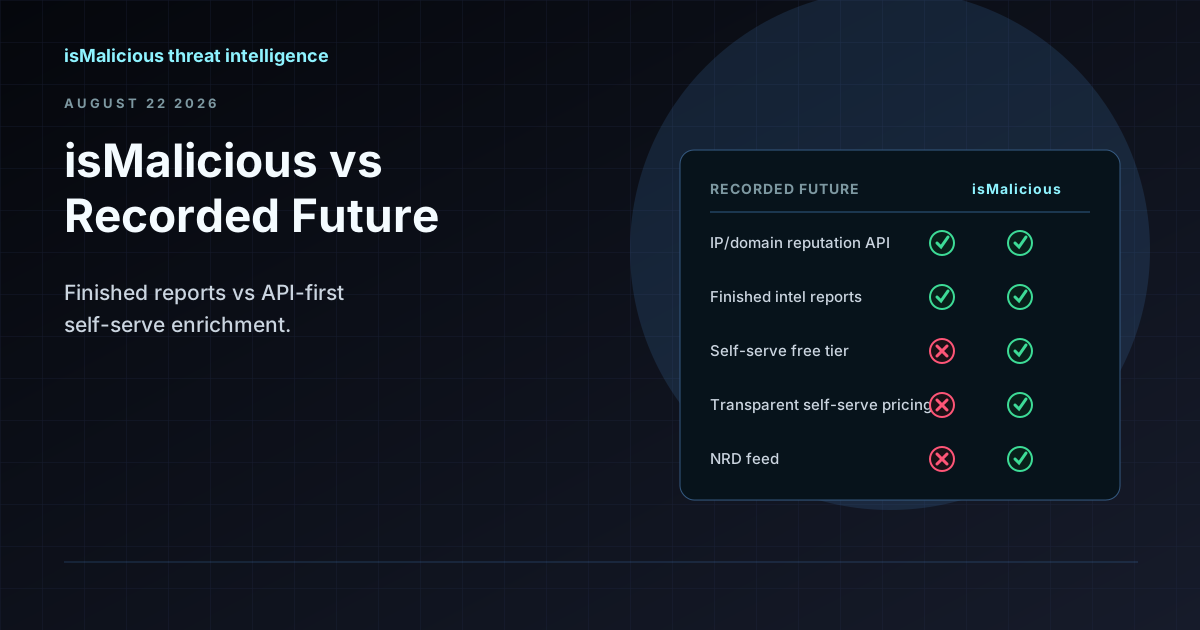
isMalicious vs Recorded Future : quand une API de données de menaces a plus de sens qu'un programme CTI d'entreprise
Recorded Future fournit du renseignement fini et un accompagnement analyste à l'échelle entreprise. isMalicious fournit de l'enrichissement en libre-service et des flux sans cycle commercial. Le bon choix dépend de votre besoin en rapports stratégiques ou en verdicts automatisés.
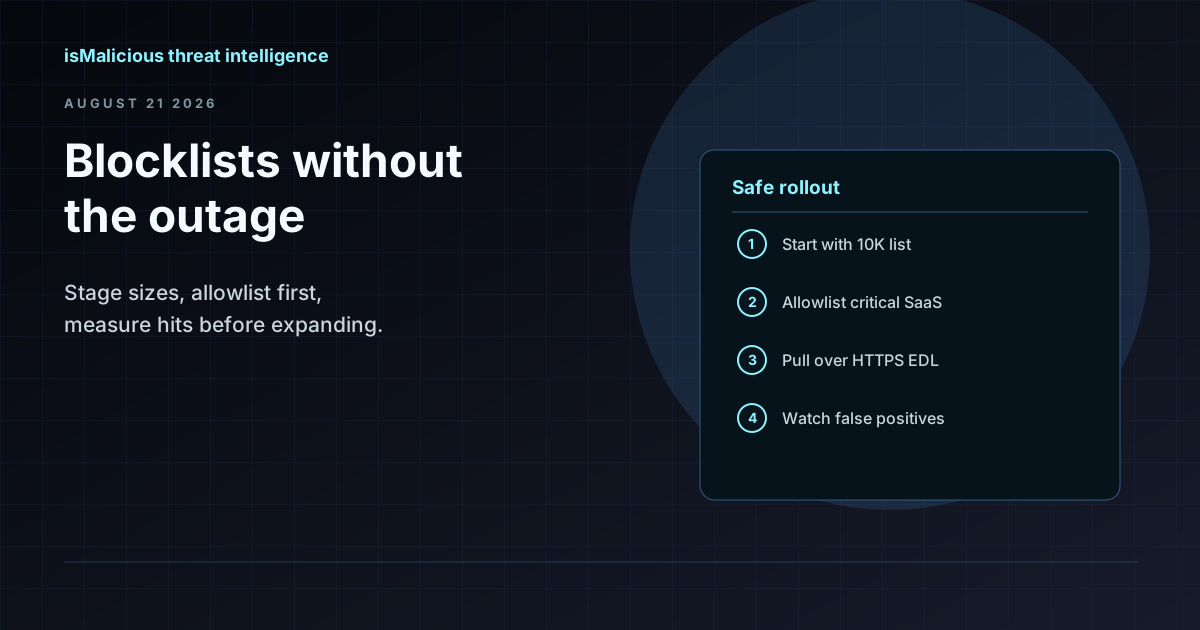
Automatisation des blocklists pare-feu : intégrer des flux IP et domaines sans panne
Les listes dynamiques externes peuvent bloquer malware et phishing en périphérie — ou casser la paie, le trafic CDN et les portails fournisseurs. Ce guide couvre le déploiement par étapes, les allowlists, fail-open vs fail-closed et la mesure des taux de hit pour les blocklists IP et domaines.
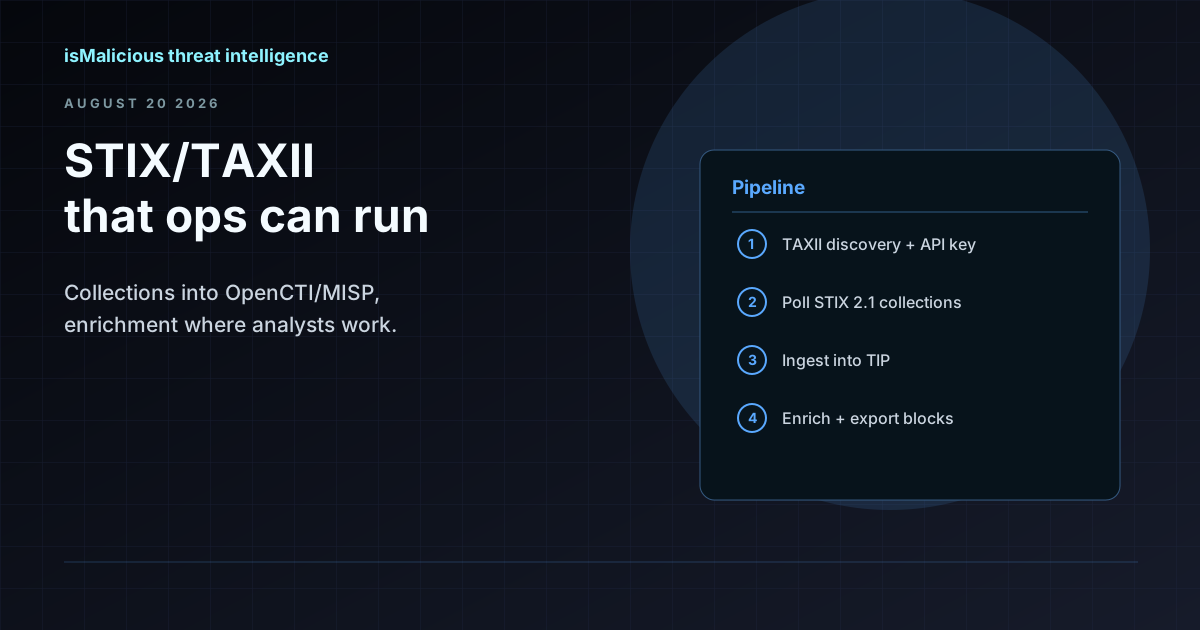
Flux STIX/TAXII : guide opérationnel pour OpenCTI, MISP et pipelines SIEM
Comment connecter des collections STIX 2.1 et TAXII 2.1 à OpenCTI, MISP ou votre SIEM — quoi interroger, comment gérer la confiance et le vieillissement des indicateurs, et où placer les API d'enrichissement face à l'ingestion de flux.
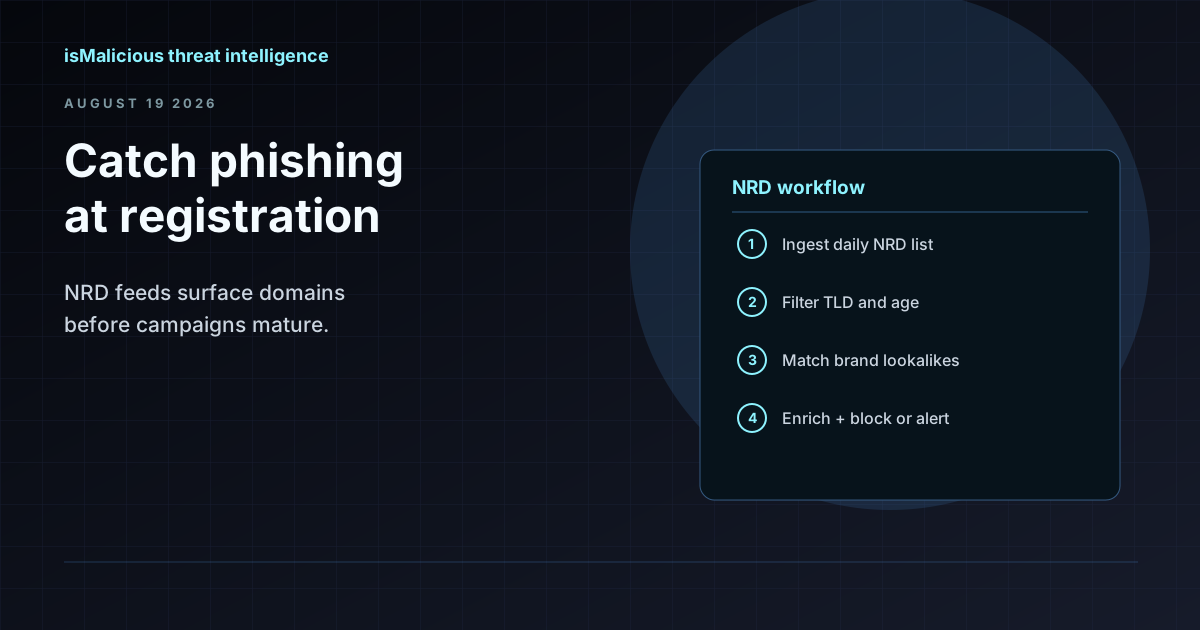
Comment utiliser un flux NRD pour détecter le phishing avant qu'il n'atteigne la boîte mail
Les domaines récemment enregistrés sont le point de départ de la plupart des campagnes de phishing. Ce guide détaille les workflows NRD pour la surveillance de marque, l'hygiène des passerelles mail et le triage SOC — sans transformer l'âge du domaine en règle de blocage brutale.
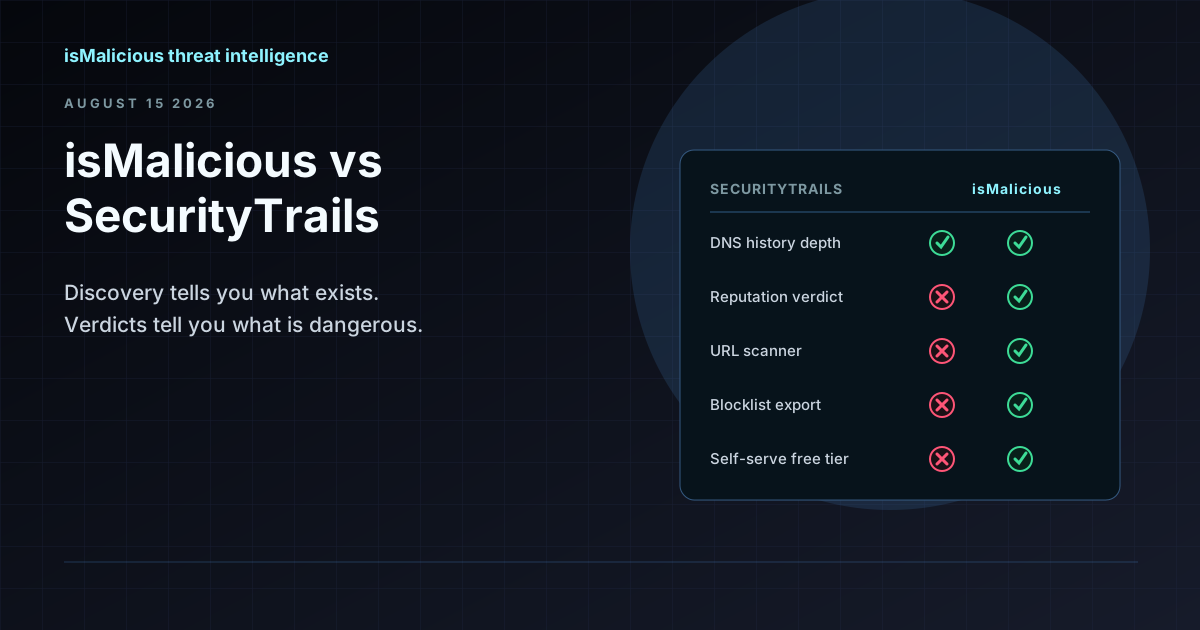
isMalicious vs SecurityTrails : données de découverte et verdicts de réputation ne sont pas le même produit
SecurityTrails vous dit ce qui existe — chaque sous-domaine, chaque enregistrement DNS historique. isMalicious vous dit ce qui est dangereux. La plupart des équipes qui cherchent une alternative à SecurityTrails veulent la seconde moitié.
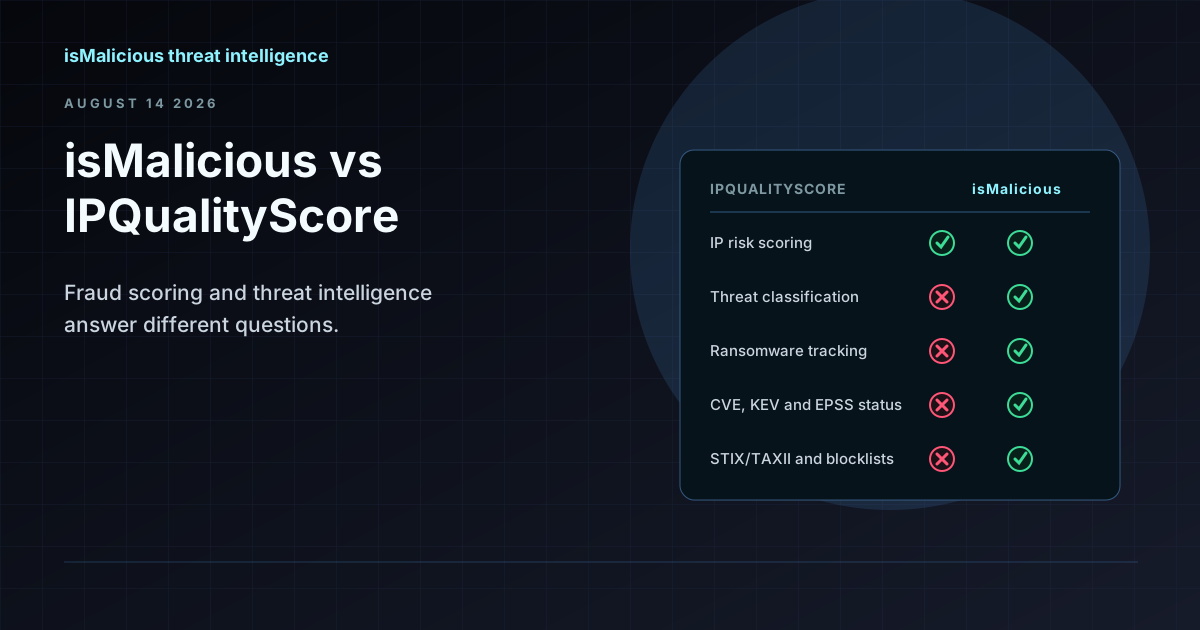
isMalicious vs IPQualityScore : scoring de fraude et threat intelligence sont deux métiers
IPQS détermine si une inscription est frauduleuse. isMalicious détermine si une infrastructure est malveillante. On les compare sans arrêt parce que les deux renvoient un nombre à propos d'une IP — et ils répondent à des questions différentes.
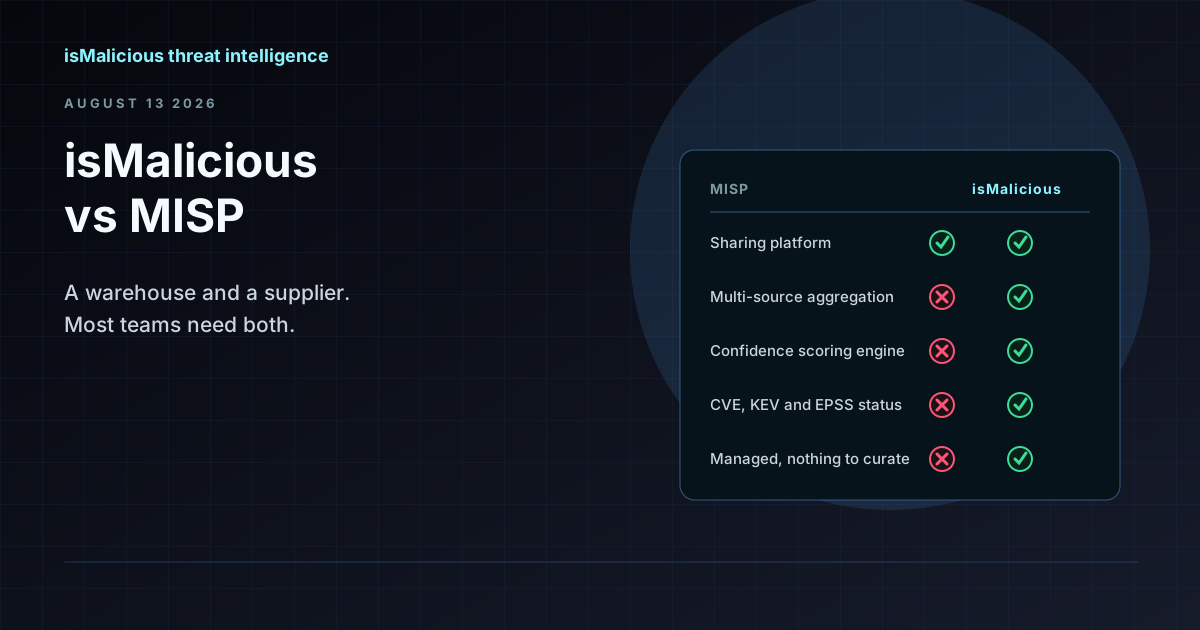
isMalicious vs MISP : pourquoi c'est la mauvaise comparaison (et quoi comparer à la place)
MISP est l'endroit où vous stockez et partagez des indicateurs. isMalicious est l'endroit d'où ils viennent. Les équipes qui cherchent une alternative à MISP cherchent en général un flux, pas une plateforme de remplacement.
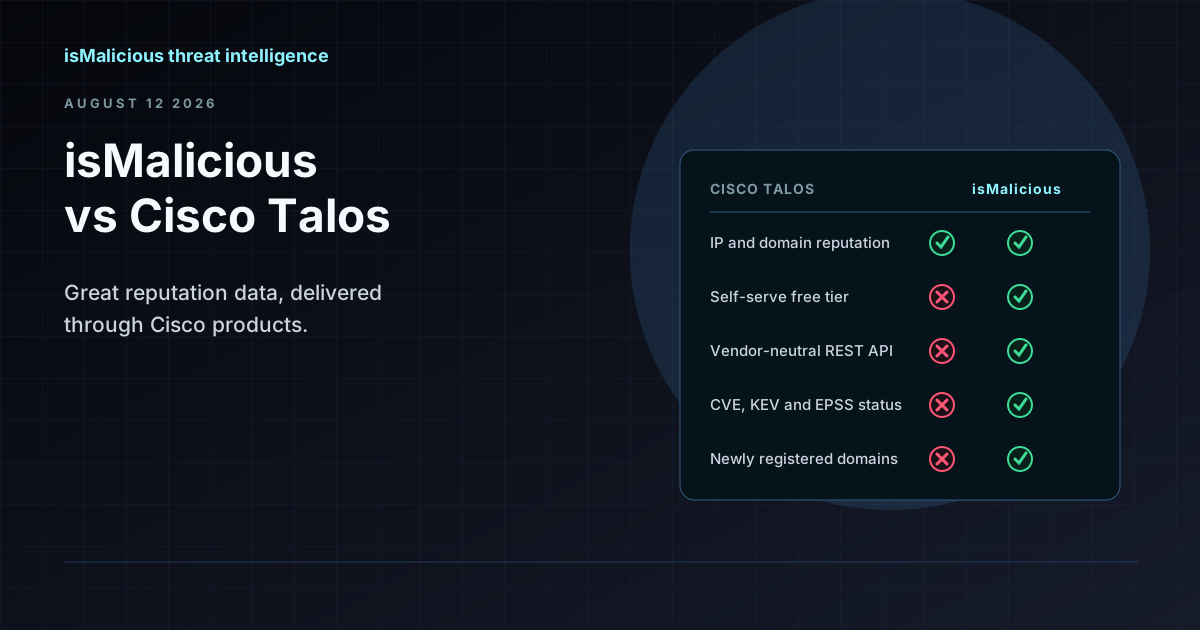
isMalicious vs Cisco Talos : la réputation IP et domaine hors de l'écosystème Cisco
La réputation Talos est excellente et elle vit à l'intérieur des produits Cisco. Si votre pile n'est pas Cisco, ou s'il vous faut une API plutôt qu'un formulaire web, c'est là que la comparaison commence.
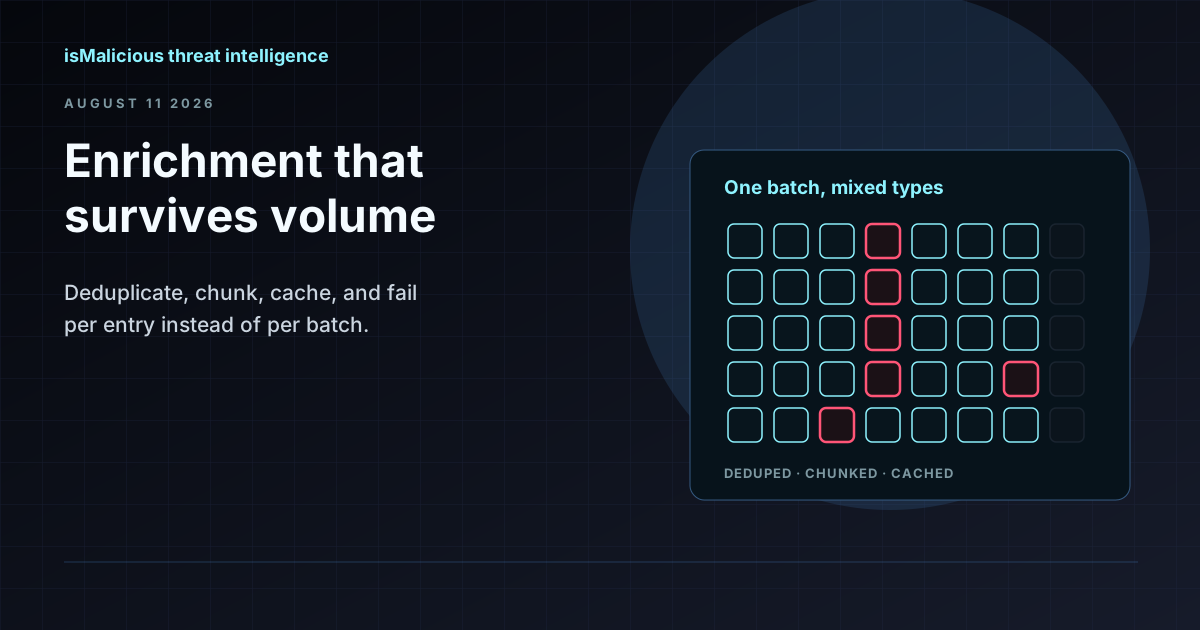
Recherche en masse d'IP et de domaines : concevoir un enrichissement qui tient au volume réel
Un seul incident produit des centaines d'indicateurs, et c'est sur les recherches indicateur par indicateur que le triage s'enlise. Voici comment bâtir un pipeline d'enrichissement par lots qui respecte les quotas, déduplique correctement et échoue proprement.
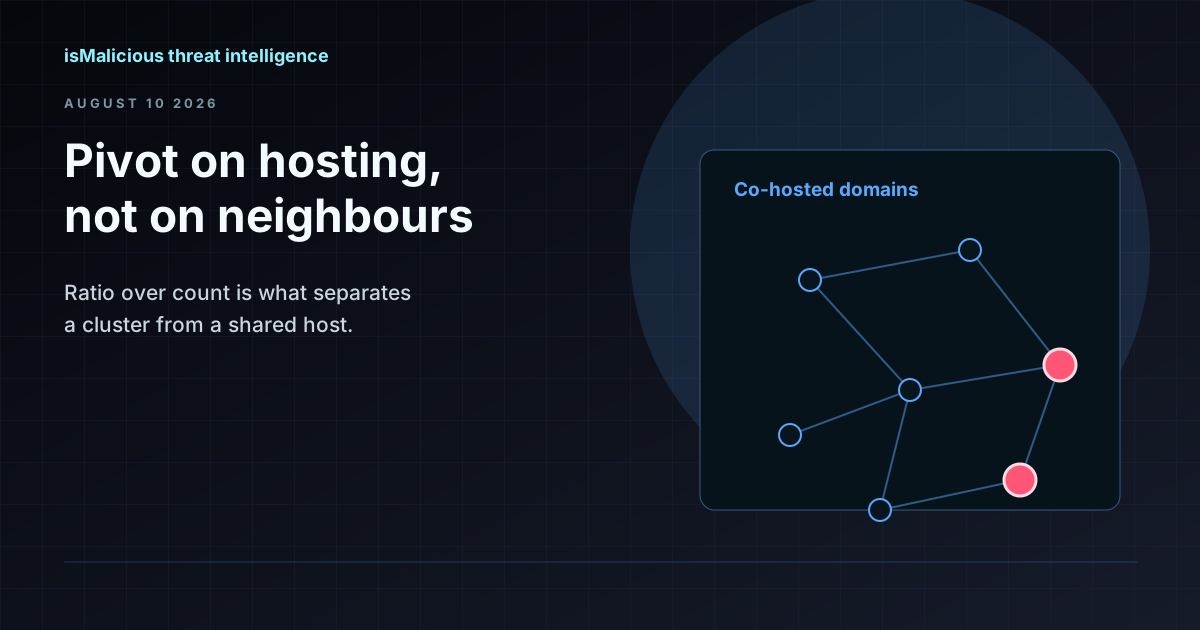
Recherche IP inverse : pivoter sur l'infrastructure sans se noyer dans l'hébergement partagé
Une recherche IP inverse transforme un indicateur en grappe — ou en mille voisins innocents. Voici comment faire la différence, et comment pivoter sur l'infrastructure d'hébergement sans générer de faux positifs.
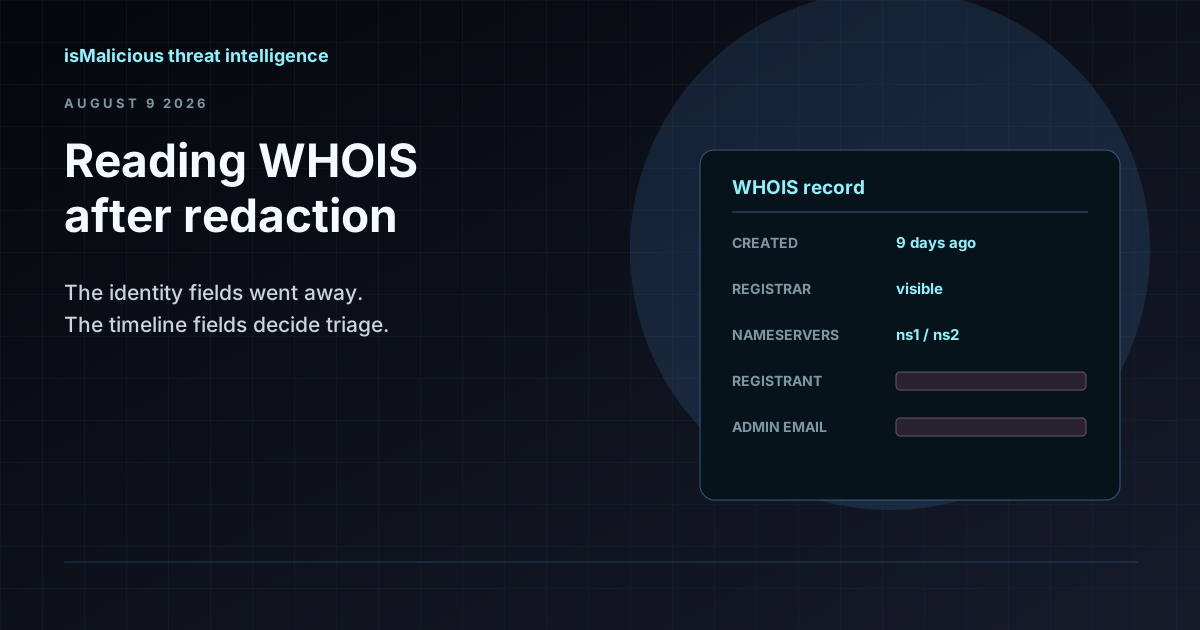
Recherche WHOIS pour les enquêtes de sécurité : lire un enregistrement après anonymisation
Les services de confidentialité ont retiré le nom du titulaire de la plupart des enregistrements WHOIS, mais les champs qui comptent pour le triage ont survécu. Voici ce qu'un enregistrement WHOIS dit encore à un analyste, et comment le lire.
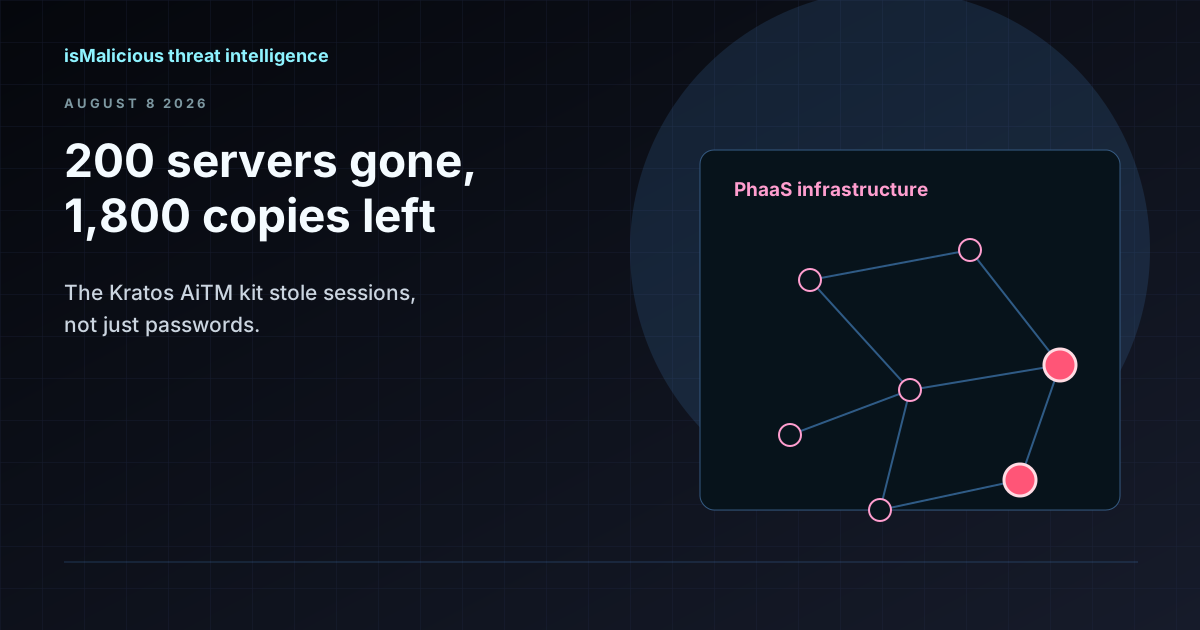
Démantèlement du kit de phishing Kratos : 200 serveurs saisis, 1 800 copies en circulation
Les polices allemande et américaine ont démantelé Kratos, le service de phishing AiTM derrière environ 15 000 campagnes Microsoft 365 par mois. L'infrastructure est hors ligne, le kit ne l'est pas. Voici ce qu'il faut rechercher maintenant.
Énumération de sous-domaines pour les équipes sécurité : découverte de la surface d'attaque et reconnaissance DNS
L'énumération de sous-domaines révèle les serveurs de dev oubliés, les enregistrements DNS orphelins et le shadow IT avant les attaquants. Comparaison des techniques passives et actives.
Détection du tunneling DNS : repérer les canaux C2 cachés dans le trafic DNS
Le tunneling DNS encapsule du C2 et de l’exfiltration dans des requêtes DNS anodines. Signaux, règles SIEM et enrichissement pour le détecter.
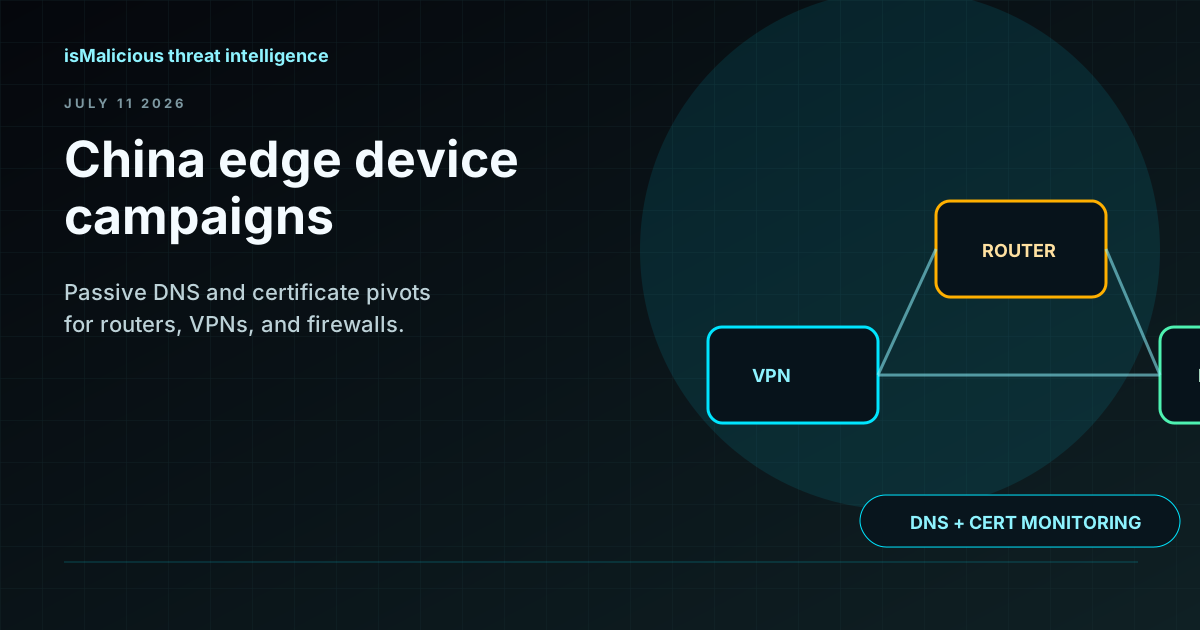
Campagnes chinoises contre les équipements de périphérie : DNS passif et certificats en alerte précoce
Les avertissements du renseignement néerlandais sur la capacité cyber chinoise confirment une priorité défensive concrète : surveiller les équipements de périphérie, les VPN, les routeurs, l'historique DNS et la réutilisation de certificats.
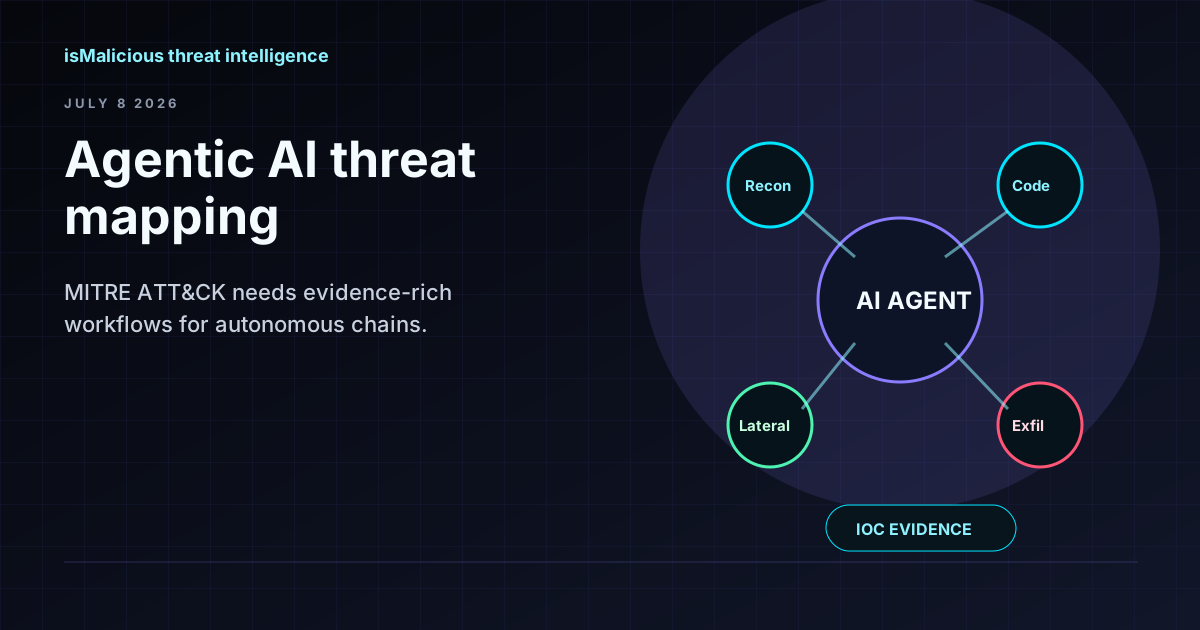
Cartographie des menaces liées à l'IA agentique : MITRE ATT&CK exige des workflows riches en preuves
Anthropic a cartographié l'activité cyber assistée par IA sur MITRE ATT&CK et identifié des angles morts autour de l'orchestration autonome. Les équipes SOC ont besoin de synthèses IA adossées aux preuves, pas de verdicts sans fondement.
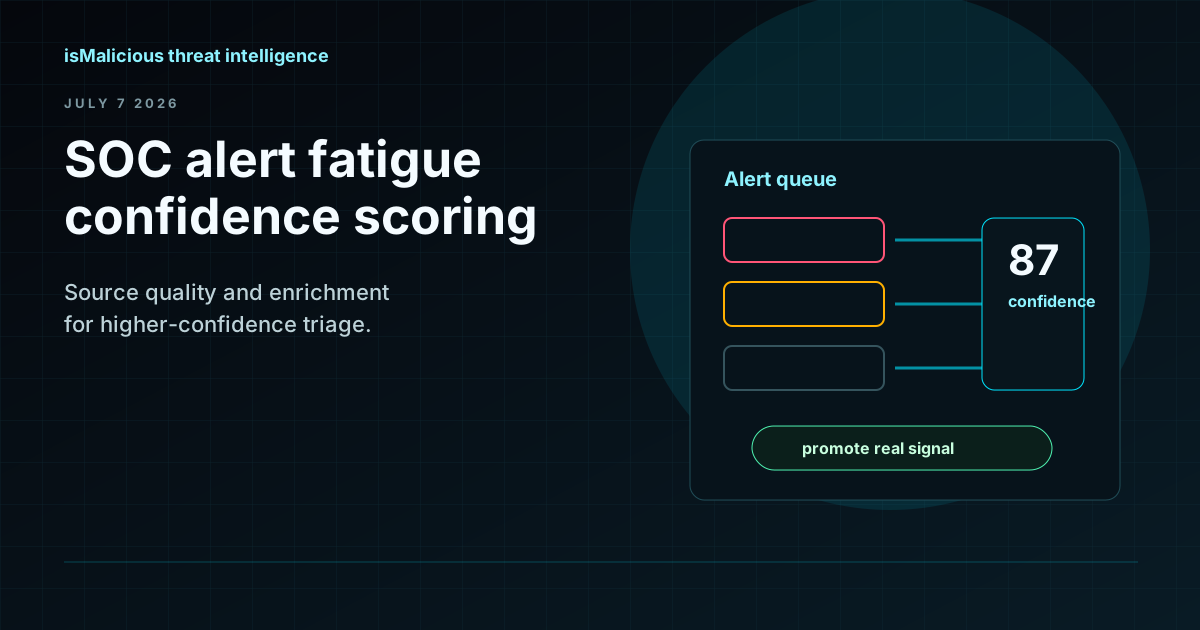
Fatigue des alertes SOC en juillet 2026 : le score de confiance vaut mieux que plus de bruit
Les travaux de Vectra AI montrent que la surcharge d'alertes reste un problème de résilience. Les SOC ont besoin de qualité des sources, de scores de confiance, d'enrichissement et de workflows SIEM qui suppriment le bruit sans masquer le risque.
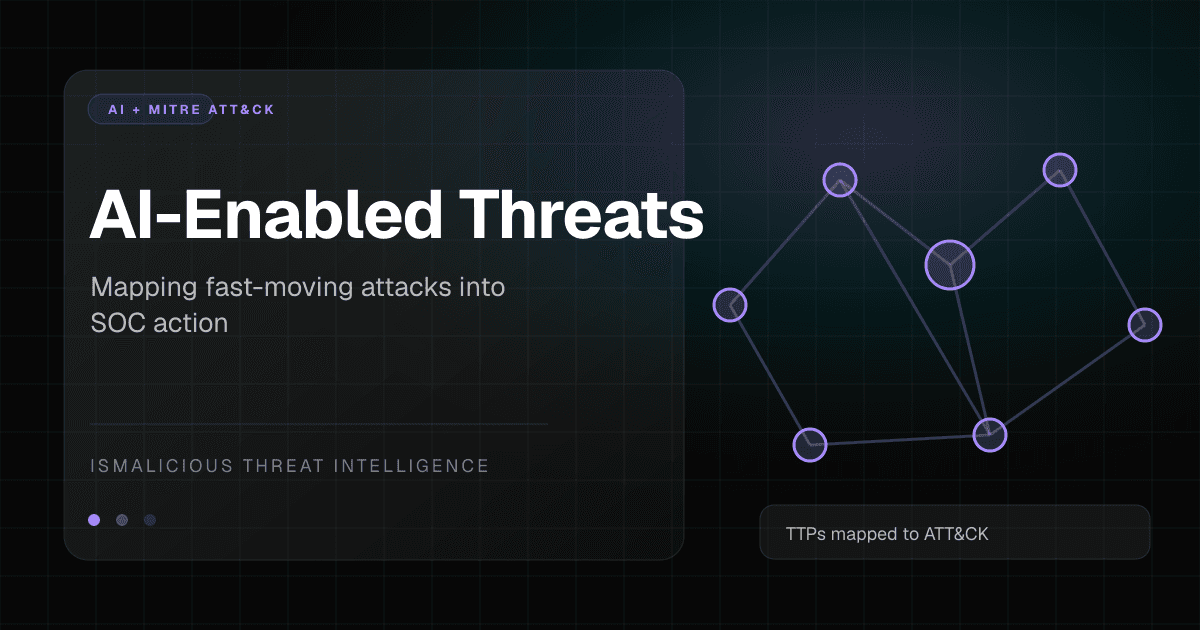
Cyberattaques assistées par IA et MITRE ATT&CK : transformer les nouvelles cartographies de menaces en actions SOC
Les menaces assistées par IA sont désormais traduites dans le langage ATT&CK, mais une cartographie n'a de valeur que si elle alimente l'enrichissement, la détection, le tri et les workflows de réponse.
La cyber-extorsion s'accompagne désormais de menaces physiques : ce que les équipes de réponse à incident doivent changer
Les incidents cyber ne se limitent plus toujours aux systèmes et aux données. Alors que les groupes d'extorsion y ajoutent des menaces physiques, les équipes de réponse ont besoin de renseignement ransomware, d'escalade sécurité des personnes, d'enrichissement d'IOC et de preuves exploitables par la direction.
Fatigue des alertes au SOC : comment la threat intelligence réduit les faux positifs sans masquer les vraies attaques
La fatigue des alertes n'est pas qu'un problème d'effectifs. Les équipes SOC ont besoin de meilleures preuves, de qualité de sources, de niveaux de confiance et de workflows d'enrichissement qui transforment des alertes bruyantes en décisions défendables.