DPRK Remote IT Worker Threat: Identity, Insider Risk, and Cloud Access Abuse
DPRK remote IT worker schemes blend fraud, identity deception, and insider access. Learn how hiring, endpoint, SaaS, and cloud controls can reduce the risk.
 IsMalicious Team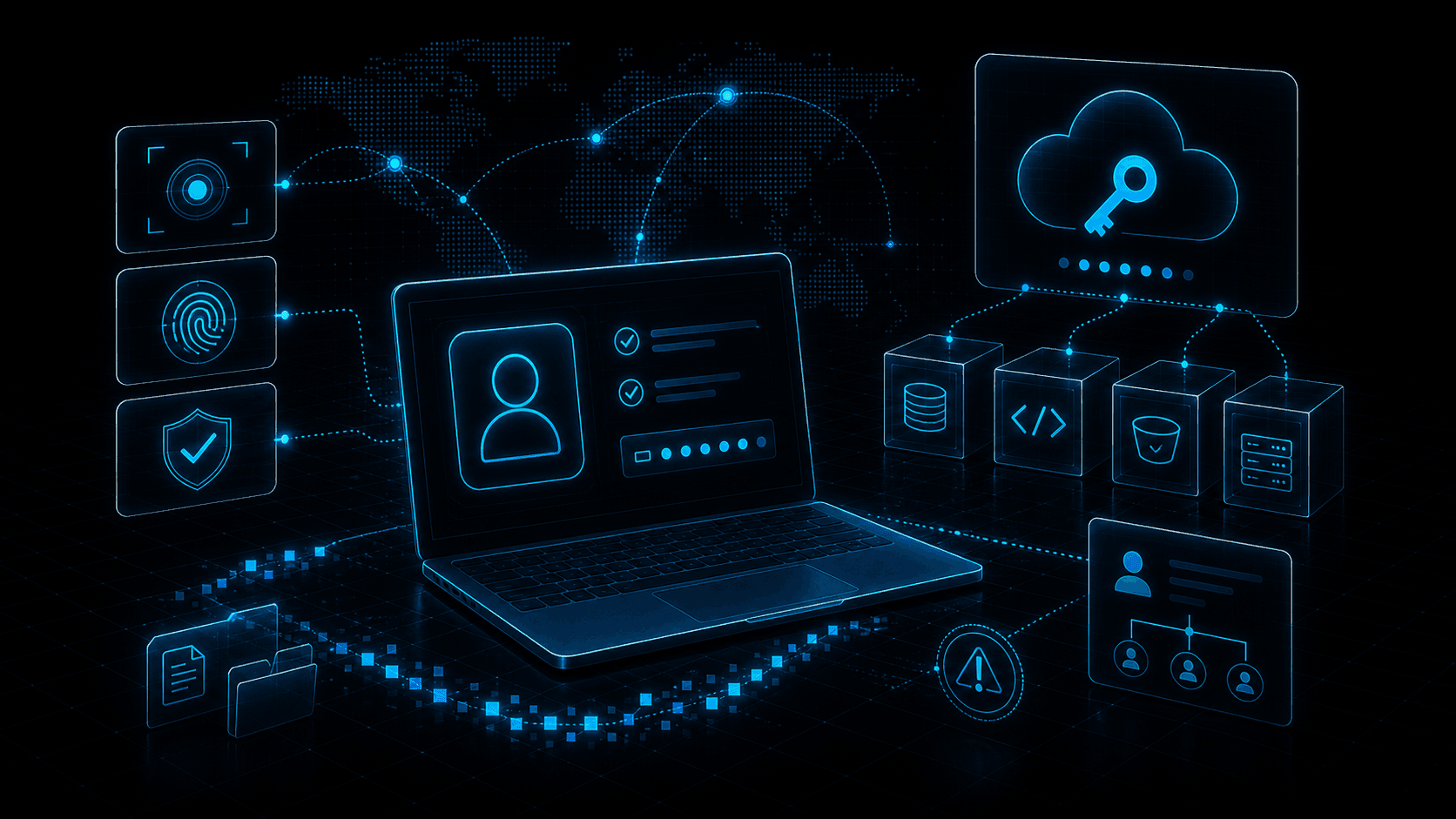
Short answer: DPRK remote IT worker risk is a security problem hiding inside normal hiring and access workflows. The person may receive legitimate credentials, but the identity may be false, the access may be externally directed, and the cloud environment may become exposed from the inside.
Remote work expanded the talent market. It also expanded the opportunity for identity deception. Public advisories from governments and security researchers have warned that North Korean-linked IT workers use fake identities, proxy arrangements, and remote work platforms to obtain jobs at technology companies. The goal may include revenue generation, sanctions evasion, data access, and sometimes follow-on cyber activity.
This is not a normal malware intrusion. There may be no exploit, no phishing page, and no suspicious attachment. The access can be granted by HR, IT, and engineering as part of onboarding. That makes the problem uncomfortable: the control failure may sit between hiring, identity proofing, endpoint management, finance, and cloud access governance.
Why This Threat Is Different
Most insider-risk programs focus on employees who become malicious or careless after legitimate hiring. DPRK remote IT worker schemes start with deception before access is granted. The organization believes it hired one person in one location. In reality, the work may be performed by someone else, routed through remote desktop infrastructure, or supported by a network of facilitators.
The access is real. The identity context is not.
This matters because many security controls trust HR and identity systems as the source of truth. If the identity record is wrong, downstream access decisions inherit that error.
Common Risk Patterns
Organizations should watch for combinations of signals, not single indicators:
- Candidate identity documents that do not align with interview behavior or payroll details.
- Repeated camera, audio, or connectivity issues during interviews.
- Requests to use unmanaged devices.
- Access through VPNs, proxies, or remote desktop chains.
- Device fingerprints shared across multiple accounts.
- Work hours inconsistent with claimed location.
- Logins from unexpected countries, ASNs, or cloud hosting providers.
- Rapid attempts to access code, secrets, or production systems beyond role needs.
- Resistance to device management or endpoint security installation.
None of these proves a DPRK-linked scheme alone. Together, they create investigative context.
The Cloud and SaaS Angle
Remote technical workers often need access to source code, CI/CD, cloud consoles, issue trackers, documentation, chat, package registries, and customer support tools. That access can be sensitive even without administrative privileges.
A worker with repository access may see secrets accidentally committed to code. A contractor with CI access may view environment variables. A developer with cloud read permissions may map infrastructure. A support engineer may access customer data. A SaaS admin may create tokens or integrations.
The threat is therefore not limited to payroll fraud. It can become supply chain, cloud, and data exposure risk.
Hiring and Identity Controls
Security should partner with HR, legal, and finance. Stronger identity verification is not only a compliance task; it protects access decisions.
Controls include:
- Verify identity through trusted providers.
- Validate work eligibility and location claims where legally appropriate.
- Review payroll routing and contractor intermediaries.
- Use live interview practices that reduce impersonation.
- Require managed devices for access to sensitive systems.
- Avoid granting broad access before verification is complete.
- Recheck identity for role changes or privileged access.
Be mindful of privacy, labor law, and anti-discrimination requirements. The goal is risk-based verification, not profiling.
Technical Access Controls
Treat remote technical roles as access paths. Apply least privilege, just-in-time elevation, and separation of duties. Do not grant production, secrets, CI/CD, and customer data access by default.
Require managed endpoints for source code and cloud access. Block access from unmanaged devices for sensitive systems. Use conditional access policies that consider device posture, location consistency, and network risk.
Monitor for remote desktop tooling and proxy infrastructure where policy forbids it. Enrich login IPs with reputation data to identify anonymizers, hosting providers, and suspicious networks.
For related identity themes, read Non-Human Identity Security, Session Token Theft, and Cloud Control Plane Attacks.
Detection and Response
Build an escalation path that includes HR, security, legal, and management. If an account appears suspicious, preserve logs before taking action. Review code access, downloads, cloud actions, ticket views, chat exports, and secret exposure. Determine whether the worker had access to production systems, customer data, or signing keys.
If deception is confirmed or strongly suspected, revoke access, recover devices where possible, rotate exposed credentials, review commits and CI activity, and assess customer or regulatory notification obligations.
Do not ignore related accounts. Facilitator networks may place multiple workers across teams or vendors. Search for shared device signals, payroll patterns, network infrastructure, and reused identity artifacts where lawful.
Cross-Functional Operating Model
This threat cannot be handled by the SOC alone. HR owns hiring workflows. Legal understands employment and privacy constraints. Finance sees payroll and contractor payment patterns. IT manages devices. Security monitors access. Engineering owns code and cloud privileges. A durable program connects all of them.
Define escalation triggers in advance. Examples include inconsistent identity verification, refusal to use managed devices, repeated access through anonymizers, remote desktop chains that violate policy, or attempts to access systems outside the role. Each trigger should specify who reviews the case and what evidence is required.
Keep investigations careful and documented. False accusations can harm employees and create legal exposure. Use objective signals, apply controls consistently, and involve legal and HR early. The goal is to verify identity and protect systems, not to make assumptions based on nationality or accent.
Vendor and Contractor Risk
Many remote IT worker schemes involve contractors, staffing agencies, or subcontracting chains. Organizations should know who actually performs the work and which entity employs them. Contracts should prohibit undisclosed subcontracting for sensitive roles and require security controls for devices, access, and identity verification.
Third-party access should be time-bound and scoped. Contractors should not receive standing broad access because it is administratively convenient. Use just-in-time access for production, require ticket-based justification, and review access at the end of each engagement.
Vendor portals, source control, CI/CD, and cloud accounts should log contractor activity with the same fidelity as employee activity. A contractor account can expose the same secrets as an employee account.
Technical Hunting Ideas
Hunt for accounts that show repeated access through hosting providers, residential proxy networks, VPNs, or remote desktop infrastructure inconsistent with their profile. Look for multiple identities sharing device fingerprints, browser fingerprints, SSH keys, phone numbers, recovery emails, or network paths where lawful and available.
Review access to code and secrets. A suspicious account that only viewed onboarding documents is a different risk from one that cloned many repositories, accessed CI variables, viewed cloud dashboards, or downloaded customer exports.
Monitor work pattern anomalies carefully. Time zones, login times, and network paths can be useful, but they are not proof alone. Combine them with identity verification, device posture, access behavior, and business context.
Onboarding Guardrails
Least privilege should begin on day one. New hires and contractors should start with minimal access and gain additional privileges only after verification, training, and role need. Delay access to production, secrets, signing keys, and broad customer data until the person and device are fully validated.
Require managed devices for engineering work. A remote worker who cannot use a managed endpoint should not receive access to sensitive repositories or cloud consoles. Device management gives security teams patch status, malware visibility, disk encryption, and the ability to revoke access.
Use separate accounts for administration. If a worker needs elevated access, require stronger authentication, session recording where appropriate, approvals, and narrow time windows.
Metrics for Leadership
Useful metrics include percentage of remote technical workers on managed devices, percentage of contractor access reviewed monthly, number of accounts with access beyond role need, number of logins from anonymizing infrastructure, time to revoke access after termination, and number of privileged actions requiring approval.
These metrics make the program concrete. The goal is not to eliminate remote work. The goal is to make access reflect verified identity, managed devices, and real business need.
60-Day Program Improvements
In the first 30 days, review access for remote contractors and recently onboarded technical workers. Confirm managed device enrollment, role-appropriate permissions, source control access, cloud permissions, and SaaS groups. Remove access that is not required.
In the next 30 days, improve onboarding gates. Require device management before source code access, separate production access from general engineering access, and add extra review for roles touching secrets, CI/CD, customer data, or cloud administration.
At the same time, tune detections for anonymizing infrastructure, impossible travel, remote desktop patterns, and unusual repository or SaaS access. These detections should be reviewed with HR and legal so the process is consistent and fair.
Incident Scoping Checklist
If a suspicious worker account is confirmed, review repositories cloned, branches pushed, packages published, secrets viewed, tickets accessed, cloud APIs called, chat exports downloaded, and customer records opened. Rotate credentials that were visible to the account. Inspect commits for backdoors or credential exposure.
Also review adjacent identities. A scheme may involve multiple accounts, shared devices, or common infrastructure. Search carefully and lawfully for overlaps in network paths, payroll details, devices, and recovery methods.
Communication Principles
These cases are sensitive. Communicate on a need-to-know basis, preserve evidence, and avoid speculative language. Internally, frame the issue as identity verification and access protection. Externally, coordinate with legal and leadership before statements, especially if customer data or regulated systems were accessible.
The best communication is backed by facts: what access existed, what activity occurred, what data was touched, what credentials were rotated, and what controls changed afterward.
Detection Content to Build
Create detections that combine identity, device, and network context. A remote worker using a VPN is not automatically malicious. A new contractor using unmanaged devices, remote desktop hops, inconsistent geography, broad repository access, and suspicious infrastructure is different.
Useful alerts include first access to sensitive repositories, bulk clone activity, access to secrets or CI variables, cloud console access from anonymizing infrastructure, and privileged actions outside the worker's normal role. Review these alerts with business context so security does not overreact to normal remote work.
Long-Term Control
The durable fix is access minimization. If every new worker receives broad source, SaaS, and cloud access on day one, identity deception has immediate impact. If access is staged, verified, and monitored, the same deception has a smaller blast radius and more chances for detection.
Threat Intelligence Takeaway
DPRK remote IT worker risk shows how threat intelligence must extend beyond malware indicators. Identity claims, remote access patterns, cloud audit logs, and infrastructure reputation all matter.
isMalicious helps enrich the IPs, domains, and hosting infrastructure seen in remote access and SaaS logs. When a supposedly local worker consistently appears through suspicious infrastructure, reputation context can help security teams ask better questions before access becomes impact.
Frequently asked questions
- What is the DPRK remote IT worker threat?
- It refers to schemes where North Korean-linked workers use false or borrowed identities to obtain remote technology jobs, earn revenue, and sometimes gain access to sensitive systems.
- Is this an insider threat or a cyber intrusion?
- It is both. The worker may receive legitimate access through hiring, but the identity deception, possible external control, and access abuse make it a security and insider-risk issue.
- What controls help reduce remote IT worker fraud?
- Use strong identity verification, device management, geolocation consistency checks, payroll and contractor review, access minimization, continuous monitoring, and separation of duties.
- What technical signals should teams monitor?
- Watch for VPN or proxy use, remote desktop hops, impossible travel, device sharing, unusual SaaS access, access from unexpected countries or ASNs, and data downloads outside normal role needs.
Related articles
 Threat Intelligence PIRs: A Workbook and Collection Plan
Turn threat intelligence requests into useful PIRs with a decision worksheet, collection plan, evidence requirements, ownership, and practical stopping rules.
 OAuth Consent Phishing: Detecting Malicious App Grants Before Data Exfiltration
OAuth consent phishing tricks users into granting access instead of giving up passwords. Learn how malicious app grants work, which permissions matter, and how to detect abuse early.
 Threat Intelligence Risk Scoring: How to Calibrate Reputation, Reduce False Positives, and Defend Your Decisions
A noisy score is worse than no score. Learn what makes a reputation model trustworthy, how to combine multi-source evidence, and how to communicate uncertainty to your SOC and your executives.
Protect Your Infrastructure
Check any IP or domain against our threat intelligence database with indexed records.
Try the IP / Domain Checker