Threat Intelligence Risk Scoring: How to Calibrate Reputation, Reduce False Positives, and Defend Your Decisions
A noisy score is worse than no score. Learn what makes a reputation model trustworthy, how to combine multi-source evidence, and how to communicate uncertainty to your SOC and your executives.
 IsMalicious Team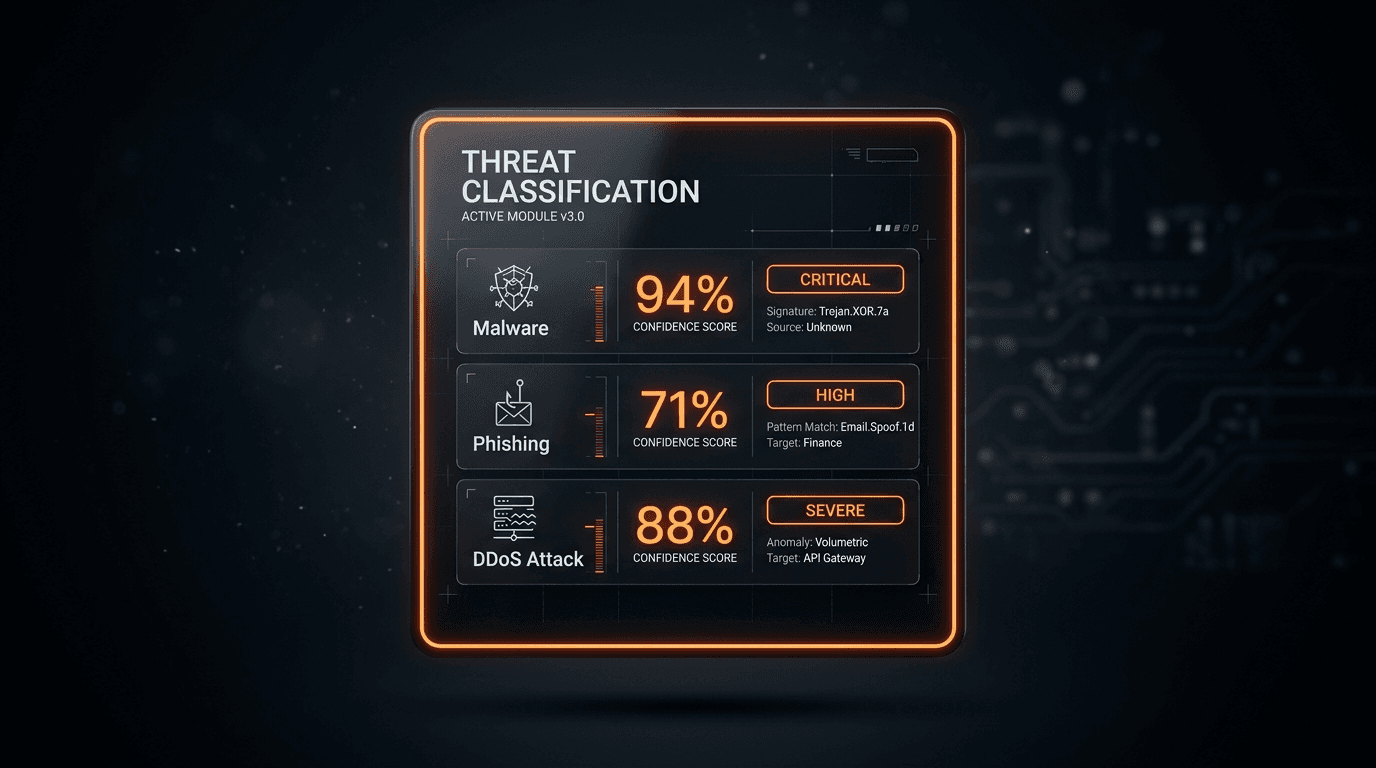
Short answer: A risk score is only as good as the provenance, freshness, and action semantics behind it. If you cannot tell a product manager why a user was blocked in two sentences, your score is not ready for customer-facing use.
What Good Scoring Actually Is
A reputation score is a summary of evidence, not a magical oracle. That evidence usually blends:
- List membership and category labels
- Prevalence and diversity of independent sightings
- Time (first seen, last seen, age of a domain) — see domain age as a risk indicator
- Context (email auth for domains, DMARC, SPF, and DKIM in practice when phishing is a concern)
- Environment fit (is this a cloud egress IP in a cloud-heavy business?)
If your vendor prints a 0-100 number without exposing sub-signals, ask harder questions. You are buying auditability as much as coverage.
The False Positive Machine: How Teams Accidentally Build One
- Eternal blocks of ephemeral cloud IPs
- Treating a hash as permanently evil even after vendor clean-up (hash intelligence intersects with file hash analysis basics)
- Punitive geo rules dressed as "security" (they create exceptions debt)
- "More detections" KPIs that reward noisy automation
A healthier perspective appears in operational threat intelligence: IOC prioritization: prioritize the work that changes outcomes, not the work that creates tickets.
A Practical Scoring Ladder (What to Use Where)
- Binary allow/deny only on narrow surfaces (e.g., admin panel IP allowlist) where exceptions are few
- Three-band decisions for public apps: allow / soft challenge (MFA) / block
- Continuous scores in analytics and model training—not usually for raw human triage, unless the UI is excellent
Tie the ladder to your fraud vs security posture, not one-size-fits all. A payments flow is not a corporate wiki.
Combining Sources Without Double-Counting
The classic mistake is to treat the same blocklist under three brands as three independent points of evidence. Better vendors dedupe, weight by source quality, and decay stale signals.
If you are building your own IOC enrichment pipeline, your internal dedup layer is the difference between a sharp score and a fog machine.
Communicating Uncertainty: Words That Do Not Mislead Executives
Executives do not need MITRE numbers in a weekly email—they need precision and recall in human language:
- "We block obvious phishing domains automatically; for edge cases, we require MFA" — better than "AI-enabled defense"
- "We had x false positives this week, mostly due to a partner VPN" — better than a vanity risk score
For vocabulary alignment on threats vs vulnerabilities, the vulnerability management lifecycle in 2026 helps separate "patches" from "threats" in the same room.
Red-Team the Score, Not the Marketing Page
- Take your own office VPN IP through the pipeline. If it is "critical," fix priors
- Take a newly created test domain you control. You should be able to predict behavior
- Take a known-good CDN asset your company depends on. A scare here is a production outage waiting to happen
This is the same kind of "calibration" discipline we apply when comparing EPSS, CVSS, and KEV for patch priority on the vulnerability side: numbers require context.
Where isMalicious Sits in the Scoring Ecosystem
isMalicious aims to be a practical aggregation layer for malicious IP and domain reputation in modern stacks with a bias toward speed and operational use in APIs, not a self-congratulatory console.
If you are still deciding between vendors, start with the threat API comparison for 2026, then test your own false positive budget against live traffic in shadow mode.
Checklist: Is Your Scoring Defensible?
- The score maps to a named action (allow, challenge, open ticket, block)
- Analysts can see sub-reasons in under 5 seconds
- Stale data is aged out and visible
- You track overrides and use them in calibration
- Shared infrastructure has ladder rules, not a hammer
Bottom Line
A reputation score is a contract with the rest of the business: we will be precise enough to protect you without breaking you. If you would not bet your Friday night on-call shift on a rule, do not bet your customers on it either.
Validate observables in practice with the isMalicious IP / domain checker and see whether the returned context matches the story in your logs.
Scoring in Practice: A Before/After “Sanity Test”
Run this monthly with a random sample of blocked and challenged traffic:
- 5 blocks you are proud of (clear malware, clear phishing) — the score should have obvious reasons.
- 5 “close calls” where customers complained — the score should still be explainable, or the rule is wrong.
- 5 random allows in high-sensitivity products — you are looking for the silent misses that hide in “low score”.
If your vendor cannot help you do this in an hour, you do not have a security partnership—you have a dashboard subscription.
How to Talk About Confidence Without Faking Precision
A score is not a probability in the actuarial sense. It is a heuristic index. Honest phrasing for executives:
- “We estimate X% of events in this category are true positives, based on last quarter’s overrule data.”
- “This indicator is reported widely but stale; we treat it as a weak signal until corroborated.”
- “We combine 3 independent signal classes; two agree on a block for customer-impacting actions.”
That is more credible than a banner that says “AI risk engine” in Arial.
What Mature Programs Store for Audit
- The version of the feed or API response model (even if that is a date you recorded)
- The inputs the rule saw (not just the output)
- The analyst’s override reason in a pick-list (free text is where consistency goes to die)
- A periodic re-open of top false positives to tune thresholds—especially if you are also juggling vulnerability scoring like EPSS, CVSS, and KEV in the same program
FAQ
Frequently asked questions
What is a false positive in IP or domain reputation?
A false positive is when a reputation system or policy labels benign infrastructure as malicious, causing unnecessary blocks, account friction, or wasted analyst time. Common causes include stale lists, over-broad categories, and shared cloud or CDN infrastructure.
Are more sources always better?
No. Many low-quality or duplicated feeds can inflate confidence without increasing accuracy. The goal is source diversity, transparent weights, and visible freshness, not a bigger number in a dashboard.
How should I present scores to L1 analysts?
Use a small set of action bands (allow, review, block) and always show the top contributing reasons: list hits, recency, category, and confidence. A single opaque number is not a decision.
What is a healthy feedback loop?
Record analyst overrides, false positives, and false negatives with the observable, context, and final verdict. Re-run periodic calibration on rules and on vendor thresholds, especially after network architecture changes (VPN, cloud migration).
How does isMalicious think about this problem?
isMalicious aggregates many curated sources with an eye toward high-speed, explainable context for security teams that need to act at WAF, SOAR, and IR speed—not a single mystical score with no provenance.
Related articles
 AI-Enabled Cyberattacks and MITRE ATT&CK: Turning New Threat Maps Into SOC Action
AI-enabled threats are being mapped into ATT&CK language, but mapping is only useful when it drives enrichment, detection, triage, and response workflows.
 SOC Alert Fatigue: How Threat Intelligence Reduces False Positives Without Hiding Real Attacks
Alert fatigue is not a staffing problem alone. SOC teams need better evidence, source quality, confidence bands, and enrichment workflows that turn noisy alerts into defensible decisions.
 ASN Reputation for Threat Intelligence: How Autonomous System Intelligence Improves Prioritization and Hunt Programs
An IP address is a snapshot; an autonomous system (ASN) is a neighborhood. Learn how to use ASN context safely for triage, fraud, and security operations—without mistaking a giant cloud for a monolithic "bad host".
Check any IP or domain
See what our indexed threat intelligence records say about it.
Try the IP / Domain Checker