Oracle PeopleSoft Zero-Day: CVE-2026-35273 Shows Why CVE Watch Needs IOC Enrichment
The PeopleSoft CVE-2026-35273 exploitation reports show how vulnerability response, ransomware intelligence, IP enrichment, and incident response must work together.
 IsMalicious Team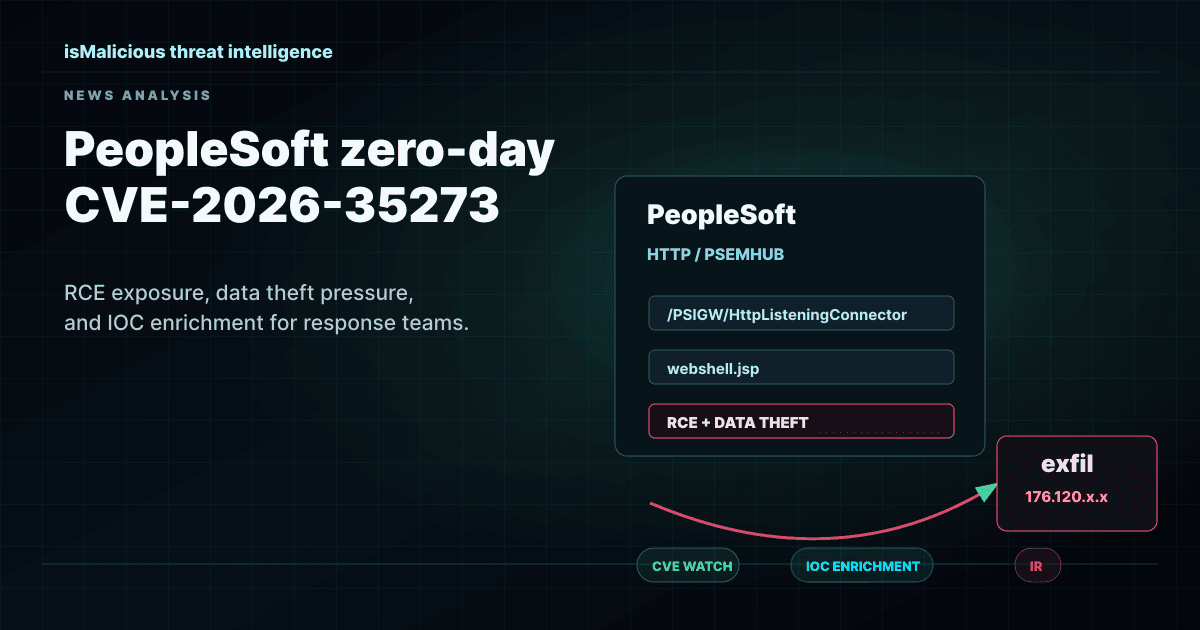
Oracle PeopleSoft moved sharply into the June 2026 threat conversation after Oracle published a security alert for CVE-2026-35273. Oracle described the issue as a PeopleSoft PeopleTools vulnerability that is remotely exploitable without authentication and can result in remote code execution. The NVD entry lists affected PeopleTools versions 8.61 and 8.62 and gives the issue a CVSS 3.1 base score of 9.8.
The news became more urgent because exploitation reporting quickly moved beyond "patch this software." BleepingComputer reported that the flaw was exploited in data theft attacks tied to ransom notes signed by ShinyHunters, and Rapid7 noted that Oracle released an out-of-band patch on June 10, 2026. This is the kind of case where vulnerability management, threat intelligence, and incident response have to work as one motion.
For isMalicious users, the lesson is clear: CVE Watch is not just a patch tracker. It should be connected to IOC enrichment, external exposure, ransomware intelligence, and SOC triage. A critical CVE on an internet-facing enterprise platform becomes much more serious when public reporting includes active exploitation, data theft, webshells, suspicious paths, and exfiltration infrastructure.
CVE Severity Is Only The First Signal
CVSS 9.8 gets attention, but a high score alone does not tell a team what to do first. Security teams need to know:
- whether the product exists in their environment;
- whether the affected component is exposed;
- whether exploitation is confirmed;
- whether a patch or mitigation exists;
- whether there are known post-exploitation indicators;
- whether data theft or extortion is part of the observed campaign;
- whether compensating controls can reduce risk before patching.
That is why CVE prioritization has to include context. CVE-2026-35273 is not just a database row. It is a business-critical application risk. PeopleSoft often sits near identity data, HR records, student records, payroll data, public-sector information, or enterprise workflows. When that kind of platform is exposed, response urgency changes.
The Extortion Angle Changes The Response
If a vulnerability is merely patchable, the workflow is patch, validate, and close. If exploitation may include data theft, the workflow is broader:
- Confirm whether vulnerable PeopleSoft versions are present.
- Identify internet-facing and partner-facing exposure.
- Apply Oracle's update or mitigation guidance.
- Review logs for suspicious requests and exploitation paths.
- Search for webshells, staging folders, and unexpected scripts.
- Enrich suspicious IPs, domains, URLs, and hashes.
- Investigate outbound transfer, remote access tooling, and credential use.
- Prepare legal, privacy, executive, and communications paths if data exposure is plausible.
That is why this belongs in incident response, not just ticketing. A PeopleSoft server that was vulnerable during the exploitation window should not be treated as "done" the moment the patch is applied. Patching closes one door. Investigation decides whether someone already walked through it.
What To Enrich During A PeopleSoft Investigation
The most useful enrichment targets are usually not exotic. They are the basic observables analysts already collect:
- source IP addresses hitting unusual PeopleSoft paths;
- suspicious destination IPs used for outbound connections;
- domains or URLs found in scripts, logs, command lines, or webshells;
- file hashes for JSP files, tools, staged archives, and binaries;
- hostnames from DNS queries before and after suspicious web requests;
- IPs tied to remote access tools or unauthorized admin activity.
The isMalicious IP threat intelligence, domain intelligence, URL scanner, and file hash lookup pages give analysts a fast path from observable to evidence. For automated response, the API docs show how to connect enrichment to SIEM and SOAR workflows.
This is especially important for extortion cases. When an attacker threatens disclosure, the organization needs a defensible timeline and evidence chain. Which IPs touched the host? Which files changed? Which domains received outbound traffic? Which indicators are known malicious, suspicious, or newly observed? Which sources support the verdict?
CVE Watch Should Trigger Hunting, Not Just Patching
A strong CVE Watch workflow should do more than list vulnerabilities. It should map CVEs to owned assets, exploit signals, and response actions. For a case like CVE-2026-35273, useful triggers include:
- "PeopleSoft is in our perimeter";
- "the affected version appears in an asset inventory";
- "the CVE has public exploitation reporting";
- "vendor mitigation is available";
- "CISA KEV or other exploitation evidence appears";
- "related IOCs are present in logs";
- "outbound traffic matches suspicious infrastructure."
This is the difference between a vulnerability feed and operational vulnerability intelligence. The feed says a CVE exists. The workflow says who owns the risk, how exposed it is, what evidence exists, and what happens next.
Ransomware Intelligence Is Not Only Ransomware Groups
Many teams think of ransomware intelligence as a list of groups and leak sites. That is too narrow. Data theft extortion can begin with a critical CVE, move through webshell or remote access tooling, exfiltrate data, and then become a legal and executive problem before encryption appears.
For PeopleSoft-style incidents, useful ransomware and extortion intelligence includes:
- actor claims and confidence level;
- known targeting patterns by sector;
- infrastructure used in current campaigns;
- TTPs for webshells, remote access, and exfiltration;
- previous leak-site behavior;
- known ransom-note language;
- victimology and industry concentration.
The goal is not to attribute too early. The goal is to shape the response. If public reporting connects exploitation to extortion claims, the incident commander should assume communications, evidence preservation, and data-impact analysis may be needed.
SIEM And SOAR Integration: Do Not Trap Evidence In Spreadsheets
During a fast-moving CVE, analysts often create ad hoc spreadsheets of IOCs. That can help for a few hours, but it does not scale. Indicators should flow into the systems that detect, block, and report.
Use the isMalicious threat intelligence API to enrich observables from:
- WAF and reverse proxy logs;
- EDR detections;
- DNS logs;
- firewall egress logs;
- PeopleSoft web server logs;
- vulnerability scanner exports;
- incident response case notes.
Then connect those verdicts into SIEM enrichment and SOC workflows. The analyst should see whether an IP or domain has known abuse history without switching between ten browser tabs. The incident commander should see which indicators were checked, when, and with what confidence.
Executive Message: This Is Exposure Plus Evidence
Leaders do not need a full CVE lecture. They need a clean framing:
- The platform is business-critical.
- The vulnerability is critical and unauthenticated.
- Public reporting describes active exploitation and data theft.
- The patch or mitigation is available.
- Our team is checking exposure, applying remediation, and hunting for evidence.
- If evidence suggests data access, privacy and communications workflows will begin.
That framing prevents the two common mistakes: minimizing an active exploitation report as "just another patch," or escalating without evidence. CVE Watch plus IOC enrichment gives the organization a way to stay factual under pressure.
Conclusion
CVE-2026-35273 is a reminder that exploited enterprise software flaws are not only vulnerability tickets. They can become data-theft, extortion, and executive-response events. The practical response is to connect CVE Watch with exposure mapping, IOC enrichment, ransomware intelligence, and SIEM/SOAR automation. Patch quickly, but do not stop there. Hunt, enrich, document, and close the loop with evidence.
Frequently asked questions
- What is CVE-2026-35273?
- CVE-2026-35273 is a critical Oracle PeopleSoft PeopleTools vulnerability reported as remotely exploitable without authentication and capable of leading to takeover of affected PeopleTools systems.
- Why does this PeopleSoft issue matter to ransomware response?
- Public reporting tied exploitation to data theft and extortion activity, which means teams should treat exposure as both a vulnerability management issue and a possible incident response trigger.
- What should defenders check after patching PeopleSoft?
- Teams should review relevant web paths, suspicious JSP files, staging directories, unexpected remote access tooling, outbound connections, and known IP or domain indicators from trusted reports.
- How can isMalicious help with CVE-2026-35273 response?
- isMalicious can track exploitable CVEs in CVE Watch, enrich IPs, domains, URLs, and hashes, and connect those signals into SOC and incident response workflows through the API.
Related articles
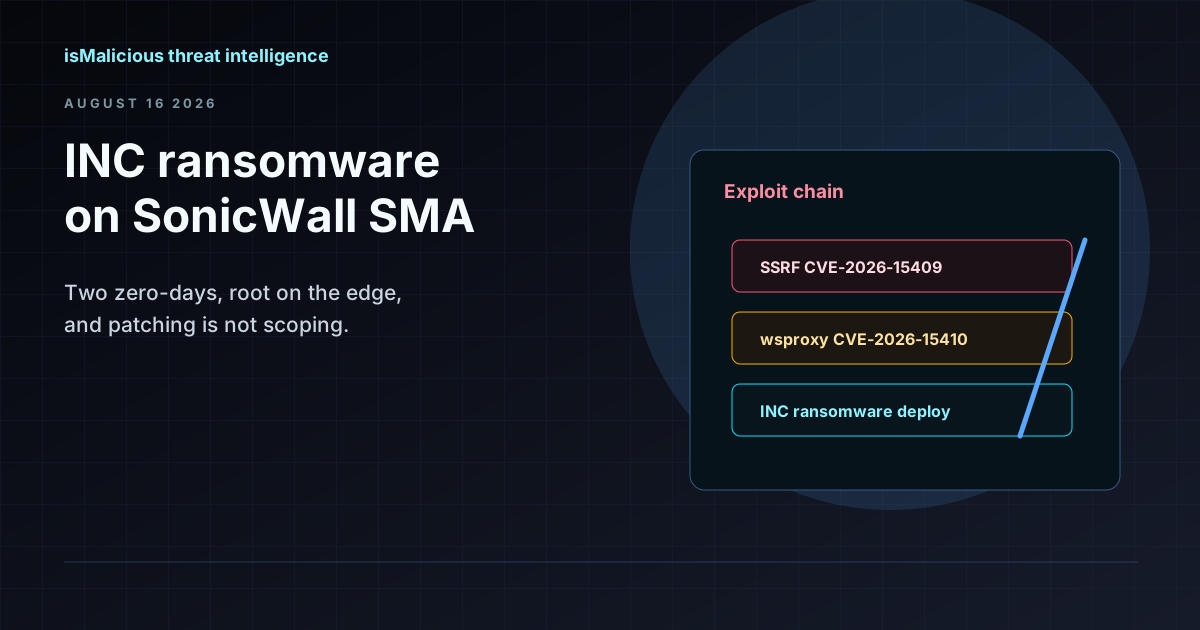 INC Ransomware Chains Two SonicWall SMA Zero-Days (CVE-2026-15409, CVE-2026-15410)
INC affiliates are weaponizing an SSRF and a post-authentication code injection in SonicWall SMA 1000 to reach internal networks. Exploitation started weeks before the July 14 patch — here is how to hunt and triage.
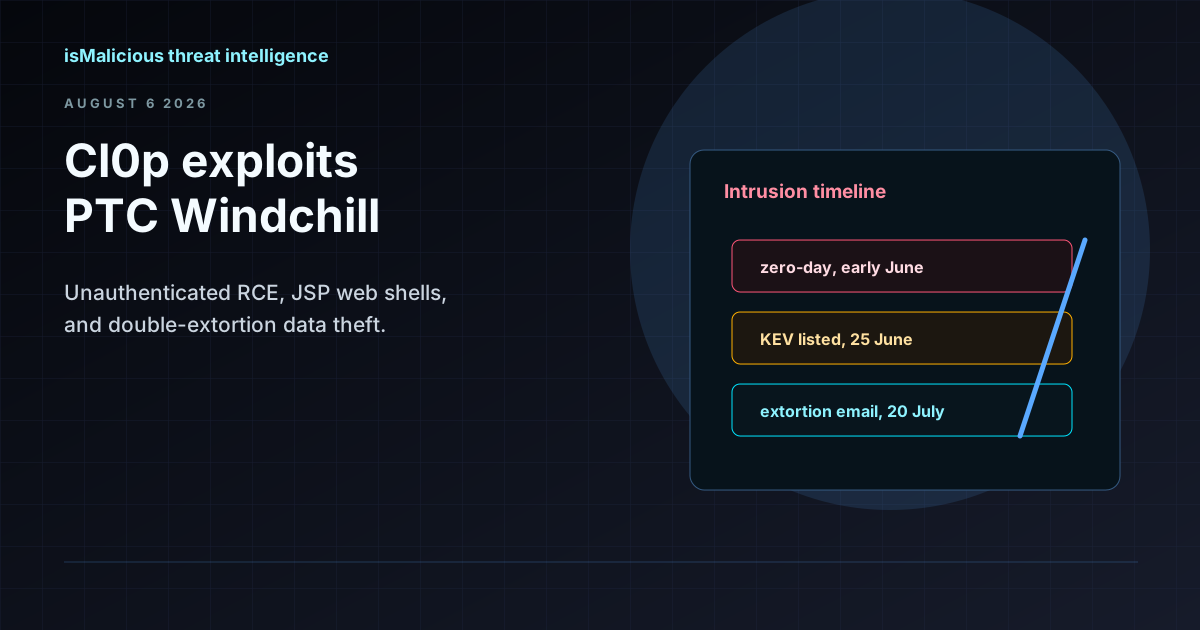 Cl0p Is Exploiting PTC Windchill (CVE-2026-12569) to Steal Engineering Data
A Cl0p affiliate is chaining a FlexPLM information disclosure with an unauthenticated RCE in PTC Windchill to plant JSP web shells and run double-extortion data theft. Here are the detection signals and the triage workflow.
 BlueHammer Defender Exploitation: July 2026 Patch SLA For Windows Fleets
BlueHammer coverage shows why endpoint patching, CISA KEV context, CVE Watch, and IOC enrichment have to work together when local privilege escalation becomes ransomware tradecraft.
Protect Your Infrastructure
Check any IP or domain against our threat intelligence database with indexed records.
Try the IP / Domain Checker