Hash verdicts
Known-malware classification with its confidence, not just a raw match.
How this check works · illustration
Look up a file hash before it stalls an investigation: known-malware verdict, related infrastructure and the sources behind it.
curl -d "email=you@example.com" https://ismalicious.com/api/keys/instant50 free requests/month · instant API key · no signup form
Known-malware classification with its confidence, not just a raw match.
Pivot from a hash to related domains, URLs and IPs, when known.
Mix hashes with IPs, domains and URLs in one batch call.
Source evidence and threat categories, ready to attach to a case.
REST endpoints, SDKs and an OpenAPI spec for existing pipelines.
Only the fingerprint leaves your environment, never the sample.
Enrich endpoint alert hashes before escalating to Tier 2.
Batch-check hashes with domains, IPs and URLs during triage.
Prioritize samples by known reputation, then pivot to infrastructure.
Screen submitted file fingerprints without uploading user content.
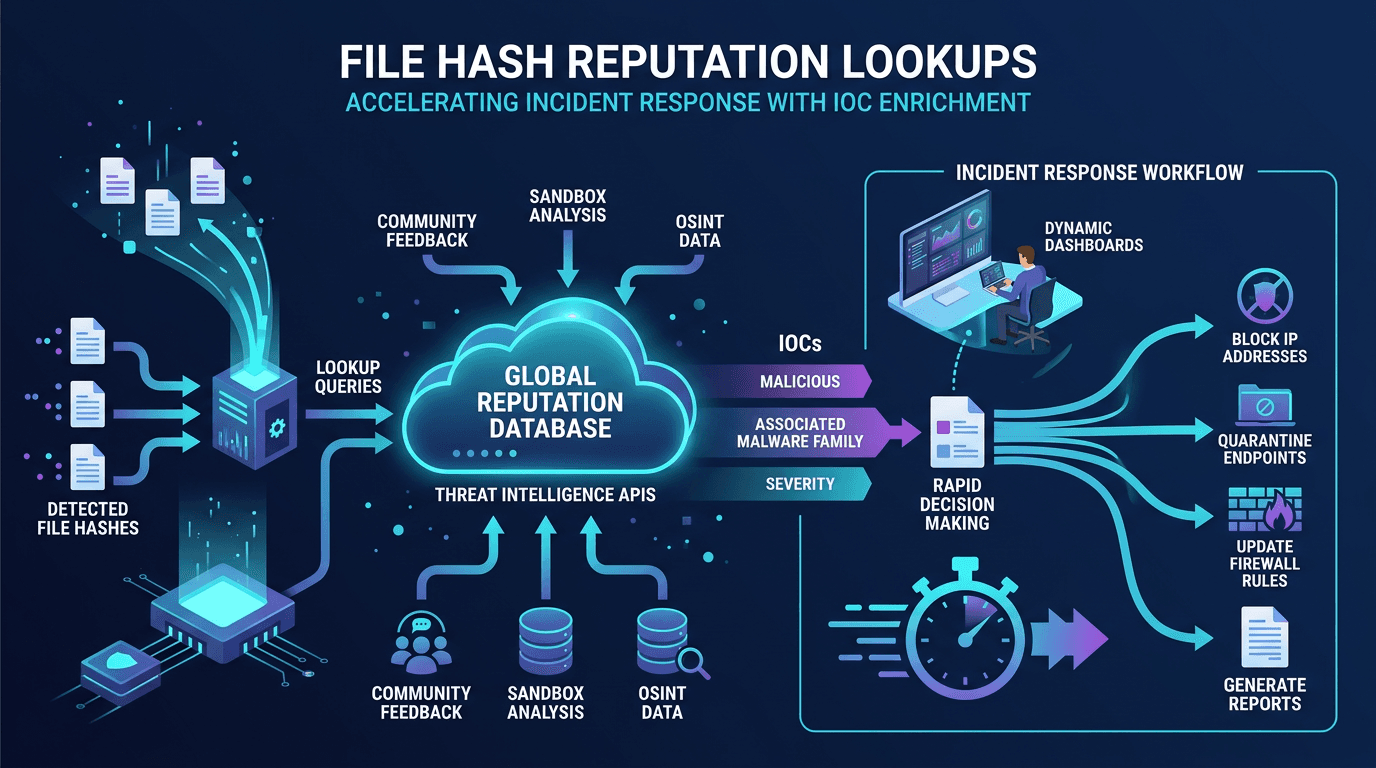
Blog post
A practitioner's guide to file hash reputation lookups—how they work, which data sources power them, how to build automated IOC enrichment pipelines, and how to integrate hash intelligence into SOC, SOAR, and incident response workflows.
Read more
Blog post
Move beyond one-off hash blocks: design reputation pipelines, reduce false positives, and integrate file intelligence with IP and domain context for production-ready detection engineering.
Read more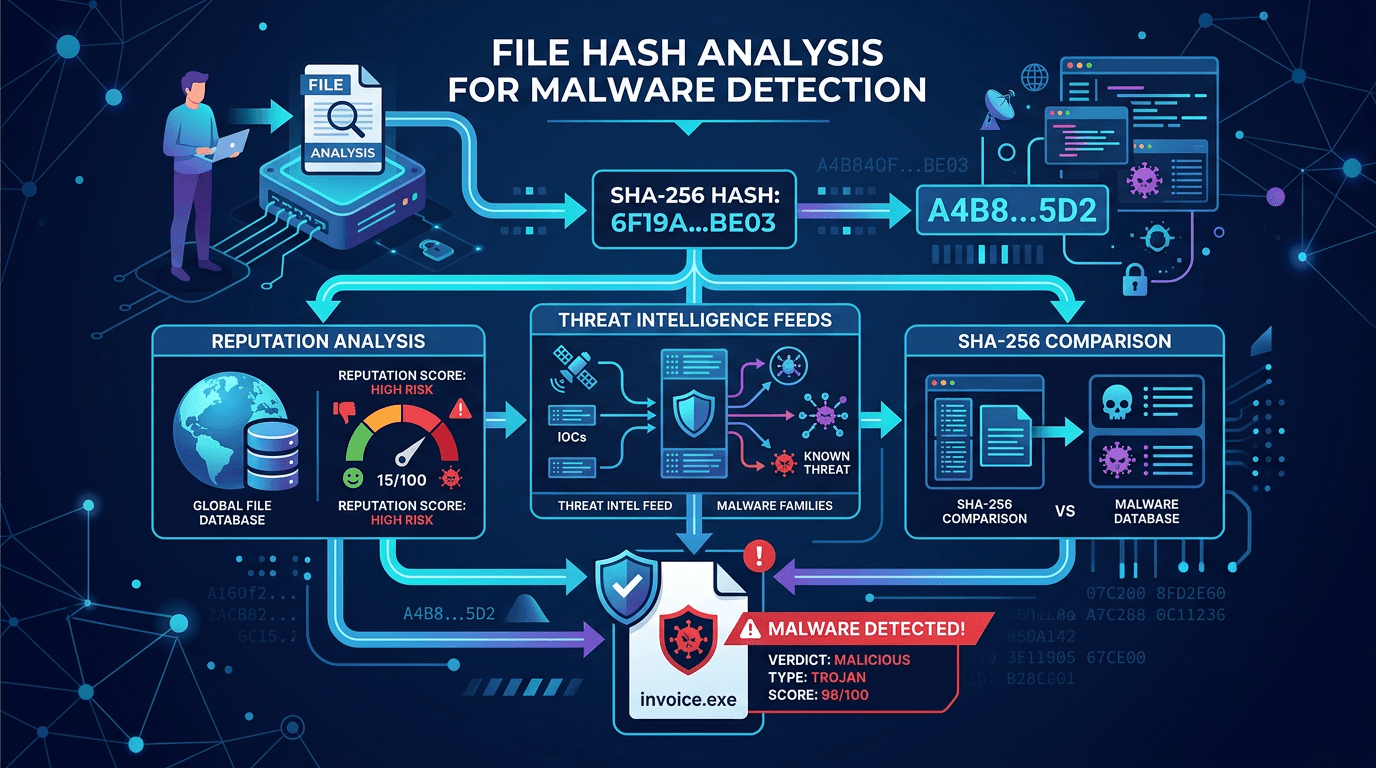
Blog post
How to check MD5, SHA-1, and SHA-256 hashes against threat intelligence, and how SOC teams use hash reputation to cut false positives.
Read moreThe free plan includes 50 lookups a month. Check the sources and limits, then connect the API.
No credit card required · Free API key