Threat Detection
Identify IPs involved in malware, botnets, spam, DDoS, scanning, and other malicious activities.
How this check works · illustration
Check any IP address against configured intelligence sources. Get instant risk scores, abuse history, geolocation, and ASN data.
curl -d "email=you@example.com" https://ismalicious.com/api/keys/instant50 free requests/month · instant API key · no signup form
Illustration dated 2026-09-01. Indicators, providers, scores and observations are fictional. This is not a current result for these addresses.
192.0.2.42
Network context
Open ports (3)
An open port describes an exposed service. Additional evidence is needed to assess whether it is being abused.
Sources flagging
2of 3 sources
Confidence
75 %
The score and confidence are illustrative values. Confidence describes support for the assessment; it is not a percentage of sources or a probability of compromise.
Example categories
Example source observations
| Source | Observation |
|---|---|
| Example feed A | Flagged |
| Example feed B | Flagged |
| Example feed C | Not listed |
“Not listed” means this source has no listing in the example. It is not a clean bill of health.
How to interpret it
Compare source observations, dates and technical context before taking action. This example makes no attribution to a threat actor.
Real reports depend on the indicator, available sources and access level. Missing data is shown explicitly. These panels illustrate how to read the data; they are not an API response schema.
7.5M+
IPs in Database
725
Threat Sources
< 50 ms
Response Time
99.5 %
Accuracy
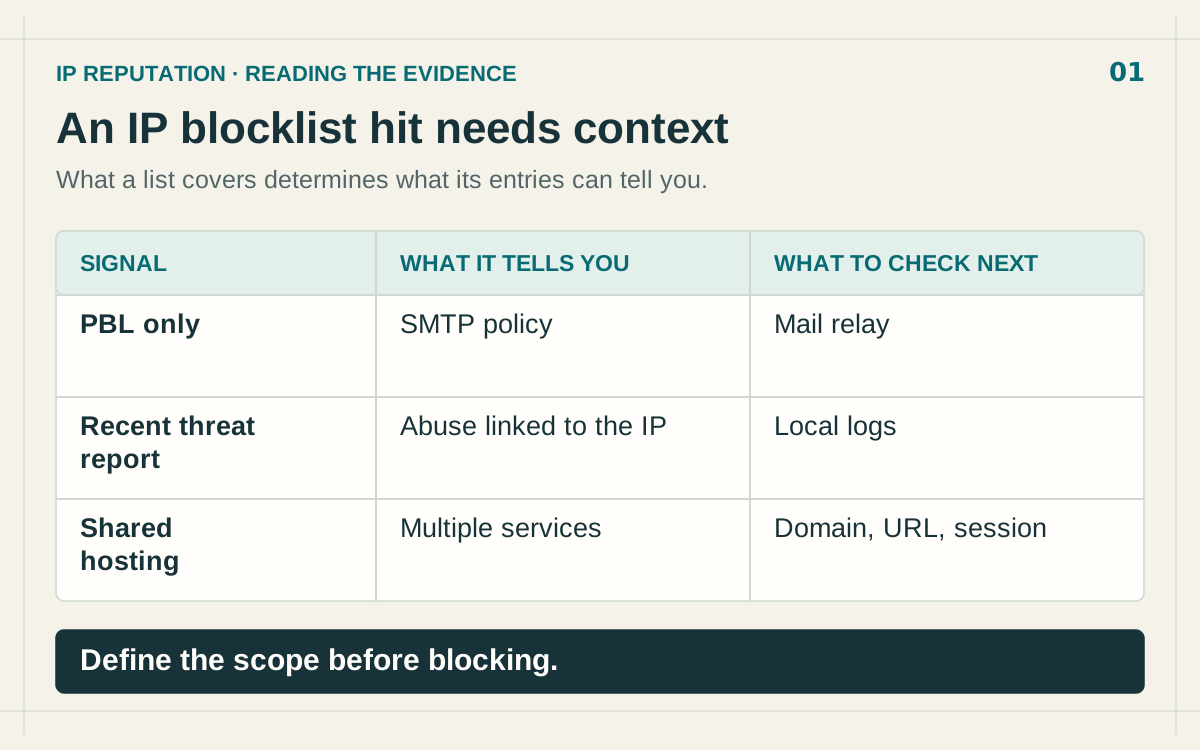
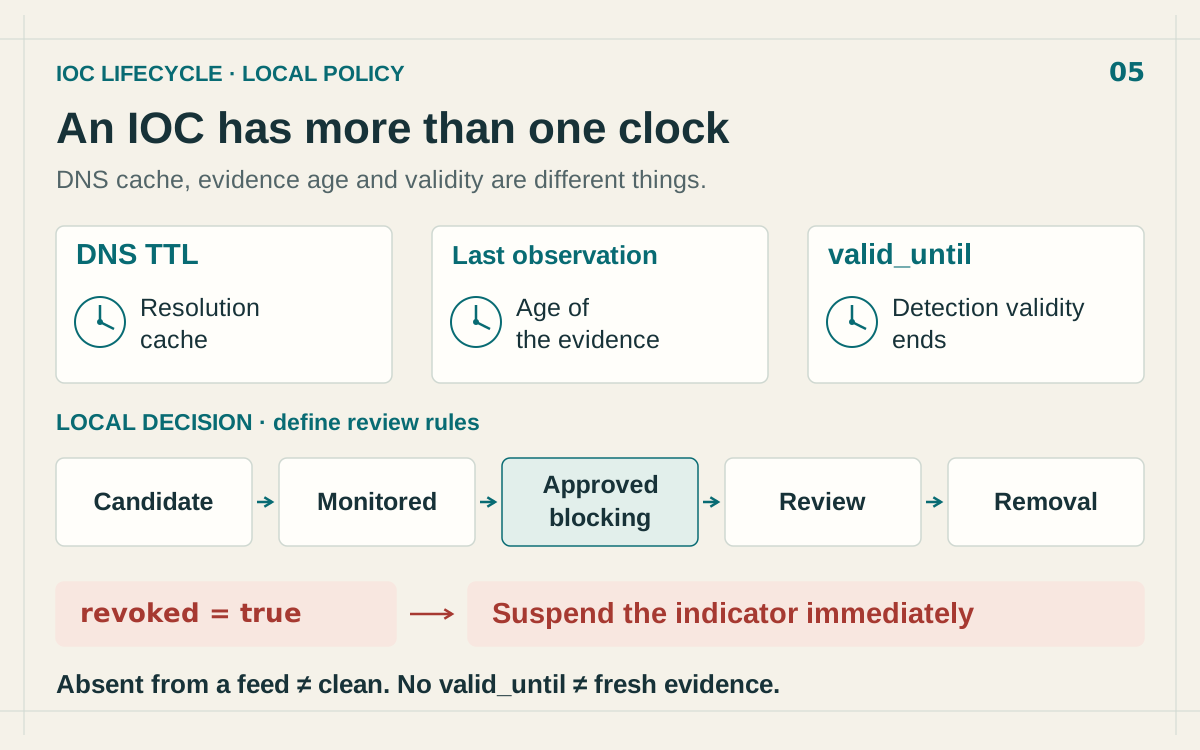
Connect the signals, then examine the context.
Identify IPs involved in malware, botnets, spam, DDoS, scanning, and other malicious activities.
Get country, city, ISP, and organization information for any IP address.
See which network owns the IP and check reputation at the ASN level.
View historical abuse reports and see when an IP was first and last seen as malicious.
Get a normalized risk score from 0-100 based on threat severity and confidence.
Check thousands of IPs at once with our high-performance bulk API.
Enrich firewall logs and automatically block high-risk IP addresses.
Check IP reputation during authentication to prevent credential stuffing.
Help analysts quickly assess if an IP in an alert is known malicious.
Flag high-risk IPs during payment processing to prevent fraud.
IP reputation is a security assessment methodology that evaluates the trustworthiness of an IP address based on its historical behavior and associations with malicious activities. Every device connected to the internet has an IP address, and tracking which IPs have been involved in attacks, spam, scanning, or other abuse creates valuable threat intelligence. Organizations use IP reputation data to block malicious traffic at the network perimeter, protect authentication systems, and enrich security alerts with context about threat actors.
Our IP reputation system continuously monitors billions of IP addresses across the global internet, collecting data from abuse reports, honeypots, spam traps, network flow analysis, and threat intelligence partnerships. When you query an IP, we check it against multiple reputation databases, analyze its ASN and geolocation context, review historical abuse patterns, and calculate a normalized risk score from 0-100. The response includes threat categories, first-seen and last-seen timestamps, and confidence levels to help you make informed security decisions.
Malicious IPs engage in various attack patterns: botnet IPs participate in DDoS attacks and coordinated campaigns, scanner IPs probe networks for vulnerabilities, spam IPs send bulk unsolicited emails, brute force IPs attempt credential stuffing attacks, C2 IPs host command-and-control servers for malware, proxy IPs anonymize attacker traffic, and cryptomining IPs run unauthorized mining operations. Understanding the specific threat category helps security teams prioritize responses and implement targeted blocking rules.
IP reputation data integrates directly into multiple security touchpoints: firewalls can block high-risk IPs at the perimeter, WAFs can challenge suspicious traffic with CAPTCHAs, authentication systems can require additional verification for risky IPs, SIEMs can enrich alerts with reputation context, and fraud prevention systems can flag transactions from compromised IP ranges. Our API supports real-time lookups with sub-50ms response times, enabling inline security decisions without adding latency.
New to the term? Read the glossary definition.
Join thousands of security teams using isMalicious to protect their infrastructure.
No credit card required · Free API key