Cl0p Is Exploiting PTC Windchill (CVE-2026-12569) to Steal Engineering Data
A Cl0p affiliate is chaining a FlexPLM information disclosure with an unauthenticated RCE in PTC Windchill to plant JSP web shells and run double-extortion data theft. Here are the detection signals and the triage workflow.
 IsMalicious Team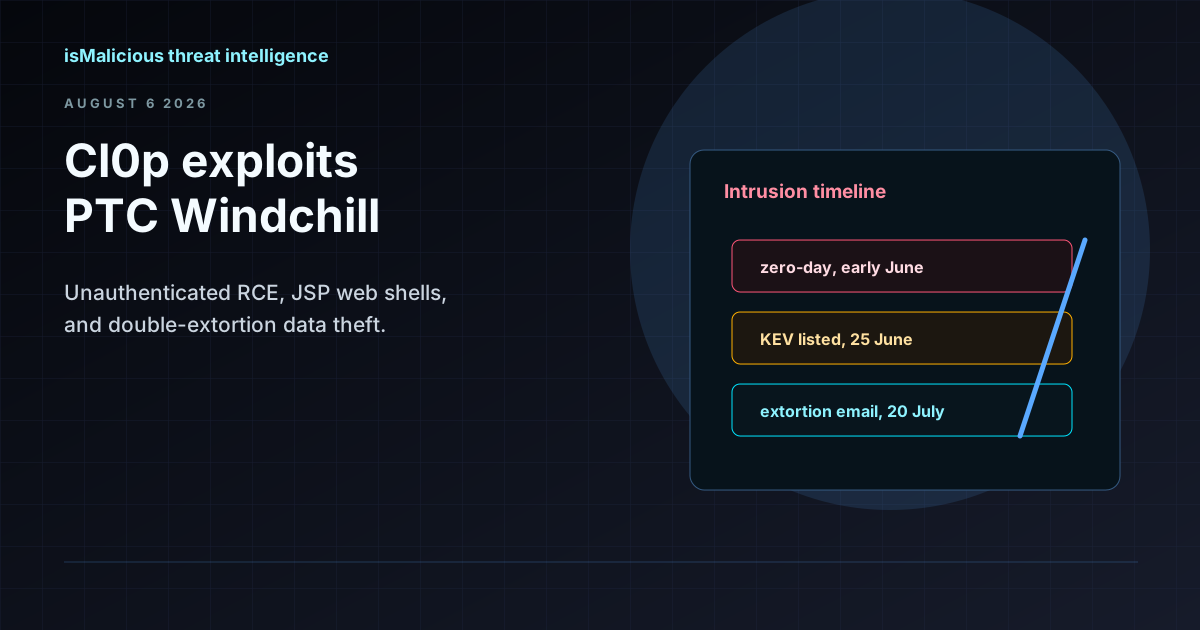
A Cl0p affiliate has spent the back half of July 2026 working through internet-exposed PTC Windchill and FlexPLM deployments, and the pattern is familiar enough that most security teams should recognise what comes next. This is the same playbook the group ran against Oracle E-Business Suite: find a widely deployed enterprise application holding high-value data, exploit it before defenders finish patching, steal the data, then extort the victim by email rather than by encrypting anything.
What makes this campaign worth a closer look is not novelty. It is the gap between disclosure and exploitation. PTC patched CVE-2026-12569 on 17 June 2026. Exploitation in the wild was flagged the following day. CISA added it to the KEV catalog on 25 June. Ransom-ISAC's assessment is that Cl0p-affiliated actors were most likely exploiting it as a zero-day in early June — before the patch existed. By the time the campaign became visible through extortion emails on 20 July, the intrusions were already weeks old.
What the Vulnerability Chain Actually Does
CVE-2026-12569 is a deserialization of untrusted data flaw in PTC Windchill PDMLink and PTC FlexPLM, leading to remote code execution. PTC, acting as the CNA, scored it CVSS 4.0 base 9.3; NVD assigned CVSS 3.1 base 9.8. Releases prior to 11.0 M030 are affected, and PTC has noted the advisory applies across CPS versions as well.
The detail that matters operationally is that the observed intrusions do not use the RCE on its own. According to the coordinated advisory published by Ransom-ISAC with eCrime.ch and DEFUSED, attackers chain two defects:
- A pre-authentication information disclosure in the FlexPLM WSDL endpoint, scored CVSS 3.1 7.5, used first for reconnaissance against the target environment.
- A server-side flaw in the Windchill login servlet, which the attacker then reaches with enough knowledge of the environment to achieve code execution without authenticating.
Chaining these turns a flaw that might otherwise require a foothold into fully unauthenticated remote code execution. It also explains why exposure assessments that only checked for authentication controls in front of Windchill came back clean.
Post-Exploitation: Web Shells, Then Staging
Once code execution lands, the reported tradecraft is deliberate rather than fast:
- Hex-named JSP web shells written under
/Windchill/login/. ReliaQuest and the Ransom-ISAC advisory both describe this as the persistence mechanism, and it is the single most checkable artefact for anyone doing retrospective hunting. - Filesystem enumeration from the application context, mapping what the instance holds before touching it.
- Staging of engineering and design data — the product designs, bills of materials, CAD artefacts, and lifecycle documentation that make a PLM platform worth attacking in the first place.
- Exfiltration for double extortion, with no ransomware deployment observed. The pressure comes from the threat of publication, not from the loss of availability.
That last point changes the detection problem. There is no encryption event to trip an alert, no ransom note on a file share, no sudden spike in failed backups. The first signal many victims receive is the extortion email itself.
The Extortion Stage Is the Loud Part
Starting 20 July 2026, Ransom-ISAC observed extortion emails carrying the subject line "Windchill PDMLink module serious data leak" sent to hundreds of users inside affected organizations. The messages appear to originate from unrelated compromised accounts and carry Cl0p's current contact details.
Two things follow from that:
- The email arrives broadly, not to a security contact. Sending to hundreds of recipients is a pressure tactic; it guarantees the incident becomes internally visible before the security team has scoped it. Plan the communications response alongside the technical one.
- Sender reputation will not save you. Because the mail comes from compromised third-party accounts rather than attacker-registered domains, authentication checks on the sending domain can pass cleanly. Treat the content, not the envelope, as the signal.
As of 22 July, Ransom-ISAC reported that Cl0p had not yet listed victims of this campaign on its leak site or publicly claimed credit — consistent with the group's habit of running the private extortion window first.
Detection and Hunting Signals
If you run Windchill or FlexPLM, assume the exposure window opened in early June rather than on the patch date. Concretely:
- Hunt for JSP files under
/Windchill/login/with hex-string names, and compare the directory against a known-good deployment rather than against your own memory of it. - Review WSDL endpoint access logs on FlexPLM for enumeration patterns, particularly requests from addresses with no business relationship to your environment.
- Baseline egress from the Windchill host. A PLM server has a small, predictable set of destinations. Anything outside that set is worth a lookup, and staging plus exfiltration of design data produces volume that stands out against that baseline.
- Look for large archive creation in temporary or web-accessible paths, timestamped before any outbound transfer.
- Check authentication and session records for the application service account behaving like an interactive user.
- Pull the vendor indicators. PTC published indicators of compromise alongside the exploitation warning, and Ransom-ISAC's advisory adds more; both are more specific than anything generic hunting will surface.
Enriching What the Logs Give You
Hunting produces a list of unfamiliar addresses and domains, and the triage question is always the same: which of these matters enough to escalate. That is where enrichment does the work.
- Run the addresses appearing in Windchill access and egress logs through IP reputation lookups to check hosting context, ASN, and prior malicious association before deciding whether a connection was toolchain noise or staging infrastructure.
- Check any domains involved through domain intelligence and DNS history — infrastructure stood up for a single campaign tends to have a registration and resolution history that looks nothing like a legitimate vendor endpoint.
- Where you have recovered web shell samples, use file hash lookups to check whether the artefact is a known kit rather than something bespoke to your intrusion.
- Push the whole set through bulk lookups rather than one at a time. Retrospective hunting across weeks of logs produces hundreds of candidate indicators, and the per-indicator manual pivot is where triage stalls.
- Wire the enrichment into your SIEM through the API so the same context reaches every subsequent alert automatically instead of living in one responder's notes.
Prioritisation Beyond This CVE
The broader lesson in CVE-2026-12569 is about which vulnerabilities earn emergency handling. A CVSS 9.8 in an application most asset inventories classify as "engineering tooling" will lose an argument against a lower-scored flaw in something the business considers critical — right up until a ransomware affiliate demonstrates otherwise.
Exploitation evidence is the tiebreaker. This CVE was in KEV within eight days of disclosure, which is the signal that should have moved it ahead of severity-sorted queue positions. Teams tracking their declared products against KEV and EPSS through CVE Watch get that reprioritisation as an alert rather than as a discovery during incident response.
If You Suspect Compromise
Patch first — PTC's fixed releases and remediation steps are the baseline — but do not treat patching as scoping. A patch applied in August closes an exposure window that opened in June, and the web shells planted during that window survive the update.
For incident response teams working a live case, the sequence that has worked on prior Cl0p campaigns is to preserve application and web server logs before retention ages them out, enrich the outbound indicators to size the blast radius, then rotate every credential the Windchill instance could reach. The extortion email tells you the attacker believes they have your data. The logs tell you whether they are right.
FAQ
Frequently asked questions
What is CVE-2026-12569?
CVE-2026-12569 is a critical remote code execution vulnerability in PTC Windchill PDMLink and PTC FlexPLM caused by deserialization of untrusted data. PTC disclosed and patched it on 17 June 2026, scoring it CVSS 4.0 base 9.3, while NVD assigned CVSS 3.1 9.8. It affects Windchill and FlexPLM releases prior to 11.0 M030 and was added to the CISA KEV catalog on 25 June 2026.
How are attackers exploiting it without credentials?
Published advisories describe a chain rather than a single bug. Attackers first query the FlexPLM WSDL endpoint, which leaks information pre-authentication (a separate defect scored CVSS 3.1 7.5), then use what they learn against a server-side flaw in the Windchill login servlet. The combination turns an authenticated-looking attack surface into unauthenticated remote code execution.
What indicators suggest a Windchill instance was compromised?
The clearest artefact reported so far is hex-named JSP files written under the /Windchill/login/ path, which serve as web shells. Beyond that, look for filesystem enumeration from the application account, large staging archives of engineering and design data, and outbound connections from the Windchill host to destinations that have no role in your product lifecycle toolchain.
Who is being targeted?
From 20 July 2026, Ransom-ISAC reported the campaign concentrating on aerospace, automotive, manufacturing, and retail or apparel organizations. That distribution follows the software rather than any one region: Windchill and FlexPLM hold product designs and bills of materials, so the victim profile is any organization whose intellectual property lives in a PLM platform.
How does isMalicious help triage this campaign?
isMalicious enriches the IP addresses, domains, and file hashes that surface in Windchill logs and egress telemetry, so responders can separate ordinary toolchain traffic from exfiltration infrastructure without opening a lookup tab per indicator. The API pushes the same enrichment into SIEM and incident response tooling, and CVE Watch tracks the KEV and exploitation status of CVE-2026-12569 against products you have declared.
Related articles
 CVE-2026-63077 Puts Unauthenticated RCE on Every TeamCity On-Premises Server
A deserialization flaw in the agent polling protocol gives attackers TeamCity server privileges without credentials. JetBrains patched in 2025.11.7 and 2026.1.3 — CISA KEV and a 3-day federal deadline mean hunt now, not after the next release train.
 CVE-2026-9198 Gives Unauthenticated RCE in IBM Langflow OSS Agent Control Planes
A SUPERUSER token minted through /api/v1/auto_login chains with Python exec() in /api/v1/validate/code. Langflow 1.10.1 fixes the flaw — but internet-exposed instances need hunting now, not after the next sprint.
 INC Ransomware Chains Two SonicWall SMA Zero-Days (CVE-2026-15409, CVE-2026-15410)
INC affiliates are weaponizing an SSRF and a post-authentication code injection in SonicWall SMA 1000 to reach internal networks. Exploitation started weeks before the July 14 patch — here is how to hunt and triage.
Check any IP or domain
See what our indexed threat intelligence records say about it.
Try the IP / Domain Checker