isMalicious vs SecurityTrails: Discovery Data and Reputation Verdicts Are Not the Same Product
SecurityTrails tells you what exists — every subdomain, every historical DNS record. isMalicious tells you what is dangerous. Most teams searching for a SecurityTrails alternative want the second half.
 IsMalicious Team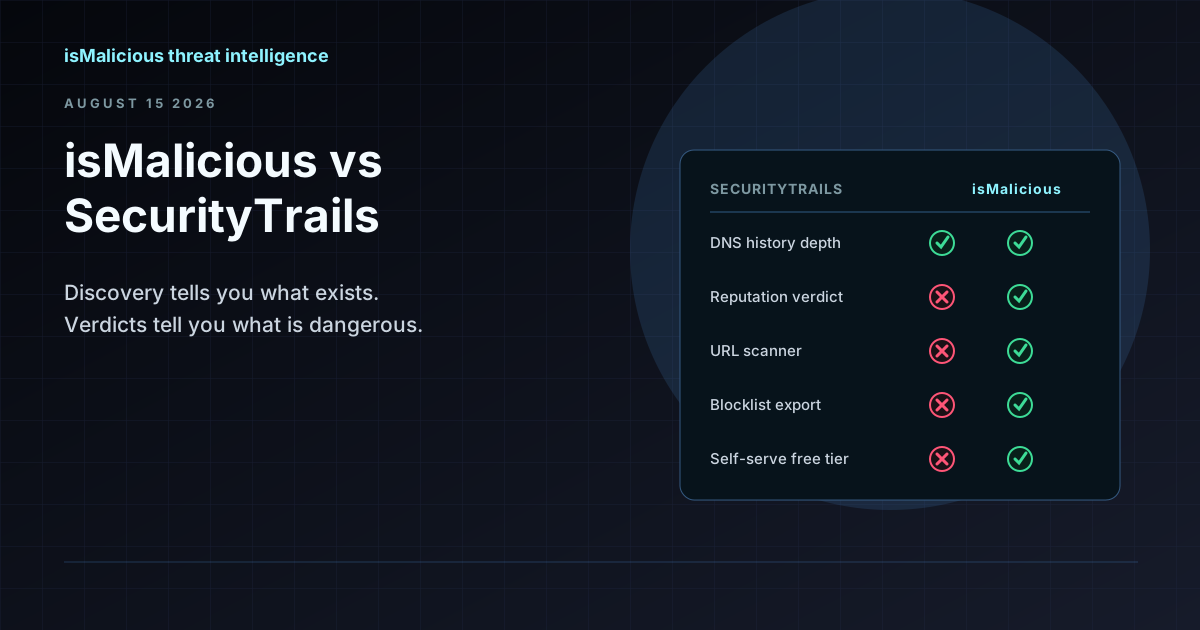
SecurityTrails built a strong product around a specific question: what does this domain's DNS footprint look like, now and historically? Subdomain discovery, passive DNS timelines, WHOIS history, attack surface enumeration. If that is the question you have, it answers it well.
The reason this comparison comes up is that discovery data does not close an investigation. Knowing a domain has 400 subdomains and changed nameservers twice in 2024 is useful context, and it does not tell you whether any of it is malicious. That gap — between what exists and what is dangerous — is where the two products separate.
What SecurityTrails Does Well
- Historical DNS records with genuine depth, going back further than most sources and covering record types comprehensively enough for long-horizon research.
- Subdomain discovery at a scale that makes it a default choice for attack surface enumeration.
- WHOIS and domain history, including changes over time rather than just the current record.
- Attack surface mapping, aggregating the above into a picture of an organization's external footprint.
For reconnaissance, asset discovery, and passive DNS research, this is specialist tooling and it earns its position.
Where the Gap Shows Up
The limitations are all on the assessment side rather than the data side:
- No reputation verdicts. SecurityTrails returns records, not judgments. An analyst reading a DNS timeline still has to determine whether any of it indicates malicious activity.
- No URL malware scanning. There is no endpoint that fetches a page and assesses it, so phishing triage requires a separate tool.
- No ransomware group tracking, so an indicator tied to an extortion campaign carries no such context.
- No dark web monitoring for credential or data exposure signals.
- Enterprise pricing after the Recorded Future acquisition. Access is increasingly bundled into enterprise Recorded Future offerings, which changes the buying motion for smaller teams.
- Not tuned for blocklist automation. The data model serves research, not the push of confirmed-malicious infrastructure into firewalls and DNS resolvers.
That last pair is what usually drives the search. Teams rarely leave SecurityTrails because the DNS data disappointed them; they leave because they needed a verdict and an enforcement feed, and found themselves buying an enterprise contract for neither.
What isMalicious Provides
isMalicious is built around the assessment question:
- Multi-source reputation verdicts for IPs, domains, and URLs, with threat classification rather than raw records.
- URL scanning with redirect-chain tracking, for triaging a reported link rather than researching a domain's history.
- CVE intelligence with CVSS, EPSS, and KEV status, which connects an exposed asset to whether its vulnerability is being exploited.
- Ransomware group tracking and dark web exposure signals.
- Blocklist exports and STIX/TAXII collections, so a verdict reaches enforcement controls without a custom export step.
- A self-serve free tier and transparent pricing, so evaluation does not require a procurement cycle.
On the discovery side, isMalicious provides DNS records, DNS history, subdomain visibility, WHOIS, and domain age as part of a threat report. That covers the enrichment needs of most SOC workflows. It does not match SecurityTrails for exhaustive historical timelines, and if long-horizon passive DNS research is a core part of your job, that difference is real.
Feature Comparison
| Capability | SecurityTrails | isMalicious |
|---|---|---|
| Historical DNS / subdomain depth | Yes, specialist | Partial |
| WHOIS lookup | Yes | Yes |
| IP reputation verdict | No | Yes |
| Domain reputation | Partial | Yes |
| URL scanner | No | Yes |
| Multi-source threat correlation | No | Yes |
| Ransomware group tracking | No | Yes |
| CVE intelligence (CVSS, EPSS, KEV) | Partial | Yes |
| Dark web monitoring | No | Yes |
| Blocklist / STIX-TAXII export | No | Yes |
| Bulk API | Yes | Yes |
| Self-serve free tier | No | Yes |
The Split That Works in Practice
Rather than replacing one with the other, most mature workflows divide the work by question:
- Discovery first, where breadth matters. Enumerating an organization's footprint during onboarding, an acquisition, or an external assessment is a discovery problem, and specialist tooling wins.
- Assessment second, on the results. Once you have a list of subdomains and historical resolutions, the operative question is which of them are exposed, flagged, or already compromised. That is a reputation and vulnerability question.
- Enforcement third. Whatever is confirmed malicious needs to reach the controls that block it, which means a feed rather than a research interface.
The failure mode is treating step one as the whole job. An attack surface report listing 400 subdomains with no risk assessment attached generates work rather than reducing it — somebody still has to check each one.
Where the Volume Lands
That checking step is why bulk enrichment matters here specifically. Subdomain enumeration on a mid-sized organization routinely returns hundreds of hostnames, and running them through individual lookups is exactly the kind of task that gets started, half-finished, and abandoned.
Bulk lookups accept the enumeration output directly — domains, IPs, and URLs mixed in one request — and return reputation with full context per entry, which turns a discovery list into a prioritised list. Wiring the same call into SIEM workflows through the API means recurring attack surface assessments produce a diff of what changed and what is newly flagged, rather than a fresh spreadsheet every quarter.
Getting Started
If your work is passive DNS research and exhaustive historical enumeration, SecurityTrails is the specialist and this comparison should send you back to it. If you need verdicts, exploitation context, and a feed that enforcement controls can consume — or if enterprise packaging is the thing pushing you to look around — see the side-by-side on the SecurityTrails comparison page.
The practical next step is to take an existing subdomain list and run it through bulk lookups. The useful comparison is not feature tables; it is how many entries come back with a verdict attached versus how many you would still have to assess by hand.
FAQ
Frequently asked questions
Is isMalicious a SecurityTrails alternative?
For threat intelligence and reputation scoring, yes. For deep passive DNS research and exhaustive subdomain enumeration, SecurityTrails remains the specialist and isMalicious does not try to match its depth there. The right answer depends on whether your workflow needs discovery breadth or a malicious verdict.
Does isMalicious include DNS history and subdomain data?
Yes, as part of threat reports — DNS records, WHOIS, domain age, subdomain visibility, and resolution history are all available. What isMalicious does not offer is the exhaustive historical DNS timeline depth that SecurityTrails built its product around. Teams doing long-horizon passive DNS research usually keep the specialist for that specific task.
What changed after the Recorded Future acquisition?
SecurityTrails is increasingly packaged into enterprise Recorded Future offerings, which shifts the buying motion toward enterprise contracts. For teams that want self-serve access and predictable pricing without a procurement cycle, that shift is frequently the trigger for evaluating alternatives rather than any change in the data itself.
Can isMalicious replace SecurityTrails in a SOC?
For alert enrichment and blocklist automation, yes — those are workflows built around verdicts and feeds, which is what isMalicious produces. For passive DNS research workflows, many teams keep SecurityTrails for discovery and use isMalicious for the verdict and the downstream feed. The two roles are separable.
Which one is better for attack surface mapping?
SecurityTrails, if the goal is enumerating everything that exists across an organization's DNS footprint. isMalicious is better once the question shifts from "what do we have" to "which of these is exposed or already flagged," since that requires reputation and vulnerability context rather than more discovery data.
Related articles
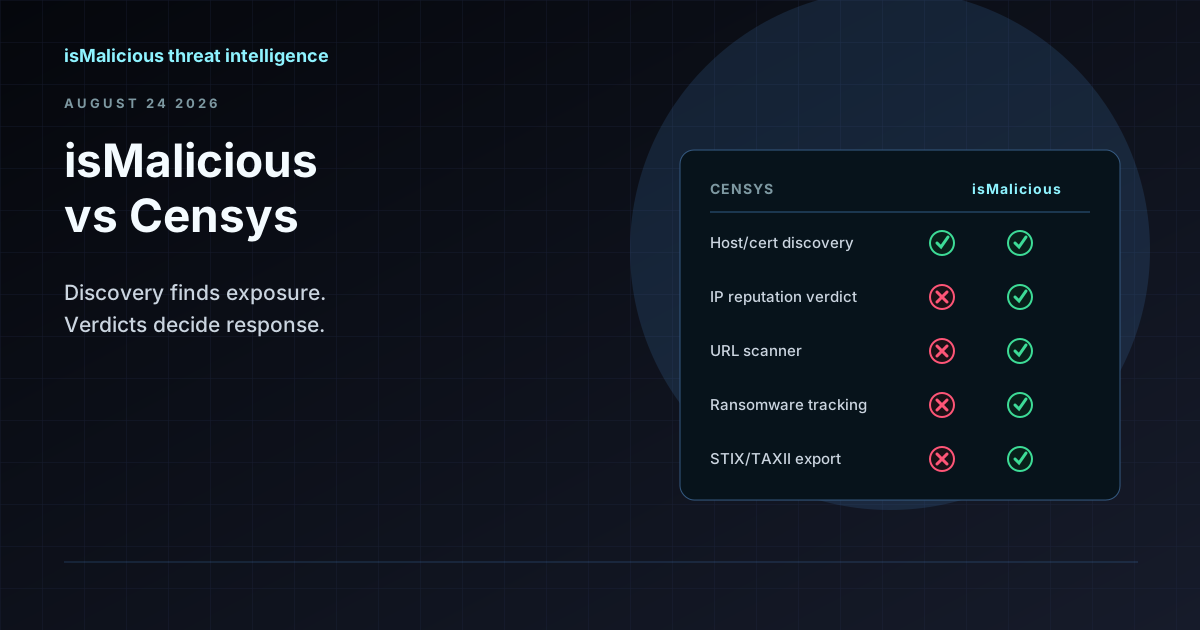 isMalicious vs Censys: Internet Discovery and Reputation Verdicts Are Different Jobs
Censys maps what exists on the internet — hosts, certificates, open ports. isMalicious assesses what is malicious. Most teams comparing the two need the second question answered, not the first.
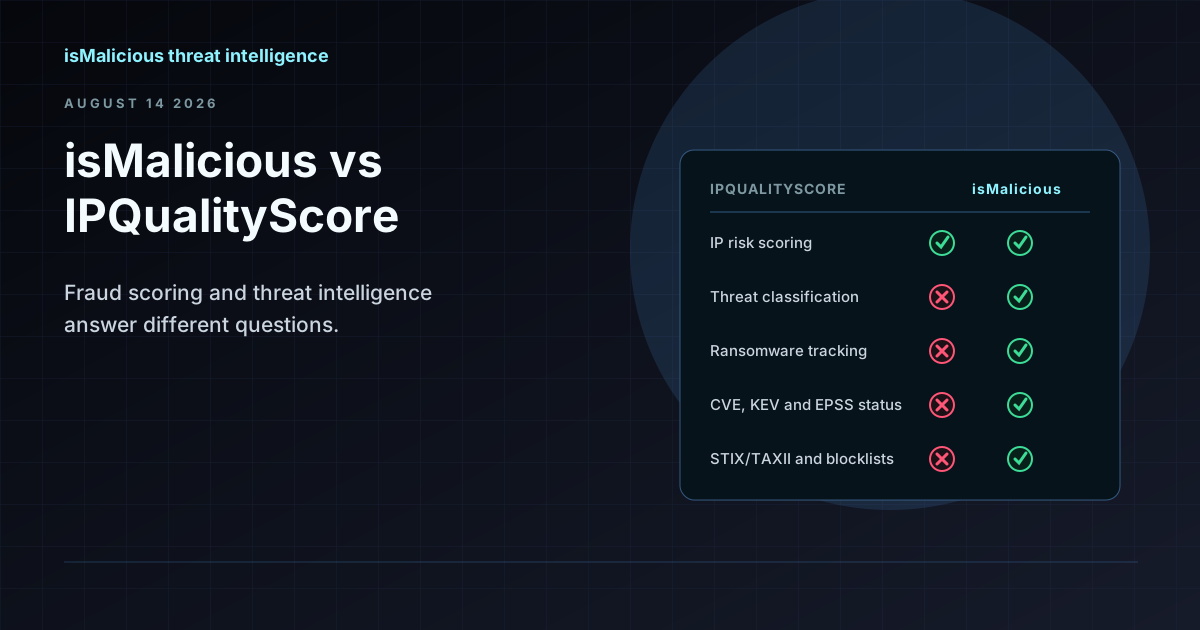 isMalicious vs IPQualityScore: Fraud Scoring and Threat Intelligence Are Different Jobs
IPQS scores whether a signup is fraudulent. isMalicious scores whether infrastructure is malicious. The two get compared constantly because both return a number about an IP address — and they answer different questions.
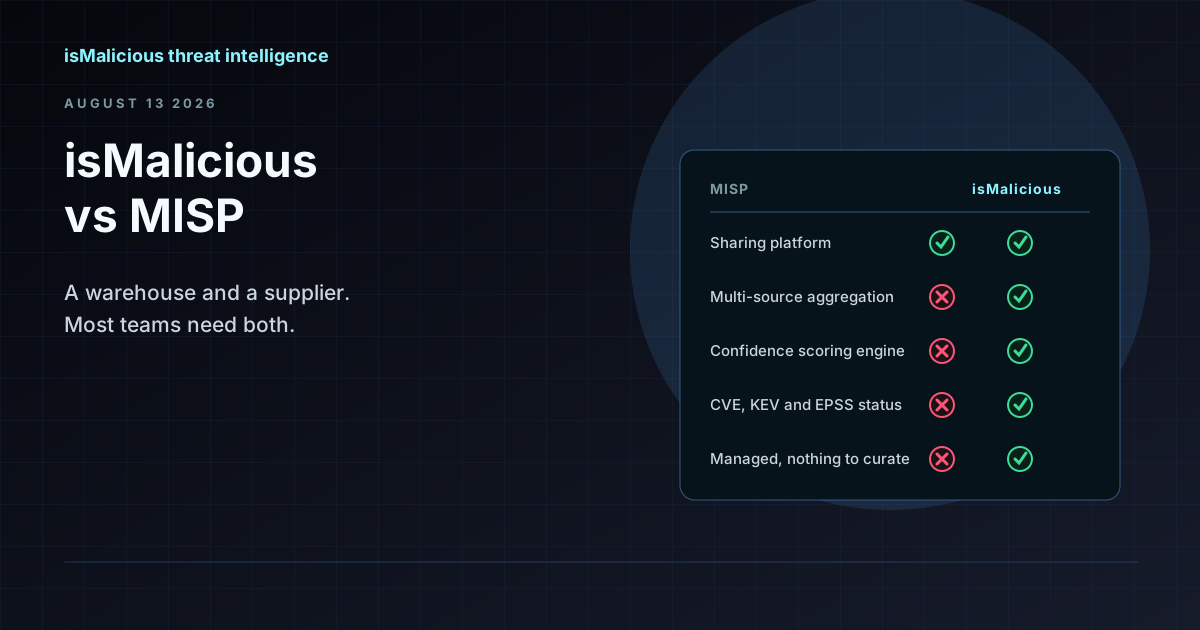 isMalicious vs MISP: Why This Is the Wrong Comparison (and What to Compare Instead)
MISP is where you store and share indicators. isMalicious is where indicators come from. Teams searching for a MISP alternative are usually looking for a feed, not a replacement platform.
Check any IP or domain
See what our indexed threat intelligence records say about it.
Try the IP / Domain Checker