Batch size by plan
10 items per call on Free, 50 on Basic, 100 on Pro, 500 on Enterprise.
Send domains, IPs, URLs and hashes in one request: 10 per call on Free, 100 on Pro, 500 on Enterprise.
No credit card required · Free API key
Each item is looked up in the same database as a single lookup.
30 014 020
Total threats
20 474 358
Malicious domains
9 539 662
Malicious IPs
591
Sources in the corpus
No credit card required · Free: a 10% sample of each list · full lists on paid plans
10 items per call on Free, 50 on Basic, 100 on Pro, 500 on Enterprise.
Send a JSON array of entities; get results back as JSON or CSV.
IPs, domains, URLs and hashes in one request, each type detected automatically.
Score, risk level, categories, source count and recommended action for each item.
Split long lists across calls within your per-minute and monthly limits.
Duplicate and invalid entries are skipped and reported in the response.
Enrich SIEM logs with threat data in bulk.
Validate blocklists and allowlists against threat intel.
Check a set of IOCs during an investigation.
Check sender domains and URLs from email batches.
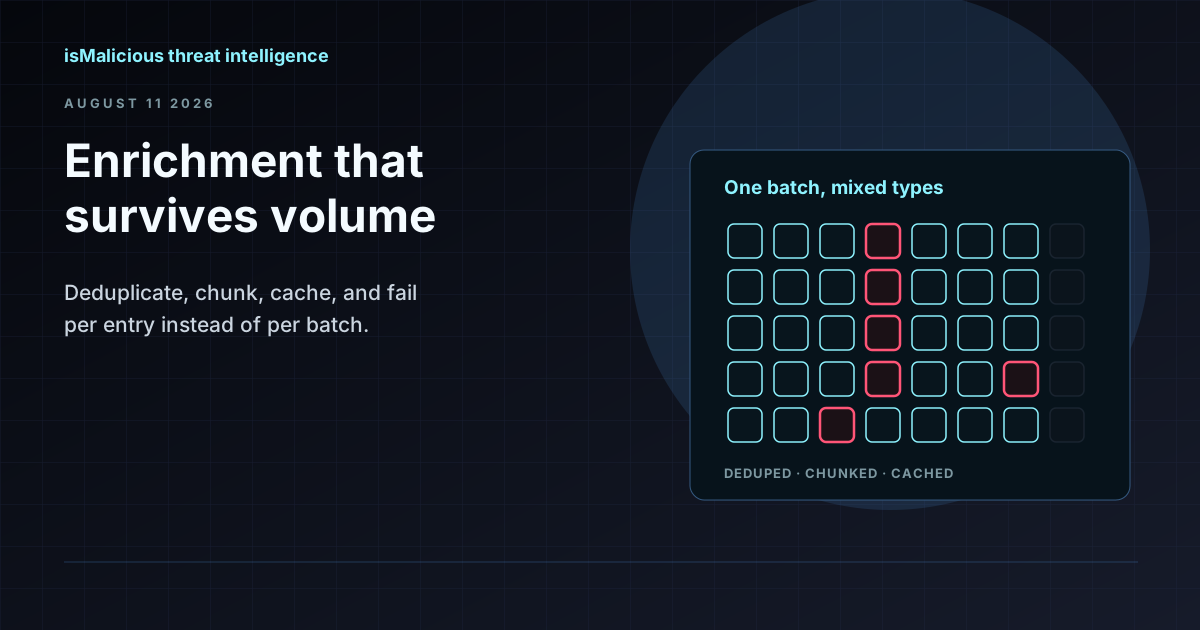
Blog post
One incident produces hundreds of indicators, and per-indicator lookups are where triage stalls. Here is how to build a batch enrichment pipeline that respects quotas, deduplicates properly, and fails gracefully.
Read more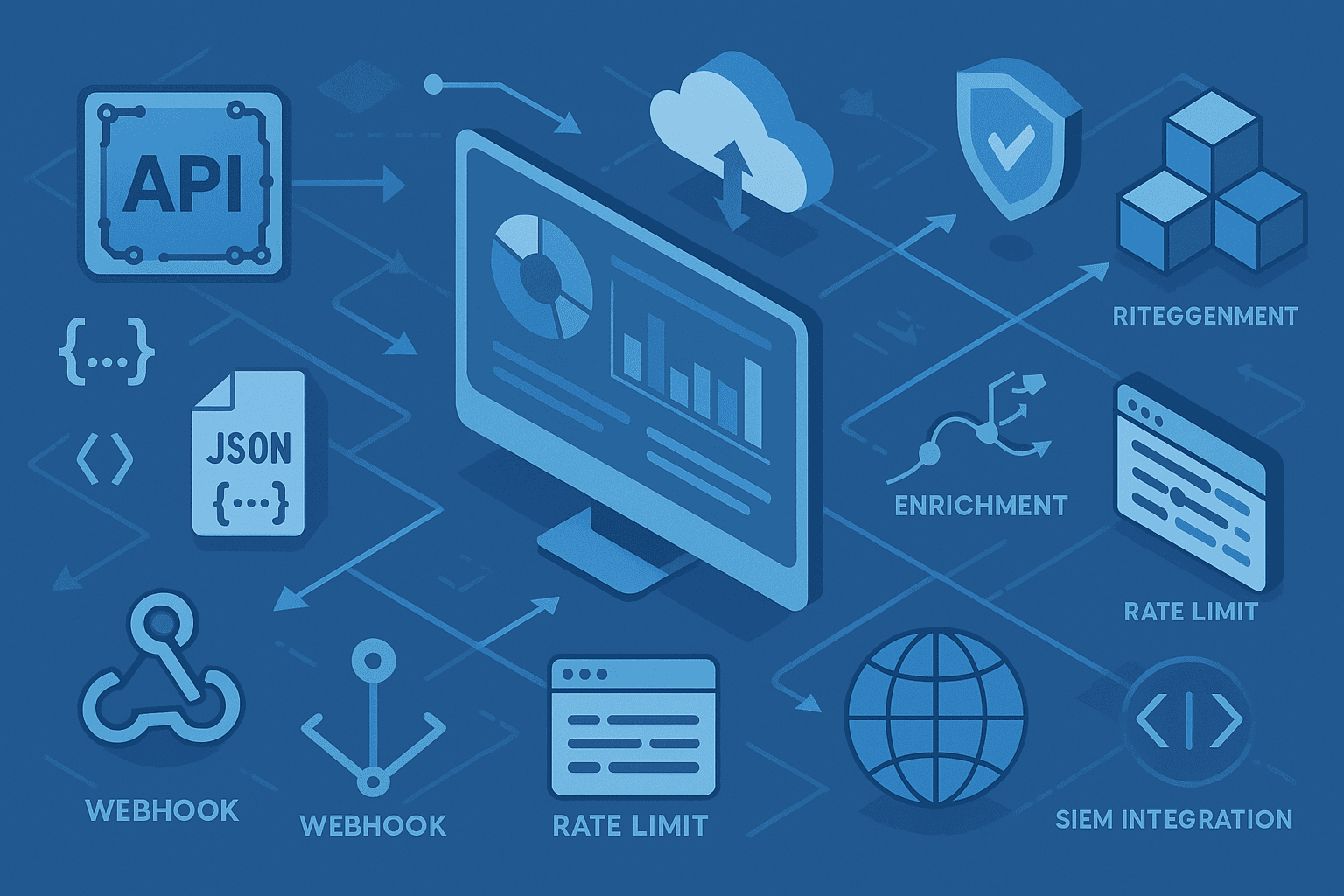
Blog post
Discover how integrating threat intelligence APIs can transform your security infrastructure. Learn best practices for automated threat detection, continuous monitoring, and documented integration with your existing systems.
Read more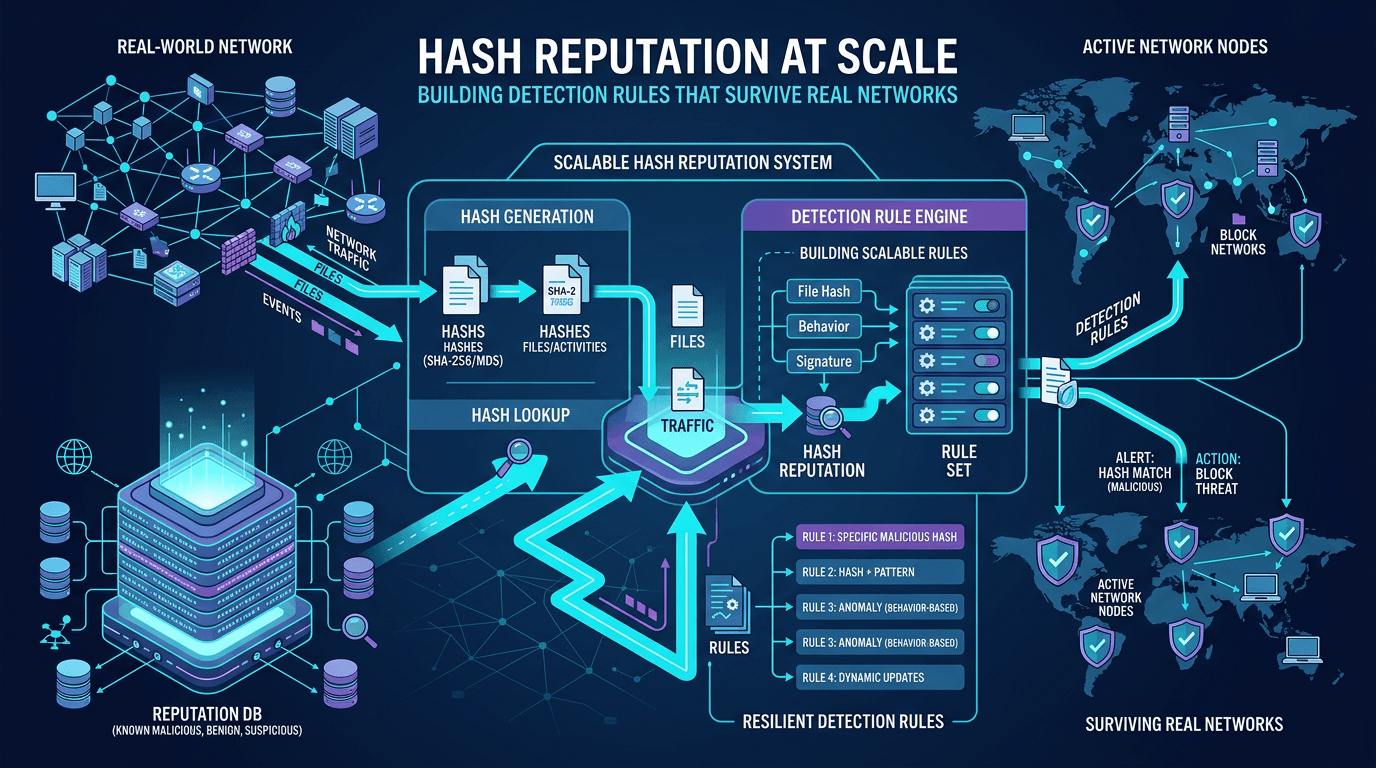
Blog post
Move beyond one-off hash blocks: design reputation pipelines, reduce false positives, and integrate file intelligence with IP and domain context for production-ready detection engineering.
Read moreThe free plan includes 50 lookups a month. Check the sources and limits, then connect the API.
No credit card required · Free API key