isMalicious vs IPQualityScore: Fraud Scoring and Threat Intelligence Are Different Jobs
IPQS scores whether a signup is fraudulent. isMalicious scores whether infrastructure is malicious. The two get compared constantly because both return a number about an IP address — and they answer different questions.
 IsMalicious Team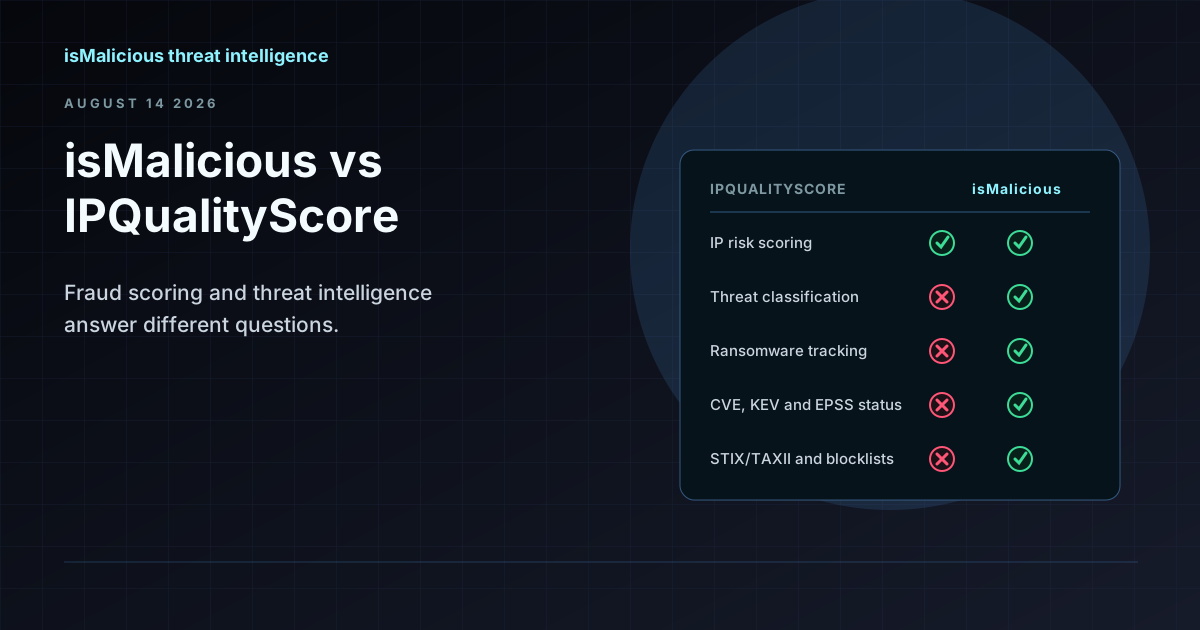
IPQualityScore and isMalicious both take an IP address and return an assessment, which is why they keep appearing in the same evaluations. It is also why those evaluations often go badly: the two products answer questions that only look similar from a distance.
IPQS answers "is this traffic likely to be fraudulent?" isMalicious answers "is this infrastructure malicious?" A residential proxy used by someone creating fake accounts is high-risk to IPQS and unremarkable to a SOC. A compromised web server distributing malware is critical to a SOC and irrelevant to a signup form. Both assessments are correct within their own frame.
What IPQualityScore Does Well
IPQS is a fraud detection service, and within that scope it is well built:
- Proxy, VPN, and Tor detection with the kind of granularity that fraud scoring requires, where the difference between a datacenter proxy and a residential one changes the decision.
- Bot and fraud scoring that combines IP signals with device fingerprinting and behavioural data.
- Disposable email detection, which is a specific and genuinely useful capability for anyone operating a signup flow.
- Ad fraud prevention, filtering invalid traffic before it consumes a media budget.
If your problem is fake accounts, promo abuse, chargebacks, or paid traffic quality, this is a service aimed directly at you.
Where the Gap Shows Up for Security Teams
The limitations only matter if you are trying to use IPQS for security operations rather than fraud prevention:
- It is fraud-focused, not a general threat intelligence platform. The taxonomy is built around abuse likelihood, not around malware families, threat groups, or campaign infrastructure.
- No CVE intelligence. Nothing about vulnerability exploitation, which is where a large share of intrusions begin.
- No ransomware group tracking. When an indicator belongs to an extortion campaign, that context is absent.
- No dark web monitoring, so credential and data exposure signals sit outside the product.
- No STIX/TAXII support, which complicates ingestion into threat intelligence platforms.
- No streaming threat feed for pushing indicators into detection controls.
- Domain reputation limited to fraud signals rather than phishing, malware hosting, or C2 classification.
To be clear, none of these are failures. A fraud API is not supposed to track ransomware groups. They are simply the reasons a SOC evaluating IPQS as its threat intelligence source ends up needing something else as well.
What isMalicious Provides
isMalicious is built for the security operations side of the same address space:
- Multi-source reputation for IPs, domains, and URLs, classified by threat category — phishing, malware, C2, scanning — rather than by fraud likelihood.
- CVE intelligence with CVSS, EPSS, and KEV status, so exploitation evidence sits next to indicator reputation.
- Ransomware group tracking and dark web exposure signals.
- URL scanning with redirect-chain tracking, for phishing triage rather than traffic scoring.
- Infrastructure pivots — WHOIS, DNS history, reverse IP, and ASN context — which is how one indicator becomes a campaign.
- STIX/TAXII export and blocklist feeds for firewalls, DNS resolvers, and mail gateways.
On proxy and VPN detection specifically, isMalicious provides ASN-level context distinguishing datacenter from residential ranges along with VPN and hosting provider signals. That is adequate for security triage and less granular than a service whose entire purpose is fraud fingerprinting. Where deep proxy detection is the requirement, IPQS is stronger, and pretending otherwise would not help anyone choose.
Feature Comparison
| Capability | IPQualityScore | isMalicious |
|---|---|---|
| IP reputation / risk score | Yes | Yes |
| Proxy / VPN / Tor detection | Yes, granular | Partial (ASN and hosting context) |
| Bot and device fingerprinting | Yes | No |
| Disposable email detection | Yes | No |
| Domain reputation | Partial (fraud signals) | Yes |
| URL scanner | Partial | Yes |
| Ransomware group tracking | No | Yes |
| CVE intelligence (CVSS, EPSS, KEV) | No | Yes |
| Dark web monitoring | No | Yes |
| STIX/TAXII export | No | Yes |
| Streaming threat feed | No | Yes |
| Bulk API | Yes | Yes |
| Free tier available | Yes | Yes |
Choosing by Team Rather Than by Feature
The cleanest way to decide is to ask who is making the decision the score feeds into.
If a product or anti-abuse team owns the decision — should this signup proceed, should this transaction clear, is this ad impression valid — then fraud signals are the right input. Proxy detection, device fingerprinting, and disposable email checks map directly onto that decision.
If a security team owns the decision — should this alert escalate, is this connection part of an intrusion, should this domain be blocked — then threat classification, infrastructure pivots, and exploitation context are the right input. Knowing an address is a VPN does not tell an analyst whether the connection was an attack.
If both functions exist in your organization, running both is a reasonable outcome rather than a duplication. They are answering to different stakeholders with different tolerance for false positives: blocking a legitimate signup costs a customer, while missing a C2 connection costs an incident.
Automation Fit
For security use, the integration surface matters as much as the data. The isMalicious API returns reputation together with WHOIS, DNS, and hosting context in one call, which suits SIEM enrichment and SOAR playbooks where an alert needs to arrive with context attached. Bulk lookups handle the volume that log extraction and incident scoping generate, and blocklist exports close the loop into enforcement controls.
Fraud scoring, by contrast, is typically called synchronously at the application boundary, on one address at a time, in the request path. Different integration shape, different latency budget, different consumer — which is a further sign that these are complementary products rather than substitutes.
Getting Started
If you are protecting a signup flow or an ad budget, IPQS is aimed at your problem and this comparison should point you there. If you are enriching security alerts, investigating infrastructure, or tracking exploitation, see the side-by-side on the IPQualityScore comparison page, then run an address through the IP reputation lookup to see the threat-classification view of the same data. For teams that need both, the API documentation covers wiring security enrichment alongside whatever fraud scoring you already run.
FAQ
Frequently asked questions
Is isMalicious better than IPQualityScore?
Neither is better in the abstract, because they serve different buyers. IPQualityScore is built for fraud prevention — identifying proxies, VPNs, bots, and disposable email addresses to stop account and ad fraud. isMalicious is built for security operations — malicious IPs, phishing domains, ransomware infrastructure, CVE exploitation status, and dark web exposure. A SOC generally needs the second; a product or anti-abuse team may well need the first.
Can isMalicious detect VPNs and proxies like IPQualityScore?
Partially. isMalicious provides ASN-level context that distinguishes datacenter from residential ranges and includes VPN and hosting provider signals as part of IP context. For granular proxy and VPN fingerprinting tuned specifically to fraud scoring, IPQualityScore offers more depth, and that difference is worth being explicit about.
Which one belongs in a SOC?
isMalicious. SOC work requires intelligence on malware, phishing, ransomware groups, command-and-control infrastructure, and vulnerability exploitation — categories a fraud-scoring service does not cover. IPQualityScore is tuned to protect a signup form or an ad budget rather than to support incident response on a network intrusion.
Do teams ever run both?
Yes, and in organizations with separate security and anti-abuse functions it is common. The fraud team scores traffic at the application boundary with IPQS signals, while the security team enriches alerts and investigates infrastructure with isMalicious. They consume different data about the same addresses because they are making different decisions.
What does isMalicious cover that a fraud API does not?
CVE intelligence with CVSS, EPSS, and KEV status; ransomware group tracking; dark web exposure signals; a newly registered domain feed; STIX/TAXII export; and blocklist feeds for firewalls and DNS resolvers. None of those are fraud-scoring functions, and all of them are routine requirements in security operations.
Related articles
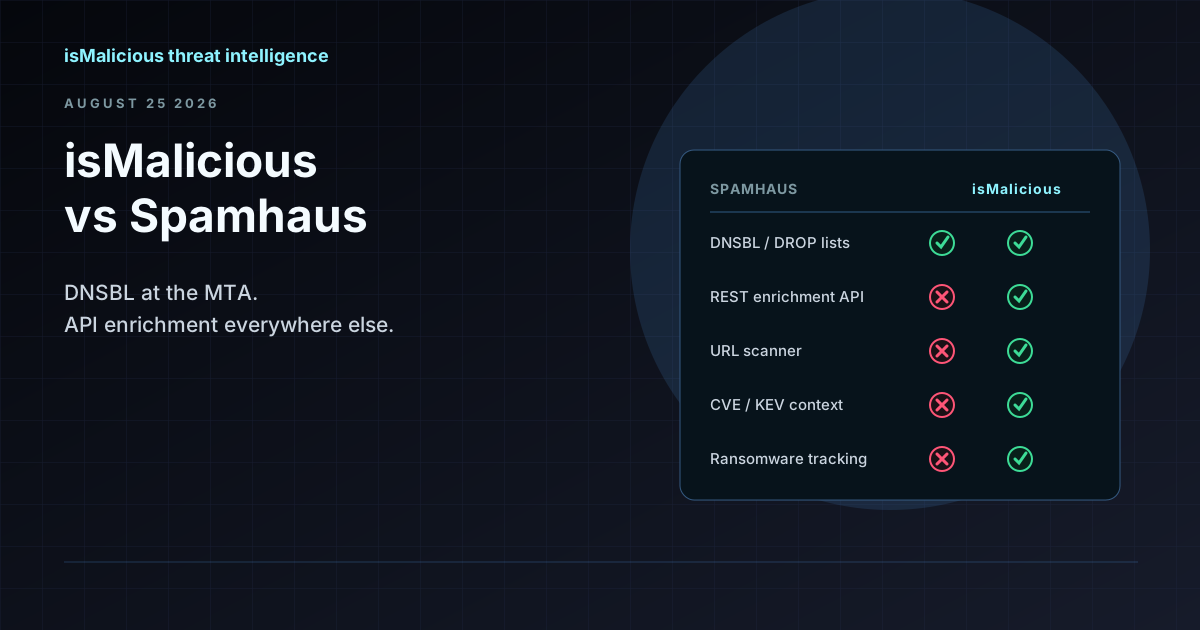 isMalicious vs Spamhaus: DNSBL Blocklists and Threat Enrichment Serve Different Layers
Spamhaus DROP and SBL are the standard for mail and network DNSBL blocking. isMalicious adds REST enrichment, URL scoring, CVE context, and STIX feeds. Most mature stacks use both at different layers.
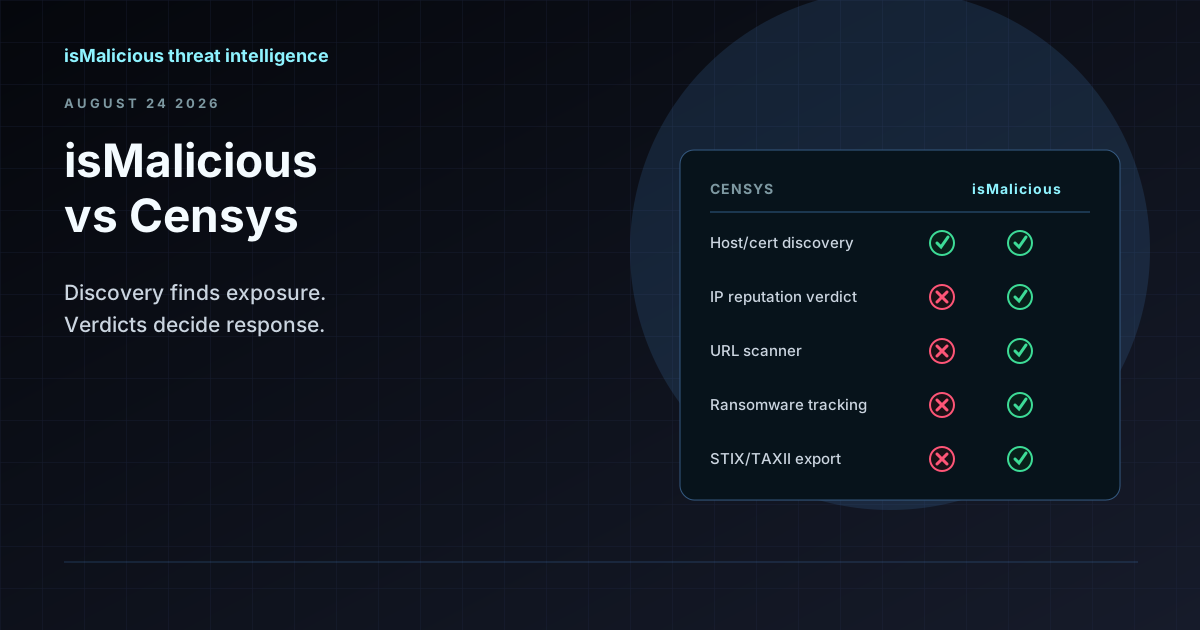 isMalicious vs Censys: Internet Discovery and Reputation Verdicts Are Different Jobs
Censys maps what exists on the internet — hosts, certificates, open ports. isMalicious assesses what is malicious. Most teams comparing the two need the second question answered, not the first.
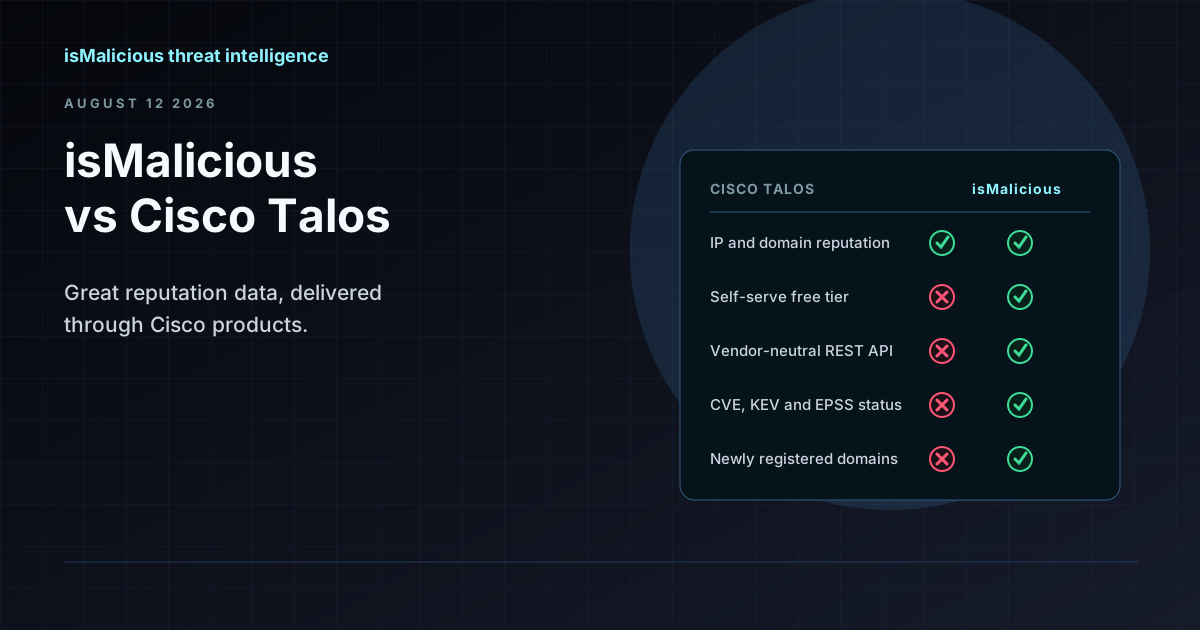 isMalicious vs Cisco Talos: Reputation Lookups Outside the Cisco Stack
Talos reputation is excellent and it lives inside Cisco products. If your stack is not Cisco, or you need an API rather than a web form, that is where the comparison starts.
Check any IP or domain
See what our indexed threat intelligence records say about it.
Try the IP / Domain Checker