WHOIS Lookup Domain registration and ownership data
- Domain
- example.com
- DNS A
- 192.0.2.1
- WHOIS
- Sample record
Sample record · DNS and WHOIS
Look up WHOIS records for any domain. Get registrar, registration dates, nameservers, and ownership information with privacy detection.
curl -d "email=you@example.com" https://ismalicious.com/api/keys/instant50 free requests/month · instant API key · no signup form
Read an example registration record.
Illustration dated 2026-09-01. Indicators, providers, scores and observations are fictional. This is not a current result for these addresses.
Example requestGET /api/check/whois?query=example.com
example.com
Registration
Nameservers
- ns1.example.net
- ns2.example.net
Domain status
clientTransferProhibited
Registrant
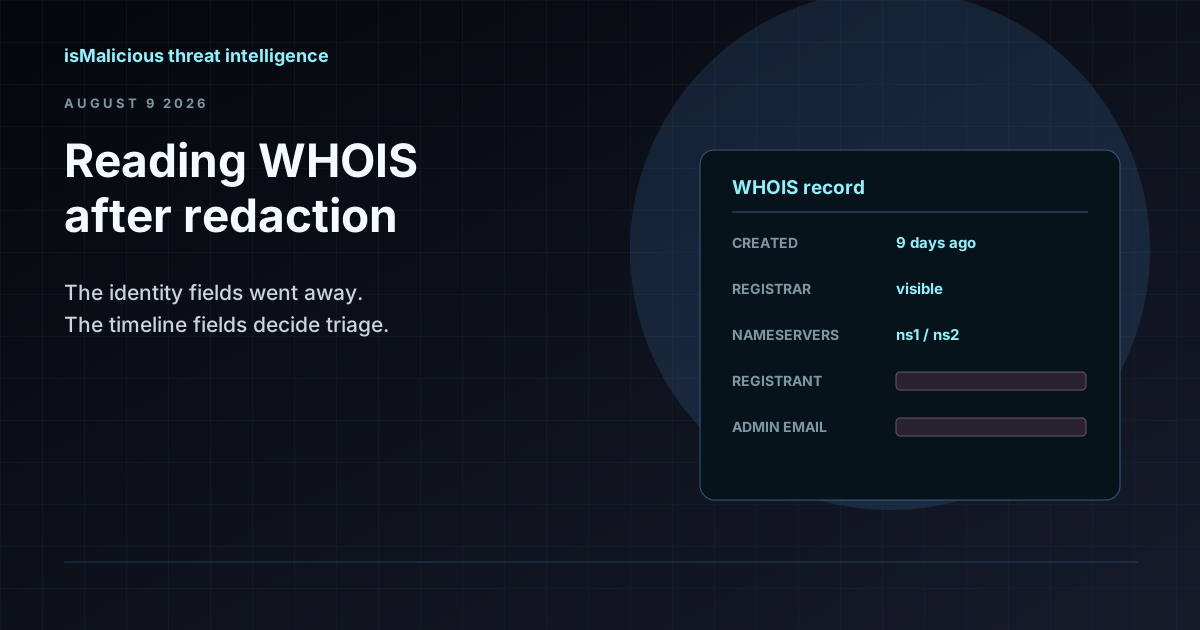
Registrant details are hidden for privacy in this example.
Age on the example date
12days
The age is calculated from the registration date to the stated example date. It does not increase as this illustration gets older.
How to interpret it
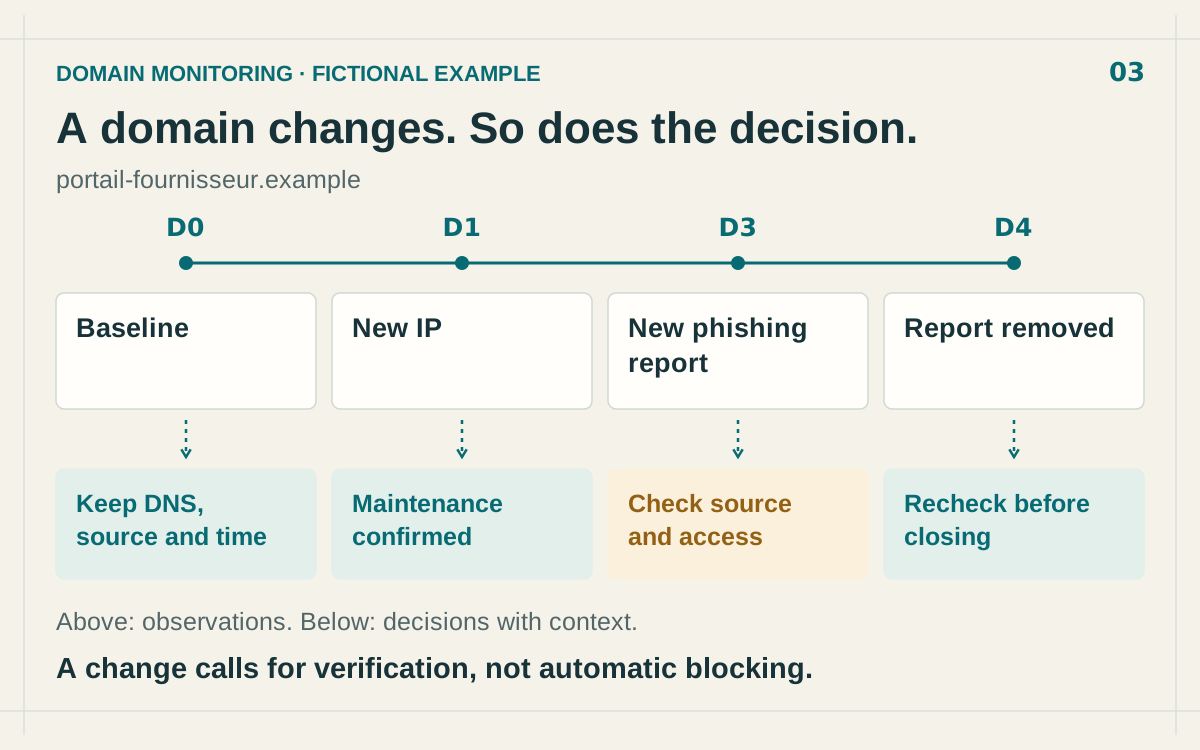
A young domain or private registration is context, not a malicious verdict. WHOIS alone cannot establish whether a domain is trustworthy.
Real reports depend on the indicator, available sources and access level. Missing data is shown explicitly. These panels illustrate how to read the data; they are not an API response schema.
1,000+
TLDs Supported
< 500 ms
Response Time
24hr
Cache Refresh
Key features. Everything you need to protect your infrastructure and users.
Registrar Information
See which registrar the domain is registered with and their contact info.
Registration Dates
Get creation date, expiration date, and last update timestamps.
Nameservers
List of authoritative nameservers for the domain.
Privacy Detection
Detect when domain privacy/proxy services are being used.
Contact Information
Registrant, admin, and tech contact details when available.
Bulk WHOIS
Look up WHOIS data for multiple domains in a single request.
Use cases. How security teams use this tool.
Brand Protection
Monitor for domains that may be impersonating your brand.
Fraud Investigation
Research suspicious domains during fraud investigations.
Threat Attribution
Connect related malicious infrastructure through registration data.
Due Diligence
Verify domain ownership for business transactions.
Understanding WHOIS Records
WHOIS is a protocol that provides registration information about domain names and IP addresses. When you look up a domain's WHOIS record, you can discover who registered it, when it was created, when it expires, which registrar manages it, and what nameservers handle its DNS. This publicly queryable database has been a cornerstone of internet governance since the early days of the web, enabling transparency and accountability in domain ownership.
Why WHOIS Matters for Security
Security professionals rely on WHOIS data for threat intelligence and incident response. During investigations, WHOIS reveals connections between malicious domains through shared registrant information, email addresses, or nameservers. Domain age derived from WHOIS helps identify newly registered domains commonly used in attacks. Registration patterns expose bulk registration behaviors typical of malicious campaigns. Contact information, when available, supports legal actions and abuse reporting to take down malicious infrastructure.
Privacy Protection and GDPR Impact
Since GDPR implementation in 2018, many registrars redact personal information from public WHOIS records to protect registrant privacy. Privacy protection services, also called WHOIS privacy or domain privacy, replace registrant details with proxy information. While this protects legitimate users, it also helps malicious actors hide their identities. Our WHOIS API detects when privacy protection is in use and extracts maximum available information from each record, helping you understand what data is real versus masked.
Using WHOIS for Threat Intelligence
Effective WHOIS-based threat intelligence involves correlating registration data across multiple domains to identify attacker infrastructure. Look for patterns: attackers often reuse registrant emails, prefer certain budget registrars, cluster registrations around campaign dates, and use similar nameserver configurations. Our API enriches raw WHOIS data with parsed fields, domain age calculations, privacy detection, and registrar reputation scores to accelerate your investigations and surface specific intelligence.
Frequently asked questions.
What information is in a WHOIS record?
Why is WHOIS data hidden for some domains?
Do you support all TLDs?
How often is WHOIS data updated?
New to the term? Read the glossary definition.
Related articles. Learn more from our security research blog.
Ready to get started?
Join thousands of security teams using isMalicious to protect their infrastructure.
No credit card required · Free API key