Défense contre le smishing mobile : scanners d'URL et réputation de domaine pour juillet 2026
Le phishing mobile gagne en importance opérationnelle. Les équipes sécurité ont besoin d'analyse d'URL, de vérification de réputation de domaine, de pivots DNS et de circuits de signalement conçus pour le SMS et la messagerie.
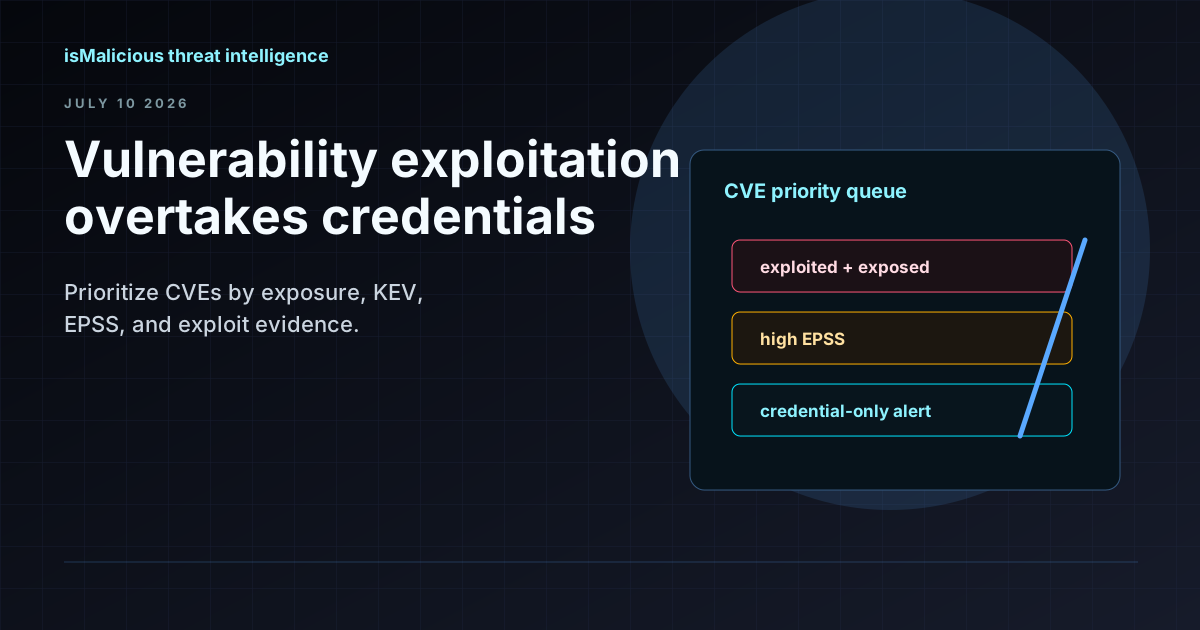
Quand l'exploitation de vulnérabilités dépasse les identifiants : la priorisation des CVE en 2026
Le Verizon DBIR place l'exploitation de vulnérabilités parmi les principales voies de compromission. CVE Watch, KEV, EPSS et le contexte d'exposition aident les équipes à patcher ce que les attaquants utilisent réellement.
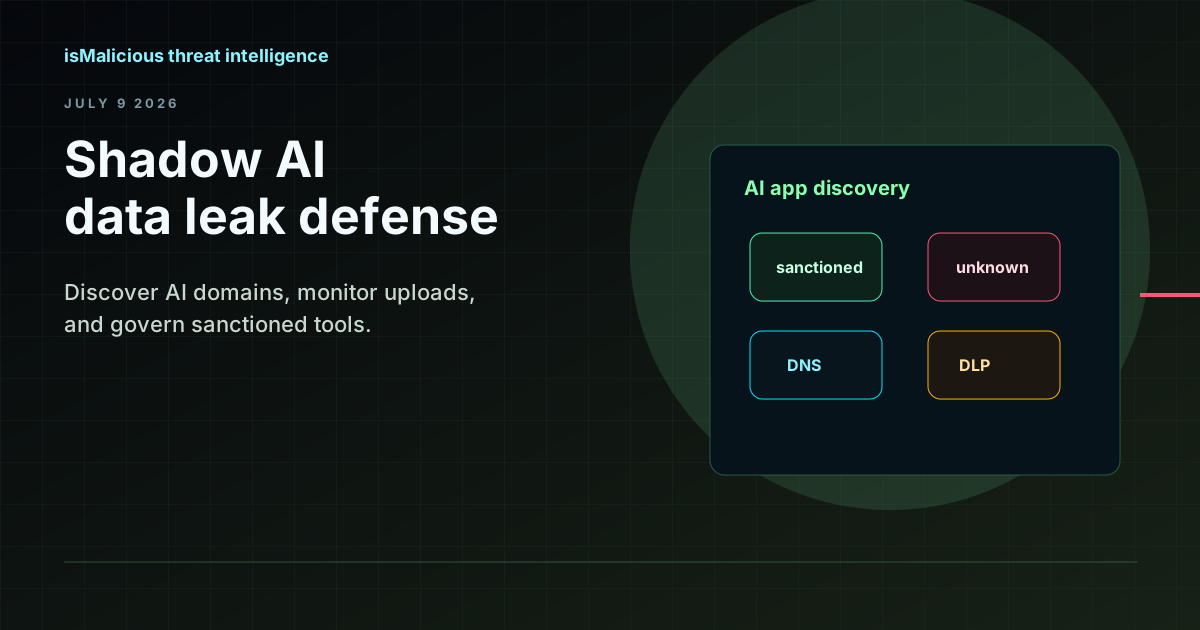
Fuites de données liées au shadow AI : surveiller domaines, URL et applications IA non validées
Le shadow AI est devenu un problème de gouvernance et de fuite de données. Les équipes sécurité ont besoin de découverte, de visibilité DNS, de contrôles sur les applications validées et de surveillance des domaines autour des usages d'outils IA.
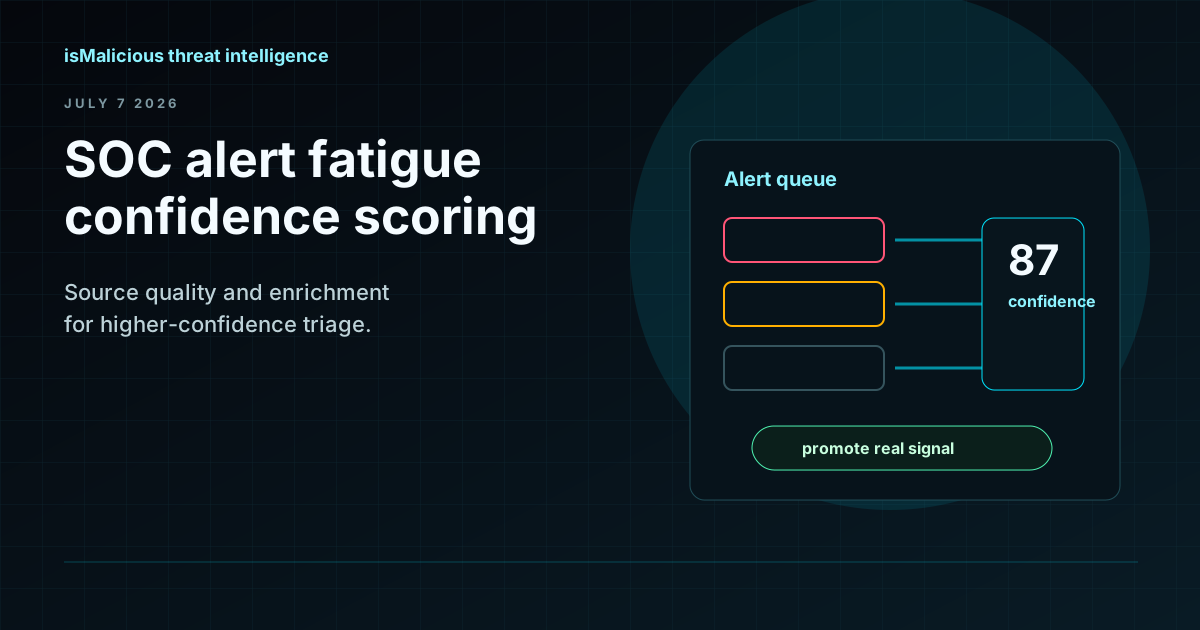
Fatigue des alertes SOC en juillet 2026 : le score de confiance vaut mieux que plus de bruit
Les travaux de Vectra AI montrent que la surcharge d'alertes reste un problème de résilience. Les SOC ont besoin de qualité des sources, de scores de confiance, d'enrichissement et de workflows SIEM qui suppriment le bruit sans masquer le risque.
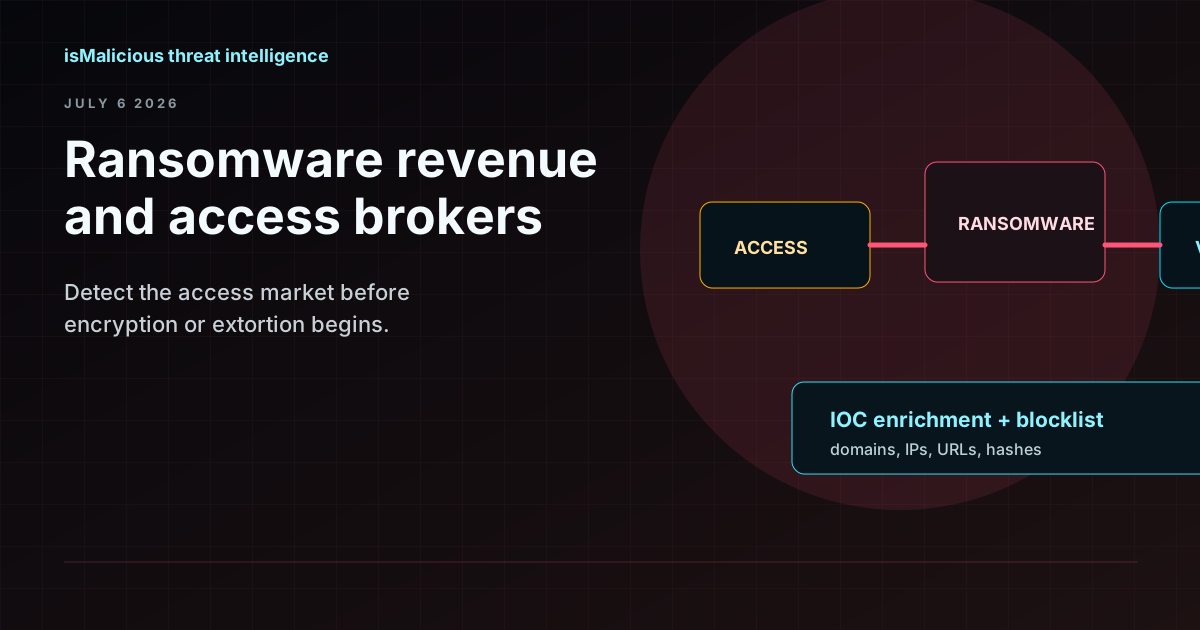
Les revenus du ransomware augmentent : les courtiers d'accès initial rendent la threat intelligence urgente
Les chiffres de revenus ransomware du T1 2026 révèlent un marché de l'accès arrivé à maturité. Les défenseurs ont besoin de renseignement ransomware, de surveillance de domaines, de blocklists et d'enrichissement par API avant que le chiffrement ne commence.
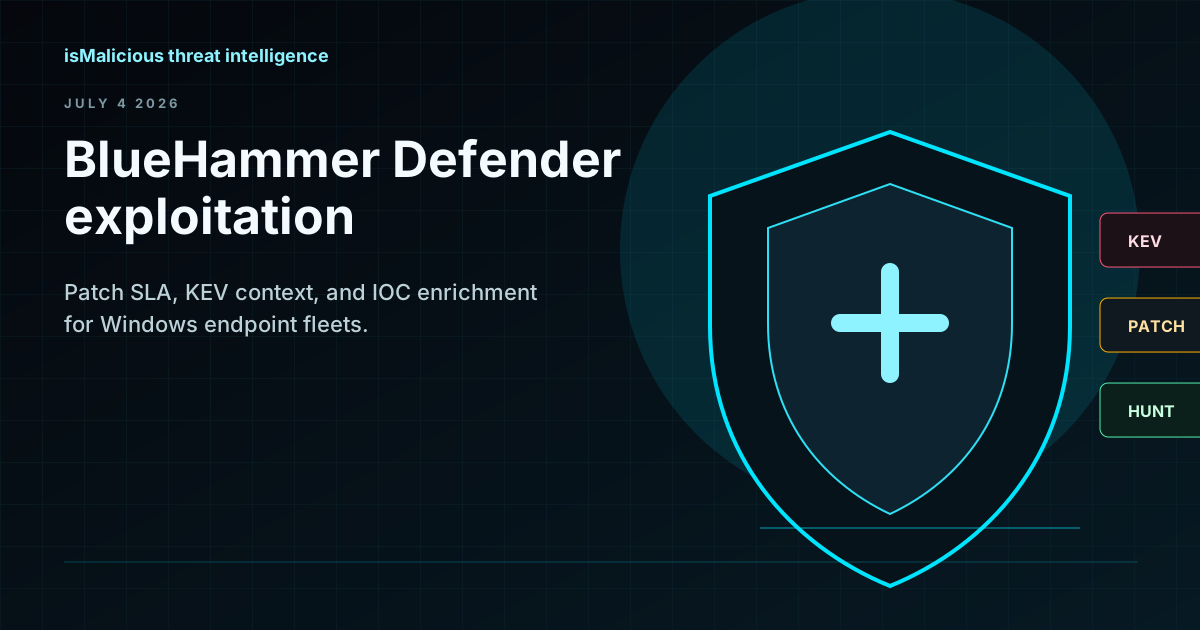
Exploitation de BlueHammer dans Defender : le SLA de patch de juillet 2026 pour les parcs Windows
La couverture médiatique de BlueHammer montre pourquoi le patching des endpoints, le contexte CISA KEV, CVE Watch et l'enrichissement des IOC doivent fonctionner ensemble quand une élévation de privilèges locale devient un mode opératoire ransomware.
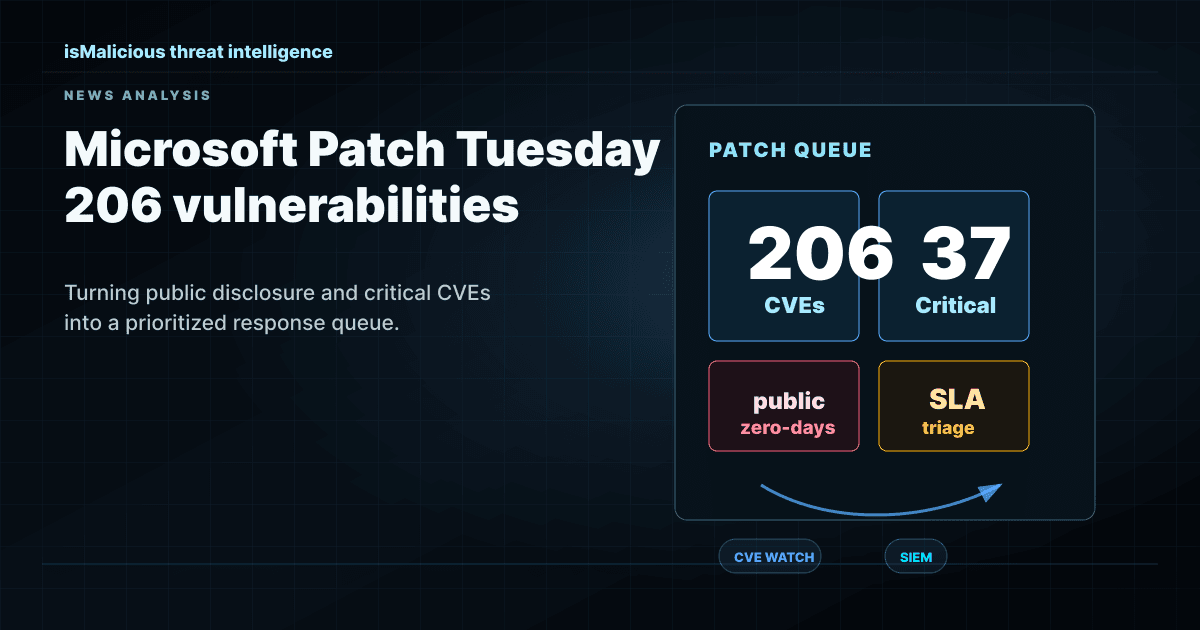
Patch Tuesday Microsoft de juin 2026 : transformer 206 vulnérabilités en file de priorités pour le SOC
Microsoft a corrigé 206 vulnérabilités en juin 2026, dont des zero-days divulgués publiquement. Les équipes sécurité ont besoin de CVE Watch, du contexte KEV, de preuves d'exploitation et d'enrichissement pour éviter la fatigue du patch.
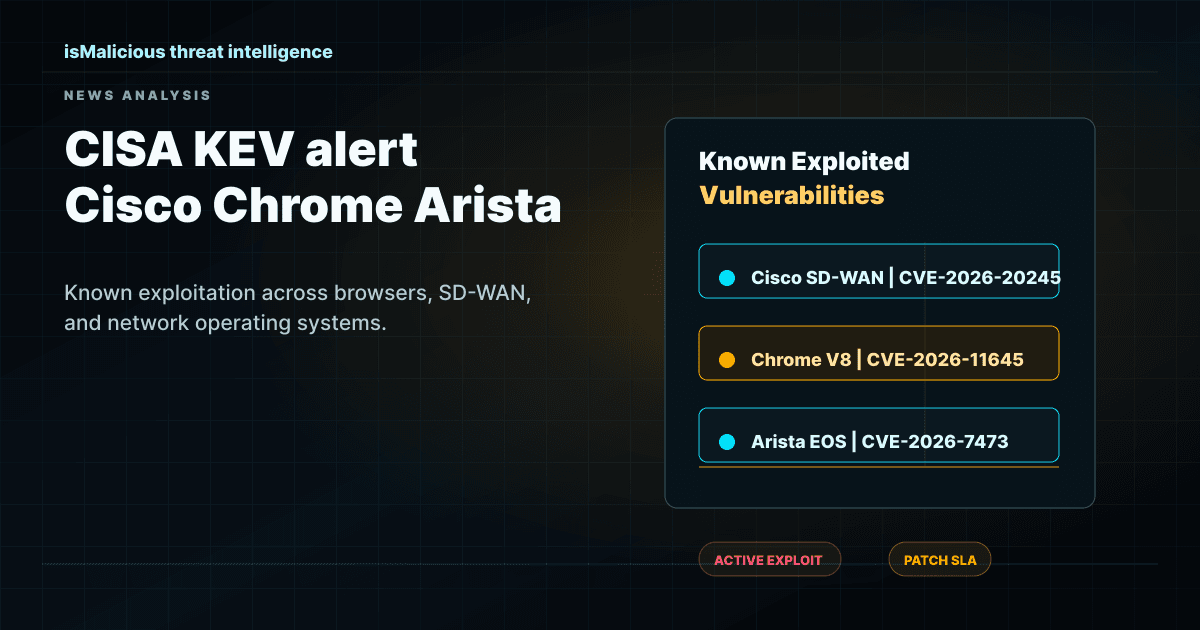
Le CISA KEV ajoute des failles Cisco, Chrome et Arista : comment prioriser l'exploitation active
La CISA a ajouté au catalogue KEV des vulnérabilités Cisco SD-WAN, Google Chromium V8 et Arista EOS en juin 2026. Voici comment les équipes SOC et gestion des vulnérabilités doivent transformer ce signal en action.
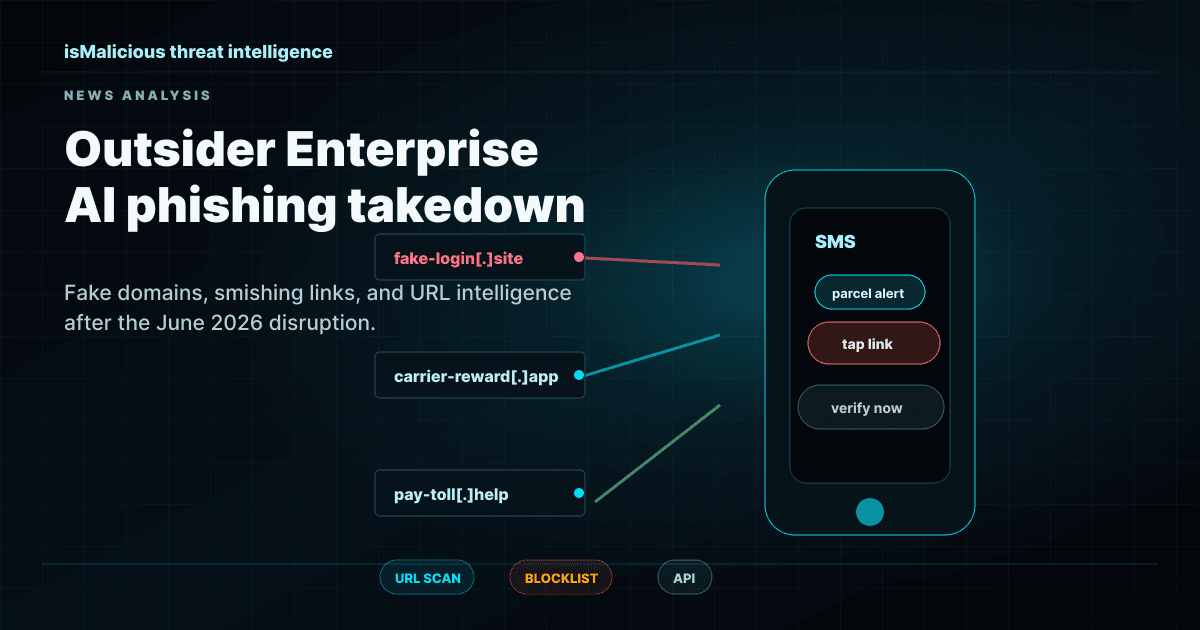
Démantèlement d'Outsider Enterprise : l'infrastructure de phishing dopée à l'IA est devenue un problème de réputation de domaine
Le démantèlement d'Outsider Enterprise par le FBI, Google et Black Lotus Labs montre pourquoi la défense contre le phishing IA passe par le scan d'URL, la vérification de réputation de domaine, les blocklists et un enrichissement rapide par API.