SOC Alert Fatigue In July 2026: Confidence Scoring Beats More Noise
Vectra AI research shows alert overload remains a resilience problem. SOC teams need source quality, confidence scoring, enrichment, and SIEM workflows that suppress noise without hiding risk.
 IsMalicious Team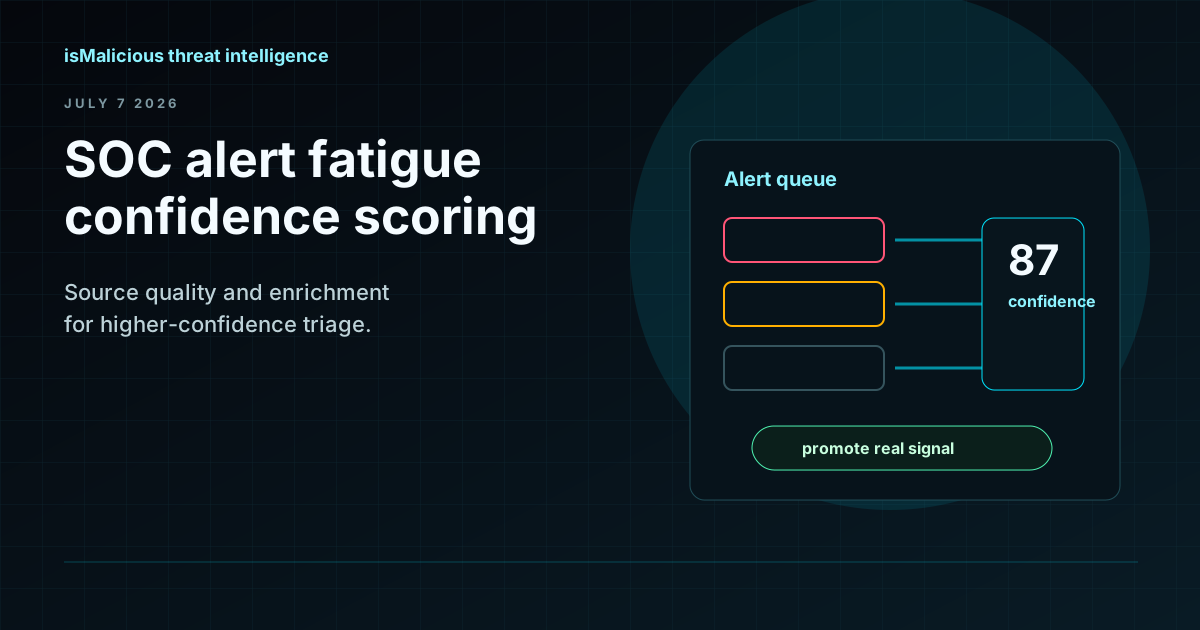
SOC alert fatigue is no longer a tooling problem. It is a signal-quality problem. Vectra AI's 2026 State of Threat Detection and Response reporting says defenders still face unaddressed alerts, fragmented visibility, and uncertainty about whether the right threats are being prioritized. That matches what analysts experience daily: more dashboards, more automation, and still too many alerts that do not tell a clear story.
The fix is not simply to buy another alerting product. The fix is to make each alert more defensible. If an IP, domain, URL, or file hash is suspicious, the analyst needs to know why, how fresh the evidence is, which sources agree, and whether the indicator appears in related infrastructure.
Alert Volume Is Not The Primary Metric
Reducing alert count is useful only if true risk remains visible. A SOC can lower volume by tuning detections into silence, but that does not improve security. Better metrics include:
- percentage of alerts enriched automatically;
- time to first useful context;
- source agreement on malicious verdicts;
- age of intelligence evidence;
- number of alerts promoted to incident;
- number of incidents closed with documented enrichment;
- false-positive rate by rule and source.
These metrics focus on decision quality, not just queue size.
Confidence Scoring Gives Analysts A Starting Point
A confidence score should not be a mysterious number. It should summarize evidence. For example, a domain seen on one stale feed is different from a newly registered domain that appears in phishing telemetry, DNS pivots, certificate reuse, and blocklist sources. The second case deserves faster escalation.
The isMalicious data quality model supports this operational view. Analysts need source names, freshness, categories, and context. They should be able to challenge the verdict, not merely accept it.
Enrichment Belongs Inside SIEM And SOAR
Manual enrichment does not scale. If a SIEM alert contains an external IP, domain, URL, or hash, the enrichment should appear in the alert automatically. Use the threat intelligence API and API docs to connect:
- IP reputation;
- domain intelligence;
- URL scanning;
- file hash checks;
- DNS history;
- blocklist evidence from blocklists.
This creates a standard case note. Analysts can still investigate, but they start with evidence instead of empty fields.
A Practical Confidence Model
A useful SOC confidence model should be simple enough for analysts to trust. Start with four factors:
- source reliability: how consistent the provider has been historically;
- source agreement: whether independent sources support the same verdict;
- freshness: whether the evidence is recent enough for the indicator type;
- context: whether the indicator appears in a suspicious path, campaign, or case.
Do not hide these factors behind a single black-box score. Show the evidence beside the verdict. If an alert is downgraded because evidence is stale, the analyst should see that. If an alert is escalated because a domain appears in multiple phishing sources and shares DNS history with known infrastructure, that should be visible too.
This transparency is also useful for tuning. When a rule produces false positives, the team can ask whether the problem is the detection logic, the source, the enrichment threshold, or the asset context.
AI In The SOC Needs Guardrails
AI can summarize alerts and cluster cases, but it should not invent verdicts. Evidence should come from telemetry and threat intelligence. The AI layer should explain, group, and recommend next steps based on source-backed data.
For SOC leaders, this distinction matters. AI can reduce repetitive work, but it cannot compensate for poor visibility, stale feeds, or missing ownership. The durable improvement is trusted enrichment plus workflow discipline.
Operational CTA
Connect enrichment to your SIEM, review SOC threat intelligence, and use data quality to tune detections by evidence strength. The goal is not fewer alerts at any cost. The goal is fewer unsupported decisions.
Frequently asked questions
- Why is SOC alert fatigue still a problem in 2026?
- Security teams have more tools and more automation, but alerts still lack consistent context, confidence, ownership, and prioritization. More detections do not automatically mean better response.
- What is confidence scoring in threat intelligence?
- Confidence scoring summarizes how strongly available sources support a verdict, including source reliability, freshness, source agreement, and indicator context.
- How can enrichment reduce false positives?
- Enrichment adds reputation, blocklist, passive DNS, certificate, malware, and source-quality context so analysts can separate benign noise from indicators that deserve escalation.
- How does isMalicious support SOC triage?
- isMalicious provides source-backed verdicts, data quality context, IP/domain/URL/hash enrichment, and API integrations for SIEM and SOAR workflows.
Related articles
 Threat Intelligence Sources: Evaluate Evidence Before You Act
Use isMalicious Sources and Threat Patterns to examine freshness, contribution, agreement, coverage, and corpus-wide patterns before turning a detection into action.
 SOC Alert Fatigue: How Threat Intelligence Reduces False Positives Without Hiding Real Attacks
Alert fatigue is not a staffing problem alone. SOC teams need better evidence, source quality, confidence bands, and enrichment workflows that turn noisy alerts into defensible decisions.
 Cloud IP Reputation: What AWS, Azure, and GCP Defenders Should Track in 2026
Cloud IP addresses are shared, recycled, and abused at scale. Learn how to interpret reputation signals, reduce false positives, and align network security with platform-native controls across the three major hyperscalers.
Protect Your Infrastructure
Check any IP or domain against our threat intelligence database with indexed records.
Try the IP / Domain Checker