Shadow AI Data Leak Defense: Monitor Domains, URLs, And Unsanctioned AI Apps
Shadow AI has become a governance and data leakage issue. Security teams need discovery, DNS visibility, sanctioned app controls, and domain monitoring around AI tool usage.
 IsMalicious Team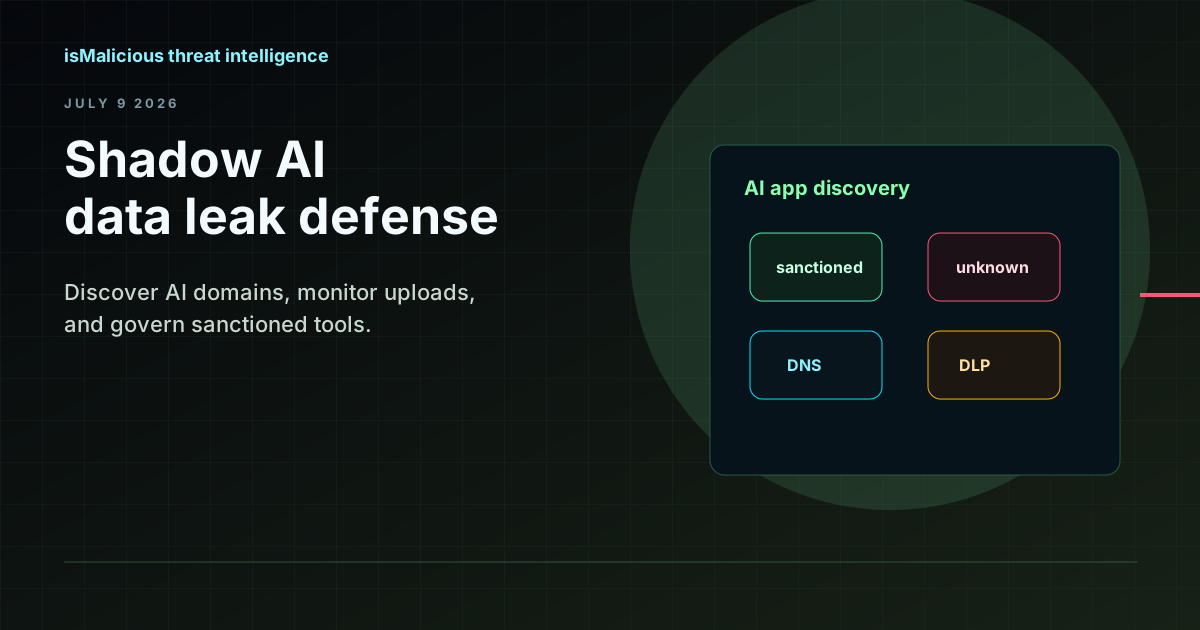
Shadow AI is no longer a theoretical governance concern. Microsoft Learn defines shadow AI as AI tool usage outside organizational approval and describes risks including sensitive data leakage, noncompliance, and reputational harm. That is the practical issue for July 2026: employees want productivity, but security teams need visibility into where data is going.
The hard part is that shadow AI rarely looks like malware. It can be a browser tab, a personal account, a plugin, a browser extension, a transcription tool, a coding assistant, or a SaaS app connected through OAuth. Traditional awareness training does not give defenders enough telemetry.
Treat AI Tools As Data Destinations
Security teams should classify AI tools the same way they classify storage, collaboration, and code-sharing platforms. Ask:
- is the tool sanctioned?
- does it train on submitted data?
- what account identity is used?
- does it support enterprise retention and audit?
- what data categories are allowed?
- are uploads, prompts, and files logged?
- can DLP policies block sensitive submissions?
Microsoft's staged guidance emphasizes discovery, blocking unsanctioned apps, preventing sensitive data from going to sanctioned apps, and governing AI interactions. That model maps directly to SOC and compliance operations.
Domain And URL Visibility Matter
AI governance often starts with policy, but enforcement starts with network and browser visibility. Monitor:
- AI app domains and subdomains;
- newly registered lookalikes of popular AI brands;
- browser extensions that call AI APIs;
- OAuth grants to AI-adjacent tools;
- DNS requests from unmanaged devices;
- URLs used by prompt-sharing or file-upload services.
Use domain intelligence, URL scanning, and DNS history to distinguish approved tools from suspicious infrastructure. A fake AI assistant domain can be both a data leakage path and a credential phishing path.
What To Log For Investigation
Shadow AI investigations need enough telemetry to answer factual questions without over-collecting user content. Useful records include:
- destination domain and URL category;
- account identity and device posture;
- sanctioned or unsanctioned app status;
- upload size and file type;
- DLP policy match;
- OAuth grant and permission scope;
- browser extension ID;
- timestamp and business unit.
The goal is not to read every prompt. The goal is to know whether regulated, confidential, customer, source-code, or credential material moved into a place the organization cannot govern. That distinction helps legal, compliance, and security teams respond proportionally.
Governance Needs A Response Loop
Do not make shadow AI a policy-only issue. Build a response loop:
- discover AI app usage;
- classify sanctioned and unsanctioned tools;
- monitor sensitive data movement;
- enrich unknown domains and URLs;
- block high-risk destinations;
- educate users with specific alternatives;
- audit exceptions and repeat usage.
The isMalicious data quality page helps teams review source-backed evidence when unknown domains appear in telemetry. For automation, the API can enrich AI-related domains and URLs in SIEM, proxy, or DLP workflows.
Handle Exceptions Explicitly
Some teams will need new AI tools before procurement finishes. Do not force them into secrecy. Create a temporary exception path with owner, approved data types, expiration date, and logging requirements. Shadow AI risk falls when users have a realistic way to ask for a tool and get a documented answer.
Operational CTA
Monitor domains, URLs, and certificates tied to AI tools. Connect enrichment to your SIEM, review API Docs, and build a sanctioned AI inventory. Shadow AI is manageable when usage becomes visible enough to govern.
Frequently asked questions
- What is shadow AI?
- Shadow AI is employee use of AI tools without approval, visibility, or governance from IT, security, legal, or compliance teams.
- Why is shadow AI a data leakage risk?
- Users may paste source code, customer data, credentials, contracts, incident details, or regulated information into tools that are not approved for that data.
- What should teams monitor for shadow AI?
- Monitor AI app domains, URL categories, DNS logs, browser telemetry, DLP events, sanctioned app usage, and uploads of sensitive data.
- How does isMalicious help with shadow AI visibility?
- isMalicious can enrich domains and URLs, inspect DNS history, monitor suspicious infrastructure, and feed risk context into SOC workflows.
Related articles
 SSO Vishing And SaaS Data Theft: Domain Monitoring Before The Helpdesk Call
ShinyHunters-style SSO vishing shows how fake login domains, MFA enrollment abuse, and SaaS access can become data theft. Domain monitoring gives defenders early warning.
 Mobile Smishing Defense: URL Scanners And Domain Reputation For July 2026
Mobile phishing keeps gaining operational relevance. Security teams need URL scanning, domain reputation checks, DNS pivots, and employee reporting workflows built for SMS and chat.
 Shadow AI Governance: How Security Teams Can Detect Risk Without Blocking Innovation
Shadow AI is the new shadow IT: fast adoption, weak visibility, and serious data leakage risk. Security teams need discovery, domain intelligence, policy, training, and monitoring.
Protect Your Infrastructure
Check any IP or domain against our threat intelligence database with indexed records.
Try the IP / Domain Checker