isMalicious vs MISP: Why This Is the Wrong Comparison (and What to Compare Instead)
MISP is where you store and share indicators. isMalicious is where indicators come from. Teams searching for a MISP alternative are usually looking for a feed, not a replacement platform.
 IsMalicious Team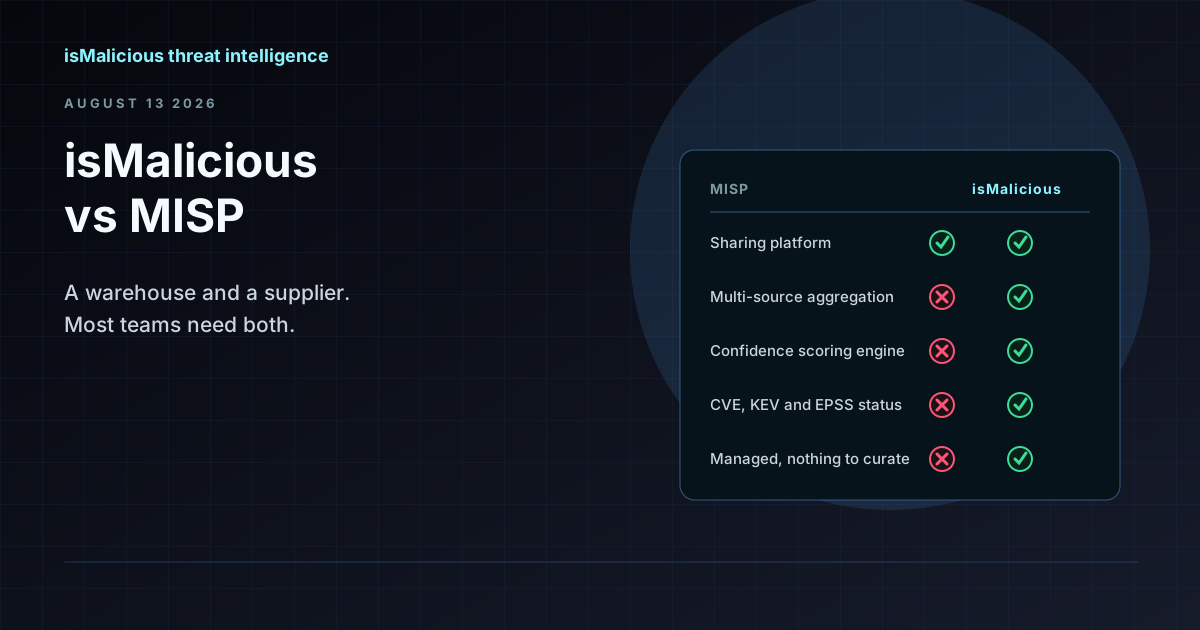
Search interest in "MISP alternative" is steady, and a decent share of it is misdirected. MISP is a threat intelligence sharing platform. isMalicious is a threat data provider. Putting them head to head is like comparing a warehouse to a supplier — you can do it, but the result will not tell you what to buy.
That said, the confusion is understandable, because both get described as "threat intelligence" and both end up in the same architecture diagram. So it is worth being precise about what each one does, where the boundary sits, and what teams are usually actually asking when they search for this comparison.
What MISP Is For
MISP (Malware Information Sharing Platform) is the dominant open-source hub for collecting, correlating, and distributing indicators. Its strengths are real and hard to replicate:
- Open-source and self-hosted, so the data stays under your control and the software cost is zero.
- A genuine sharing model. Sharing groups, distribution levels, and synchronisation between instances make it the standard for ISAC and sector-level collaboration.
- A flexible event and attribute model that can represent almost any kind of intelligence, with taxonomies and galaxies for classification.
- A wide integration ecosystem, with connectors to most security tooling and a mature API.
If several teams or several organizations need to work on the same indicators and see each other's context, MISP is the answer and there is no close second in open source.
What MISP Does Not Do
The gap is not a flaw in MISP. It is a scope boundary that catches teams out during deployment:
- A fresh instance is empty. MISP does not come with intelligence. What it contains is whatever you feed into it.
- No multi-source aggregation. Connect eight feeds and you get eight sets of attributes, with overlapping and contradictory entries you are responsible for reconciling.
- No confidence scoring engine. You can tag confidence, and you must decide what the tag should be. Nothing computes a cross-source score for you.
- No unified CVE, ransomware, or dark web product data. These arrive only if a connected feed supplies them, in whatever shape that feed uses.
- Enrichment requires connectors, each of which needs its own credentials, configuration, and maintenance.
- Real operational overhead. Infrastructure, upgrades, feed curation, taxonomy governance, and stale-attribute cleanup are ongoing work performed by someone on your team.
That last point is where "free" gets misleading. The licence costs nothing; the curation costs analyst time, indefinitely.
What isMalicious Provides Instead
isMalicious sits on the supply side of that boundary:
- Multi-source aggregation with confidence scoring, so the reconciliation between overlapping sources happens before the data reaches you rather than after.
- A REST enrichment API returning reputation, WHOIS, DNS, and hosting context for an indicator in one call — the lookup endpoint is the usual entry point.
- CVE intelligence with CVSS, EPSS, and KEV status, so vulnerability context sits alongside indicator context rather than in a separate system.
- Ransomware group tracking and dark web exposure signals as first-class product data.
- STIX/TAXII collections for ingestion, and blocklist exports for enforcement controls.
- A managed service, meaning there is no instance to patch and no feed catalogue to curate.
What it does not provide is a sharing platform. There is no event model, no distribution groups, no instance synchronisation, no collaborative case model across organizations. If that is what you need, you need MISP.
The Architecture That Actually Gets Deployed
In practice the two compose cleanly, and this is the pattern worth planning for:
- MISP is the hub. Events, attributes, sharing groups, and organizational collaboration live there.
- isMalicious is a feed into it. STIX/TAXII collections or scheduled imports supply aggregated, scored indicators alongside your community feeds.
- isMalicious is also an enrichment call from it. When an analyst opens an attribute, an API lookup attaches current reputation, registration age, and hosting context to what MISP already knows.
- Enforcement pulls from whichever is authoritative. Blocklists can be exported from MISP after your own curation, or consumed directly from isMalicious where you want the vendor's scoring to govern.
The result is that MISP handles collaboration and institutional memory, and the feed handles breadth and freshness. Neither is doing the other's job badly.
Feature Comparison
| Capability | MISP | isMalicious |
|---|---|---|
| Threat sharing platform | Yes | No |
| Self-hosted and open-source | Yes | No (managed service) |
| Multi-source aggregation | No | Yes |
| Confidence scoring engine | No | Yes |
| REST enrichment API | Via feeds and connectors | Yes |
| STIX/TAXII | Import and export | Export |
| CVE intelligence (CVSS, EPSS, KEV) | No | Yes |
| Ransomware group tracking | Via feeds | Yes |
| Managed cloud option | No | Yes |
| Free tier available | Yes (open-source) | Yes |
What Teams Are Usually Asking
Reading between the lines of the search query, there are three distinct questions hiding behind "MISP alternative," and they have different answers.
"We run MISP and the data in it is poor quality." You do not want a different platform. You want better feeds and less curation burden, which means adding an aggregated, scored source rather than replacing MISP.
"We were told to deploy MISP and it looks like a lot of work." It is a lot of work, and whether it is worth it depends on whether you need to share. If your requirement is enriching alerts in a SIEM, an API gets you there in an afternoon and MISP does not. Add the platform when collaboration becomes the requirement.
"We need a threat intelligence platform, not just a feed." Then the comparison you want is MISP against OpenCTI — both are platforms, and that is a fair fight. isMalicious is a feed for either of them.
Getting Started
If MISP is already running, the fastest improvement is usually a better source rather than a different platform: see the side-by-side on the MISP comparison page, then look at STIX/TAXII collections for the ingestion path and the API for attribute enrichment.
If MISP is not running and you are weighing whether to stand it up, try the data layer first. Run a few indicators through the IP and domain lookups, wire the API into your SIEM, and see how much of the requirement that covers. Standing up a sharing platform is a reasonable decision once you know you need to share; it is an expensive way to discover you only needed enrichment.
FAQ
Frequently asked questions
Is isMalicious a MISP replacement?
No, and treating it as one would be a mistake in either direction. MISP is a sharing and storage platform: it holds events, correlates attributes, and distributes indicators between organizations. isMalicious is a threat data provider you ingest into MISP through STIX/TAXII, or query from MISP through an enrichment connector. Replacing one with the other leaves a real gap.
If MISP is free, why pay for a data source?
Because MISP's cost is not the licence, it is the curation. An empty MISP instance has no indicators in it. What you get out depends entirely on the feeds you connect and the effort spent assessing their quality, deduplicating them, and ageing out stale entries. A commercial source with multi-source aggregation and confidence scoring replaces some of that ongoing labour, which is usually the more expensive line item.
How do I feed isMalicious data into MISP?
Through STIX/TAXII collections or scheduled blocklist imports for bulk ingestion, and through the API for on-demand enrichment of existing attributes. A common arrangement runs MISP as the hub with isMalicious as one premium feed alongside community sources, so analysts see aggregated verdicts on the attributes they are already working with.
Does MISP do confidence scoring?
MISP has a flexible tagging and taxonomy model that lets you record confidence, and it does not compute a confidence score for you. Whether an attribute is trustworthy depends on which feed contributed it and what your own team recorded about that feed. Scoring across sources is a data-provider function rather than a platform one.
What if we are a small team without MISP already running?
Then the honest recommendation is to start with the data and add the platform later. A self-hosted MISP instance carries real operational overhead — infrastructure, upgrades, feed curation, taxonomy decisions — that pays off once several people or several organizations need to collaborate on indicators. A small team that mainly needs enrichment in a SIEM gets there faster through an API alone.
Related articles
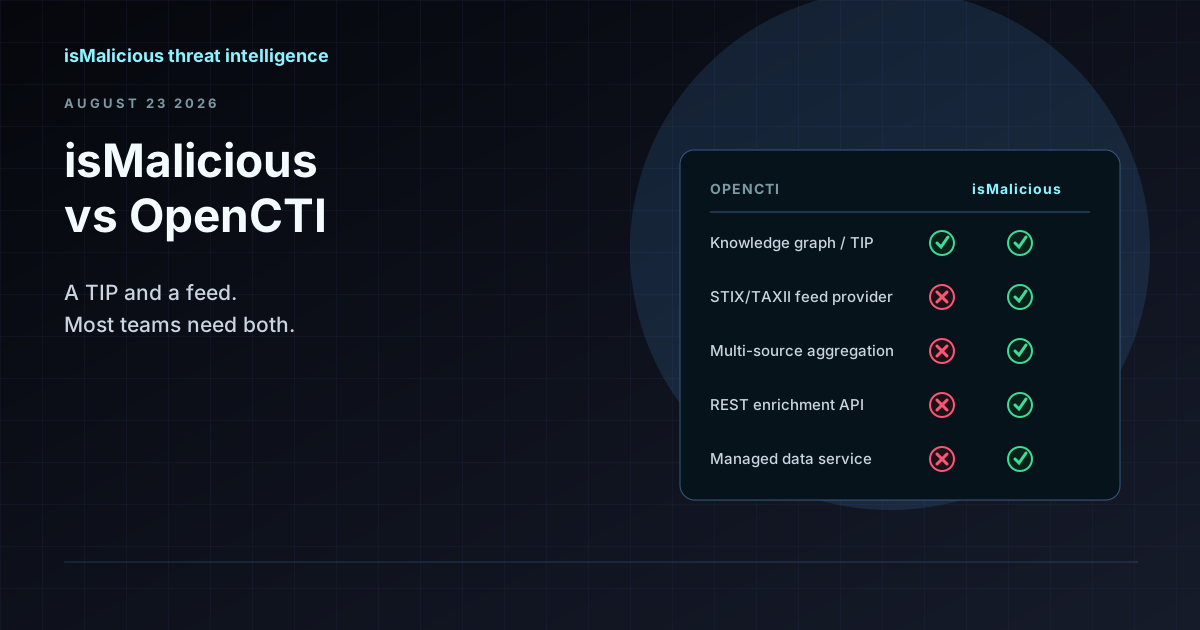 isMalicious vs OpenCTI: Why This Is the Wrong Comparison (and How They Work Together)
OpenCTI is a threat intelligence platform and knowledge graph. isMalicious is a data provider that feeds it. Teams searching for an OpenCTI alternative usually need a feed, not a replacement TIP.
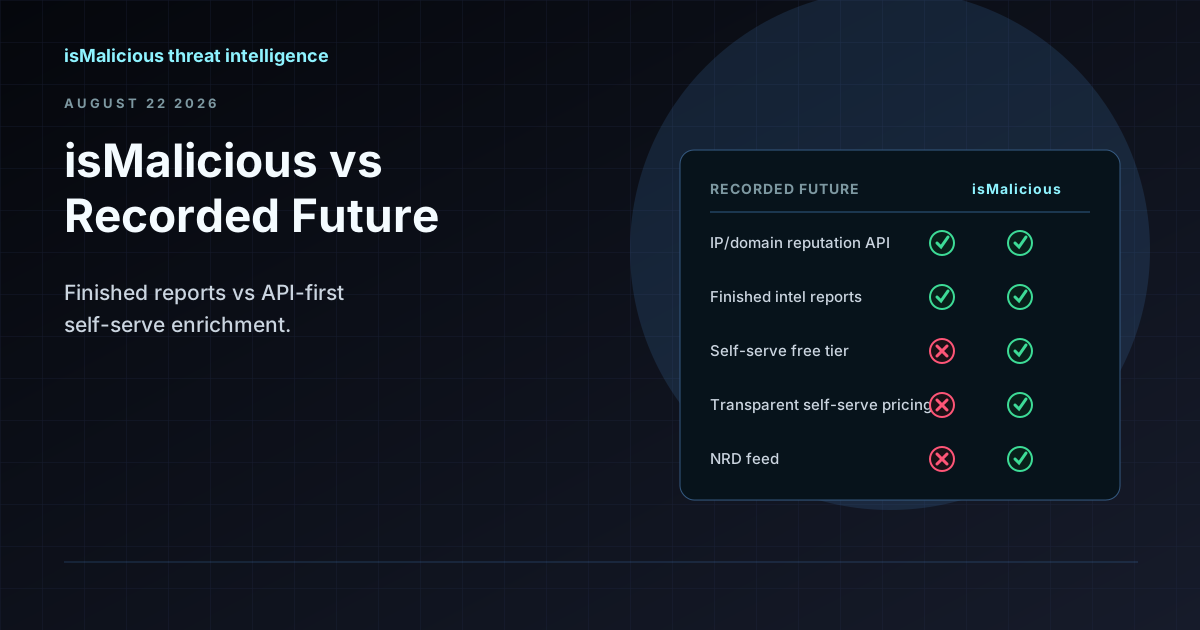 isMalicious vs Recorded Future: When a Threat Data API Makes More Sense Than an Enterprise Intel Program
Recorded Future delivers finished intelligence and analyst support at enterprise scale. isMalicious delivers self-serve enrichment and feeds without a sales cycle. The right choice depends on whether you need strategic reports or automated verdicts.
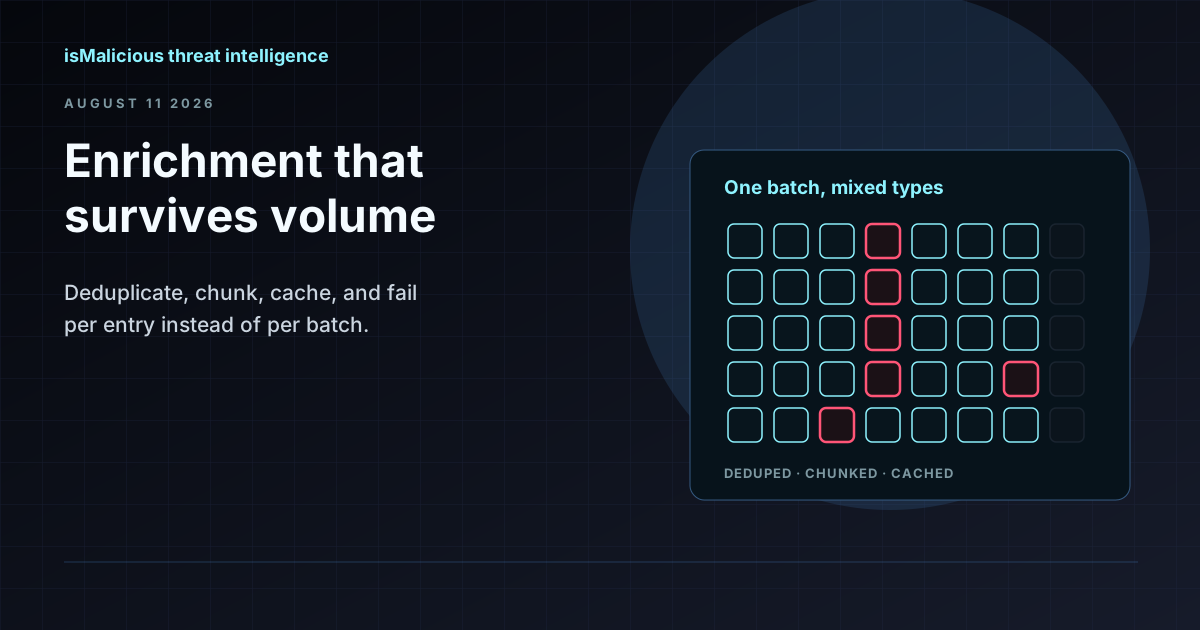 Bulk IP and Domain Lookups: Designing Indicator Enrichment That Survives Real Volume
One incident produces hundreds of indicators, and per-indicator lookups are where triage stalls. Here is how to build a batch enrichment pipeline that respects quotas, deduplicates properly, and fails gracefully.
Check any IP or domain
See what our indexed threat intelligence records say about it.
Try the IP / Domain Checker