isMalicious vs Recorded Future: When a Threat Data API Makes More Sense Than an Enterprise Intel Program
Recorded Future delivers finished intelligence and analyst support at enterprise scale. isMalicious delivers self-serve enrichment and feeds without a sales cycle. The right choice depends on whether you need strategic reports or automated verdicts.
 IsMalicious Team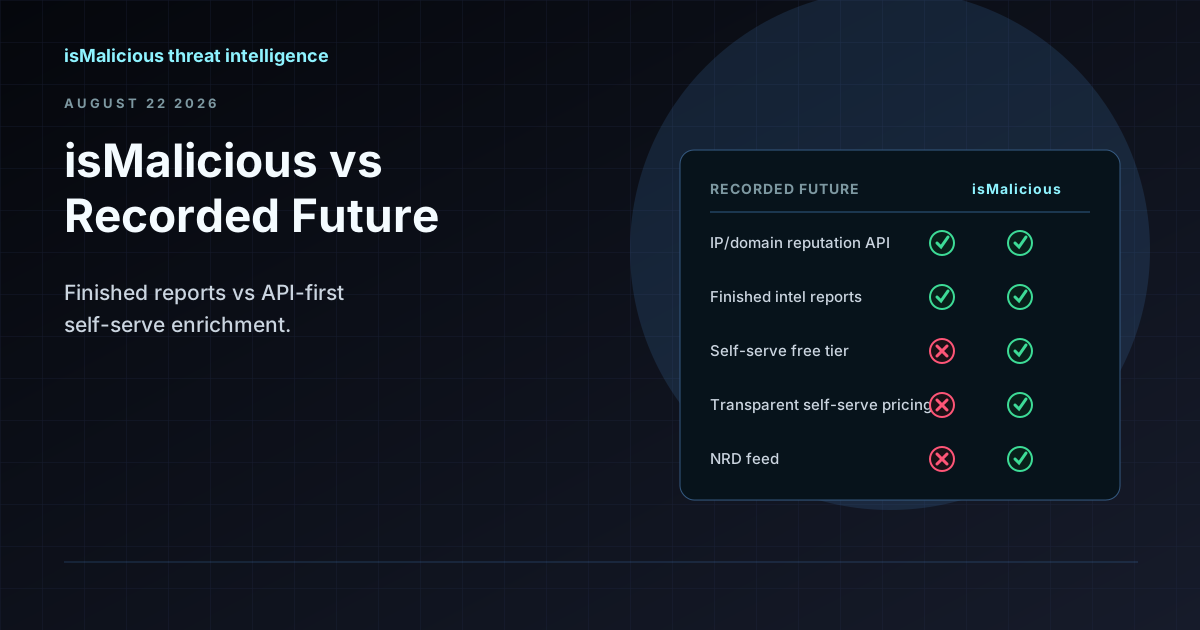
Recorded Future sits at the top of the threat intelligence market for good reason. It aggregates wide source coverage, produces finished intelligence products, and wraps them in analyst workflows that large security organizations depend on. When a CISO funds a strategic intelligence program — complete with briefing cycles, sector reporting, and dedicated vendor support — Recorded Future is frequently the benchmark.
The comparison with isMalicious comes up for a different reason. Teams searching for a "Recorded Future alternative" are often not trying to replicate a full enterprise intel program. They need reputation verdicts in a SIEM, a blocklist that updates without manual curation, or an API they can wire up this week without a six-month procurement cycle. Those are different requirements, and treating them as the same purchase decision leads to the wrong tool — in either direction.
What Recorded Future Does Well
Recorded Future built its reputation on depth beyond raw indicators:
- Finished intelligence reports with analyst context, campaign narratives, and sector-specific briefings that go beyond listing IOCs.
- Broad multi-source aggregation across open, closed, and proprietary collections, curated into a single platform experience.
- Analyst workflows — search, alerting, case management integrations, and the kind of UI that supports daily intelligence production.
- Enterprise support and onboarding, including dedicated customer success for organizations that treat threat intelligence as a staffed function.
- Strategic coverage spanning geopolitical risk, brand monitoring, and vulnerability intelligence alongside traditional IOC data.
If your team reads intelligence reports as part of its operating rhythm and has budget for a platform that supports that rhythm, Recorded Future is built for that job.
Where the Gap Shows Up for Automation Teams
The strengths above come with trade-offs that matter for a different buyer profile:
- No free tier and no self-serve path. Evaluation requires a sales conversation, and contracts commonly run from roughly $50,000 to $500,000 or more per year depending on scope.
- Complex onboarding. Full value typically arrives after integration work, workflow configuration, and analyst training — appropriate for a strategic program, slow for a team that just needs an enrichment endpoint.
- Pricing opacity until procurement. Budget planning is harder when the number depends on modules, seats, and negotiation rather than a published rate card.
- Report-first delivery model. The platform is optimized for analysts reading curated intelligence, not for a firewall pulling a blocklist every hour or a SOAR playbook firing 10,000 enrichment calls per day.
- Latency profile tuned for research, not inline enrichment. API access exists, but the product center of gravity is investigative depth rather than sub-second enrichment at the edge of every alert.
None of that is a criticism for the buyer Recorded Future targets. It is a scope boundary that explains why a security engineer searching for "threat intelligence API" ends up evaluating something else entirely.
What isMalicious Provides Instead
isMalicious is designed for the automation and enrichment side of the same problem space:
- Self-serve access with a free tier and transparent pricing — Pro at $99 per month — so evaluation does not wait on a contract.
- An API-first enrichment model for IPs, domains, and URLs, built for inline use in SIEM and SOAR pipelines rather than a standalone analyst portal.
- Multi-source reputation verdicts with confidence scoring, so overlapping feeds are reconciled before they reach your stack.
- CVE intelligence with CVSS, EPSS, and KEV status alongside indicator context.
- Ransomware group tracking and dark web exposure signals as structured product data.
- Blocklist exports, STIX/TAXII collections, and bulk lookups for enforcement and scale.
- A newly registered domain feed through the NRD list for teams monitoring domain-squatting and fast-flux registration patterns.
- Architecture oriented toward API enrichment latency, so automated pipelines get structured responses without waiting on report generation.
What isMalicious does not provide is the finished report layer, the analyst briefing workflow, or the enterprise customer success model. If your requirement is "tell me what this APT group is doing in my sector this quarter," Recorded Future remains the closer match.
Feature Comparison
| Capability | Recorded Future | isMalicious | | :------------------------------------- | :--------------- | :-------------------- | | Finished intelligence reports | Yes | No | | Analyst support / onboarding | Yes (enterprise) | Self-serve docs | | Multi-source IOC aggregation | Yes | Yes | | REST enrichment API | Yes | Yes (primary product) | | STIX/TAXII export | Yes | Yes | | Blocklist automation | Partial | Yes | | CVE intelligence (CVSS, EPSS, KEV) | Yes | Yes | | Ransomware group tracking | Yes | Yes | | Dark web monitoring | Yes | Yes | | NRD / newly registered domains | Partial | Yes | | URL malware scanning | Partial | Yes | | Self-serve free tier | No | Yes | | Published pricing | No (sales-led) | Yes ($99/mo Pro) |
What Teams Are Usually Asking
Three distinct questions hide behind "Recorded Future alternative," and they have different answers.
"We need enrichment in our SIEM, not a new analyst portal." You want an API and a feed, not a strategic intelligence program. isMalicious is the closer fit; Recorded Future would be overscoped and overpriced for that workflow alone.
"Recorded Future pricing is out of reach and we still need verdicts." The gap is budget and buying motion, not necessarily a rejection of intelligence as a discipline. isMalicious covers automated enrichment and enforcement at a fraction of the cost, with the honest caveat that you lose finished reports and vendor analyst support.
"We run a full CTI function and want to cut the platform." That is a harder trade. isMalicious cannot replace analyst-written campaign intelligence or the workflow layer Recorded Future provides. The realistic path is keeping strategic intel where it earns its budget and moving high-volume enrichment to a dedicated API provider — or using both.
Getting Started
If your requirement is strategic intelligence with analyst support and enterprise reporting, Recorded Future remains the reference product and isMalicious is not pretending to replace it. If your requirement is self-serve enrichment, blocklist automation, and API integration without a sales cycle, see the side-by-side on the Recorded Future comparison page.
The practical next step is to wire a handful of recent alert indicators through the API and compare the enrichment latency and verdict coverage against what your current workflow produces. That test answers the automation question faster than any feature table.
Frequently asked questions
- Is isMalicious a Recorded Future replacement?
- Not for a mature strategic intelligence program. Recorded Future excels at finished reports, analyst workflows, and enterprise-scale coverage with dedicated support. isMalicious is a better fit when the requirement is API enrichment, blocklist automation, and predictable self-serve pricing without a procurement cycle.
- How does pricing compare?
- Recorded Future contracts typically start in the tens of thousands of dollars per year and scale well beyond that for full platform access, with no free tier and a sales-led onboarding process. isMalicious offers a free tier, transparent Pro pricing at $99 per month, and immediate API access for evaluation.
- Does isMalicious include finished intelligence reports?
- No. isMalicious returns structured enrichment data — reputation verdicts, WHOIS, DNS, CVE context, ransomware signals — through API and feed endpoints. It does not produce analyst-written strategic reports, campaign briefings, or the kind of curated narrative intelligence that Recorded Future publishes for enterprise customers.
- What does isMalicious do that Recorded Future often gets evaluated for?
- Automated indicator enrichment at scale: querying IPs, domains, and URLs from a SIEM or SOAR, exporting STIX/TAXII collections, pushing blocklists to firewalls, and running bulk checks against large indicator lists. Those are API and feed workflows, not report-reading workflows.
- Can we use both?
- Yes, and many larger organizations do. Recorded Future can remain the strategic layer while isMalicious handles high-volume enrichment, newly registered domain monitoring through the NRD feed, or a secondary verdict source for automation pipelines that need low-latency API responses.
Related articles
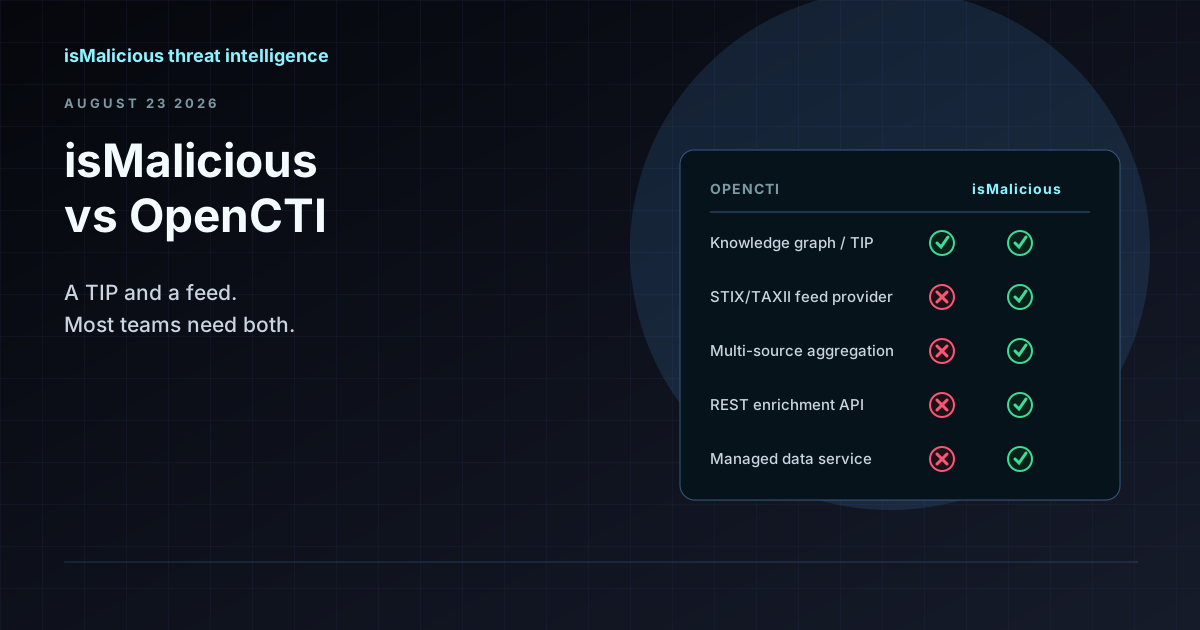 isMalicious vs OpenCTI: Why This Is the Wrong Comparison (and How They Work Together)
OpenCTI is a threat intelligence platform and knowledge graph. isMalicious is a data provider that feeds it. Teams searching for an OpenCTI alternative usually need a feed, not a replacement TIP.
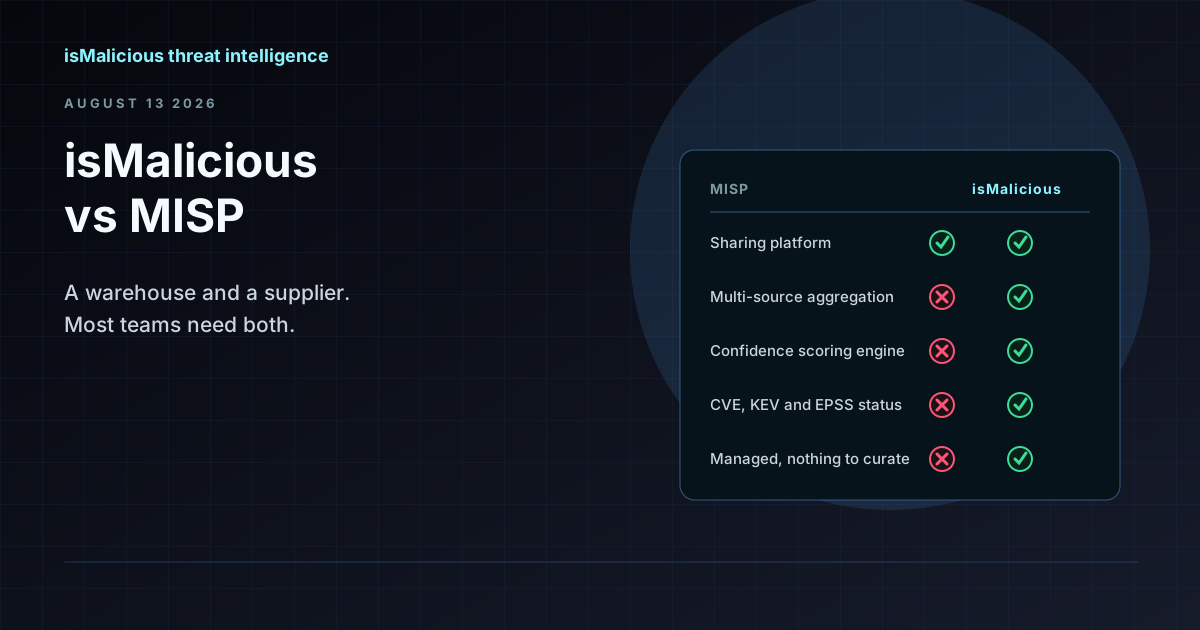 isMalicious vs MISP: Why This Is the Wrong Comparison (and What to Compare Instead)
MISP is where you store and share indicators. isMalicious is where indicators come from. Teams searching for a MISP alternative are usually looking for a feed, not a replacement platform.
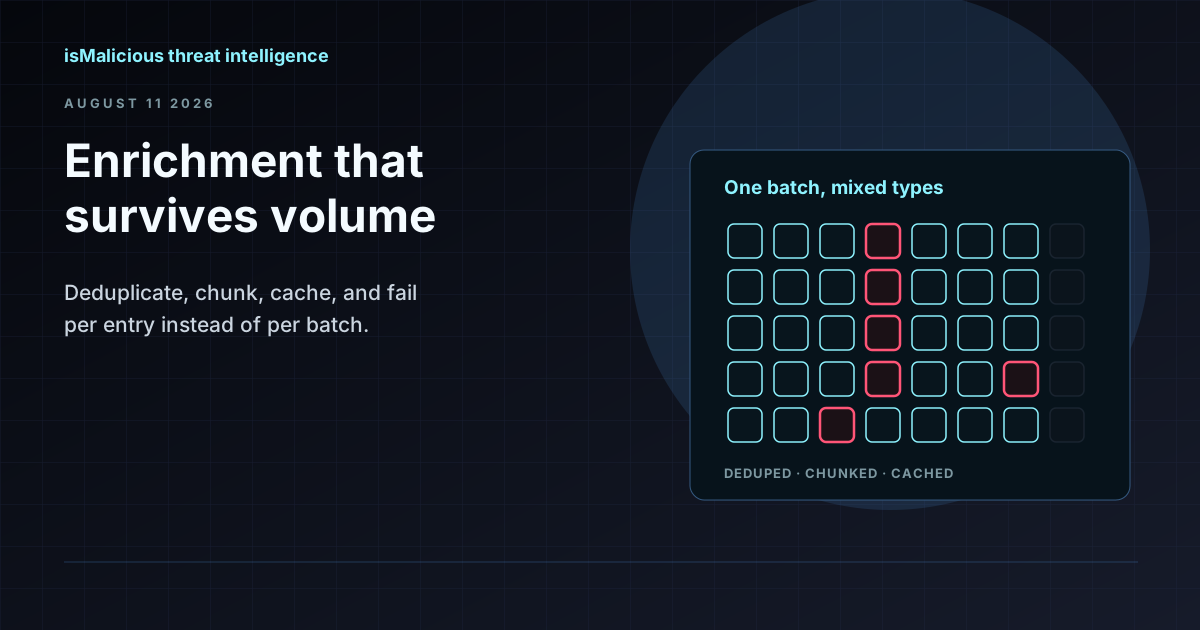 Bulk IP and Domain Lookups: Designing Indicator Enrichment That Survives Real Volume
One incident produces hundreds of indicators, and per-indicator lookups are where triage stalls. Here is how to build a batch enrichment pipeline that respects quotas, deduplicates properly, and fails gracefully.
Protect Your Infrastructure
Check any IP or domain against our threat intelligence database with indexed records.
Try the IP / Domain Checker