isMalicious vs OpenCTI: Why This Is the Wrong Comparison (and How They Work Together)
OpenCTI is a threat intelligence platform and knowledge graph. isMalicious is a data provider that feeds it. Teams searching for an OpenCTI alternative usually need a feed, not a replacement TIP.
 IsMalicious Team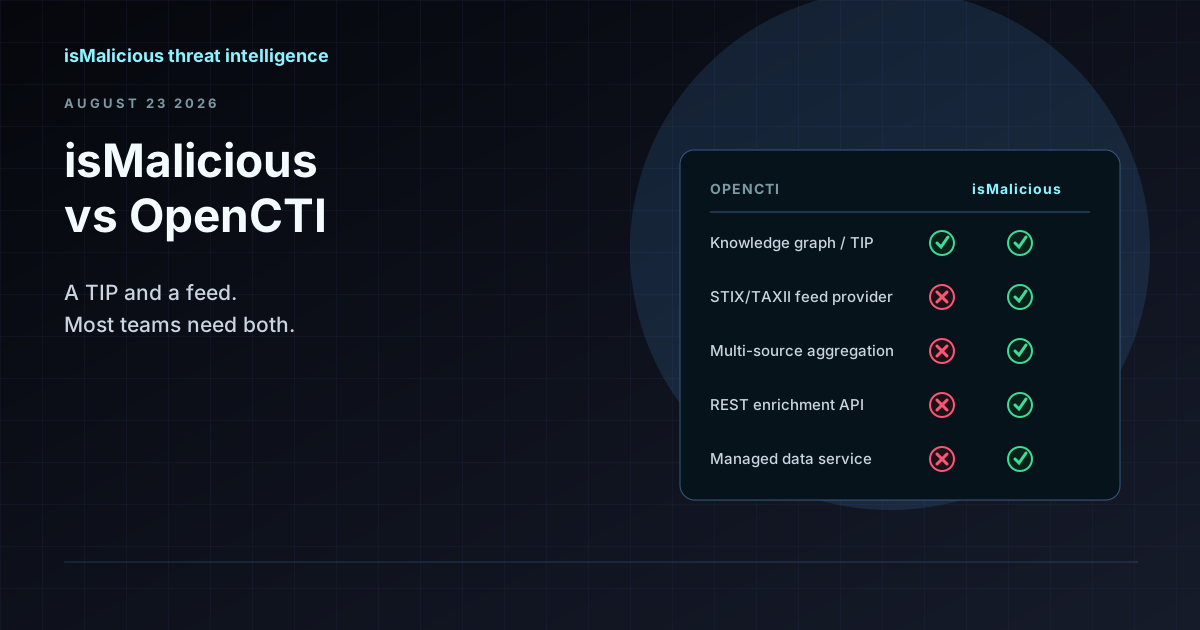
Search interest in "OpenCTI alternative" is growing, and a meaningful share of it is misdirected — in the same way "MISP alternative" often is. OpenCTI is a Threat Intelligence Platform. isMalicious is a threat data provider. Putting them head to head is like comparing a case management system to the feed that populates it.
That confusion is understandable. Both appear in the same architecture diagrams, both get labeled "threat intelligence," and both show up in RFPs under the same category. So it is worth being precise about what each one does, where the boundary sits, and what teams are actually asking when they land on this comparison.
What OpenCTI Is For
OpenCTI (Open Cyber Threat Intelligence) is a modern TIP built around a STIX-native knowledge graph. Its strengths are structural rather than data-generative:
- A STIX 2.1 object model with relationships, sightings, and graph traversal that supports complex investigations.
- Case management and workflow for analysts working incidents alongside the intelligence they collect.
- Connector ecosystem for ingesting from MISP, commercial feeds, sandboxes, and enrichment services.
- Role-based access and sharing for teams that need controlled distribution of sensitive intelligence.
- Dashboards and visualization over the knowledge graph, including MITRE ATT&CK mapping and timeline views.
- Self-hosted or cloud deployment, keeping data residency under your control.
If your requirement is a central hub where analysts store, correlate, and share intelligence — with a graph that connects campaigns to indicators to actors — OpenCTI is a strong answer.
What OpenCTI Does Not Do
The gap is scope, not quality:
- It does not generate intelligence. A fresh OpenCTI instance is empty until connectors populate it.
- No multi-source aggregation engine. Each feed arrives separately; reconciling overlapping verdicts is your team's job unless a feed does it upstream.
- No built-in confidence scoring across sources. You can record confidence in STIX objects, but the platform does not compute a cross-source score for you.
- No native CVE product, ransomware tracking, or dark web monitoring. These appear only if a connected provider supplies them.
- Operational overhead. Infrastructure, upgrades, connector maintenance, taxonomy decisions, and stale-object cleanup are ongoing work.
- Not an enforcement endpoint. OpenCTI distributes intelligence; it does not replace a blocklist on your firewall unless you export to one.
That last point is where the "alternative" search often originates. Teams deploy OpenCTI expecting it to solve the data problem, discover that curation is the hard part, and start looking for something that already aggregates and scores indicators.
What isMalicious Provides Instead
isMalicious sits on the supply side of that boundary:
- Multi-source aggregation with confidence scoring, so reconciliation happens before data reaches your platform.
- A REST enrichment API for IPs, domains, and URLs — one call returns reputation, WHOIS, DNS, and hosting context.
- CVE intelligence with CVSS, EPSS, and KEV status as structured product data.
- Ransomware group tracking and dark web exposure signals.
- STIX/TAXII collections for ingestion and blocklist exports for direct enforcement.
- A managed service with a free tier and transparent pricing — no instance to patch, no feed catalogue to curate from scratch.
What isMalicious does not provide is a TIP: no knowledge graph, no case management, no STIX relationship editor, no analyst dashboard for graph traversal. If that is what you need, you need OpenCTI — or MISP — not a data provider pretending to be one.
The Architecture That Actually Gets Deployed
In practice the two compose cleanly:
- isMalicious is upstream. STIX/TAXII collections or the OpenCTI connector push aggregated, scored indicators into the platform on a schedule.
- OpenCTI is the hub. Analysts investigate, attach context, link sightings to cases, and control what gets shared internally.
- Enrichment on demand. When an analyst opens an indicator, an API lookup from isMalicious attaches current reputation and registration context to what OpenCTI already stores.
- Enforcement downstream. Blocklists export from OpenCTI after your curation rules, or directly from isMalicious where you want vendor scoring to govern firewall and DNS controls.
The result: OpenCTI handles collaboration and institutional memory; isMalicious handles breadth, freshness, and aggregation labor.
Feature Comparison
| Capability | OpenCTI | isMalicious | | :------------------------------------- | :------------------------- | :------------------- | | Threat intelligence platform (TIP) | Yes | No | | STIX knowledge graph | Yes | No | | Case management / workflows | Yes | No | | Self-hosted deployment | Yes | No (managed service) | | Multi-source aggregation | No (via feeds) | Yes | | Confidence scoring engine | No | Yes | | REST enrichment API | Via connectors | Yes | | STIX/TAXII export | Yes | Yes | | OpenCTI native connector | N/A | Yes | | CVE intelligence (CVSS, EPSS, KEV) | Via feeds | Yes | | Ransomware group tracking | Via feeds | Yes | | Blocklist export | Via export connectors | Yes | | Free tier available | Yes (open-source platform) | Yes (managed data) |
What Teams Are Usually Asking
Three questions hide behind "OpenCTI alternative."
"We run OpenCTI and the data quality is poor." You need better feeds, not a different platform. Adding an aggregated, scored source through STIX/TAXII or the connector is the fix.
"We were told to deploy a TIP and it is a lot of work." Running OpenCTI is real operational commitment. If your requirement is enriching alerts in a SIEM, an API alone may cover it. Add the TIP when graph-based collaboration becomes the requirement.
"We need a platform, not just a feed." Then compare OpenCTI against MISP — both are platforms. isMalicious is a feed for either of them, and the honest comparison page for platform-vs-platform lives at /vs/opencti with that framing made explicit.
Getting Started
If OpenCTI is already running, the fastest improvement is usually a better upstream source: see the side-by-side on the OpenCTI comparison page, then review STIX/TAXII collections and the OpenCTI integration for the ingestion path.
If OpenCTI is not running and you are weighing whether to stand one up, try the data layer first. Run indicators through the IP and domain lookups, wire the API into your SIEM, and measure how much of the requirement that covers before committing to platform operations.
Frequently asked questions
- Is isMalicious an OpenCTI replacement?
- No. OpenCTI is a Threat Intelligence Platform — it stores STIX objects, builds a knowledge graph, manages cases, and distributes indicators to downstream tools. isMalicious is a commercial threat data provider you ingest into OpenCTI through STIX/TAXII or an enrichment connector. Replacing one with the other leaves a gap in either direction.
- Can isMalicious feed data into OpenCTI?
- Yes. isMalicious publishes STIX/TAXII collections for scheduled ingestion, and an OpenCTI connector can pull reputation verdicts, WHOIS context, and CVE data into the platform. See the integration guide at /integrations/opencti for the connector path.
- Why does the search say "OpenCTI alternative" if they are complementary?
- Because many teams evaluate OpenCTI, discover the operational overhead of running a TIP, and search for something simpler. What they often need is not a different platform but a managed data source that removes feed curation work. The FAQ clarifies that distinction — isMalicious is an alternative data provider, not an alternative TIP.
- Does OpenCTI include threat data out of the box?
- OpenCTI ships as an empty platform. Indicators, relationships, and context arrive through connectors and feeds you configure. Quality depends entirely on what you connect and how much curation your team performs.
- What architecture uses both?
- A common pattern runs isMalicious as an upstream feed into OpenCTI via STIX/TAXII, uses OpenCTI as the knowledge graph and case hub, and exports curated blocklists from either OpenCTI or directly from isMalicious to firewalls and DNS resolvers.
Related articles
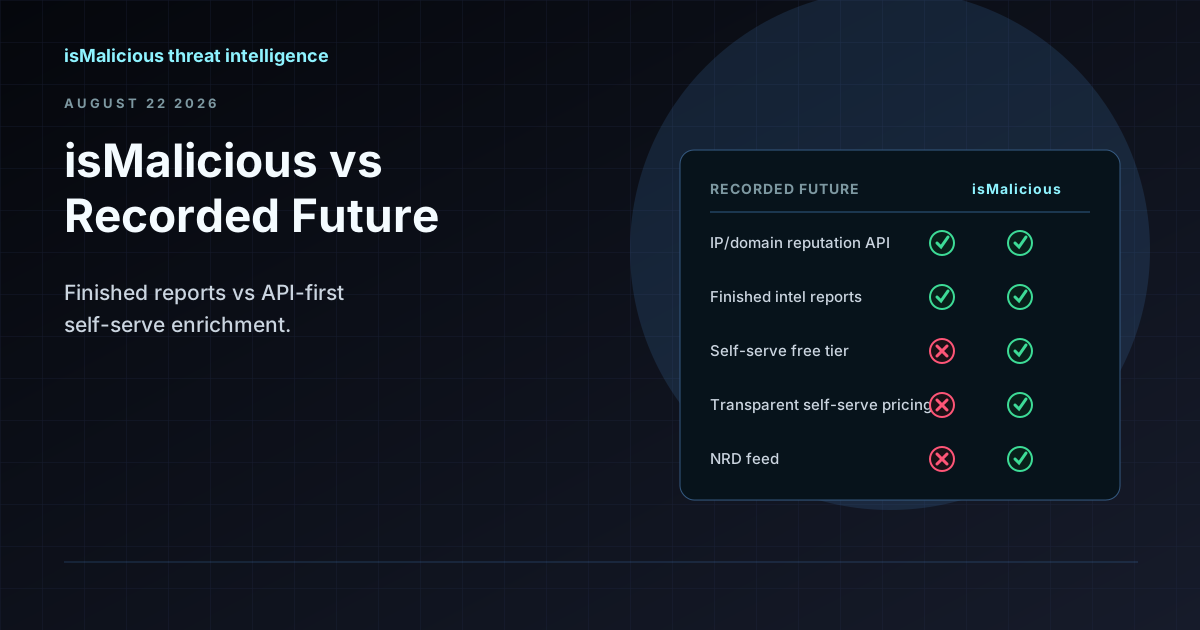 isMalicious vs Recorded Future: When a Threat Data API Makes More Sense Than an Enterprise Intel Program
Recorded Future delivers finished intelligence and analyst support at enterprise scale. isMalicious delivers self-serve enrichment and feeds without a sales cycle. The right choice depends on whether you need strategic reports or automated verdicts.
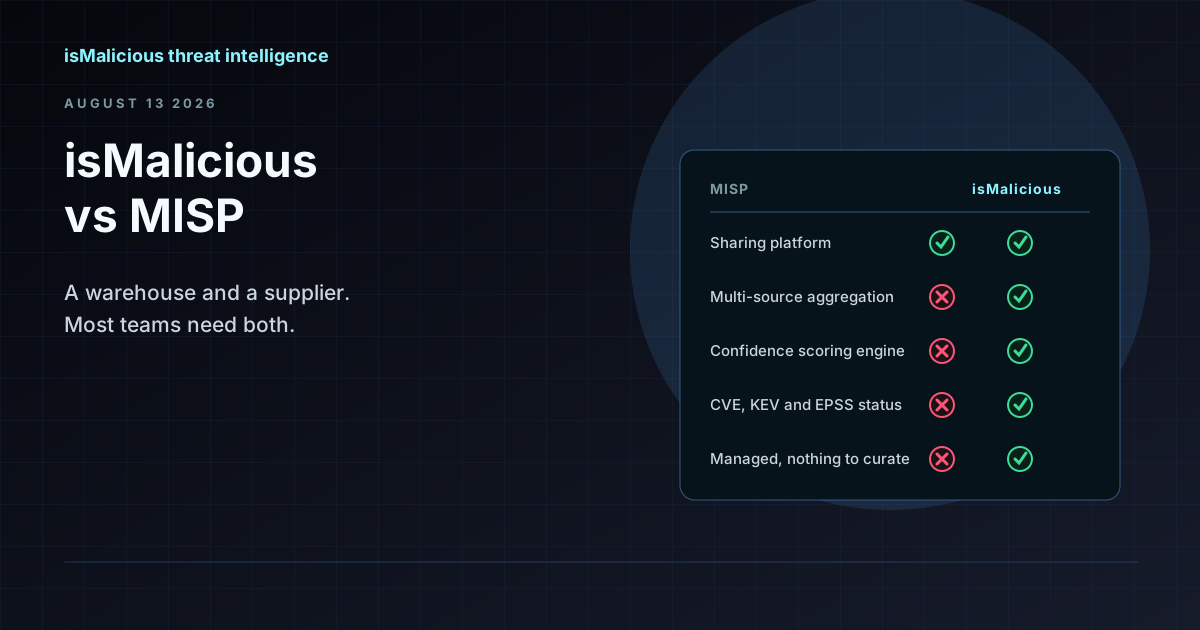 isMalicious vs MISP: Why This Is the Wrong Comparison (and What to Compare Instead)
MISP is where you store and share indicators. isMalicious is where indicators come from. Teams searching for a MISP alternative are usually looking for a feed, not a replacement platform.
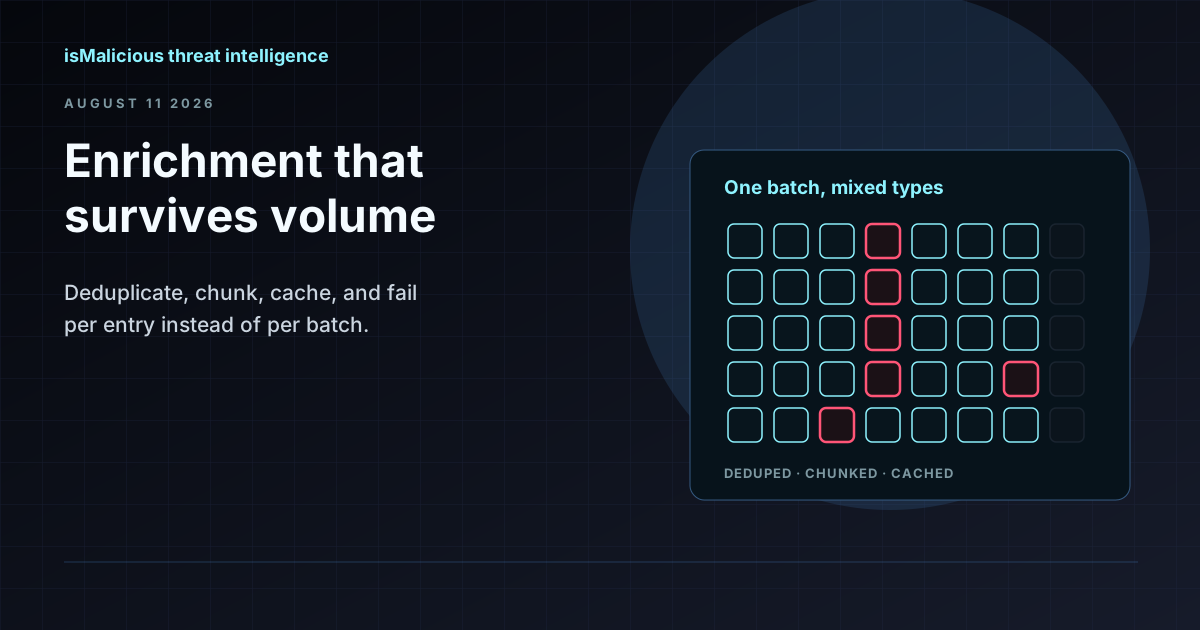 Bulk IP and Domain Lookups: Designing Indicator Enrichment That Survives Real Volume
One incident produces hundreds of indicators, and per-indicator lookups are where triage stalls. Here is how to build a batch enrichment pipeline that respects quotas, deduplicates properly, and fails gracefully.
Protect Your Infrastructure
Check any IP or domain against our threat intelligence database with indexed records.
Try the IP / Domain Checker