isMalicious vs Cisco Talos: Reputation Lookups Outside the Cisco Stack
Talos reputation is excellent and it lives inside Cisco products. If your stack is not Cisco, or you need an API rather than a web form, that is where the comparison starts.
 IsMalicious Team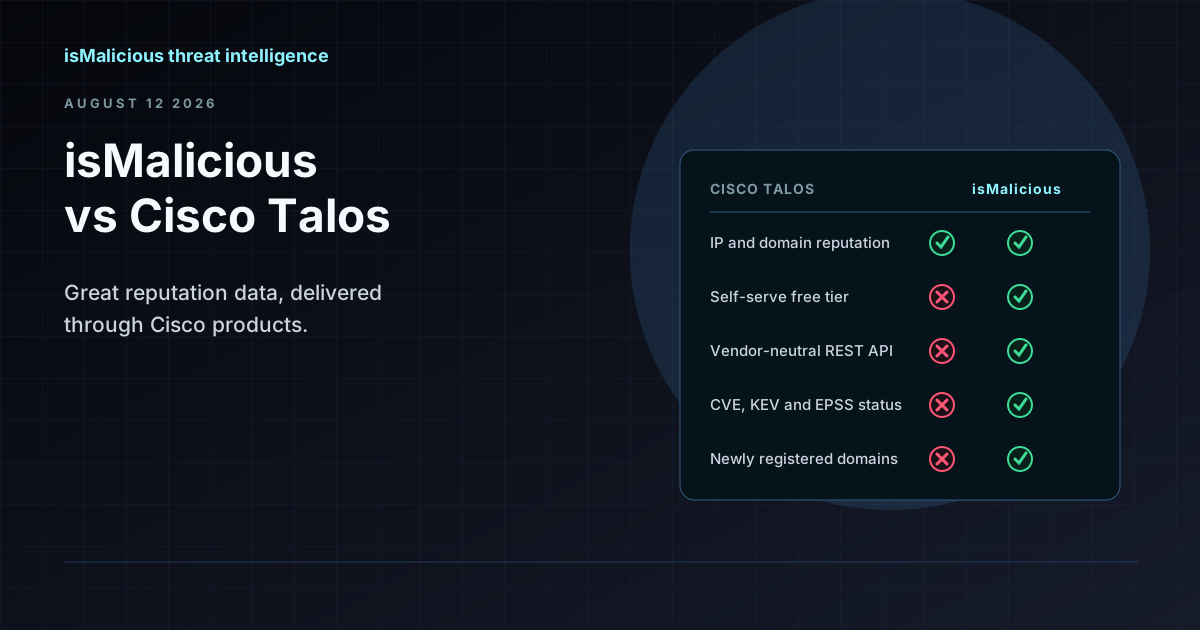
Most people arrive at this comparison from one of two places. Either they have been using the public Talos web lookup to check an address by hand and want to automate it, or they run a mixed security stack and are trying to work out how much Talos intelligence they can actually use without buying further into Cisco.
Both are reasonable questions, and both have the same answer underneath: Talos is a strong intelligence operation whose value is delivered through Cisco products. The comparison is not really about data quality. It is about where the intelligence can reach.
What Cisco Talos Does Well
Talos is the threat intelligence organization behind Cisco's security portfolio, and it has genuine strengths:
- Deep integration with Cisco enforcement points. Reputation data flows directly into Cisco firewalls, Secure Email, and Umbrella, applying at the point of enforcement without any integration work on your side.
- IP and domain reputation feeds built on visibility that comes from operating security products at very large scale.
- Malware research and public reporting that is consistently well regarded, and which frequently sets the public understanding of a campaign.
- Enterprise trust. For organizations that already buy Cisco, Talos is a known quantity that needs no separate vendor assessment.
If your perimeter is Cisco, you are already getting a good deal of this automatically, and there is no reason to displace it.
Where the Gap Shows Up
The friction appears when you try to use Talos intelligence somewhere Cisco does not reach:
- There is no self-serve developer tier. The public lookup is a web interface for humans, not an API you can point a SOAR playbook at. Automating enrichment outside Cisco products is not the supported path.
- Value concentrates inside the Cisco suite. The intelligence is designed to enforce within Cisco products. Extracting it for use in a third-party SIEM or a custom pipeline gives you less than a Cisco-native deployment would.
- Limited transparency for non-Cisco integrations. Understanding what a verdict is based on, and integrating that reasoning into your own logic, is harder from outside the ecosystem.
- Reputation without the surrounding context. A reputation feed answers whether an indicator is bad. It does not carry CVE exploitation status, ransomware group activity, or dark web exposure, so those remain separate subscriptions with separate integrations.
None of this is a criticism of the intelligence. It is a description of a product built to make Cisco security products better, being asked to do something else.
What isMalicious Adds
isMalicious is built API-first for stacks that are not standardised on one vendor:
- A vendor-neutral REST API with a self-serve free tier, so an engineer can test an integration the same afternoon they think of it rather than after a procurement cycle.
- Bulk lookups that accept domains, IPs, and URLs mixed in one request, which is the shape log-extraction and incident-scoping work actually takes.
- CVE intelligence with CVSS, EPSS, and KEV status through CVE Watch, so the same platform that tells you an address is malicious can tell you whether the vulnerability on your edge appliance is being exploited.
- Ransomware group tracking and dark web exposure signals, which matter when an indicator turns out to be part of an extortion campaign rather than opportunistic scanning.
- A newly registered domain feed and blocklist exports that firewalls, DNS resolvers, and mail gateways can consume regardless of who makes them.
- STIX/TAXII output and connectors for OpenCTI, Cortex, and IntelOwl, which is how intelligence gets into open-source and mixed tooling.
The Combined Pattern That Works
For organizations with Cisco at the perimeter, replacing Talos would be a strange decision. The pattern that works is layering:
- Let Talos enforce inside Cisco. Firewall, Umbrella, and email filtering apply reputation natively. That coverage is already paid for and requires no work.
- Use isMalicious where Cisco is not. SIEM correlation, SOAR playbooks, in-house tooling, CI pipelines, and cloud-native services need an API, and that is the gap to fill.
- Keep vulnerability and threat-group context in one place. CVE, ransomware, and dark web signals arriving through the same API as reputation means one integration rather than four.
- Export blocklists to non-Cisco controls. Where enforcement happens outside the Cisco stack, a feed those controls can pull is what turns a verdict into a block.
Feature Comparison
| Capability | Cisco Talos | isMalicious |
|---|---|---|
| IP and domain reputation | Yes | Yes |
| Cisco product integration | Yes, native | No |
| Vendor-neutral REST API | Partial | Yes |
| Self-serve free tier | No | Yes |
| Bulk API (100+ indicators) | Partial | Yes |
| CVE intelligence (CVSS, EPSS, KEV) | Partial | Yes |
| Ransomware group tracking | Partial | Yes |
| Dark web monitoring | Partial | Yes |
| Newly registered domain feed | No | Yes |
| STIX/TAXII export | Partial | Yes |
| OpenCTI / SOAR connectors | Partial | Yes |
Automation Is the Real Difference
The decision usually comes down to a workflow question rather than a data question. If your analysts are copying an address out of an alert, pasting it into a web reputation lookup, reading the result, and typing a conclusion into a ticket, the bottleneck is not the quality of the reputation data. It is the human in the middle.
The isMalicious API exists to remove that step: reputation, WHOIS, DNS, and hosting context return in a single call, which a SIEM or SOAR playbook can consume so the alert arrives already enriched. For teams running mixed enforcement, the firewall integration path covers pushing confirmed-malicious infrastructure into controls that are not Cisco.
Getting Started
If you are all-in on Cisco, keep Talos and stop reading — it is doing its job at the enforcement layer. If you run a mixed stack, or you need enrichment inside automation rather than in a browser tab, see the side-by-side on the Cisco Talos comparison page, then run an indicator through the IP reputation lookup to see what comes back. The API documentation is where to start if the goal is wiring enrichment into a playbook rather than checking one address by hand.
FAQ
Frequently asked questions
Is isMalicious a Cisco Talos alternative?
For teams that need vendor-neutral threat intelligence over an API, yes. Talos intelligence is deeply integrated into Cisco firewalls, email security, and Umbrella, and that is where it delivers most of its value. isMalicious provides comparable reputation and feed capabilities through open APIs that work with any SIEM, firewall, or SOAR platform, without requiring Cisco licences.
Does Cisco Talos offer a self-serve API?
Not in the way a developer-oriented threat intelligence service does. Talos publishes a public web reputation lookup and distributes intelligence through Cisco products, but there is no free self-serve developer tier comparable to an API-first provider. Teams outside the Cisco ecosystem generally find the automation path is the limitation rather than the data.
Which is better for a multi-vendor SOC?
isMalicious, on integration grounds rather than data quality. A mixed environment needs REST APIs, STIX/TAXII, and working connections to Splunk, Palo Alto, Fortinet, OpenCTI, and in-house automation. Talos intelligence reaches its full value inside Cisco enforcement points, so a non-Cisco stack captures less of it.
Can I use both together?
Yes, and many teams do. Organizations running Cisco firewalls or Umbrella get Talos intelligence natively at the enforcement layer, then use isMalicious for enrichment in the tools Cisco does not cover — SIEM correlation, custom SOAR playbooks, development and CI environments, and cloud-native pipelines.
What does isMalicious cover that a reputation feed does not?
Alongside IP, domain, and URL reputation, isMalicious exposes CVE intelligence with CVSS, EPSS, and KEV status, ransomware group tracking, dark web exposure signals, a newly registered domain feed, and blocklist exports — from one API. The practical difference is fewer separate subscriptions to reconcile when an investigation crosses from an indicator to a vulnerability or a threat group.
Related articles
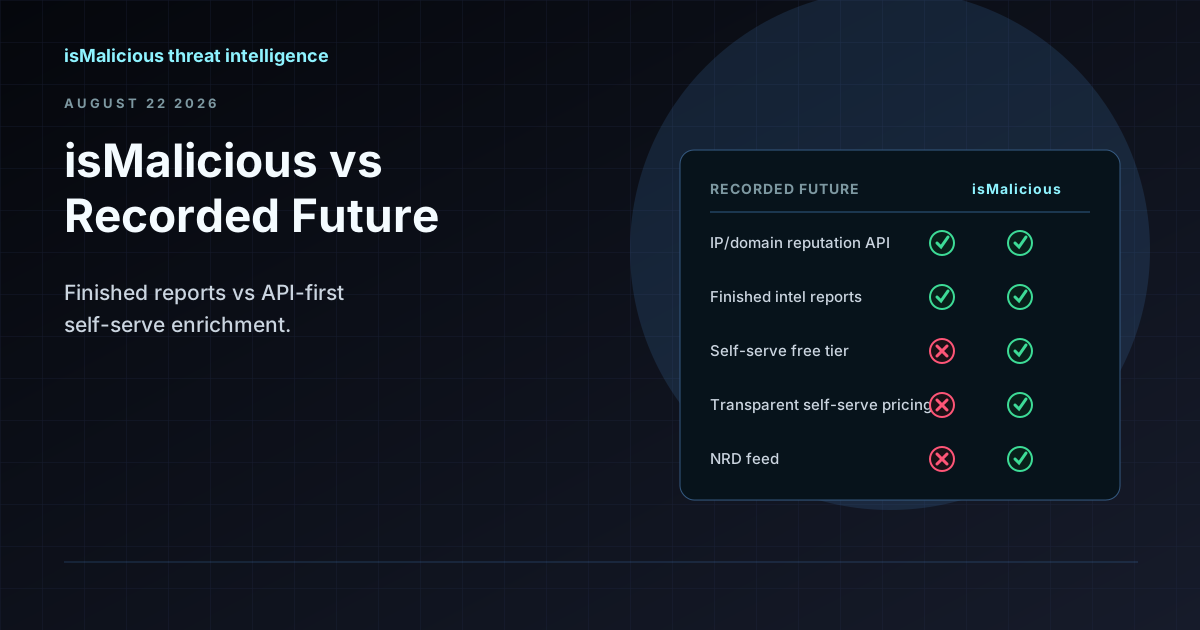 isMalicious vs Recorded Future: When a Threat Data API Makes More Sense Than an Enterprise Intel Program
Recorded Future delivers finished intelligence and analyst support at enterprise scale. isMalicious delivers self-serve enrichment and feeds without a sales cycle. The right choice depends on whether you need strategic reports or automated verdicts.
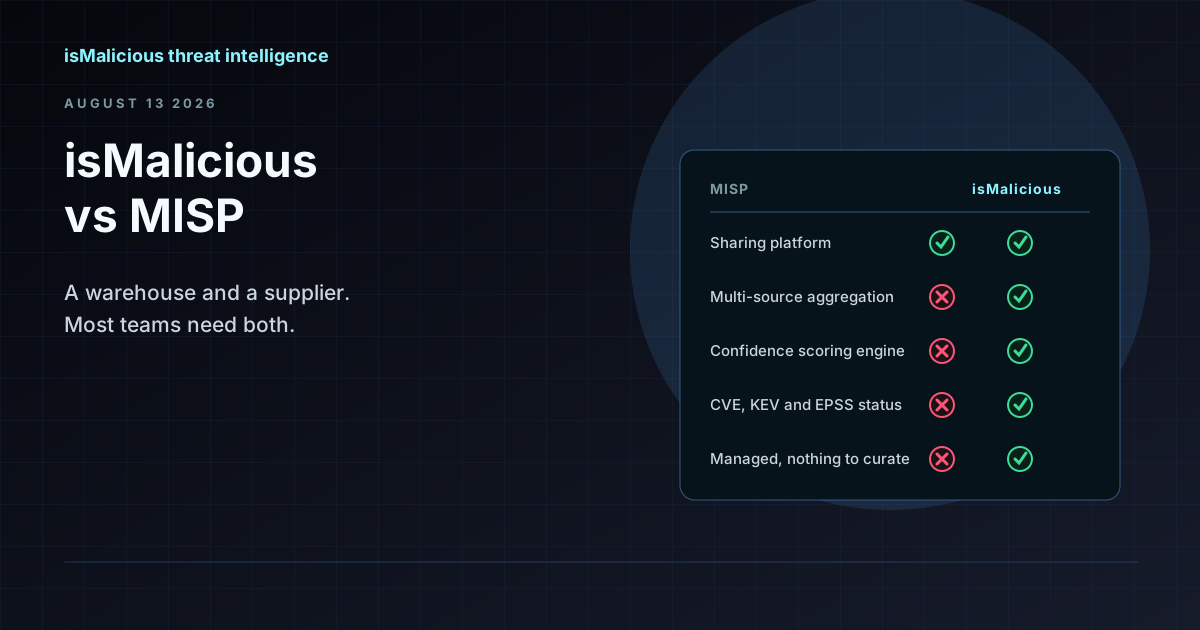 isMalicious vs MISP: Why This Is the Wrong Comparison (and What to Compare Instead)
MISP is where you store and share indicators. isMalicious is where indicators come from. Teams searching for a MISP alternative are usually looking for a feed, not a replacement platform.
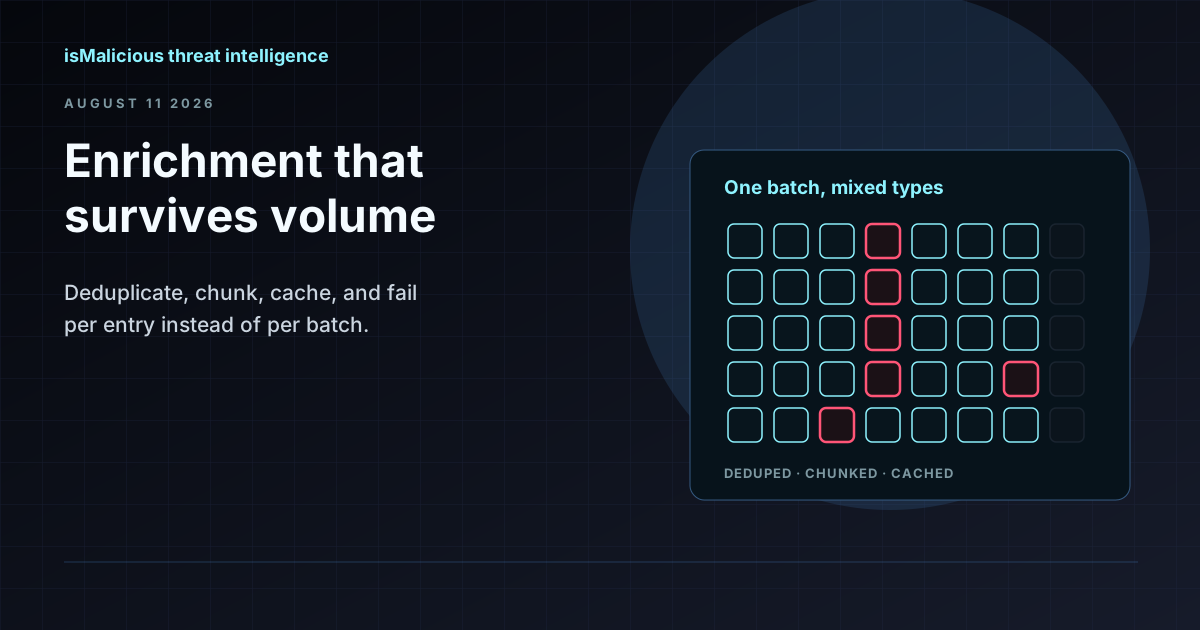 Bulk IP and Domain Lookups: Designing Indicator Enrichment That Survives Real Volume
One incident produces hundreds of indicators, and per-indicator lookups are where triage stalls. Here is how to build a batch enrichment pipeline that respects quotas, deduplicates properly, and fails gracefully.
Check any IP or domain
See what our indexed threat intelligence records say about it.
Try the IP / Domain Checker