INC Ransomware Chains Two SonicWall SMA Zero-Days (CVE-2026-15409, CVE-2026-15410)
INC affiliates are weaponizing an SSRF and a post-authentication code injection in SonicWall SMA 1000 to reach internal networks. Exploitation started weeks before the July 14 patch — here is how to hunt and triage.
 IsMalicious Team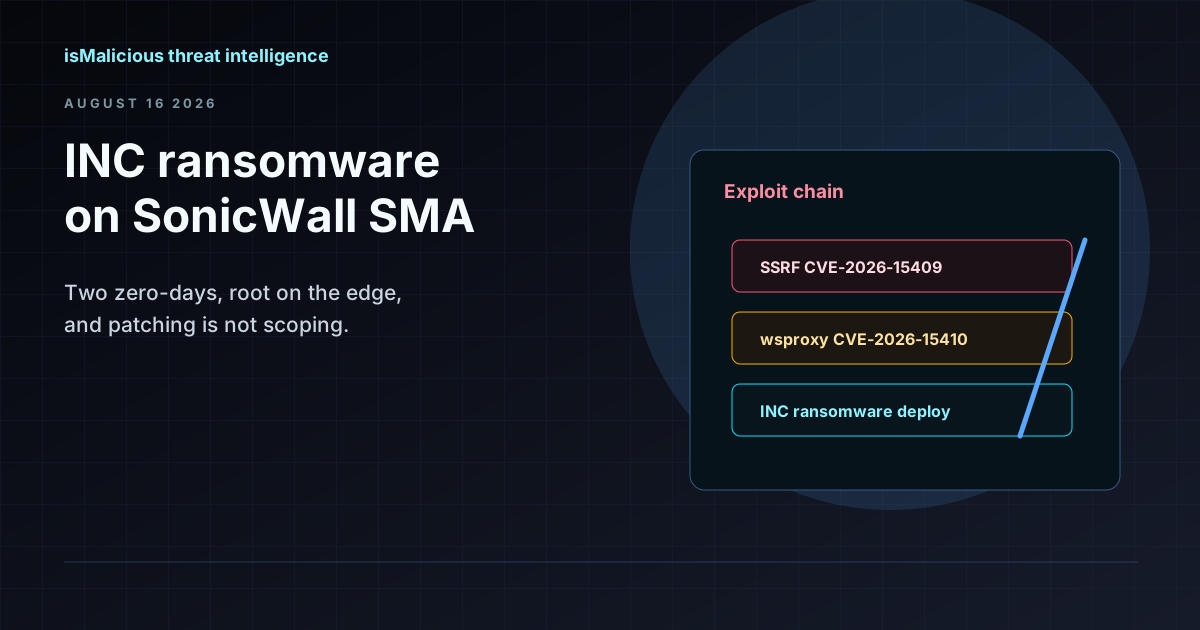
INC ransomware affiliates spent most of July 2026 working through internet-exposed SonicWall Secure Mobile Access 1000 appliances, and the technical story is a two-bug chain rather than a single missed patch. CVE-2026-15409 is a server-side request forgery. CVE-2026-15410 is a post-authentication code injection in the wsproxy path. Chained together on an edge device that already sits between the internet and your internal network, they give an external actor far more than a foothold on a VPN concentrator.
What makes this incident worth treating as an active case rather than a patch ticket is timing. SonicWall disclosed and fixed both flaws on 14 July 2026 under advisory SNWLID-2026-0008. CISA added them to the Known Exploited Vulnerabilities catalog the same day, with a federal remediation deadline of 17 July. Threat intelligence linked to cluster UTA0533, however, shows exploitation in the wild starting roughly three weeks earlier. By the time the advisory arrived, INC affiliates had already had a runway measured in weeks, not hours.
How the Chain Works on SMA 1000
SonicWall SMA 1000 series appliances terminate remote access for employees and partners. That placement matters: a compromise here is not equivalent to compromising a random web server. The appliance is designed to reach internal hosts, store session state, and broker connections that security teams intentionally allow through the perimeter.
The observed chain proceeds in two stages:
- CVE-2026-15409 (SSRF) lets an unauthenticated attacker coerce the appliance into making requests the attacker specifies. On an access gateway, SSRF is rarely an abstract bug. It is a way to reach management interfaces, internal services, and localhost-only endpoints that were never meant to answer from the internet edge.
- CVE-2026-15410 (wsproxy code injection) follows once the attacker has the post-authentication context the wsproxy component expects. The injection path yields code execution with the privileges of the affected service, which on an SMA appliance is enough to operate the device as the attacker chooses.
Neither CVE alone matches what defenders saw in victim environments. INC affiliates and the broader UTA0533 activity set used the pair as a single intrusion primitive, which is why patch prioritisation had to cover both identifiers even if only one showed up in a scanner report.
INC as the Dominant Operator
Among ransomware groups tracked through July and early August 2026, INC has been the most consistent operator on this chain. That is not a statement about exclusivity — other actors may have obtained the same exploit kit — but the leak-site timeline is instructive.
Victims tied to SMA compromise began surfacing on INC's extortion site from mid-July through 1 August. That window overlaps the pre-advisory exploitation period rather than trailing it by a few days. Organizations that treated SNWLID-2026-0008 as "patch this week" rather than "assume breach since late June" are the ones now scoping data theft that started before the firmware update.
INC's tradecraft on edge appliances follows a pattern security teams have seen on other VPN and remote-access targets: establish persistence on the gateway, map internal reachable subnets from the appliance's routing table, deploy a lightweight staging mechanism, then move to domain controllers or file servers using credentials and sessions the appliance can reach. Encryption, when it appears, tends to come late and serves pressure rather than initial access.
Why Patching After Compromise Is Not Scoping
Firmware that closes CVE-2026-15409 and CVE-2026-15410 stops new exploitation. It does not remove webshells, scheduled tasks, or credential caches an attacker planted while the bugs were open.
If your SMA 1000 was internet-facing through June and July 2026, the minimum defensible posture is:
- Preserve appliance logs and any available wsproxy debug output before log rotation erases the pre-patch window.
- Hunt for unexpected outbound connections from the SMA management and data-plane interfaces. Edge appliances have a short list of legitimate destinations — vendor update endpoints, your identity provider, perhaps a syslog collector. Anything else deserves enrichment before you dismiss it as user VPN noise.
- Review authentication and session tables for accounts that authenticated from geographies or ASNs inconsistent with your user population, particularly in the three weeks before 14 July.
- Rotate secrets the appliance stores or can reach — RADIUS shared secrets, LDAP bind passwords, certificate private keys uploaded for portal branding, and any API tokens configured for integrations.
- Inspect downstream hosts that accepted connections sourced from the SMA appliance during the exposure window. SSRF and wsproxy execution often precede lateral movement by days.
Teams that stopped at "we patched on 15 July" without retrospective hunting are discovering leak-site entries that reference file trees exfiltrated before the firmware upgrade.
Detection and Hunting Signals
Concrete artefacts to work from:
- Unauthenticated requests to wsproxy paths followed by anomalous child processes on the appliance, if your logging captures process execution at the OS level.
- Internal HTTP requests originating from the SMA host to RFC1918 or link-local destinations that are not part of your documented split-tunnel or portal configuration — the SSRF stage often shows up here before code injection succeeds.
- New or modified files under appliance web or script directories with timestamps predating the patch.
- Spikes in concurrent VPN sessions from a small set of source addresses, particularly if those sessions terminate quickly after reaching internal resources.
- Egress to unfamiliar VPS or bulletproof hosting ASNs from the appliance itself rather than from tunneled client traffic.
Vendor indicators published with SNWLID-2026-0008 should be ingested into your SIEM, but retrospective cases rarely end with vendor IOCs alone. The addresses and domains in your own egress logs from June and July are the set that matters.
Enriching Indicators From SMA Telemetry
Hunting produces hundreds of candidate IP addresses and domains. The triage question is which connections represent ordinary remote-access behaviour and which point at INC staging infrastructure.
- Run unfamiliar source and destination addresses through IP reputation lookups to check ASN, hosting context, and prior malicious association before escalating.
- For domains seen in SSRF targets or outbound callbacks, use domain intelligence and DNS history — campaign infrastructure often has a registration timeline that does not resemble a corporate VPN dependency.
- Push the full candidate set through bulk lookups rather than pivoting one indicator at a time. A three-week window on a busy SMA generates enough noise that manual triage stalls incident response.
- Wire enrichment into your SIEM through the API so the same context attaches to the next SMA-related alert automatically.
- Track both CVEs in CVE Watch against declared SonicWall products so KEV status and EPSS movement reprioritise patching queues without a spreadsheet review.
Where you recover binaries or scripts from the appliance filesystem, file hash lookups help determine whether the artefact matches a known INC toolkit or a one-off dropper.
Perimeter and Incident Response Posture
SMA 1000 appliances belong in the same risk tier as any other internet-facing remote access product: restrict management interfaces to administrative jump hosts, enforce MFA on all portal authentication, and monitor the appliance as a security sensor rather than as passive network plumbing.
If enrichment confirms contact with known INC infrastructure or leak-site timing matches your exposure window, treat incident response as a data-theft investigation first. INC's pressure model depends on proving exfiltration; your logs and enriched egress indicators are what tell you whether that proof exists.
For organisations feeding indicators into downstream controls, confirmed malicious addresses can be pushed to blocklist enforcement at the firewall once you have documented the match — firewall teams should coordinate with whoever owns the SMA case so blocking does not cut off evidence collection prematurely.
The advisory is published, the KEV entries are live, and the patch is available. The open question for many teams is not whether to update firmware, but whether July's traffic logs contain the answer to a breach they have not finished scoping yet.
Frequently asked questions
- What vulnerabilities does the INC SonicWall SMA campaign exploit?
- Attackers chain CVE-2026-15409, a server-side request forgery in SonicWall SMA 1000, with CVE-2026-15410, a post-authentication code injection in the wsproxy component. Used together, the pair gives an external actor a path from the internet-facing appliance into code execution and lateral movement without waiting for a user to authenticate through normal means.
- When was SonicWall SMA patched and what is the CISA deadline?
- SonicWall published SNWLID-2026-0008 on 14 July 2026 with fixed firmware for SMA 1000 series appliances. CISA added both CVEs to the Known Exploited Vulnerabilities catalog the same day, setting a federal remediation deadline of 17 July 2026 under Binding Operational Directive 22-01.
- How long was exploitation happening before the patch?
- Threat intelligence attributed to UTA0533 indicates active exploitation roughly three weeks before the advisory landed. That means organizations that patched on 14 July may already have had an intruder on the appliance for most of July. Treat a July patch as closing the door, not as proof the house was empty.
- What post-compromise behaviour has INC shown on this chain?
- INC has been the dominant ransomware group observed using the full chain. Victims began appearing on the group leak site from mid-July through 1 August 2026, which aligns with the pre-patch exploitation window rather than with defenders reacting to the advisory.
- How does isMalicious help respond to this campaign?
- After hunting egress from SMA appliances, teams can run unfamiliar IP addresses and domains through bulk enrichment to separate VPN partner traffic from staging and exfiltration infrastructure. The same lookups feed SIEM workflows through the API, and CVE Watch tracks KEV status for CVE-2026-15409 and CVE-2026-15410 against declared SonicWall assets.
Related articles
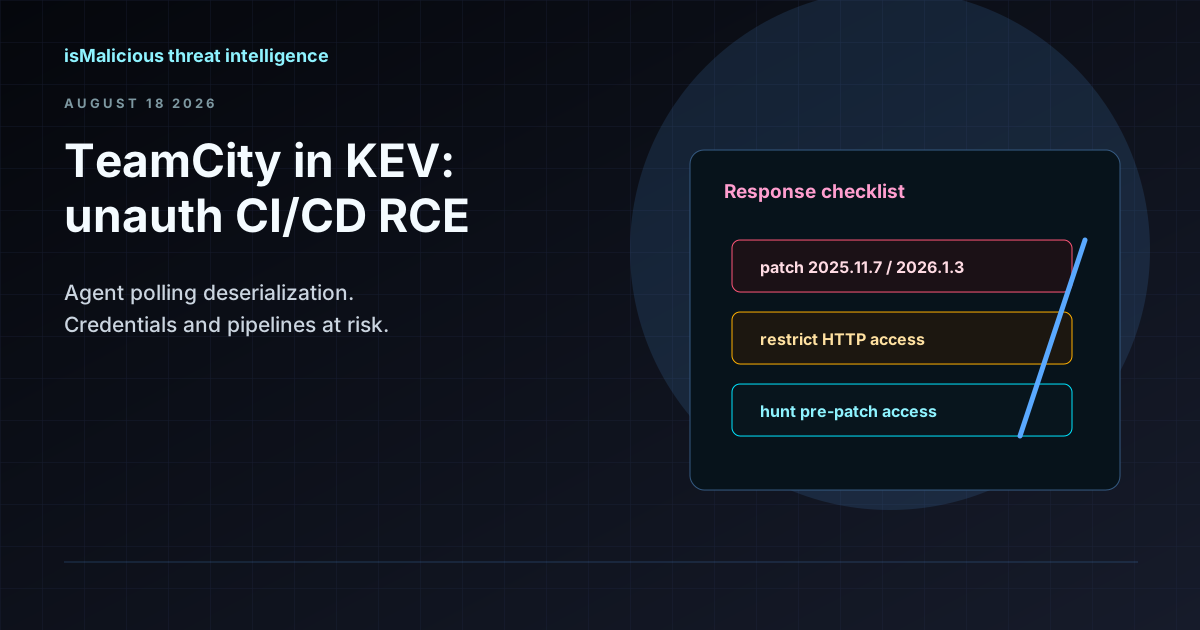 CVE-2026-63077 Puts Unauthenticated RCE on Every TeamCity On-Premises Server
A deserialization flaw in the agent polling protocol gives attackers TeamCity server privileges without credentials. JetBrains patched in 2025.11.7 and 2026.1.3 — CISA KEV and a 3-day federal deadline mean hunt now, not after the next release train.
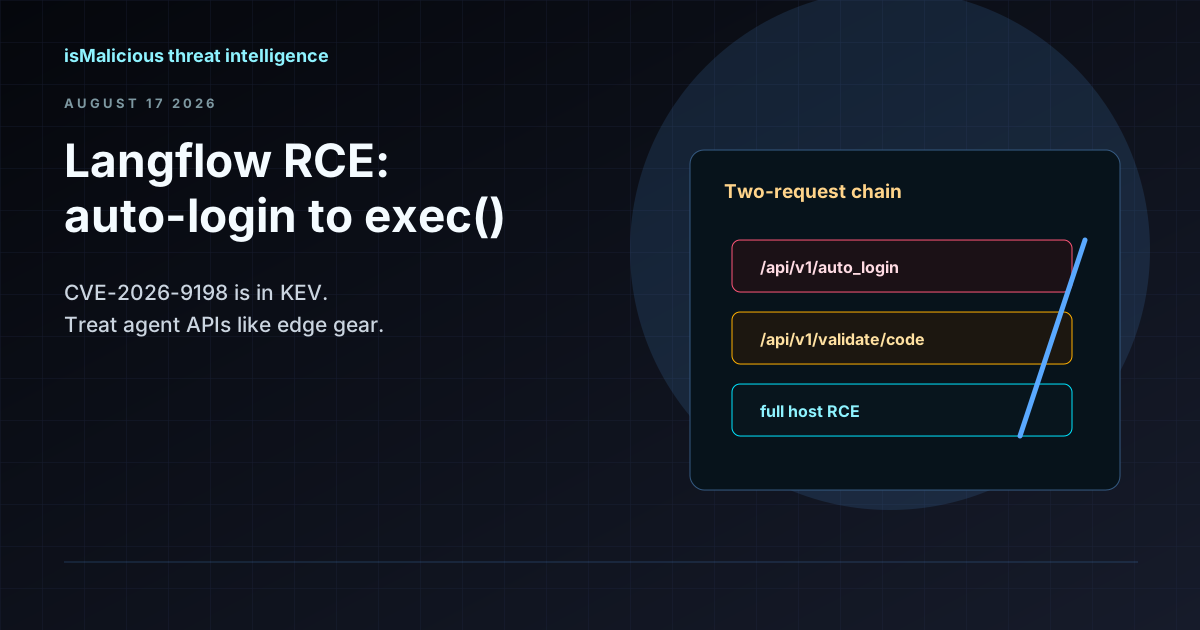 CVE-2026-9198 Gives Unauthenticated RCE in IBM Langflow OSS Agent Control Planes
A SUPERUSER token minted through /api/v1/auto_login chains with Python exec() in /api/v1/validate/code. Langflow 1.10.1 fixes the flaw — but internet-exposed instances need hunting now, not after the next sprint.
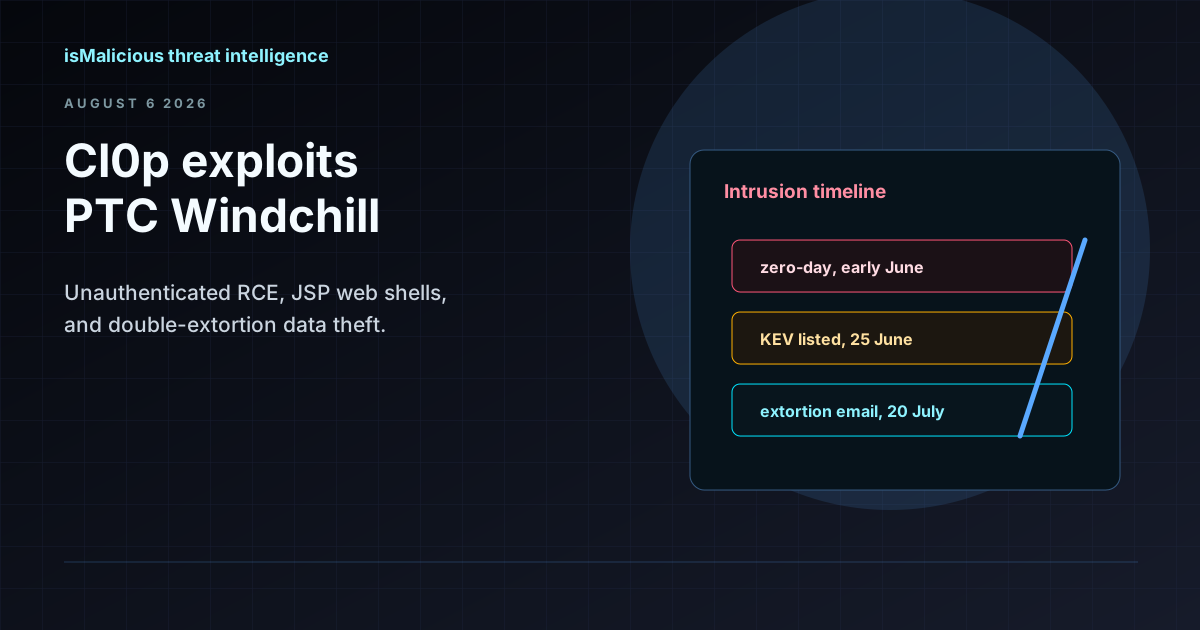 Cl0p Is Exploiting PTC Windchill (CVE-2026-12569) to Steal Engineering Data
A Cl0p affiliate is chaining a FlexPLM information disclosure with an unauthenticated RCE in PTC Windchill to plant JSP web shells and run double-extortion data theft. Here are the detection signals and the triage workflow.
Protect Your Infrastructure
Check any IP or domain against our threat intelligence database with indexed records.
Try the IP / Domain Checker