China Edge Device Campaigns: Passive DNS And Certificates For Early Warning
Dutch intelligence warnings about Chinese cyber capability reinforce a practical defense priority: monitor edge devices, VPNs, routers, DNS history, and certificate reuse.
 IsMalicious Team
Nation-state cyber defense often sounds strategic, but the first control is usually practical: know what is exposed. The Record reported that Dutch intelligence assessed China's offensive cyber capabilities as comparable to the United States and warned about campaigns targeting edge devices such as routers, firewalls, and VPN solutions.
This matters because edge devices combine three difficult properties: they are exposed to the internet, they are operationally sensitive, and they are often monitored less deeply than servers or endpoints. A compromised appliance can provide durable access, traffic visibility, credential capture, or a bridge into internal networks.
Edge Device Risk Starts With Inventory
The first question is basic: which routers, VPN gateways, firewalls, load balancers, and remote access appliances are internet-facing? The second is harder: which versions, plugins, authentication methods, and management interfaces are active?
Security teams should track:
- product and firmware version;
- management interface exposure;
- MFA and admin access policy;
- vendor advisory status;
- KEV and public-exploit context;
- certificate and DNS history;
- logging coverage;
- backup and rebuild procedures.
Use CVE Watch for relevant vulnerabilities and domain intelligence for infrastructure tied to exploitation attempts.
DNS And Certificates Reveal Infrastructure Links
Attackers rotate infrastructure, but relationships leak through DNS, certificates, hosting, and naming patterns. DNS history can show where a domain pointed before an alert fired. Certificate data can reveal reused names, issuers, or operational habits. IP reputation can show whether a source belongs to scanning, hosting, proxy, or abuse-heavy networks.
For edge-device incidents, enrich:
- source IPs hitting management paths;
- callback domains from appliance logs;
- suspicious certificate names;
- URLs found in exploit attempts;
- IPs used for VPN login anomalies.
Then connect enrichment into incident response and SIEM. Appliance logs are too sparse to analyze without context.
When To Escalate
Escalate an edge-device alert when more than one weak signal lines up. Examples include a management login from a suspicious IP followed by DNS to an unknown host, a firmware gap plus public exploit activity, or a new certificate on a portal that resembles a vendor login. Any sign of outbound traffic from a router, firewall, or VPN appliance to infrastructure with poor reputation deserves immediate review.
Incident response should preserve appliance configuration, logs, firmware version, admin account changes, and network captures when possible. If compromise is plausible, plan for credential rotation and rebuild. Many appliances are hard to prove clean after privileged access.
Monitor Before The Exploit Wave
Many edge-device campaigns begin with scanning and target selection. Defenders should watch for:
- repeated probes against specific appliance paths;
- authentication attempts from new geographies;
- management login failures followed by success;
- outbound traffic from appliances to unknown hosts;
- sudden certificate changes;
- newly registered domains that mimic vendors or portals.
Use IP / Domain Checker workflows to enrich these signals quickly. A single source IP may be noise. A cluster of related domains, scans, and callbacks is an investigation.
Operational CTA
Monitor domains, URLs, and certificates around your edge-device estate. Use DNS history, IP reputation, and API enrichment to move from exposed inventory to early warning.
Frequently asked questions
- Why are edge devices common targets for state-linked actors?
- Routers, firewalls, VPN gateways, and appliances are exposed, difficult to monitor, slow to patch, and often sit at privileged network positions.
- What telemetry helps detect edge-device campaigns?
- Useful telemetry includes management-plane logs, VPN authentication, DNS history, certificate reuse, source IP reputation, firmware versions, and outbound callbacks.
- How can passive DNS help?
- Passive DNS can show historical relationships between domains and IPs, helping analysts cluster infrastructure and identify related domains before they appear in a direct alert.
- How does isMalicious support edge-device investigations?
- isMalicious provides IP reputation, domain intelligence, DNS history, URL scanning, and API enrichment for SOC and incident response teams.
Related articles
 Domain Shadowing: Detect Compromised DNS at Scale
Detect domain shadowing by monitoring DNS changes, certificate issuance, subdomain behavior, account security, and infrastructure relationships.
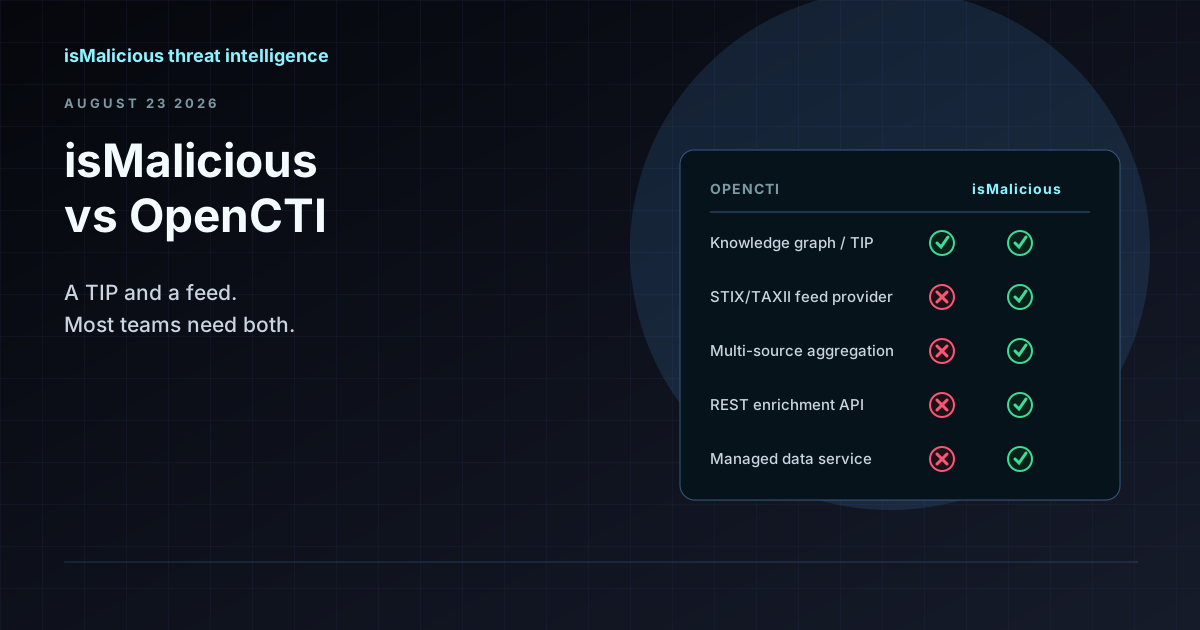 isMalicious vs OpenCTI: Why This Is the Wrong Comparison (and How They Work Together)
OpenCTI is a threat intelligence platform and knowledge graph. isMalicious is a data provider that feeds it. Teams searching for an OpenCTI alternative usually need a feed, not a replacement TIP.
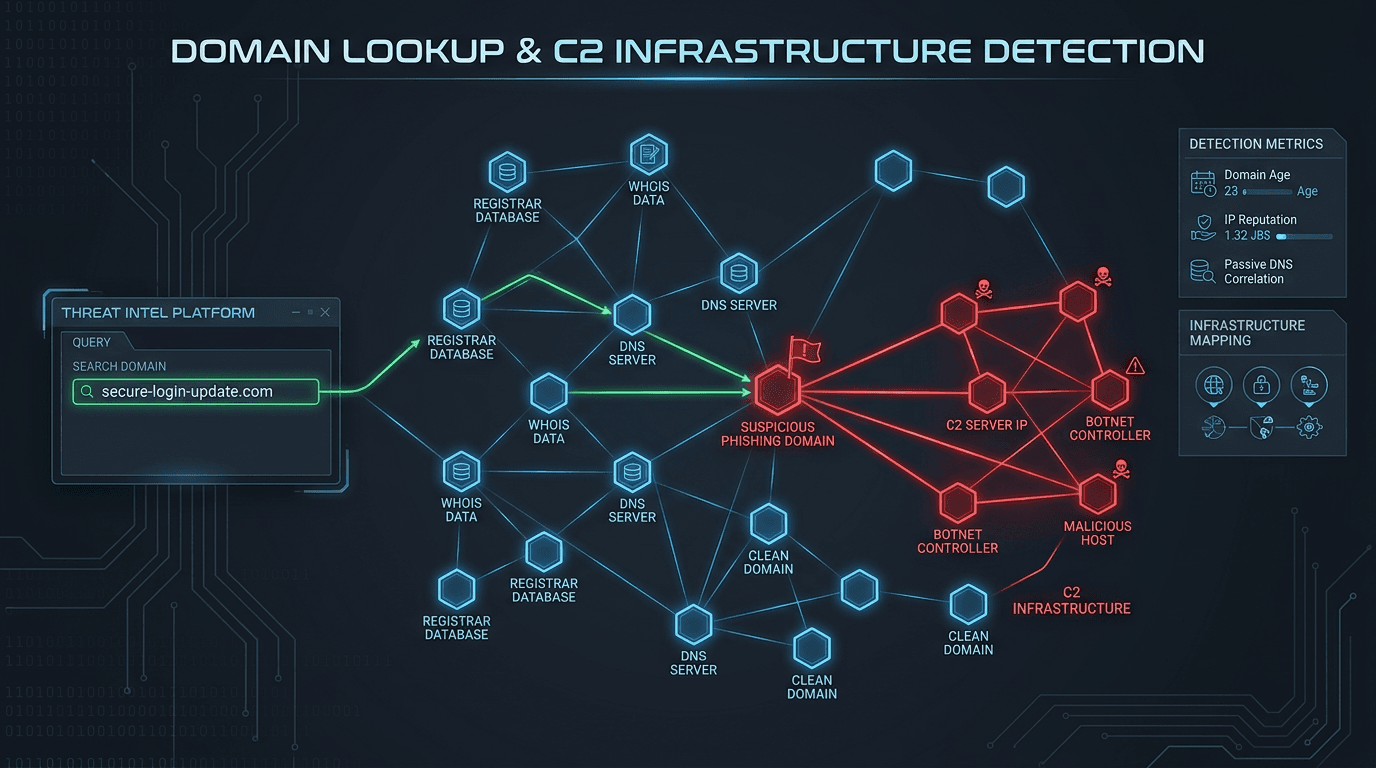 Malicious Infrastructure Clustering: How Passive DNS, TLS Certificates, and ASNs Reveal Shared Campaigns
A single C2 IP is a clue; shared signing patterns and DNS co-occurrence are a map. This guide explains how defenders cluster infrastructure without chasing ghosts—and how to document findings for IR, threat intel, and law enforcement handoffs.
Protect Your Infrastructure
Check any IP or domain against our threat intelligence database with indexed records.
Try the IP / Domain Checker