AMOS macOS Infostealer: ClickFix Shows Why Hash Reputation Must Cover Developer Macs
AMOS and related macOS infostealers are turning social engineering into credential theft. File hash reputation, URL scanning, and domain intelligence help teams respond before stolen tokens spread.
 IsMalicious Team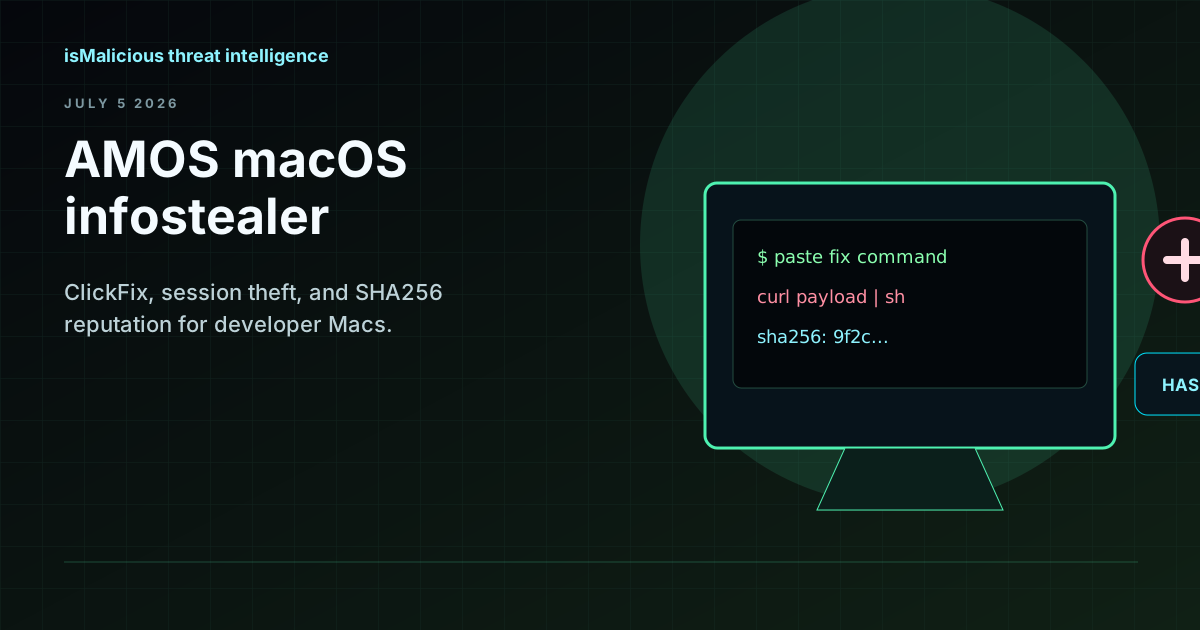
macOS is no longer a side note in enterprise malware response. Coverage of Atomic macOS Stealer, also known as AMOS, from TechRadar and related reporting on macOS infostealer growth shows a practical shift: attackers do not need a zero-day when they can convince users to run the malware themselves.
That is the point of ClickFix. A user sees a fake problem and is told to paste a command, install an update, solve a fake CAPTCHA, or run a utility. The payload then targets credentials, browser sessions, crypto wallets, cloud tokens, Keychain data, or developer secrets. The attacker is not exploiting macOS as much as they are exploiting trust in the workflow.
For security teams, the defensive answer is not "Mac users should know better." The answer is a response model that treats macOS as part of the same threat intelligence pipeline as Windows endpoints and Linux servers.
Developer Macs Are High-Value Targets
Many organizations under-monitor Macs because they are perceived as lower risk. That assumption breaks down when the device belongs to a developer, administrator, founder, finance leader, or cloud engineer. A single compromised Mac may expose:
- GitHub or GitLab credentials;
- SSH private keys;
- browser cookies and session tokens;
- cloud CLI profiles;
.envfiles and API keys;- password manager sessions;
- Slack, Teams, Discord, or email sessions;
- source-code signing material.
This makes macOS infostealers a supply-chain and identity problem. The endpoint is only the first blast radius.
Hash Reputation Is The Fast First Pivot
When EDR, helpdesk, or an analyst finds a suspicious binary, disk image, shell script, or staged archive, the first question is whether anyone else has seen it. A file hash reputation lookup helps establish whether the file is known malicious, unknown, suspicious, or tied to a malware family.
Hash reputation is especially useful when user reports are vague. "I pasted a command from a website" may not tell the SOC much. The downloaded payload hash, URL, domain, and destination IP are concrete evidence. Pair hash lookup with URL scanning, domain intelligence, and IP reputation to reconstruct the campaign.
Do Not Stop At Password Reset
Infostealer response should assume sessions and tokens may be stolen. Password reset alone may be insufficient if active sessions remain valid. A practical response includes:
- isolate the endpoint;
- collect payload hashes and scripts;
- enrich hashes, domains, URLs, and IPs;
- revoke browser sessions and SSO sessions;
- rotate cloud keys, SSH keys, API keys, and package tokens;
- inspect source-code and cloud audit logs;
- rebuild the endpoint if persistence or privileged execution occurred;
- add confirmed indicators to blocklists.
The existing isMalicious guide on session token theft and infostealers expands this point: credential theft is no longer only usernames and passwords.
Make Stealer Intelligence Operational
Use the threat intelligence API to enrich hashes and infrastructure from EDR telemetry, DNS logs, proxy events, and incident response case notes. The API docs show how to connect this to SIEM or SOAR tooling, while data quality helps analysts understand source confidence.
Teams usually meet this threat in the same incident pattern: a suspicious file, a nervous user, and a short window before tokens are abused.
Operational CTA
Try the File Hash Checker, scan suspicious installer URLs with the URL scanner, and connect enrichment to your incident response workflow. macOS stealer defense is endpoint security, identity security, and threat intelligence in one case.
Frequently asked questions
- Why are macOS infostealers a serious enterprise risk?
- Developer and executive Macs often hold browser sessions, cloud CLI tokens, SSH keys, source-code access, password vault sessions, and collaboration accounts. A stealer can turn one laptop into many downstream incidents.
- What is ClickFix?
- ClickFix is a social engineering pattern that tricks users into running commands or installers while believing they are fixing a browser, document, CAPTCHA, or application problem.
- What should teams enrich after finding AMOS-like malware?
- Enrich file hashes, download URLs, command-and-control domains, destination IPs, related installer names, and any domains used in malicious ads or fake software pages.
- How does isMalicious help with macOS stealer response?
- isMalicious provides file hash lookup, malicious domain checks, URL scanning, IP reputation, and API enrichment for SOC and incident response workflows.
Related articles
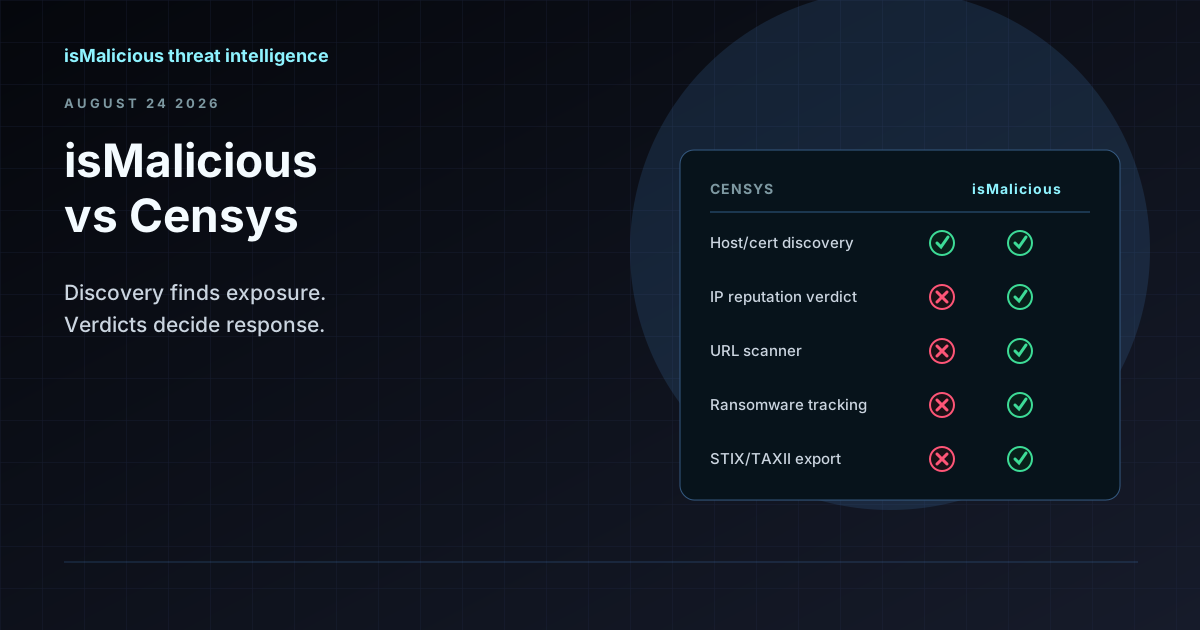 isMalicious vs Censys: Internet Discovery and Reputation Verdicts Are Different Jobs
Censys maps what exists on the internet — hosts, certificates, open ports. isMalicious assesses what is malicious. Most teams comparing the two need the second question answered, not the first.
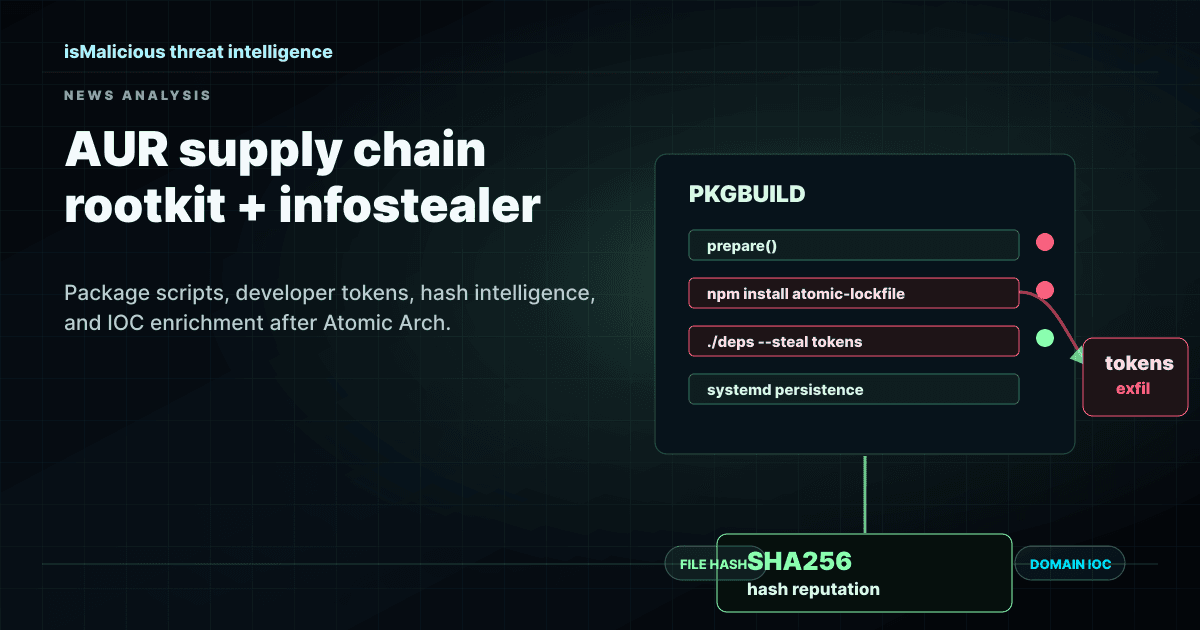 Arch AUR Rootkit And Infostealer Campaign: Supply Chain Defense Starts With Hash Intelligence
The June 2026 Arch User Repository compromise shows why supply chain security needs package review, file hash reputation, developer credential protection, and fast IOC enrichment.
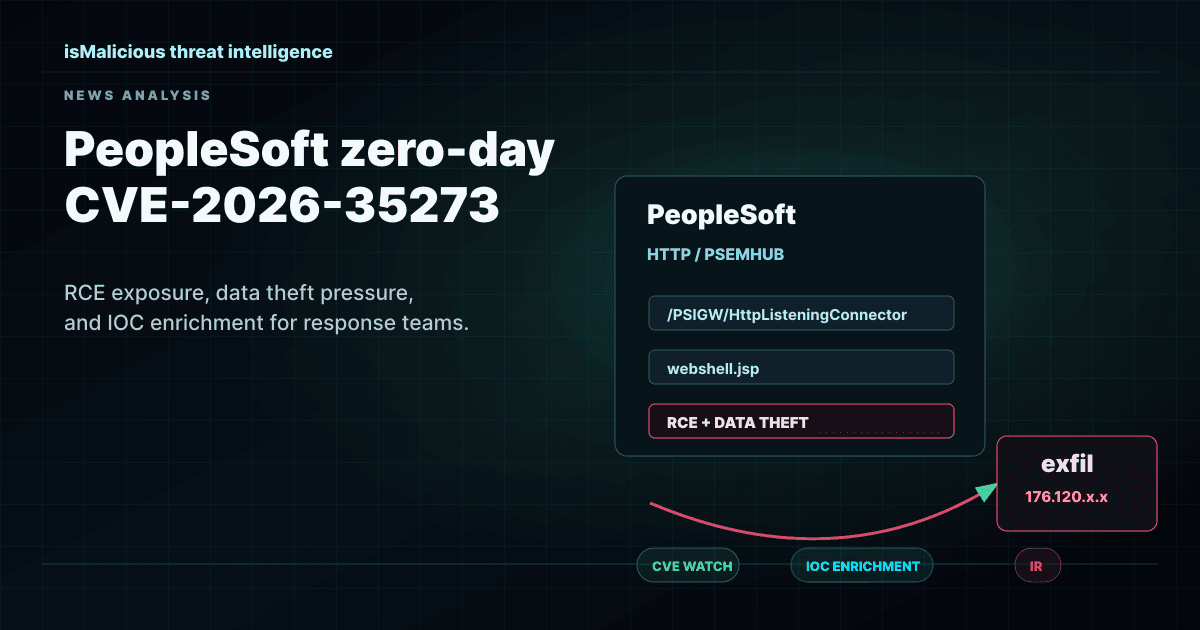 Oracle PeopleSoft Zero-Day: CVE-2026-35273 Shows Why CVE Watch Needs IOC Enrichment
The PeopleSoft CVE-2026-35273 exploitation reports show how vulnerability response, ransomware intelligence, IP enrichment, and incident response must work together.
Protect Your Infrastructure
Check any IP or domain against our threat intelligence database with indexed records.
Try the IP / Domain Checker