Operation Endgame Takes Down Gootloader, CastleRAT and StealC: What Defenders Should Hunt Now
Between 9 and 11 November 2026, Operation Endgame took down the servers and domains behind Gootloader, CastleRAT and StealC and secured about 6.4 million stolen credentials. No arrest was announced. The infrastructure is gone; the infected hosts, the stolen passwords and the access already sold are not.
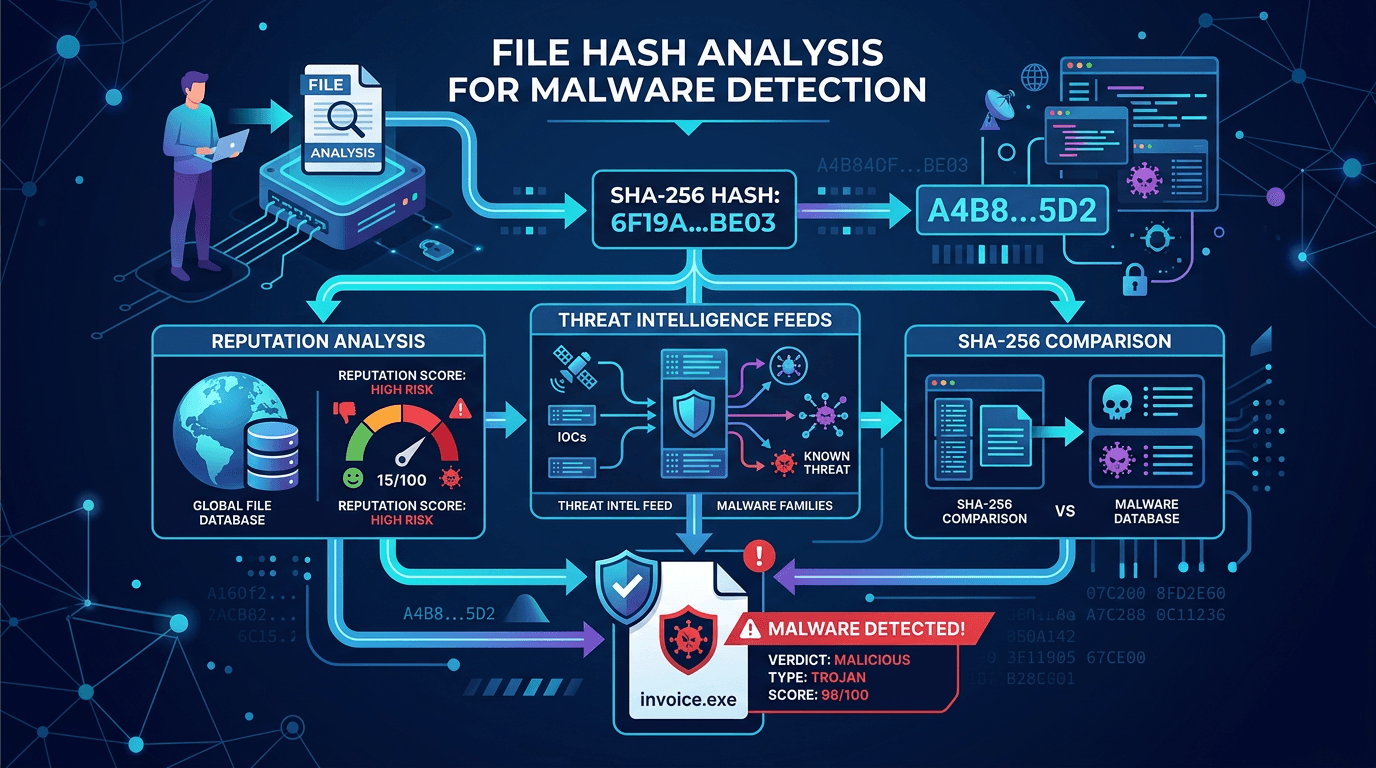
Calculate a File’s SHA-256 Hash with PowerShell
Calculate SHA-256 without executing a file, compare it with the correct reference, and document the limits of a hash reputation result.

Malicious Browser Extensions Are Stealing Session Cookies: Detection Guide
Rebranded browser extensions are harvesting session cookies and OAuth tokens after silent updates. Here is how to detect and respond before EDR ever sees it.
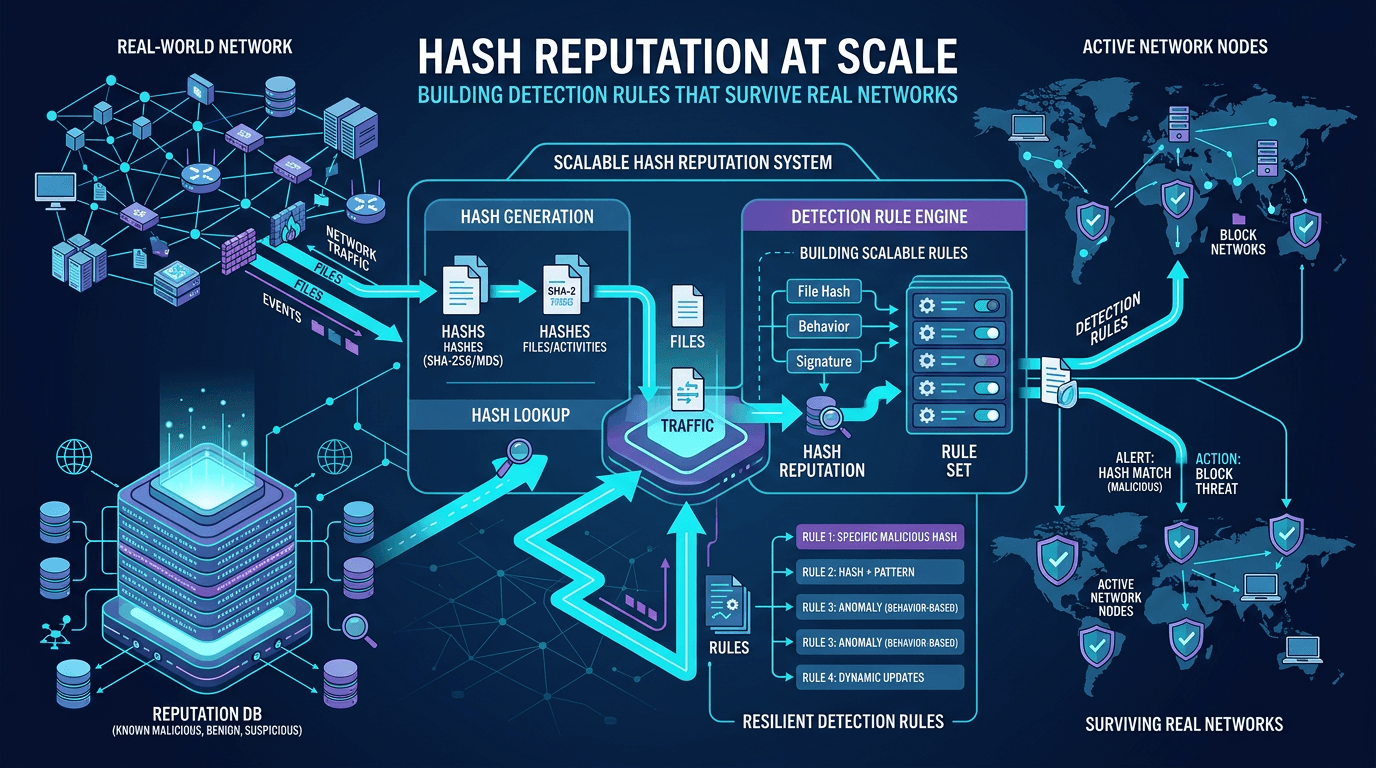
Hash Reputation at Scale: Building Detection Rules That Survive Real Networks
Move beyond one-off hash blocks: design reputation pipelines, reduce false positives, and integrate file intelligence with IP and domain context for production-ready detection engineering.
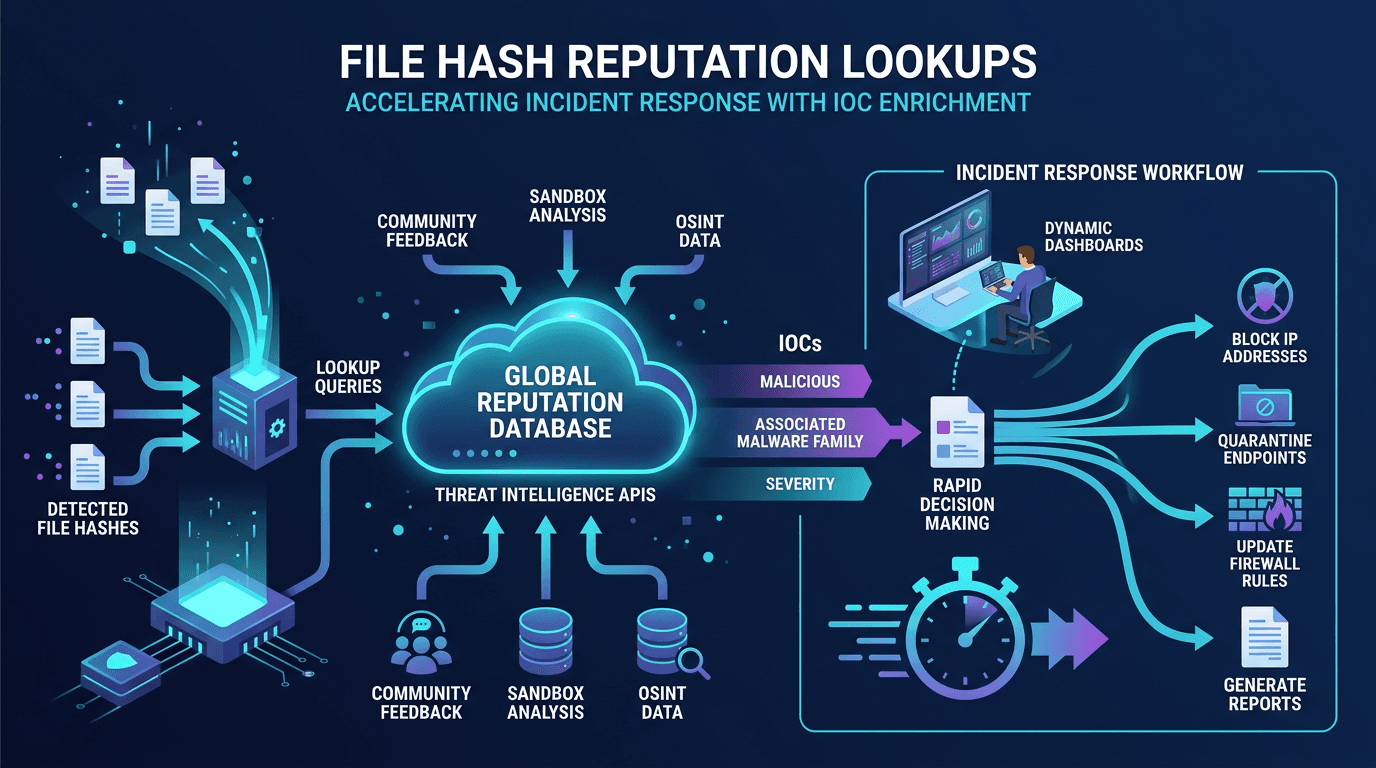
File Hash Reputation Lookups: Accelerating Incident Response With IOC Enrichment
A practitioner's guide to file hash reputation lookups—how they work, which data sources power them, how to build automated IOC enrichment pipelines, and how to integrate hash intelligence into SOC, SOAR, and incident response workflows.
File Hash Check: Is This SHA-256 Malware?
How to check MD5, SHA-1, and SHA-256 hashes against threat intelligence, and how SOC teams use hash reputation to cut false positives.
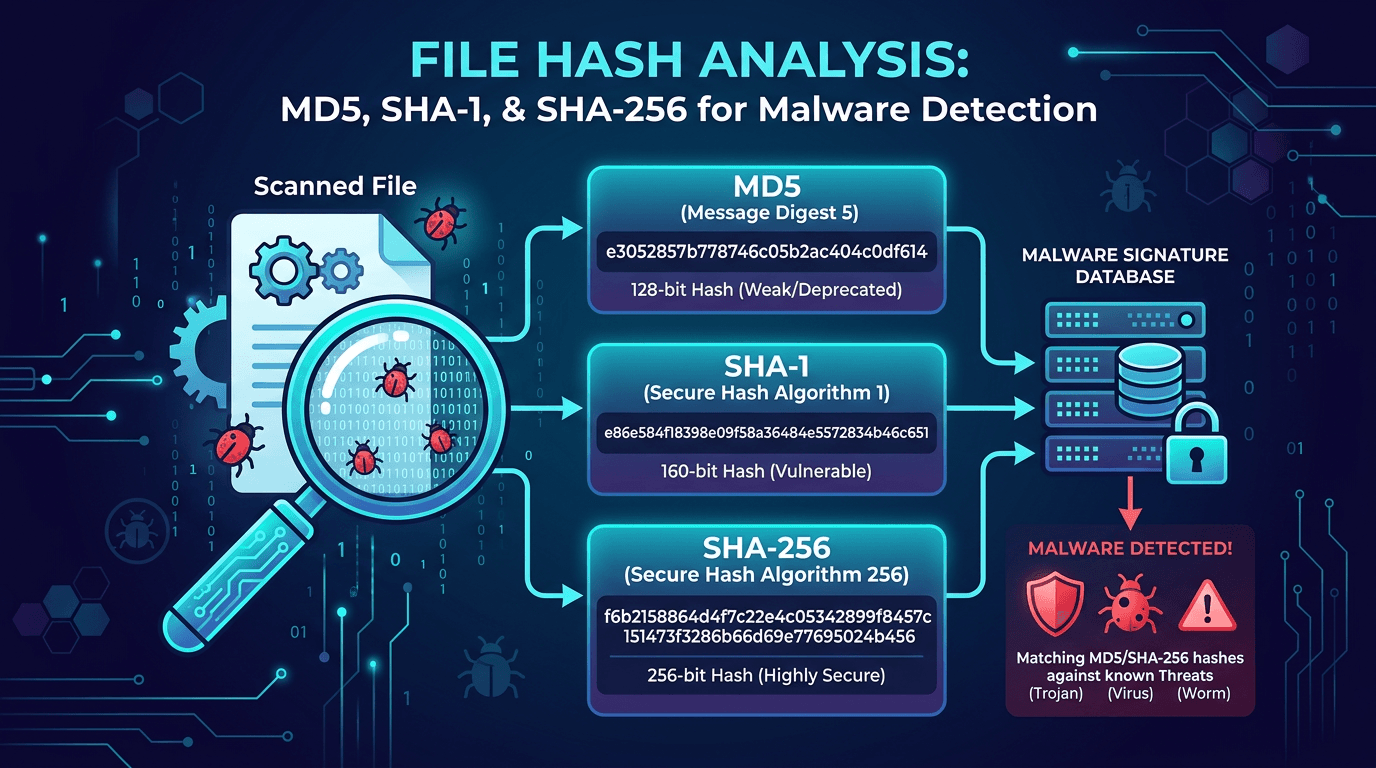
File Hash Analysis: MD5, SHA-1, and SHA-256 for Malware Detection and Threat Hunting
A practical guide to file hashes in cybersecurity—how MD5, SHA-1, and SHA-256 work, why they matter for malware detection, incident response, and threat hunting, and how to use hash lookups to enrich indicators of compromise.