Subdomain Enumeration for Security Teams: Attack Surface Discovery and DNS Reconnaissance
Subdomain enumeration surfaces forgotten dev servers, dangling DNS, and shadow IT before attackers do. Passive and active recon techniques compared.
 IsMalicious Team
Every domain has a shadow. Marketing spins up a campaign microsite, engineering forgets to tear down a staging box, a contractor connects a CNAME to a SaaS trial that never got renewed—and none of it shows up in the asset inventory anyone actually maintains. Attackers know this. Subdomain enumeration is one of the first things a reconnaissance script does against a target, precisely because the parent domain is usually locked down while its forgotten children are not. For defenders, the same technique is the fastest way to answer an uncomfortable question: what is actually running under our name right now?
Why Enumeration Matters on Both Sides
For an attacker, a subdomain list is a map of the attack surface before a single packet touches the "real" application. A wide enumeration pass often turns up admin panels, internal tools accidentally exposed, old API versions still accepting traffic, and staging environments running with weaker authentication than production. None of that requires exploiting a vulnerability—it just requires knowing where to look.
For a defender, the exact same list is an asset inventory correction. Most organizations' official CMDB understates their real footprint, because subdomains get created outside change control: a developer's personal Vercel deploy pointed at a company subdomain, a marketing tool's tracking pixel host, a decommissioned product that still resolves. Shadow IT does not announce itself. Enumeration is how you find it before someone else does.
Passive vs. Active Techniques
Not all discovery methods carry the same risk or yield the same coverage, and a mature program uses both.
Passive techniques query public records without ever sending traffic to the target infrastructure:
- Certificate transparency logs — every publicly trusted TLS certificate is logged, and each one lists every hostname it covers. Searching CT logs for a parent domain surfaces every subdomain that has ever requested a certificate, including ones that were spun up and decommissioned months ago.
- Passive DNS — historical resolution data collected by sensors and resolvers across the internet, showing what hostnames existed and what they pointed to, even after the records themselves are deleted or changed.
- Search engine and archive indexing — cached pages, archived crawls, and search results occasionally reveal hostnames that were briefly public and then locked down.
Passive methods are safe to run against domains you do not own—they touch no infrastructure—but they are inherently backward-looking and can miss anything that never generated a public certificate or got crawled.
Active techniques interact directly with the target's DNS or network:
- Wordlist brute forcing — querying a resolver with thousands of likely hostnames (
dev,staging,vpn,mail2,api-v1) and recording which ones resolve. Coverage depends entirely on wordlist quality and naming conventions guessed correctly. - Zone walking — exploiting DNSSEC-signed zones that use NSEC records (rather than NSEC3) to enumerate every name in a zone by walking the canonical ordering, effectively getting a full zone transfer without one being explicitly permitted.
- Zone transfer attempts — occasionally a misconfigured authoritative server still allows an
AXFRrequest from an unauthorized client, handing over the entire zone in one query.
Active techniques find hostnames passive sources never saw, but they generate traffic against real infrastructure and should be restricted to domains under your own authorization—this is reconnaissance that looks identical whether it's your red team or someone else's.
Turning a Hostname List into a Risk Picture
A raw subdomain list is not, by itself, a work queue. Two hundred hostnames tell you nothing about which ten deserve attention this afternoon. The list only becomes a risk picture once each entry is enriched:
- Reputation scoring — is the resolved IP or the hostname itself already associated with malicious activity, blocklists, or known-bad infrastructure? A subdomain enumeration pass run through subdomain discovery and reputation checks turns a flat list into a ranked one.
- DNS history — has this hostname's resolution changed hands? A record that used to point to your own load balancer and now points to a third-party IP range is the single strongest signal of a dangling or hijacked entry, and DNS history lookups exist specifically to answer that.
- Hosting ASN context — is the subdomain still resolving inside your organization's known cloud accounts and ASNs, or has it drifted onto infrastructure nobody on the team provisioned? Cross-referencing with ASN and network ownership data separates "forgotten but ours" from "someone else's now."
Layered together, these three signals turn an undifferentiated hostname dump into a short, prioritized list: the handful of subdomains that are actively dangerous versus the majority that are simply stale.
Common Findings: Forgotten Assets and Dangling DNS
The same patterns show up in almost every enumeration exercise:
- Forgotten dev and staging environments — often running outdated software, weaker authentication, or verbose error pages that leak internal architecture details.
- Orphaned marketing microsites — campaign domains that outlived the campaign and now sit unpatched and unmonitored.
- Dangling CNAME records — a subdomain still points at a cloud resource (a storage bucket, a PaaS app, a CDN endpoint) that was deprovisioned. Whoever claims that resource name next on the provider's side inherits your subdomain, and with it the ability to serve content or harvest sessions under a hostname your users already trust.
- Third-party SaaS remnants — a CNAME pointed at a trial or canceled vendor account, left resolving to nothing until an attacker registers the equivalent slot.
None of these require a zero-day. They require someone to notice, which is exactly what a recurring enumeration and enrichment pass is for.
Triaging at Scale
A single hostname lookup is easy. Two hundred hostnames discovered in one enumeration pass is a triage problem, and checking each one by hand does not scale past the first dozen. Feeding the full discovered list through bulk checking lets a team score, tag, and rank an entire subdomain inventory in one operation, so the analyst's time goes to the handful of genuinely risky entries instead of manually repeating the same lookup two hundred times.
Make Discovery Continuous
Subdomain enumeration done once, during an annual audit, is a snapshot of a footprint that keeps changing underneath it. New hostnames appear the moment a team spins up infrastructure outside change control, and dangling records appear the moment something gets torn down without a corresponding DNS cleanup. Treat discovery as a standing process rather than a project: schedule recurring enumeration, feed the results through reputation and DNS-history enrichment, and bulk-check anything new before it has a chance to become someone else's foothold. For teams building this into existing tooling or a SOC pipeline, the full enumeration, DNS-history, ASN, and bulk-check workflow is available through the isMalicious API, so continuous attack-surface monitoring can run unattended between the moments a human actually needs to look.
FAQ
Frequently asked questions
What is subdomain enumeration?
Subdomain enumeration is the process of discovering the hostnames that exist under a parent domain—app.example.com, staging.example.com, forgotten-2019.example.com—using passive sources like certificate transparency logs and passive DNS, or active techniques like wordlist brute forcing. Attackers use it for recon; defenders use it to find assets they did not know they were running.
Is subdomain enumeration illegal or against terms of service?
Passive techniques (querying certificate transparency logs, public DNS, and passive DNS databases) touch only public records and are broadly considered safe reconnaissance. Active techniques that send traffic directly to a target—brute forcing, zone walking, port scanning discovered hosts—should only be run against domains you own or have explicit written authorization to test.
What is a dangling DNS record or subdomain takeover?
A dangling DNS record points to infrastructure that no longer exists—a deprovisioned cloud storage bucket, a deleted load balancer, a canceled SaaS tenant—while the DNS entry itself remains live. An attacker who claims that same resource on the provider side inherits the subdomain, letting them serve content, harvest cookies, or phish under your brand's trusted hostname.
How often should a security team re-run subdomain discovery?
Continuously, not as a one-time audit. New subdomains appear whenever marketing spins up a campaign microsite, engineering provisions a staging environment, or a team connects a third-party SaaS to a CNAME. A quarterly manual sweep will always miss the two-week-old dev box that got indexed by a scanner first.
How does isMalicious help after I have a list of subdomains?
isMalicious turns a raw hostname list into a risk-ranked view: reputation scoring, DNS history, and hosting ASN context per subdomain, plus bulk checking so hundreds of discovered hosts can be triaged in one pass instead of one lookup at a time.
Related articles
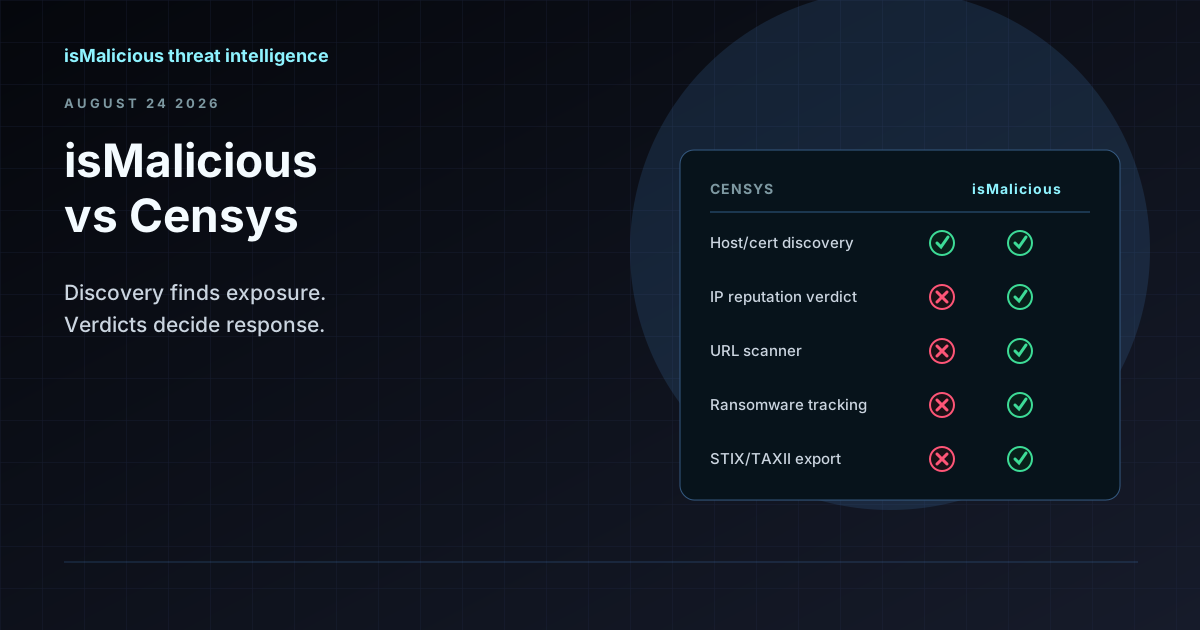 isMalicious vs Censys: Internet Discovery and Reputation Verdicts Are Different Jobs
Censys maps what exists on the internet — hosts, certificates, open ports. isMalicious assesses what is malicious. Most teams comparing the two need the second question answered, not the first.
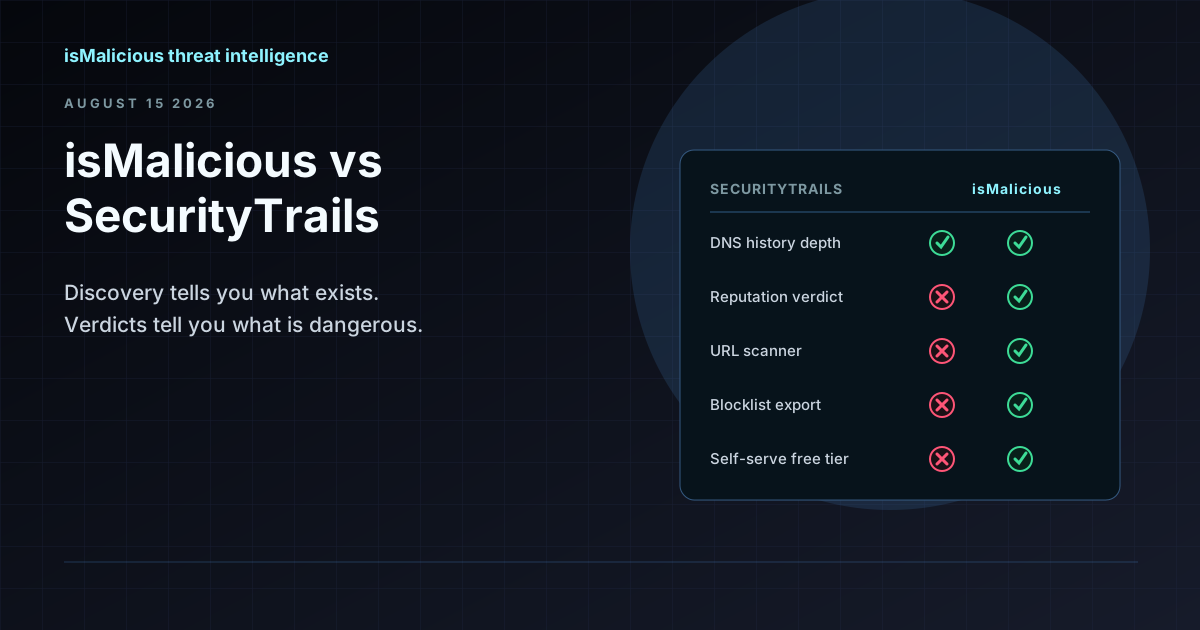 isMalicious vs SecurityTrails: Discovery Data and Reputation Verdicts Are Not the Same Product
SecurityTrails tells you what exists — every subdomain, every historical DNS record. isMalicious tells you what is dangerous. Most teams searching for a SecurityTrails alternative want the second half.
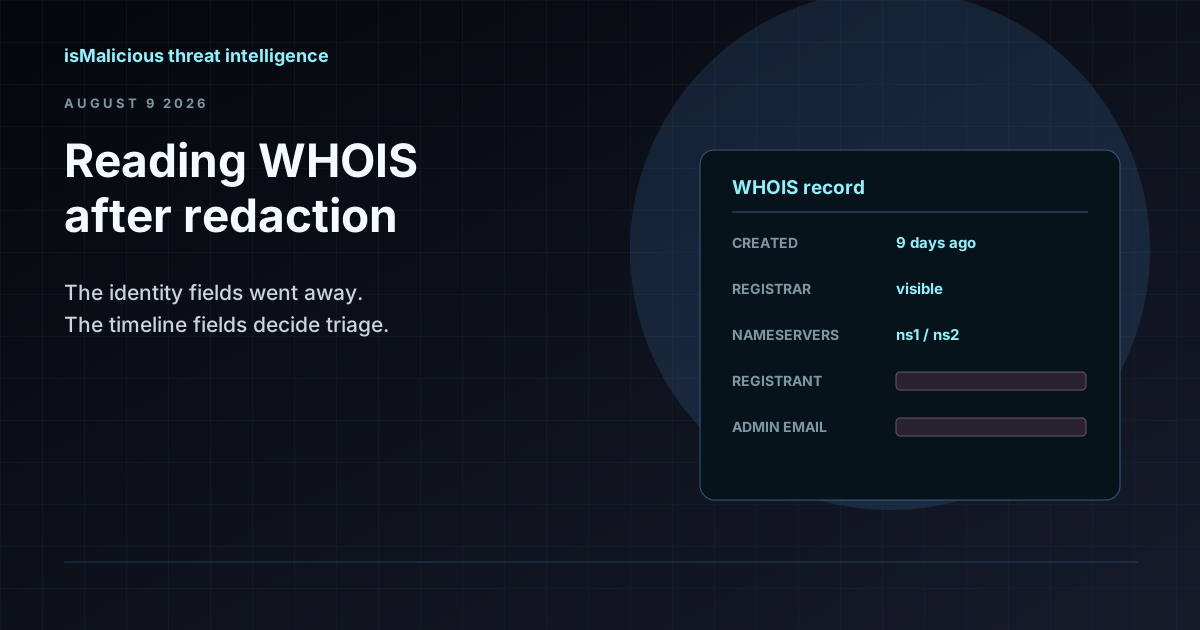 WHOIS Lookup for Security Investigations: Reading a Record After Redaction
Privacy services stripped the registrant name out of most WHOIS records, but the fields that matter for triage survived. Here is what a WHOIS record still tells an analyst, and how to read it.
Check any IP or domain
See what our indexed threat intelligence records say about it.
Try the IP / Domain Checker