SBOM and Supply Chain Security: What Security Teams Actually Need
Software bills of materials are not paperwork for compliance alone. Learn how SBOMs reduce third-party risk and speed response when a dependency blows up.
 IsMalicious Team
Every modern application is a stack of open-source packages, containers, and vendor SDKs. When log4j-style issues or compromised packages hit the news, the winning question is simple: Where do we use this component? A Software Bill of Materials (SBOM) answers that question in minutes instead of weeks.
What an SBOM Is
An SBOM is a structured inventory of components—names, versions, licenses, and often hashes—that describes what shipped in a given build or image. Standards such as SPDX and CycloneDX make SBOMs machine-readable so scanners and CI pipelines can reason about them.
Why It Matters for Security
- Vulnerability response: Map a CVE or malicious package to affected services without guessing.
- License risk: Track obligations before they become legal surprises.
- Incident scope: When a build artifact is suspect, SBOM + provenance narrows blast radius.
SBOM Alone Is Not Enough
SBOMs must be generated in CI, stored with artifacts, and kept current. Pair them with dependency pinning, signature verification, and provenance (who built what, from which commit) so you trust the inventory itself.
Operationalizing
Start with critical applications and internet-facing images. Integrate SBOM export into release pipelines, attach outputs to version control or artifact storage, and rehearse “dependency X is bad” drills twice a year.
Conclusion
Supply chain security is dependency visibility plus process. SBOMs are the visibility layer; your pipeline and governance turn them into specific supply chain defense.
Related articles
 GitHub Actions and CI/CD Pipeline Compromise: A Growing Supply Chain Attack Vector
CI/CD pipeline compromises keep recurring across GitHub Actions ecosystems. Learn the detection signals, hardening steps, and enrichment workflow security teams need.
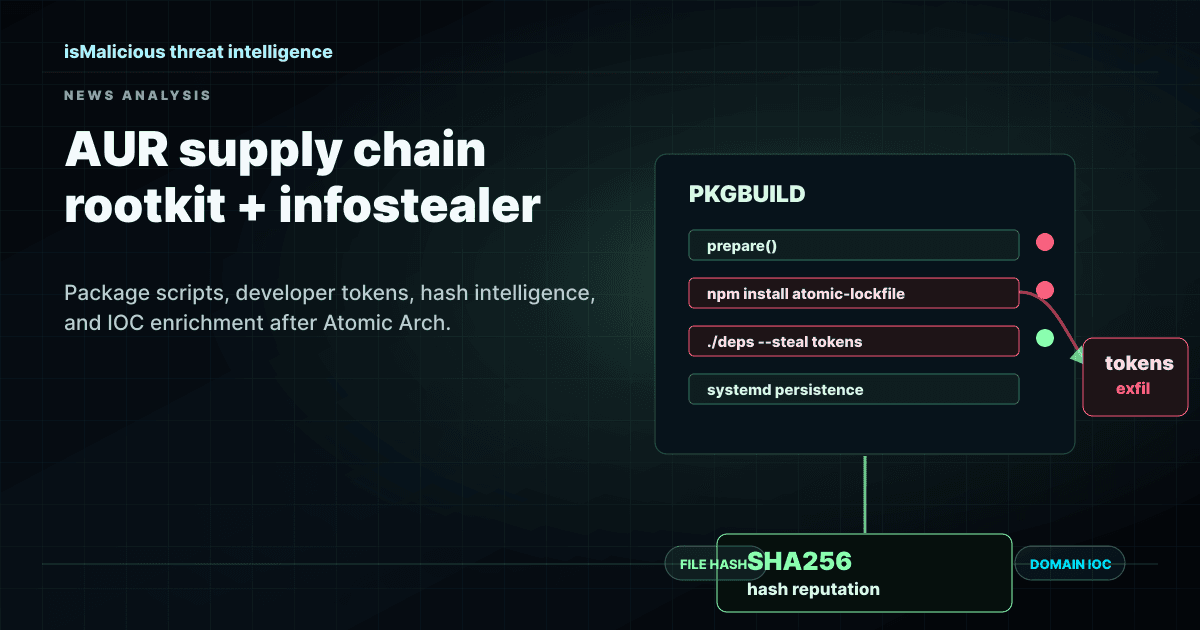 Arch AUR Rootkit And Infostealer Campaign: Supply Chain Defense Starts With Hash Intelligence
The June 2026 Arch User Repository compromise shows why supply chain security needs package review, file hash reputation, developer credential protection, and fast IOC enrichment.
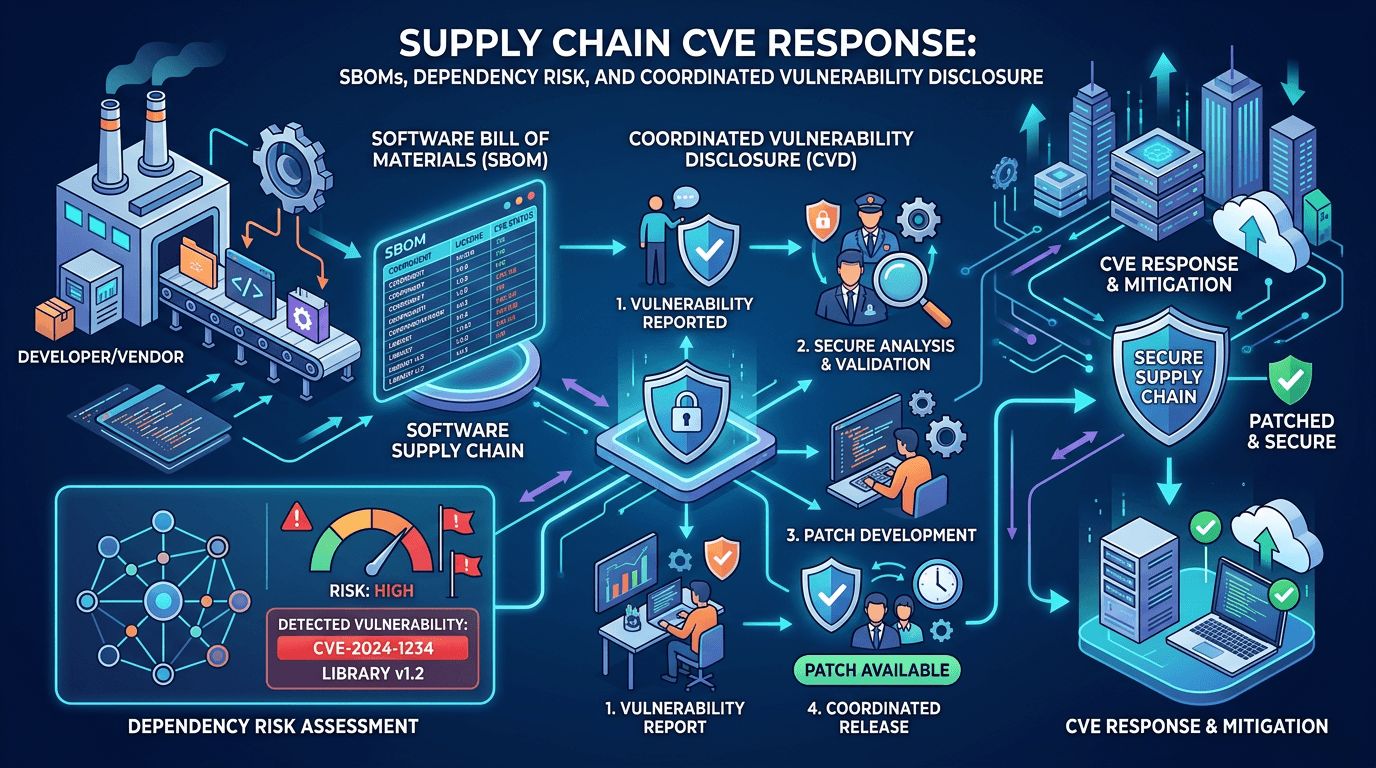 Supply Chain CVE Response: SBOMs, Dependency Risk, and Coordinated Vulnerability Disclosure
Build a modern supply-chain security program: generate SBOMs, map CVEs to components, integrate EPSS and KEV, and coordinate fixes across vendors and open-source maintainers.
Protect Your Infrastructure
Check any IP or domain against our threat intelligence database with indexed records.
Try the IP / Domain Checker