DNS Security: Poisoning, Hijacking, and Hardening That Actually Sticks
DNS is easy to ignore until it routes your users to malware. Learn how cache poisoning, hijacking, and secure DNS practices fit together.
 IsMalicious Team
DNS translates names into addresses. Attackers abuse it to redirect users to phishing sites, bypass security controls, and exfiltrate data in plain sight. Defending DNS is less about exotic zero-days and more about architecture, monitoring, and closing obvious gaps.
Cache Poisoning and Resolver Trust
Resolvers that accept spoofed answers can serve wrong IP addresses to clients until caches expire. Use DNSSEC where your zones and providers support it, and prefer trusted recursive resolvers with strong anti-spoofing behavior for client and server workloads.
Domain and Registrar Hygiene
Domain hijacking via stolen registrar credentials or expired domains bypasses most network controls. Lock domains, use registry lock where available, enforce 2FA on registrar accounts, and monitor WHOIS and certificate transparency for unexpected changes.
Encrypted DNS: DNS over HTTPS / TLS
DoH and DoT protect query privacy on the wire and reduce some on-path manipulation, but they also shift policy to which resolver you trust. Corporate environments should explicitly choose resolvers and logging policies instead of defaulting to browser or OS choices.
Monitoring and Threat Intel
Log query patterns for rare resolutions, newly registered domains contacted by endpoints, and DNS tunneling indicators. Correlate DNS telemetry with EDR and firewall data for faster triage.
Conclusion
DNS security is defense in depth: secure zones, secure resolvers, secure accounts, and visibility into what your systems resolve every day.
Related articles
 Protective DNS for the Public Sector: A Deployment Guide
Deploy protective DNS across public-sector sites and remote staff. Test coverage, handle exceptions and keep essential services available during failures.
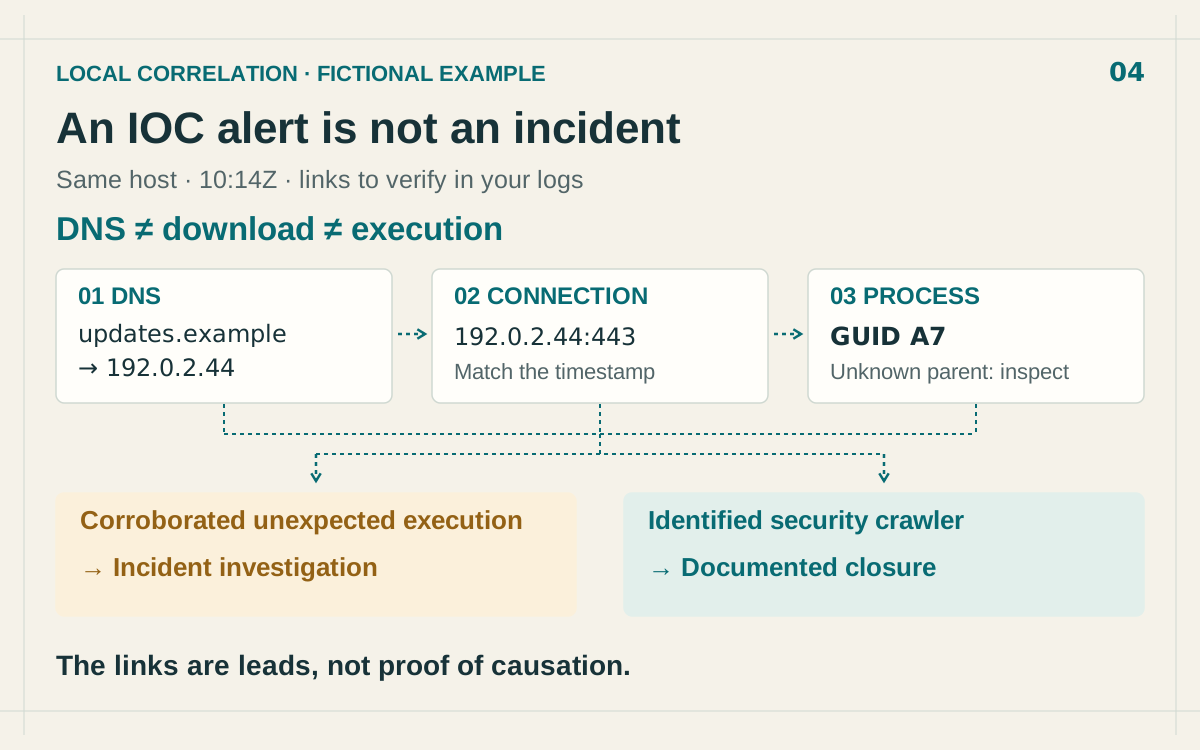 Investigate an IOC Alert: Link IP, DNS and Process Logs
An IOC match is an investigation lead. Correlate DNS, network connections and process records to establish what happened on the endpoint.
 Subdomain Enumeration for Security Teams: Attack Surface Discovery and DNS Reconnaissance
Subdomain enumeration surfaces forgotten dev servers, dangling DNS, and shadow IT before attackers do. Passive and active recon techniques compared.
Protect Your Infrastructure
Check any IP or domain against our threat intelligence database with indexed records.
Try the IP / Domain Checker