Domain Age as a Risk Indicator: Why "New" Often Means "Danger"
Newly registered domains (NRDs) are a favorite tool for threat actors. Learn why domain age is a critical signal in your threat intelligence stack and how to use it effectively.

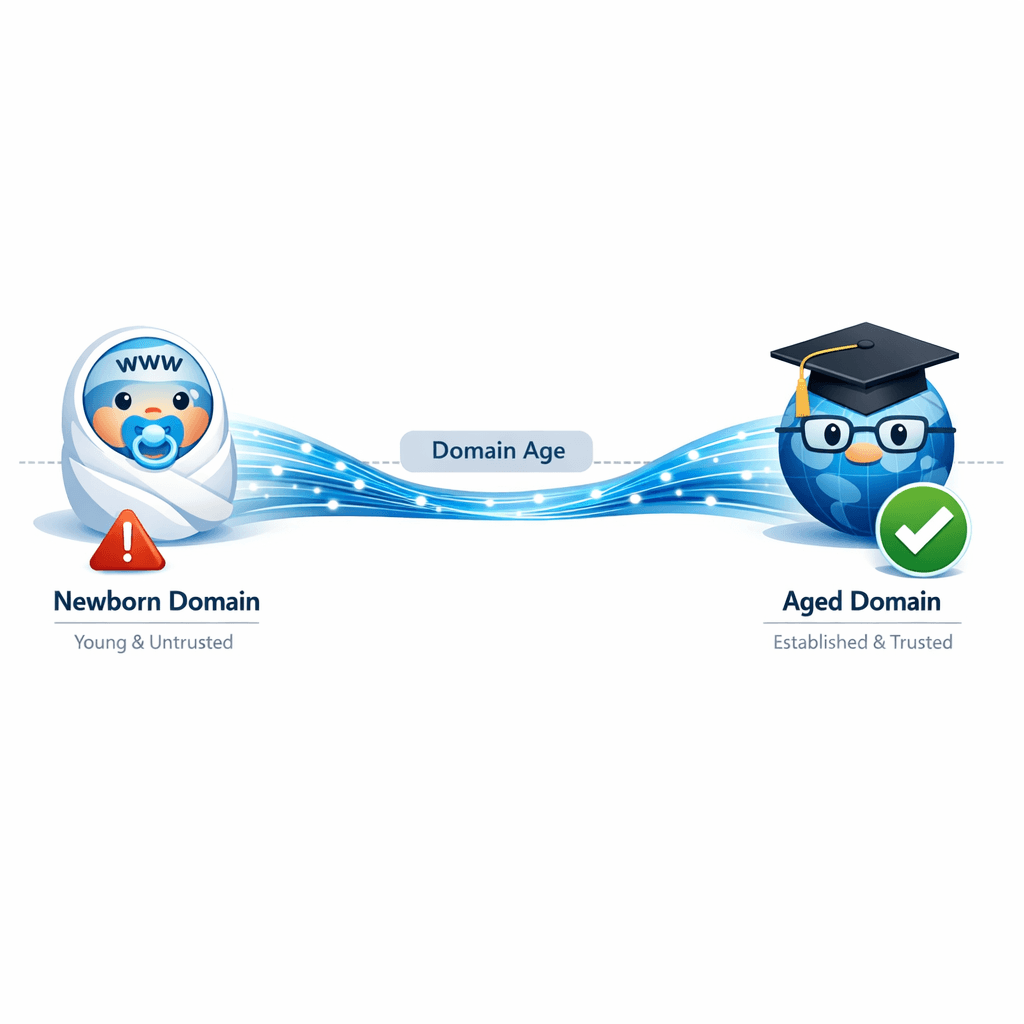
If you walked into a bank that opened yesterday, would you deposit your life savings? Probably not. You trust institutions with a history. The same logic applies to the internet, yet many security systems treat a domain registered 5 minutes ago with the same trust as one registered 15 years ago.
Domain age is a useful but underused signal in threat intelligence. Here’s why threat actors favor newly registered domains and how analysts can evaluate them.
The "Burner" Domain Strategy
Cybercriminals operate on a churn-and-burn model. They register thousands of domains for:
- Phishing campaigns: Mimicking legitimate brands (e.g.,
support-google-auth-update.com). - Command & Control (C2): Hosting malware callbacks.
- Spam: Sending millions of emails before the domain gets blacklisted.
Once a domain is flagged, they discard it and move to the next one. This means that a domain that is less than 30 days old has a statistically higher probability of being malicious than an established one.
The "Baby Domain" Policy
Many mature security organizations implement a Newly Registered Domain (NRD) policy. This involves:
- Blocking: Automatically blocking access to any domain registered in the last 24-72 hours.
- Flagging: Treating traffic to domains < 30 days old as "suspicious" and subjecting it to deeper inspection.
- Quarantine: routing emails from NRDs to a sandbox or spam folder automatically.
False Positives vs. Risk Reduction
Critics argue that blocking new domains hurts legitimate businesses launching new products. While true, the ratio of malicious to legitimate NRDs is overwhelmingly skewed towards malice.
The solution is context. Don't just block based on age. Combine age with:
- Entropy: Is the domain name random characters?
- Registrar: Is it a cheap/free registrar often used by spammers?
- Hosting: Is it hosted on a bulletproof hosting provider?
How isMalicious Helps
isMalicious enriches domain data with registration dates and reputation scores. This allows you to build granular policies. For example: "Block if Age < 7 days AND Threat Score > 50."
Conclusion
In the race against cyber threats, time is a critical dimension. By factoring domain age into your security logic, you cut off a massive avenue of attack before it even begins. Treat new domains with skepticism until they earn their trust.
Related articles
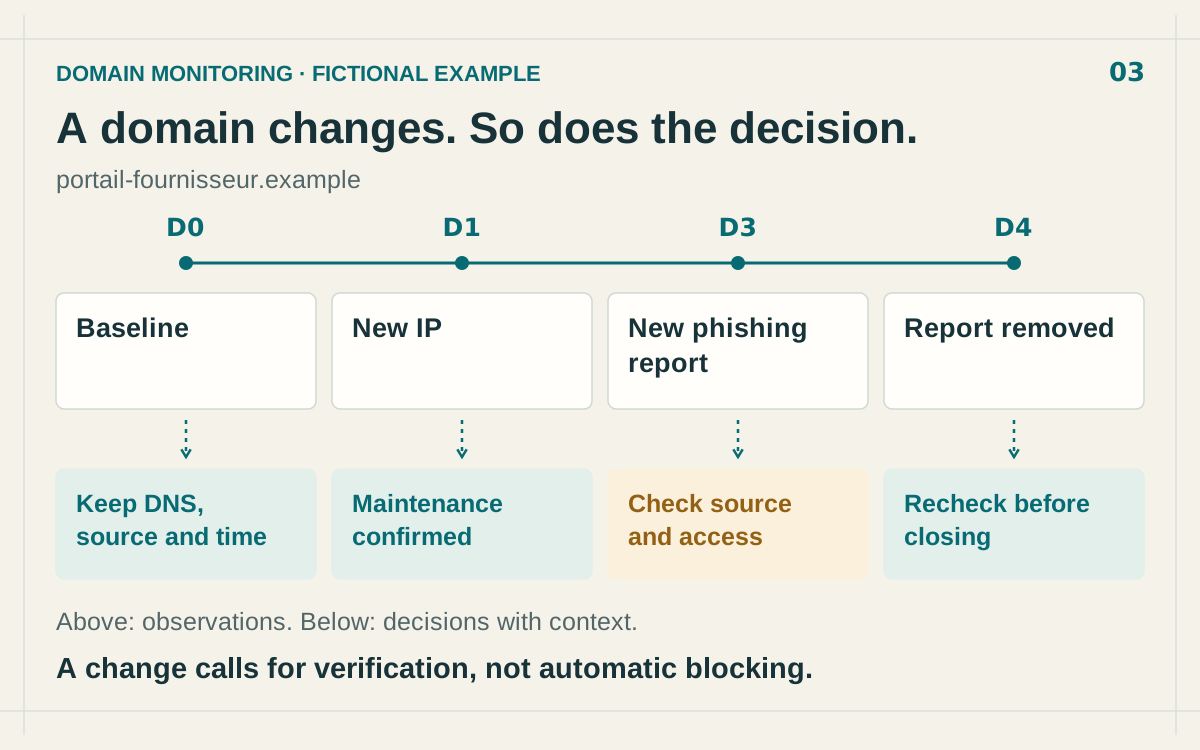 Domain Reputation Monitoring: Which Changes Need Action?
Track domain reputation over time: distinguish a new phishing report from expected DNS changes, then decide what to verify before restricting access.
 DGA Detection: Find Algorithmically Generated Domains
Detect domain generation algorithms with lexical, DNS, endpoint, and reputation signals while controlling false positives in production.
 Bulk IP and Domain Lookups: Designing Indicator Enrichment That Survives Real Volume
One incident produces hundreds of indicators, and per-indicator lookups are where triage stalls. Here is how to build a batch enrichment pipeline that respects quotas, deduplicates properly, and fails gracefully.
Protect Your Infrastructure
Check any IP or domain against our threat intelligence database with indexed records.
Try the IP / Domain Checker