SIM Swapping and Telecom Fraud: When Your Phone Number Is the Weakest Factor
Attackers who control your mobile number can bypass SMS-based 2FA and reset passwords. Learn how SIM swap fraud works and how to reduce reliance on SMS one-time codes.
 IsMalicious Team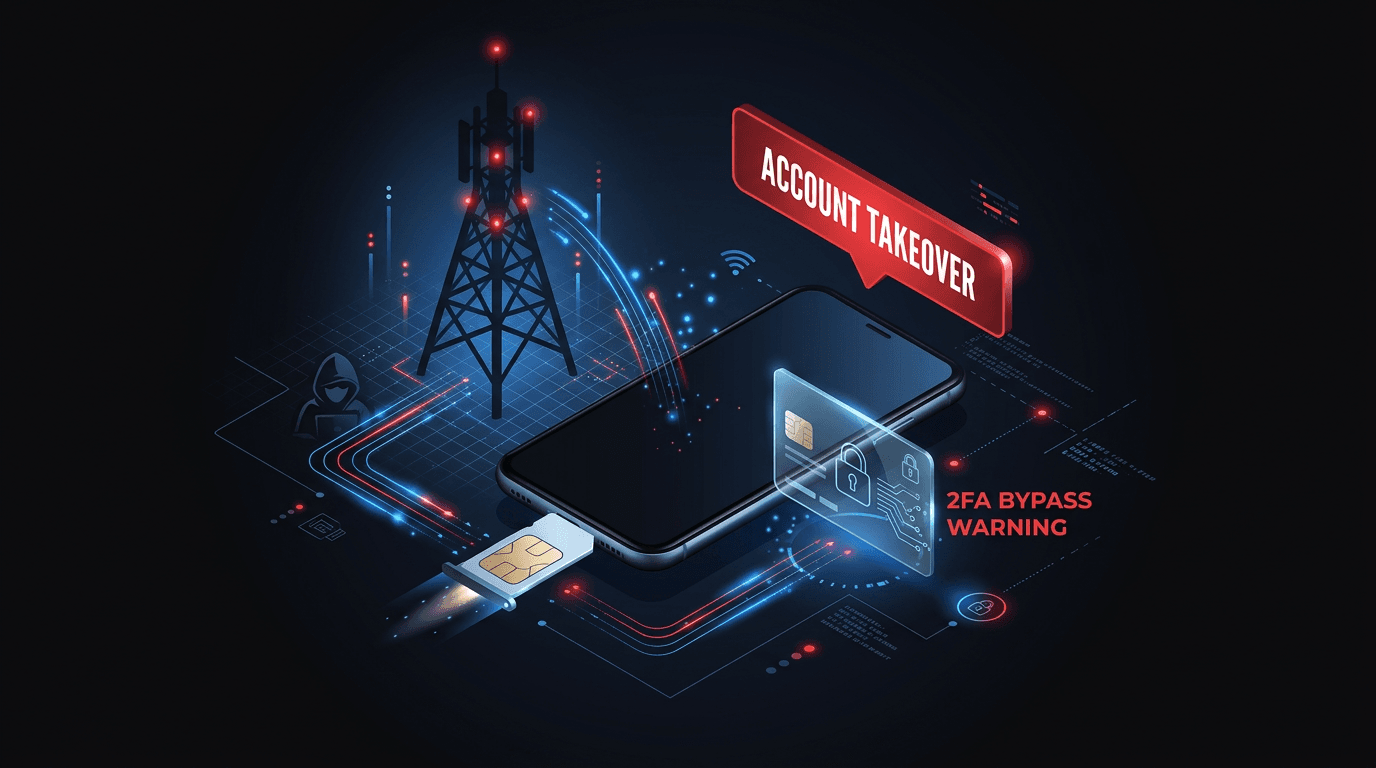
SIM swapping is account takeover via the carrier: an attacker convinces—or bribes—telecom staff to port your number to their SIM, or abuses digital account recovery flows. Once they receive SMS one-time codes and password reset links, email, banking, and crypto accounts that treat the phone as proof of identity fall quickly.
Attack Chain (Typical)
- Gather PII from breaches, social media, or phishing (DOB, last four of SSN where applicable, account numbers).
- Impersonate the victim with the carrier or use compromised carrier credentials.
- Port the number; victim loses service as the attacker receives all SMS and voice.
- Reset passwords on services that use SMS 2FA or “call to verify.”
Why SMS 2FA Is Fragile
SMS was never designed as a strong authenticator. SS7 and SIM swap attacks target the phone number, not the person. Any workflow that equates “possession of the number” with “identity” inherits that weakness.
What Organizations Should Do
- Prefer phishing-resistant MFA: Passkeys, FIDO2 security keys, or app-based TOTP with backup codes stored offline—not SMS—for workforce and high-risk customers.
- Remove SMS as sole recovery for admin and financial roles; use hardware tokens or split knowledge procedures.
- Monitor for impossible MFA or password reset patterns after telecom-related help-desk contacts.
What Individuals Can Do
- Enable carrier PIN or port freeze where available.
- Minimize linking critical accounts to SMS-only 2FA.
- Watch for sudden loss of cellular service as a possible swap in progress; contact the carrier from a known-good channel immediately.
Conclusion
SIM swapping turns the phone number into the weakest link. Moving high-value authentication off SMS—and hardening carrier accounts—cuts the most common path from “stolen PII” to “empty accounts.”
Related articles
 MFA Fatigue: Stop Push-Bombing Attacks
Detect and prevent MFA fatigue with number matching, rate limits, risk signals, phishing-resistant authentication, and an identity incident playbook.
 Residential Proxy Abuse: Detect Fraud Without Blocking Users
Detect residential proxy abuse by combining IP reputation, identity, velocity, device, and behavioral signals without penalizing legitimate users.
 Session Token Theft: Why Infostealers Bypass MFA and How Defenders Respond
Infostealers increasingly target browser cookies, session tokens, and refresh tokens. Learn why MFA is not enough, what token theft looks like, and how to detect replay.
Protect Your Infrastructure
Check any IP or domain against our threat intelligence database with indexed records.
Try the IP / Domain Checker