Ransomware Resilience: Why Immutable Backups Still Matter in 2026
Attackers target backups first. Learn how immutable storage, the 3-2-1 rule, and recovery drills turn ransomware from a business-ending event into a manageable incident.
 IsMalicious Team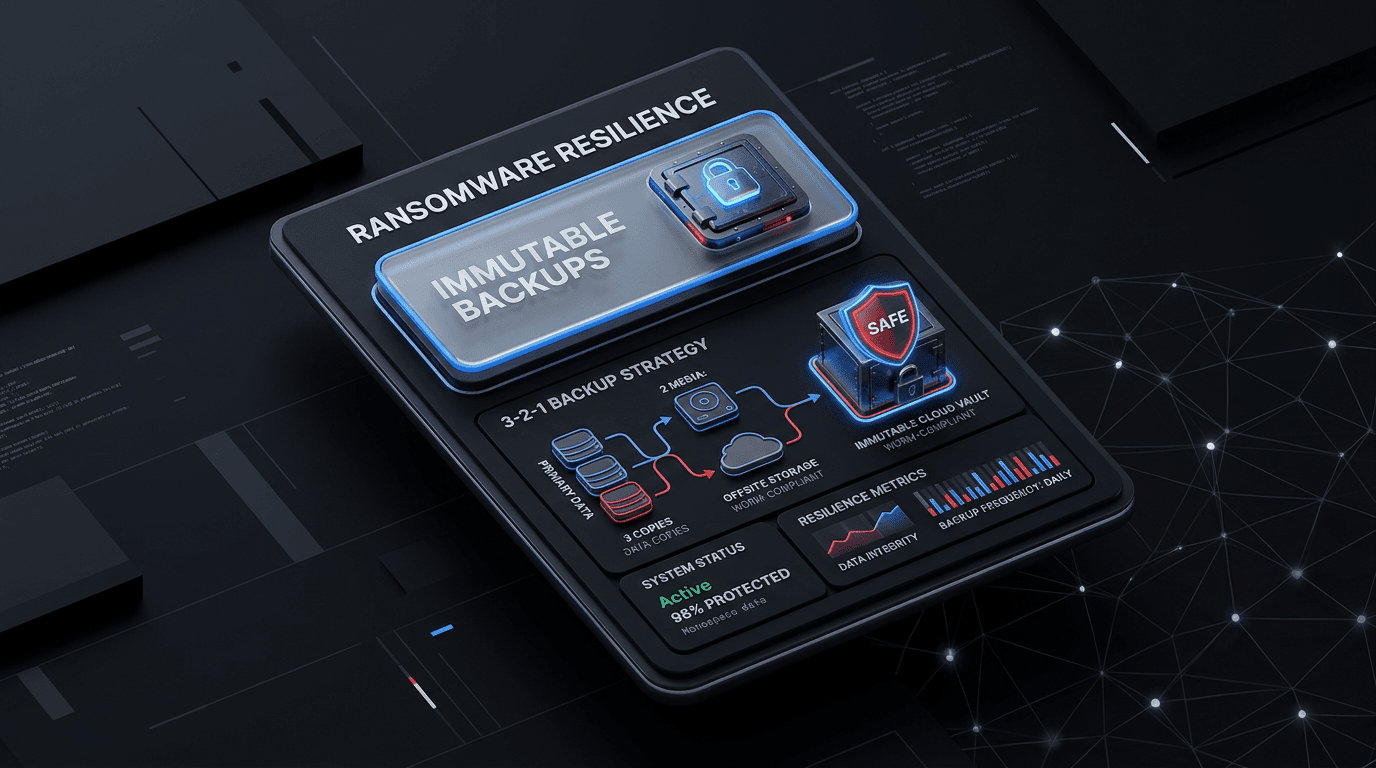
Ransomware operators no longer stop at encrypting file shares. They hunt for backup consoles, delete snapshots, and abuse privileged accounts to make recovery impossible. Resilience is not about whether you will be targeted; it is about whether you can restore operations when encryption or extortion lands.
The 3-2-1 Rule (Still the Baseline)
A practical backup strategy keeps three copies of data, on two different media types, with one copy off-site or logically air-gapped. Cloud object storage, tape, or a secondary region can satisfy the off-site requirement, but the critical detail is independence: one copy must survive compromise of your primary environment and identity plane.
Immutability and WORM
Immutable or write-once storage prevents attackers (and rogue admins) from silently overwriting or deleting backups during the dwell time before ransomware detonates. Combine immutability with separate credentials and network segmentation for backup infrastructure so Domain Admin on the corporate LAN cannot reach the immutability controls.
Test Restores, Not Just Backups
Backups that have never been restored are assumptions. Schedule tabletop plus technical exercises: pick random systems, restore to an isolated network, and measure recovery time objective (RTO) and recovery point objective (RPO) against real numbers, not slide decks.
Identity Is Part of Resilience
Modern ransomware chains often start with stolen credentials or phishing. Hardening identity, MFA, and privileged access reduces the odds that an attacker ever reaches your backup tier. Resilience is backup strategy plus least privilege and detection on the path to data destruction.
Conclusion
Immutable, tested, independently secured backups are the difference between paying a ransom and declining with confidence. Invest in recovery before the ransom note appears.
Related articles
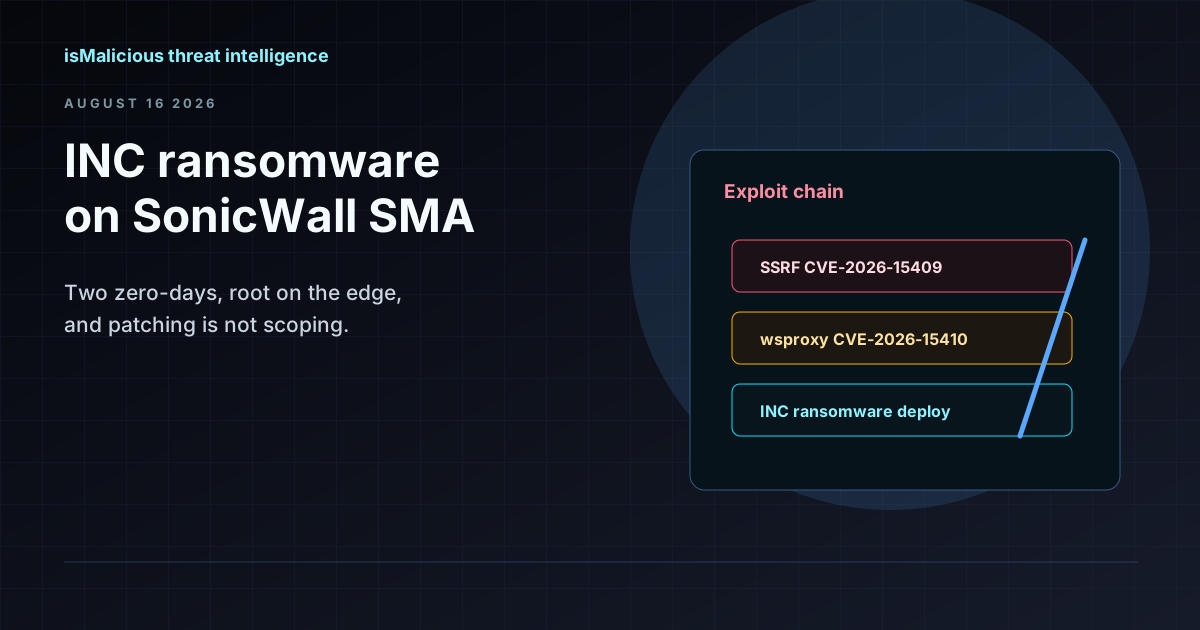 INC Ransomware Chains Two SonicWall SMA Zero-Days (CVE-2026-15409, CVE-2026-15410)
INC affiliates are weaponizing an SSRF and a post-authentication code injection in SonicWall SMA 1000 to reach internal networks. Exploitation started weeks before the July 14 patch — here is how to hunt and triage.
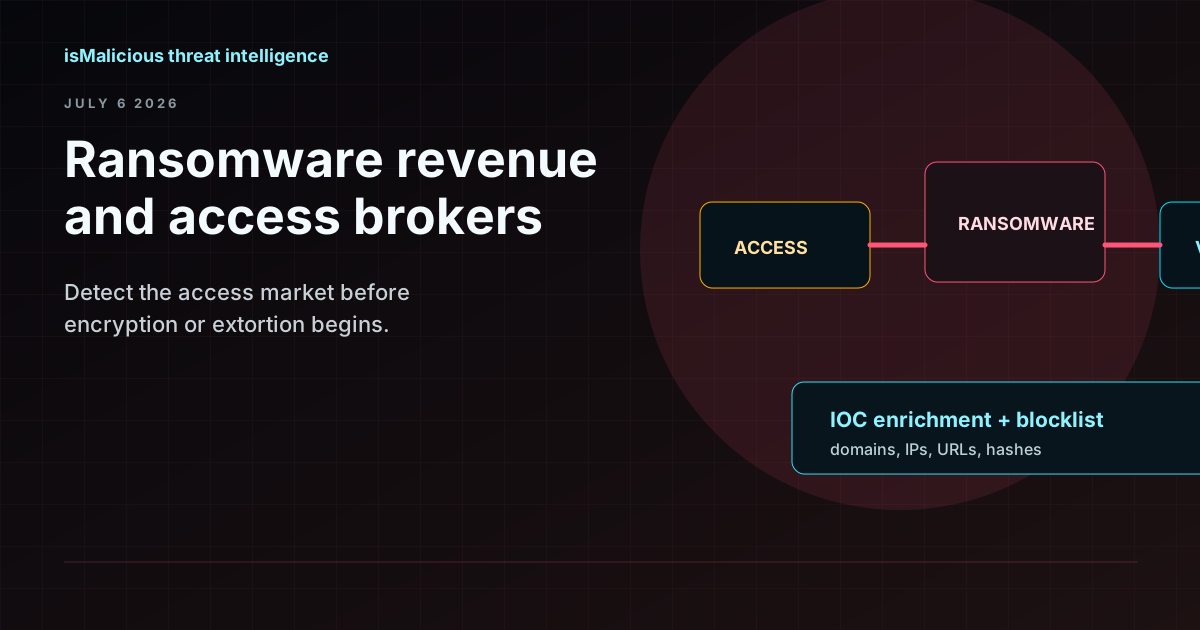 Ransomware Revenue Is Rising: Initial Access Brokers Make Threat Intelligence Urgent
Q1 2026 ransomware revenue reporting points to a mature access market. Defenders need ransomware intelligence, domain monitoring, blocklists, and API enrichment before encryption begins.
 Cyber Extortion Now Includes Physical Threats: What Incident Response Teams Must Change
Cyber incidents are no longer always contained to systems and data. As extortion crews add physical threats, responders need ransomware intelligence, safety escalation, IOC enrichment, and executive-ready evidence.
Protect Your Infrastructure
Check any IP or domain against our threat intelligence database with indexed records.
Try the IP / Domain Checker