The Splinternet: Navigating a Fragmented World Wide Web
The global internet is fracturing into regional, regulated intranets. We explore the rise of the "Splinternet" and its impact on cybersecurity and global business.

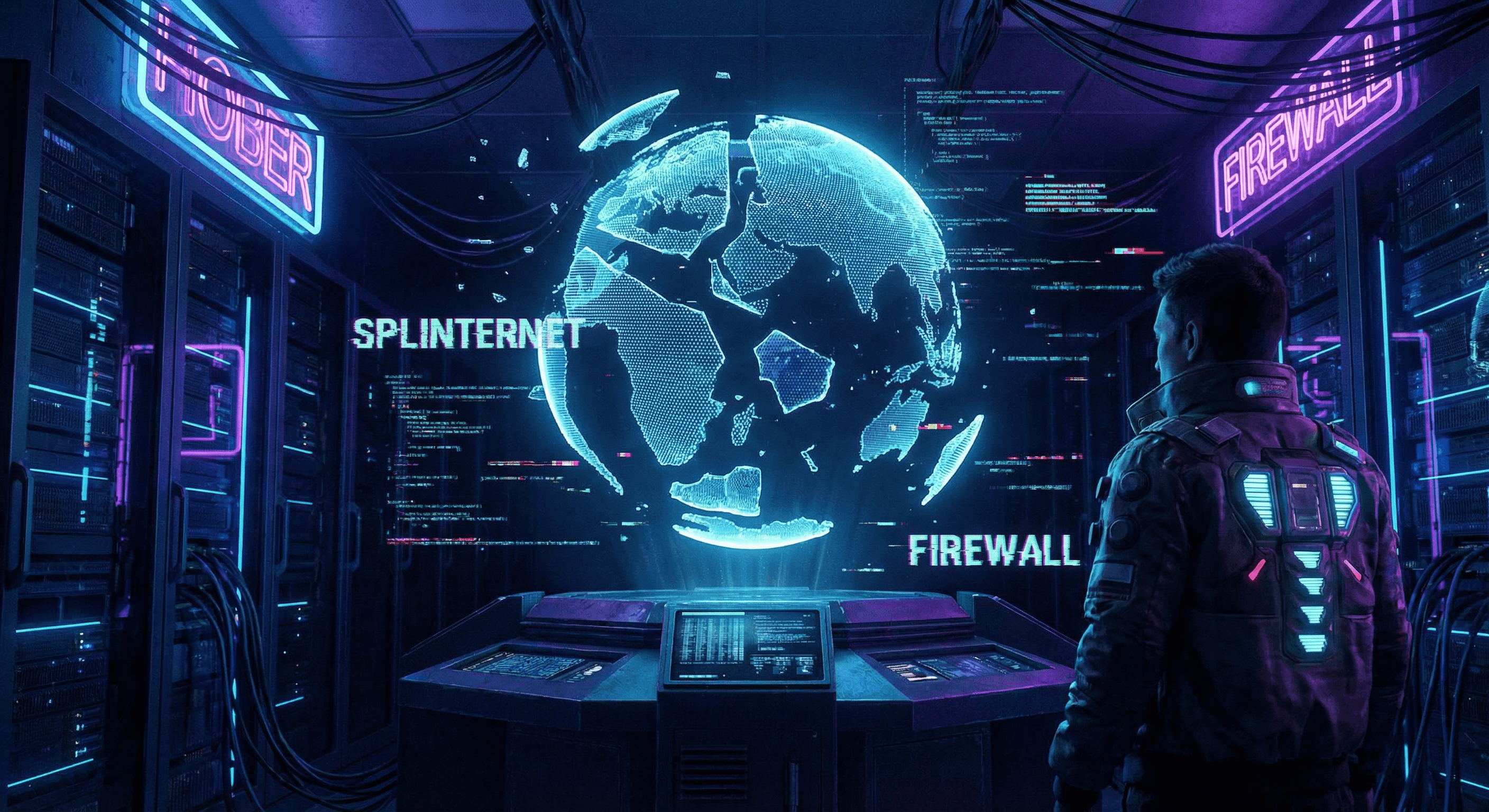
The End of the Global Village?
The vision of a single, open internet is fading. Governments are increasingly building digital borders—firewalls, censorship systems, and data localization laws—creating a fragmented Splinternet.
Drivers of Fragmentation
- National Security: Countries want to control their information space and protect critical infrastructure from foreign cyberattacks.
- Data Sovereignty: Laws like GDPR (Europe) and others require citizen data to be stored locally, complicating global cloud architecture.
- Censorship: Regimes restrict access to foreign news and social media to control the narrative.
Cybersecurity Implications
- Compliance Nightmares: Security teams must navigate a patchwork of conflicting regulations.
- Blind Spots: Threat intelligence sharing becomes harder across digital borders.
- Balkanized Infrastructure: Companies must build separate stacks for different regions (e.g., "China stack" vs. "Global stack").
Navigating the Divide
- Geo-Blocking: Using IP Intelligence to route traffic and enforce regional restrictions.
- Localized Threat Intel: Understanding that threats in one region (e.g., specific malware) may not be relevant in another.
Related Reading
Related articles
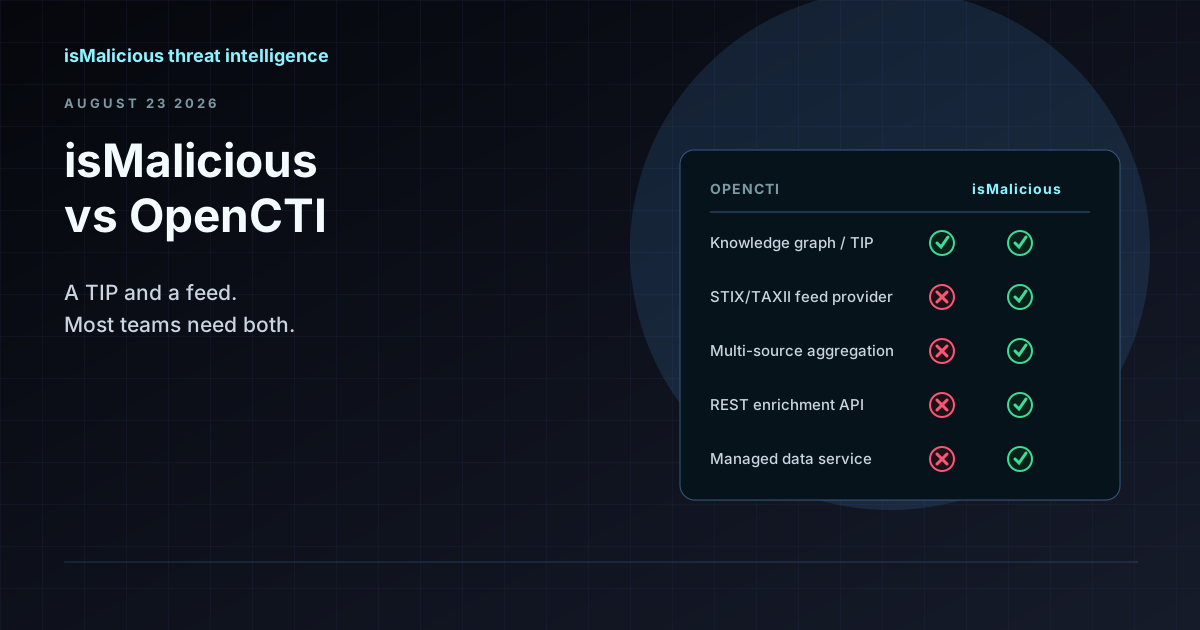 isMalicious vs OpenCTI: Why This Is the Wrong Comparison (and How They Work Together)
OpenCTI is a threat intelligence platform and knowledge graph. isMalicious is a data provider that feeds it. Teams searching for an OpenCTI alternative usually need a feed, not a replacement TIP.
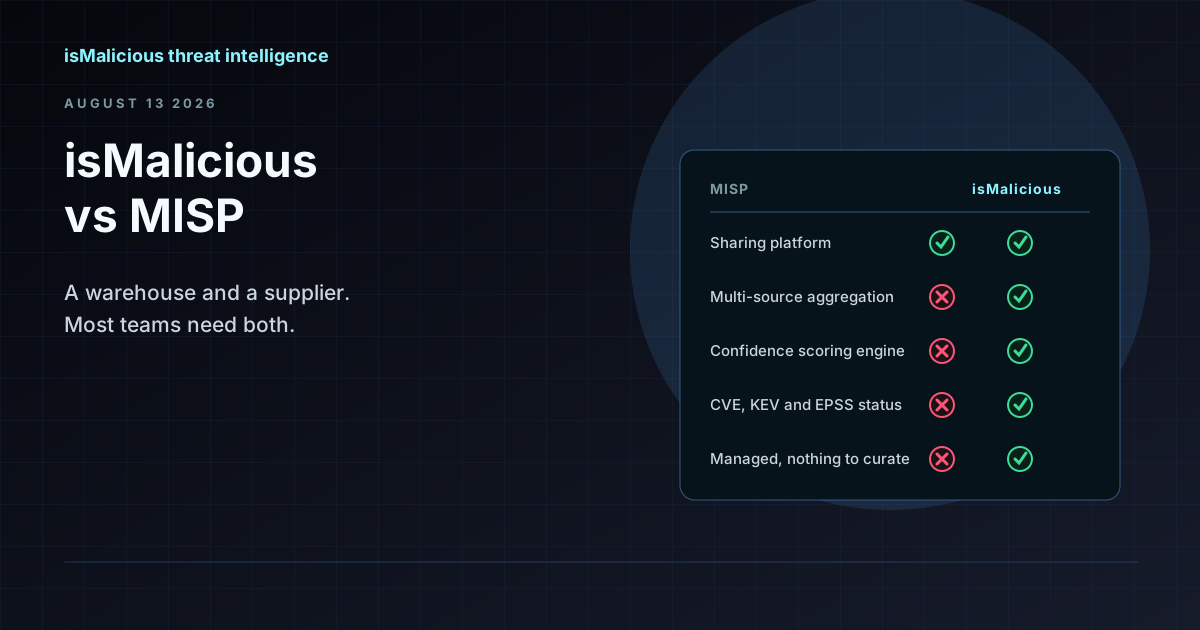 isMalicious vs MISP: Why This Is the Wrong Comparison (and What to Compare Instead)
MISP is where you store and share indicators. isMalicious is where indicators come from. Teams searching for a MISP alternative are usually looking for a feed, not a replacement platform.
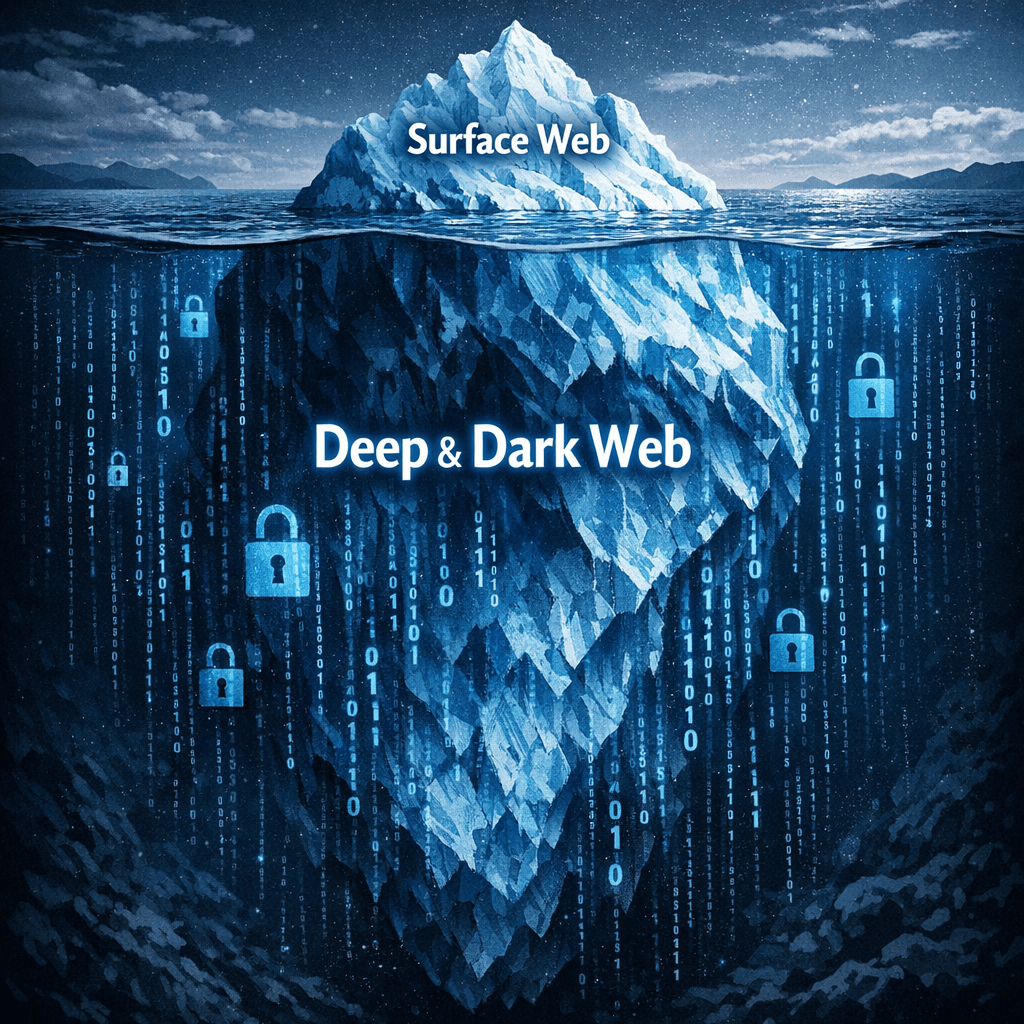 The Dark Web vs. Deep Web: Where Do Cyber Threats Hide?
Confused by the Dark Web and Deep Web? We explain the difference and where cyber threats like stolen credentials and malware actually live.
Protect Your Infrastructure
Check any IP or domain against our threat intelligence database with indexed records.
Try the IP / Domain Checker