Cloud Security Threats: Protecting Multi-Cloud Infrastructure
Cloud environments face unique security challenges from misconfigurations to cryptomining attacks. Learn how to monitor cloud assets, detect threats, and protect your multi-cloud infrastructure with threat intelligence.

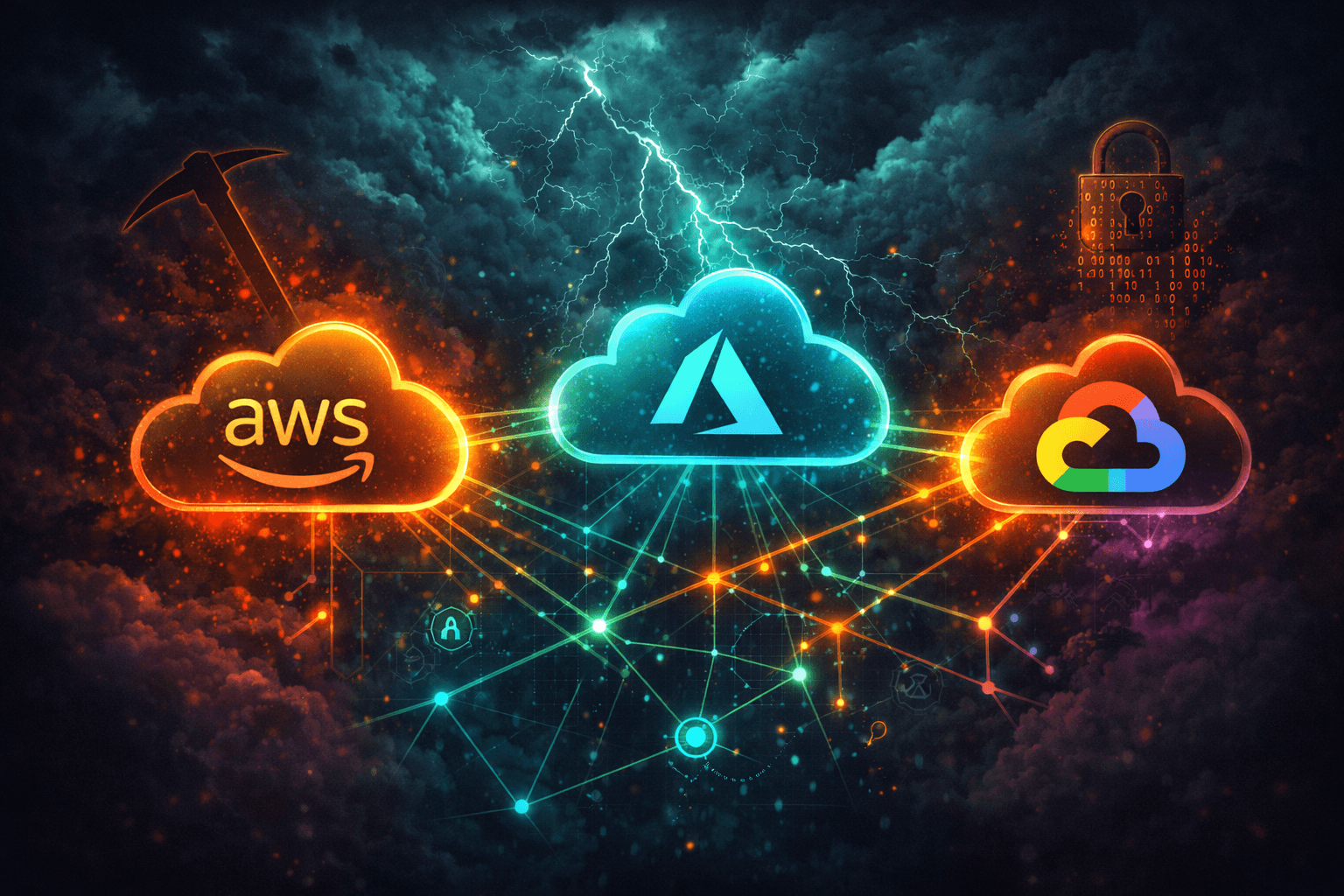
The security team received an alert about unusual compute usage at 2 AM on a Saturday. Initial investigation showed a burst of activity in a development account that should have been dormant. Deeper analysis revealed the truth: attackers had discovered exposed credentials in a public code repository, used them to provision hundreds of high-powered virtual machines, and were mining cryptocurrency at the organization's expense.
By the time the attack was contained, the bill exceeded tens of thousands of dollars. The credentials had been exposed for less than four hours before automated scanners discovered them. The mining operation was launched within minutes of discovery.
This is the reality of cloud security in 2026. The speed at which attackers operate, combined with the self-service nature of cloud computing, creates risk at a pace that traditional security processes cannot match. An exposed credential or misconfigured service can be exploited before most organizations even know they are vulnerable.
The Expanded Attack Surface
Cloud adoption has fundamentally changed how organizations think about infrastructure security. The perimeter that once defined the boundary between trusted and untrusted networks has dissolved. Resources spin up and down dynamically. Services communicate across regions and providers. The attack surface expands and contracts constantly.
Configuration Complexity
Cloud platforms provide extraordinary flexibility, but that flexibility creates complexity. A single cloud environment might involve hundreds of services, thousands of configuration options, and millions of possible permission combinations. Each represents a potential misconfiguration that attackers can exploit.
The most common cloud breaches do not involve sophisticated exploits or zero-day vulnerabilities. They result from simple misconfigurations: storage buckets left publicly accessible, security groups with overly permissive rules, or IAM policies that grant excessive permissions.
These misconfigurations exist because the complexity exceeds human cognitive capacity. Security teams cannot manually review every configuration across every service in every region. Automation helps, but gaps persist.
Multi-Cloud Multiplication
Organizations increasingly operate across multiple cloud providers, combining AWS, Azure, Google Cloud, and others based on technical requirements, business relationships, and risk diversification strategies. Each provider has different services, different configuration paradigms, and different security models.
Security teams must develop expertise across all providers, maintain visibility into all environments, and enforce consistent policies despite fundamental platform differences. The complexity multiplies with each provider added to the portfolio.
Ephemeral Infrastructure
Cloud infrastructure is dynamic by design. Containers spin up, execute, and terminate in seconds. Serverless functions execute on demand without dedicated infrastructure. Auto-scaling adjusts capacity based on load. Traditional security tools designed for static infrastructure struggle in this environment.
Threats that exist for minutes may never appear in periodic scans. Attacks that exploit ephemeral infrastructure leave minimal forensic evidence. Security approaches must adapt to infrastructure that is constantly in flux.
Critical Cloud Threats
Understanding the threats targeting cloud environments enables more effective defense.
Cryptomining Attacks
Cloud environments provide exactly what cryptocurrency miners need: abundant compute resources billed by usage. Attackers who gain access to cloud credentials can quickly provision high-compute instances and mine cryptocurrency until the breach is discovered or the billing limit is reached.
Cryptomining attacks have affected organizations of all sizes. The financial impact can be severe, with some attacks generating bills in the hundreds of thousands before detection. Beyond direct costs, cryptomining indicates that attackers have significant access to your cloud environment.
Detection requires monitoring for unusual compute provisioning, unexpected instance types (particularly GPU instances favored for mining), and network communication with known mining pools.
Data Exposure
Cloud storage services make it trivially easy to store vast amounts of data, and almost as easy to accidentally expose it. Misconfigured S3 buckets, Azure Blob containers, and Google Cloud Storage have exposed sensitive data from countless organizations.
Attackers actively scan for exposed storage. Within hours of a bucket becoming publicly accessible, automated scanners will discover and inventory it. Sensitive data exposure may occur before anyone in the organization realizes the misconfiguration exists.
Beyond storage, databases, caches, and other data services can be exposed through configuration errors. Elasticsearch instances, MongoDB databases, and Redis caches exposed to the internet have all been exploited in major breaches.
Credential Compromise
Cloud credentials provide the keys to kingdom in cloud environments. Compromised credentials enable attackers to access, modify, and delete cloud resources with the same permissions as the legitimate owner.
Credentials are compromised through various means: phishing attacks targeting cloud administrators, malware on developer workstations, exposure in code repositories or configuration files, and insider threats. Once compromised, credentials can be used immediately from anywhere in the world.
The damage from credential compromise depends on the permissions associated with those credentials. Administrative credentials enable complete environment takeover. Even limited credentials can enable data exfiltration, resource abuse, or lateral movement to more privileged access.
Container and Kubernetes Attacks
Container orchestration platforms like Kubernetes introduce their own attack surfaces. Misconfigured Kubernetes clusters, vulnerable container images, and insecure service meshes all create opportunities for attackers.
Attackers who compromise containers can escape to host systems, move laterally through clusters, and access secrets stored in Kubernetes. The complexity of container security rivals that of the underlying cloud platform.
Serverless Exploitation
Serverless functions execute custom code in cloud-managed environments. While providers handle infrastructure security, application vulnerabilities in function code remain the customer's responsibility.
Injection attacks, insecure dependencies, and excessive permissions in serverless functions can all be exploited. The ephemeral nature of serverless execution complicates detection and forensic investigation.
Monitoring Cloud Environments
Effective cloud security requires continuous monitoring across multiple dimensions.
Cloud Provider Logs
Every major cloud provider offers logging for API calls, resource changes, and security events. AWS CloudTrail, Azure Activity Log, and Google Cloud Audit Logs capture administrative actions that inform security monitoring.
These logs reveal who accessed what resources, what changes were made, and when activities occurred. Baseline analysis identifies normal patterns, enabling anomaly detection when unusual activities occur.
Log analysis at scale requires automation. The volume of events in active cloud environments exceeds human review capacity. Security teams must implement automated analysis that surfaces high-priority events for human attention.
Network Traffic Analysis
Cloud network traffic provides visibility into what resources are communicating and with whom. Connections to known malicious IP addresses, unusual data transfer volumes, or communication with unexpected destinations all warrant investigation.
Cloud providers offer network flow logging that captures traffic metadata. Analyzing these flows against threat intelligence identifies potentially malicious communication that other monitoring might miss.
Configuration Monitoring
Continuous scanning of cloud configurations identifies misconfigurations before attackers exploit them. Cloud Security Posture Management tools automate this scanning, checking configurations against security baselines and compliance requirements.
Configuration monitoring should trigger alerts when high-risk changes occur. A storage bucket becoming publicly accessible or a security group allowing unrestricted access warrants immediate investigation regardless of who made the change.
Workload Monitoring
Beyond infrastructure, monitoring workloads themselves reveals attacks that infrastructure monitoring would miss. Container runtime security, function execution monitoring, and application-level logging provide visibility into what code is actually doing.
Workloads that exhibit unusual behavior, make unexpected network connections, or access resources inconsistently with their purpose may indicate compromise even when infrastructure monitoring shows nothing amiss.
Threat Intelligence for Cloud Defense
Threat intelligence enhances cloud security monitoring by providing context about known malicious infrastructure and attack patterns.
IP Reputation for Network Security
When cloud resources communicate with external IP addresses, reputation checking identifies connections to known malicious infrastructure. A server connecting to command-and-control servers, cryptocurrency mining pools, or known attack infrastructure can be identified and blocked.
This detection works regardless of how the compromise occurred. Whether attackers exploited a misconfiguration, used compromised credentials, or used a software vulnerability, their activity eventually involves network communication that reputation checking can identify.
Domain Intelligence
Cloud applications often connect to external services by domain name. Monitoring DNS queries and checking domain reputation identifies connections to phishing sites, malware distribution infrastructure, and command-and-control servers.
Domain intelligence also helps evaluate the safety of dependencies. Cloud applications rely on numerous external services, and understanding the reputation of those services informs risk assessment.
Indicator Matching
Threat intelligence feeds provide indicators of compromise specific to cloud attacks. Known malicious IP addresses used in cryptomining campaigns, domains associated with credential harvesting, and patterns from recent cloud breaches all provide detection opportunities.
Matching cloud activity against these indicators catches attacks that generic anomaly detection might miss. The specificity of indicator matching reduces false positives while identifying real threats.
Multi-Cloud Security Strategies
Securing environments that span multiple cloud providers requires approaches that transcend individual platform tools.
Unified Visibility
Security teams need consolidated visibility across all cloud environments. Switching between provider-specific consoles and tools creates gaps where threats can hide. Unified platforms aggregate data from all providers into consistent views.
This visibility should span infrastructure, configurations, network traffic, and security events. Attacks that cross provider boundaries are particularly difficult to detect without unified visibility.
Consistent Policy Enforcement
Security policies should be consistent across cloud providers even when implementation details differ. What constitutes acceptable network security, identity management, and data protection should not vary based on which cloud hosts a particular workload.
Policy-as-code approaches enable consistent enforcement across providers. Define policies once, translate them to provider-specific implementations, and verify compliance continuously.
Provider-Agnostic Threat Intelligence
Threat intelligence used for cloud security should not be limited to any single provider's ecosystem. Attackers do not constrain themselves to single platforms, and neither should defenders.
External threat intelligence that identifies malicious infrastructure across the internet provides detection capabilities that complement provider-specific tools.
How isMalicious Protects Cloud Environments
isMalicious provides threat intelligence capabilities specifically valuable for cloud security.
Real-Time IP Reputation
Check any IP address your cloud resources communicate with against comprehensive threat intelligence. Identify connections to known malicious infrastructure including mining pools, command-and-control servers, and attack infrastructure.
Integration with cloud network monitoring enables automatic flagging of suspicious communication. Alerts can trigger before significant damage occurs.
Domain Reputation for Application Security
Cloud applications connect to numerous external services. Validating the reputation of those services identifies compromised or malicious destinations that could indicate supply chain attacks or application compromise.
API Integration for Automation
Cloud security monitoring operates at machine speed and scale. API access enables integration of threat intelligence into automated monitoring pipelines, checking IP and domain reputation as part of continuous security analysis.
Historical Intelligence
When investigating cloud security incidents, historical threat intelligence reveals whether observed indicators were known malicious at the time of activity. This context is essential for accurate incident assessment and response prioritization.
Building Cloud Security Maturity
Cloud security is a journey, not a destination. Organizations should assess their current capabilities and systematically improve.
Foundation: Visibility and Logging
Without visibility, security is impossible. Ensure logging is enabled across all cloud services, logs are centrally aggregated, and retention meets investigation needs.
Many organizations discover during incident response that critical logs were not enabled or had already been deleted. Building this foundation before incidents occur is essential.
Intermediate: Automated Detection
Human analysts cannot review all cloud activity. Implement automated detection that surfaces high-priority events for investigation while handling routine monitoring automatically.
Start with high-confidence detections like connections to known malicious infrastructure, progress to behavioral anomaly detection, and continuously tune to reduce false positives.
Advanced: Proactive Threat Hunting
Beyond reactive monitoring, proactive threat hunting searches for indicators of compromise that automated detection missed. Hypothesis-driven investigations examine cloud environments for evidence of specific attack techniques.
Threat hunting benefits from comprehensive threat intelligence that provides hypotheses to investigate and indicators to search for.
Optimized: Predictive and Preventive
Mature cloud security anticipates threats before they materialize. Configuration scanning prevents misconfigurations from becoming breaches. Intelligence about emerging attacks enables defensive preparation before those attacks target your organization.
The Cloud Security Imperative
Cloud computing is not optional for modern organizations. The agility, scalability, and cost efficiency it provides are competitive necessities. But cloud adoption without corresponding security investment creates unacceptable risk.
The attacks targeting cloud environments will continue to grow in sophistication and frequency. Attackers understand the value of cloud credentials and the opportunities that misconfigurations present. Defense must evolve correspondingly.
The organizations that thrive in the cloud are those that treat security as integral to their cloud strategy, not an afterthought. The investment in visibility, monitoring, and threat intelligence pays dividends in avoided breaches, reduced incident impact, and sustainable cloud operations.
Protect your cloud infrastructure from cryptomining, data exposure, and credential compromise. isMalicious provides the threat intelligence you need to monitor cloud communications, identify malicious infrastructure, and detect attacks before they cause significant damage. Your cloud security is only as strong as your ability to see and respond to threats.
Related articles
 GitHub Actions OIDC: Secure Cloud Deployments
Replace long-lived cloud secrets with GitHub Actions OIDC while constraining claims, permissions, environments, reusable workflows, and incident response.
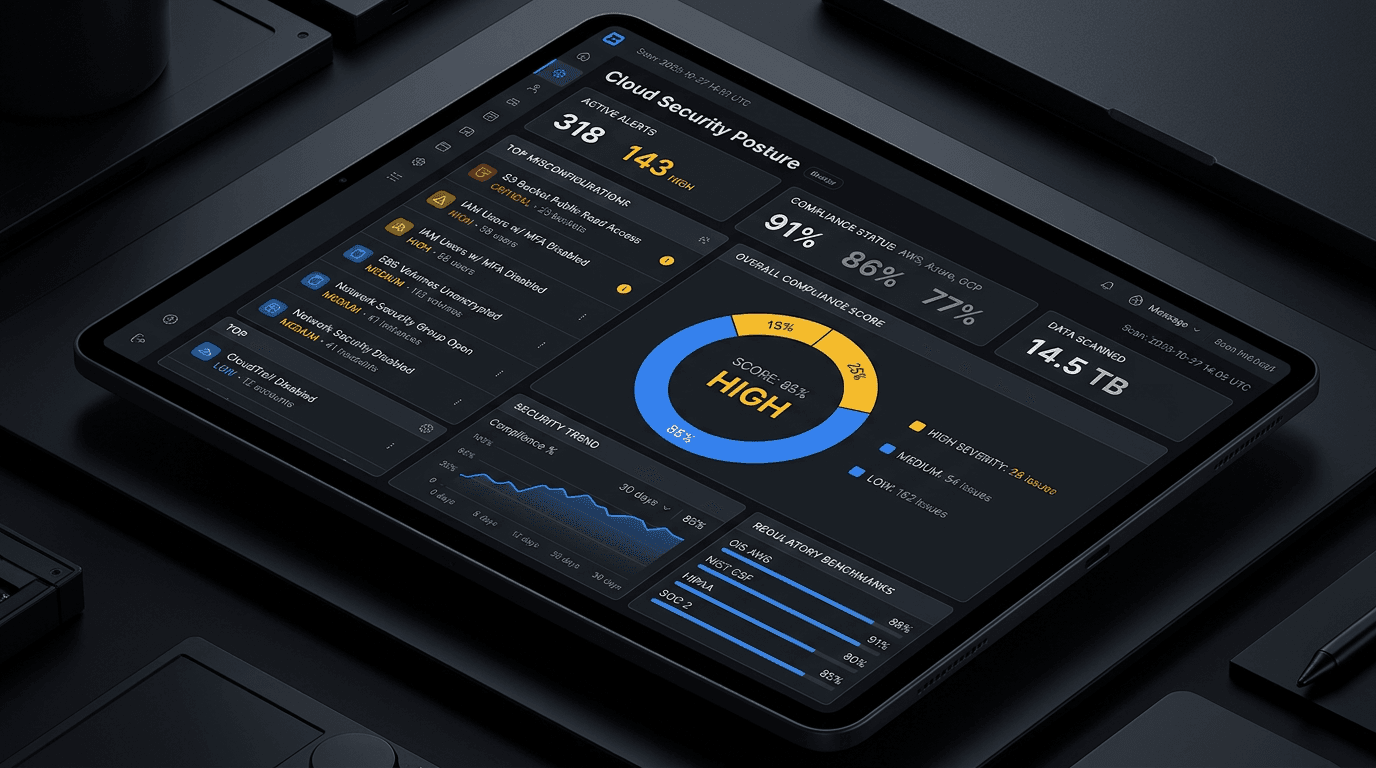 Cloud IP Reputation: What AWS, Azure, and GCP Defenders Should Track in 2026
Cloud IP addresses are shared, recycled, and abused at scale. Learn how to interpret reputation signals, reduce false positives, and align network security with platform-native controls across the three major hyperscalers.
 Container and Kubernetes Security: Protecting Cloud-Native Applications
Container environments introduce unique security challenges. Learn how to secure Docker containers, Kubernetes clusters, and cloud-native applications from emerging threats and misconfigurations.
Protect Your Infrastructure
Check any IP or domain against our threat intelligence database with indexed records.
Try the IP / Domain Checker