Satellite Internet Security: Vulnerabilities in Low Earth Orbit (LEO)
Attack surfaces expand vertically as LEO constellations integrate with enterprise networks. This post details orbital jamming, ground station spoofing, and the lack of encryption standards in commercial satellite systems for security engineers.
 IsMalicious Research Team
The New Orbital Attack Surface
Commercial space and Low Earth Orbit (LEO) satellite constellations, once the domain of state actors, are now critical infrastructure for global internet connectivity. Starlink, Kuiper, and OneWeb have democratized satellite access, but security standards have lagged.
For security teams, satellite links represent a new, often unmonitored entry point into the corporate network. Traditional firewalls and IDPS solutions are ill-equipped to handle the unique protocols and threats of space-based communications.
Key Attack Vectors
- Uplink Jamming & Spoofing: Attackers can broadcast high-power signals to overwhelm satellite receivers (jamming) or mimic legitimate ground stations (spoofing) to inject malicious commands. Without mutual authentication and signal-integrity checks, satellites can be hijacked or disabled.
- Downlink Eavesdropping: Many legacy and even some modern commercial satellite downlinks lack strong encryption. Using inexpensive Software Defined Radios (SDRs), attackers can intercept data streams, potentially capturing sensitive corporate communications or intellectual property.
- Ground Station Compromise: The "ground segment" remains the most vulnerable component. Attackers target the IT infrastructure of ground stations with malware and ransomware to pivot into the satellite control network.
Security Engineering for Space Systems
Defending against these threats requires a paradigm shift:
- End-to-End Encryption: Assume the link is compromised. Encrypt data at the application layer before it even hits the satellite modem.
- Zero Trust Architecture: Do not trust the satellite link implicitly. Segment satellite-connected devices from the main corporate network.
- Orbital Threat Intelligence: Monitor for anomalies in satellite telemetry and signal interference patterns.
Threat Detection: Geolocating the Ground Segment
To secure satellite communications, organizations must look beyond the physical link and monitor the network layer:
- Geo-Block Anomalies: Satellite ground stations have fixed geolocations. If traffic from a "secure" LEO constellation originates from an IP address geolocated to a sanctioned country or a known high-risk ASN, it is a critical indicator of compromise.
- Malicious IP Detection: Attackers using compromised VSAT terminals often reuse known malicious infrastructure. Real-time IP reputation checks can block command-and-control (C2) traffic before it reaches the satellite uplink.
- Threat Level Context: Traffic patterns that deviate from expected orbital paths (e.g., erratic latency + low reputation IP) should elevate the threat level to 'High', triggering automated isolation of the affected ground segment.
Related articles
 Local Government Network Security: A 90-Day Council Plan
Build a council network security plan around public services, clear ownership, tested segmentation and useful logs, with practical actions across 90 days.
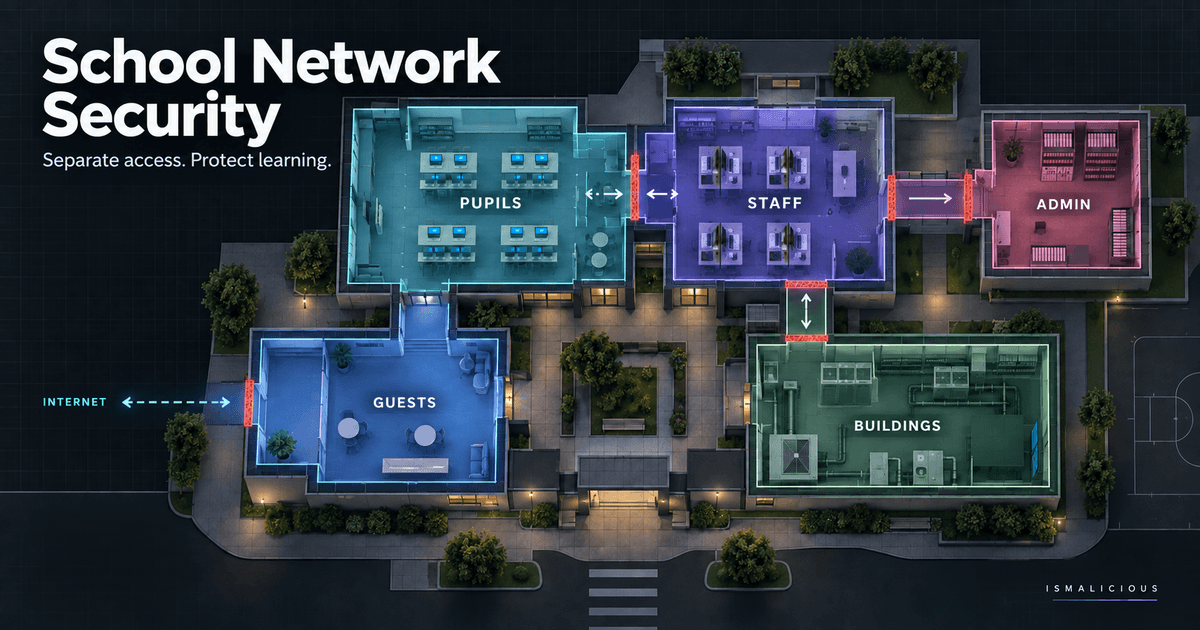 School Network Security: Test Segmentation That Works
Plan school network segmentation around teaching needs, test permitted and blocked paths, protect administration, and manage changes without losing access.
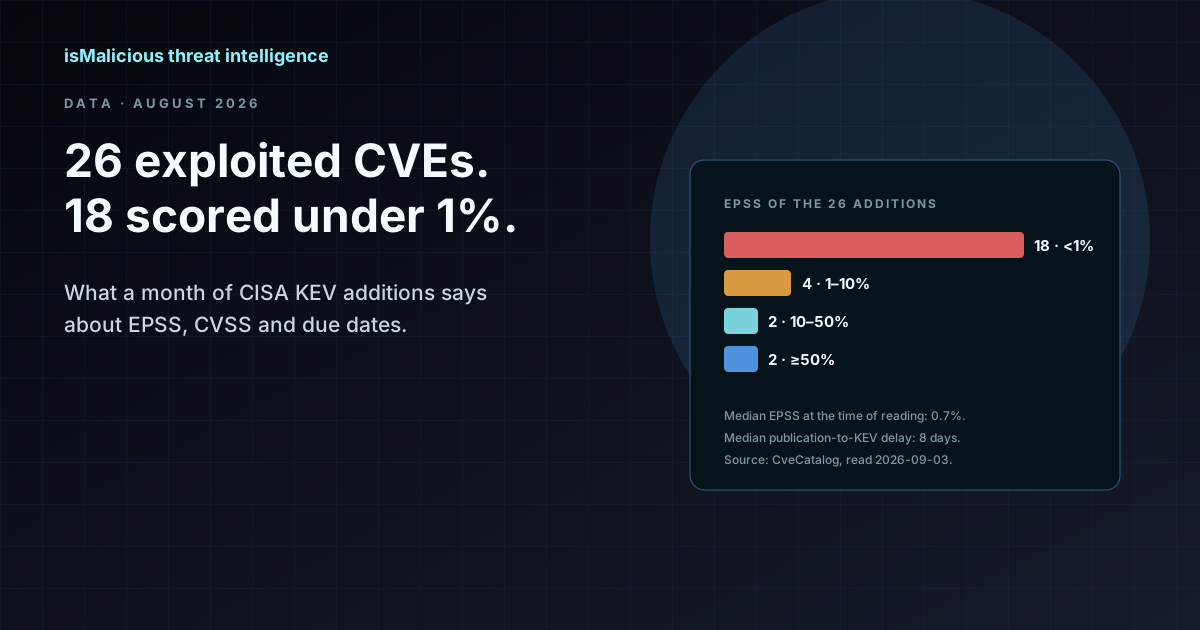 Exploited in August 2026: 26 KEV Additions, 18 With an EPSS Under 1%
A month of CISA KEV additions read against our CVE catalog: 18 of 26 exploited vulnerabilities score under 1% on EPSS today, 4 had no CVSS score when CISA added them, and CISA gave 18 of them a three-day deadline. The numbers, the method, and what they mean for a patch queue.
Protect Your Infrastructure
Check any IP or domain against our threat intelligence database with indexed records.
Try the IP / Domain Checker