Detecting the Enemy Within: Behavioral Analytics for Insider Threats
Insider threats are notoriously difficult to detect because the actor already has legitimate access. Learn how UEBA can help spot the subtle signs of malicious intent.
 IsMalicious Team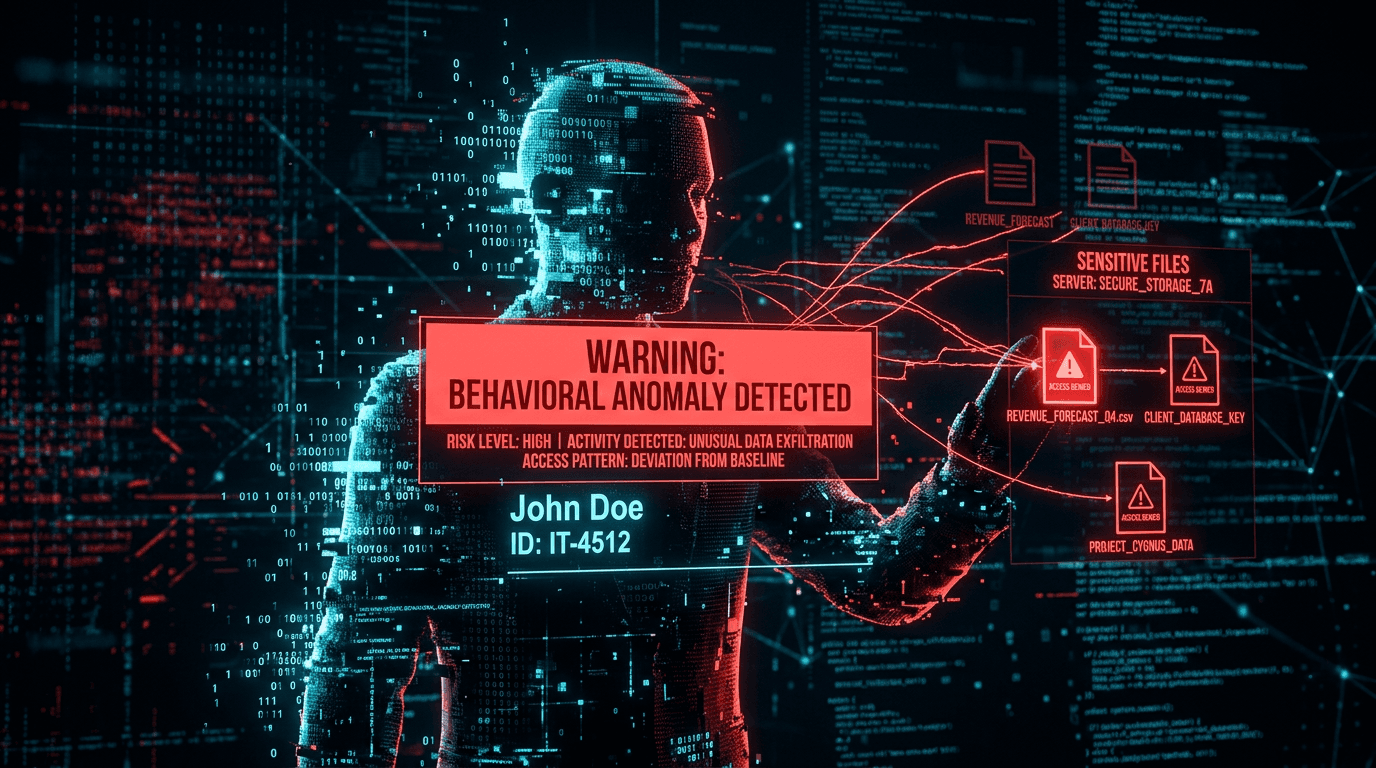
The most dangerous attacker might be sitting in the cubicle next to you. Insider threats—whether malicious employees, negligent contractors, or compromised credentials—pose a unique challenge because they bypass traditional perimeter defenses.
The Challenge of Legitimacy
Insider threats use legitimate credentials to access authorized systems. A firewall won't stop an employee from downloading a customer database they have access to every day.
Enter UEBA (User and Entity Behavior Analytics)
UEBA tools use machine learning to establish a baseline of "normal" behavior for every user and entity (device, server) in the network. When behavior deviates from this baseline, an alert is triggered.
Indicators of Compromise (IoCs) for Insiders
- Abnormal Access Times: Logging in at 3 AM when the user usually works 9-5.
- Data Exfiltration: Downloading large volumes of data to USB drives or cloud storage.
- Privilege Escalation: Attempting to access systems outside their normal job function.
- Lateral Movement: Scanning the internal network for other vulnerable systems.
The Human Element
Technology is only half the work. A documented insider-threat program also includes:
- Background Checks: Thorough vetting of employees.
- Security Awareness Training: Teaching employees to spot phishing and social engineering.
- Exit Procedures: Immediately revoking access when an employee leaves.
Conclusion
Detecting insider threats requires a shift from "signature-based" detection to "behavior-based" detection. By understanding what normal looks like, you can spot the anomaly before it becomes a breach.
Related articles
 Protective DNS for the Public Sector: A Deployment Guide
Deploy protective DNS across public-sector sites and remote staff. Test coverage, handle exceptions and keep essential services available during failures.
 DPRK Remote IT Worker Threat: Identity, Insider Risk, and Cloud Access Abuse
DPRK remote IT worker schemes blend fraud, identity deception, and insider access. Learn how hiring, endpoint, SaaS, and cloud controls can reduce the risk.
 Insider Threat Detection: Identifying and Managing Employee Security Risks
Insider threats pose unique challenges to organizational security. Learn how to detect malicious insiders, prevent data leakage, and build an effective insider threat program.
Check any IP or domain
See what our indexed threat intelligence records say about it.
Try the IP / Domain Checker