Insider Threat Detection: Identifying and Managing Employee Security Risks
Insider threats pose unique challenges to organizational security. Learn how to detect malicious insiders, prevent data leakage, and build an effective insider threat program.


The database administrator had been with the company for eight years—a trusted employee with impeccable performance reviews. When he submitted his resignation, no one thought to review his recent activity. Two weeks after his departure, the company discovered that customer records had been systematically exported over his final months. The breach cost millions in regulatory fines and customer notifications. Insider threats often come from where we least expect them.
What Are Insider Threats?
Insider threats originate from individuals with legitimate access to organizational systems and data. Unlike external attackers who must breach perimeter defenses, insiders already possess the keys to the kingdom.
Types of Insider Threats
- Malicious Insiders: Employees who intentionally steal data, sabotage systems, or cause harm for personal gain, revenge, or ideological reasons.
- Negligent Insiders: Well-meaning employees whose careless actions—like clicking phishing links or misconfiguring systems—create security incidents.
- Compromised Insiders: Legitimate users whose credentials have been stolen by external attackers, effectively turning them into unwitting threats.
- Third-Party Insiders: Contractors, vendors, and partners with access to organizational systems who may pose similar risks.
The Cost of Insider Threats
Insider incidents are among the most expensive security events:
- Average cost per incident: $15.4 million.
- Average time to contain: 85 days.
- 34% of all data breaches involve internal actors.
- Privilege misuse accounts for the majority of insider incidents.
Warning Signs of Insider Threats
Detecting insider threats requires monitoring for behavioral and technical indicators:
Behavioral Indicators
- Disgruntlement: Expressed dissatisfaction with management, compensation, or company direction.
- Financial Stress: Known financial difficulties that might motivate theft.
- Resignation or Termination: Employees in transition periods pose elevated risk.
- Policy Violations: Pattern of ignoring security policies or procedures.
- Unusual Working Hours: Accessing systems at odd times without business justification.
Technical Indicators
- Mass Data Downloads: Unusual volumes of file access or downloads.
- Unauthorized Access Attempts: Trying to access systems or data outside job responsibilities.
- Use of Unauthorized Tools: Installing data exfiltration tools, personal cloud storage, or encryption software.
- Email Anomalies: Sending large attachments to personal accounts or unknown recipients.
- Privilege Escalation: Attempting to gain access beyond authorized levels.
Building an Insider Threat Program
1. Executive Sponsorship
Effective insider threat programs require leadership commitment:
- Secure executive sponsorship and budget allocation.
- Establish clear program governance and accountability.
- Define acceptable use policies and consequences.
- Balance security with privacy and employee trust.
2. Risk Assessment
Identify your most valuable assets and who can access them:
- Map critical data and systems requiring protection.
- Document user access rights and privileges.
- Identify high-risk roles and individuals.
- Assess current detection and response capabilities.
3. Technical Controls
Implement monitoring and prevention technologies:
- Data Loss Prevention (DLP): Monitor and control data movement.
- User and Entity Behavior Analytics (UEBA): Detect anomalous user activity.
- Privileged Access Management (PAM): Control and audit privileged accounts.
- Network Monitoring: Track data flows and communications.
- Endpoint Detection and Response (EDR): Monitor user activity on endpoints.
4. Access Management
Apply the principle of least privilege:
- Grant minimum necessary access for job functions.
- Implement role-based access control (RBAC).
- Conduct regular access reviews and recertification.
- Immediately revoke access upon role changes or termination.
5. Employee Lifecycle Management
Address insider risk throughout employment:
- Hiring: Conduct background checks and reference verification.
- Onboarding: Provide security awareness training and policy acknowledgment.
- Role Changes: Adjust access rights with position changes.
- Offboarding: Promptly disable accounts and retrieve assets.
Detection Strategies
Baseline Normal Behavior
Establish what normal looks like for each user and role:
- Document typical working hours and access patterns.
- Track standard data access volumes and types.
- Identify common applications and resources used.
- Note regular communication patterns.
Monitor for Anomalies
Alert on deviations from established baselines:
- Unusual login times or locations.
- Accessing data outside normal job function.
- Large file transfers or downloads.
- Use of external storage devices.
- Communication with competitors or unknown external parties.
Correlate Multiple Indicators
Single indicators rarely confirm malicious intent. Look for patterns:
- Combine behavioral and technical indicators.
- Consider context like upcoming resignation or performance issues.
- Weight indicators by severity and confidence.
- Investigate clusters of suspicious activity.
How isMalicious Can Help
isMalicious enhances insider threat detection through external intelligence:
- Exfiltration Detection: Identify when internal systems communicate with suspicious external destinations.
- Domain Monitoring: Detect data uploads to personal cloud services, paste sites, or file sharing platforms.
- IP Reputation: Flag connections to known malicious infrastructure that may indicate compromised credentials.
- API Integration: Automate checks of outbound traffic destinations against threat databases.
- Real-Time Alerts: Get notified when suspicious external communications occur.
Responding to Insider Incidents
Investigation Phase
- Preserve Evidence: Capture logs, system images, and relevant data before the insider can cover tracks.
- Determine Scope: Identify what data or systems were accessed or compromised.
- Assess Intent: Distinguish between malicious, negligent, and compromised insider scenarios.
- Document Everything: Maintain detailed records for potential legal proceedings.
Containment Phase
- Revoke Access: Immediately disable accounts and credentials.
- Isolate Systems: Quarantine affected systems if necessary.
- Change Credentials: Reset passwords for potentially compromised accounts.
- Notify Stakeholders: Inform leadership, legal, and HR as appropriate.
Recovery Phase
- Remediate Vulnerabilities: Address gaps that allowed the incident.
- Restore Operations: Return affected systems to normal operation.
- Update Controls: Implement additional monitoring or restrictions.
- Conduct Lessons Learned: Improve detection and response capabilities.
Legal and Privacy Considerations
Insider threat programs must balance security with employee rights:
- Privacy Laws: Understand applicable regulations regarding employee monitoring.
- Consent Requirements: Ensure employees are informed of monitoring practices.
- Union Agreements: Consider collective bargaining obligations.
- Documentation: Maintain records demonstrating legitimate business purposes.
- Legal Counsel: Involve legal team in program design and incident response.
Creating a Security Culture
Prevention is more effective than detection:
- Security Awareness Training: Educate employees about insider threat risks and reporting.
- Anonymous Reporting Channels: Enable employees to report concerns safely.
- Positive Reinforcement: Recognize and reward security-conscious behavior.
- Open Communication: Foster environment where employees feel valued and heard.
- Consistent Enforcement: Apply policies fairly across all levels.
Protect Your Organization
Insider threats will always exist because organizations must grant access to function. The goal is not to eliminate trust but to verify it through appropriate monitoring and controls. By combining technical detection with behavioral awareness and using threat intelligence from isMalicious, organizations can identify and respond to insider threats before they cause catastrophic damage.
Start building your insider threat program today. Assess your current visibility, implement appropriate monitoring, and create a culture where security is everyone's responsibility.
Related articles
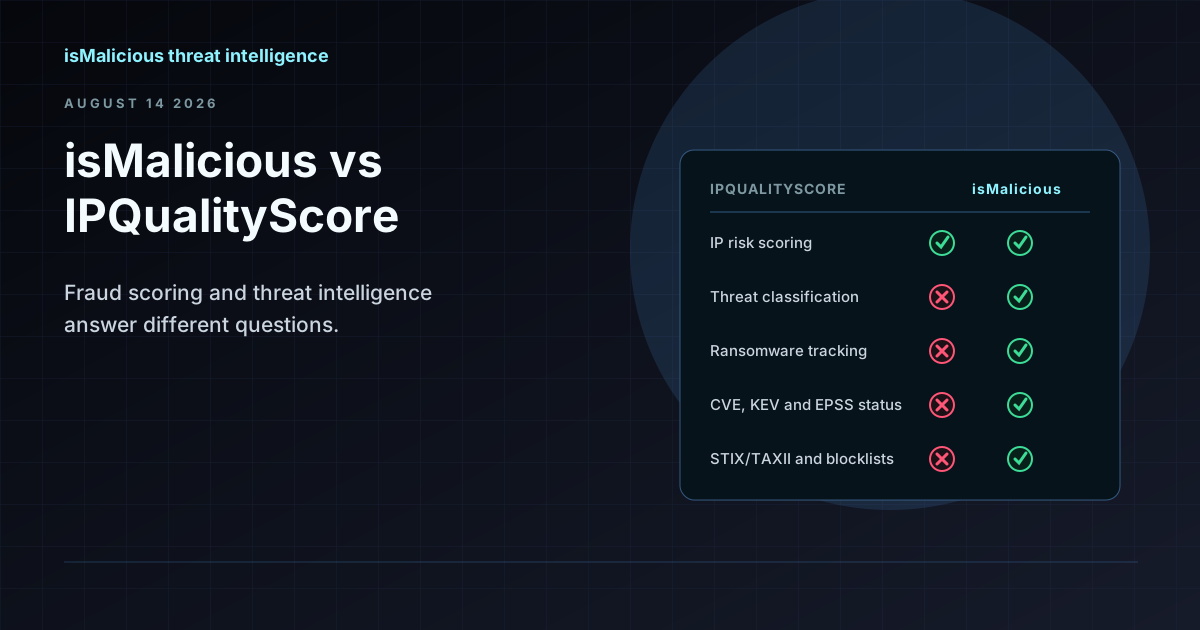 isMalicious vs IPQualityScore: Fraud Scoring and Threat Intelligence Are Different Jobs
IPQS scores whether a signup is fraudulent. isMalicious scores whether infrastructure is malicious. The two get compared constantly because both return a number about an IP address — and they answer different questions.
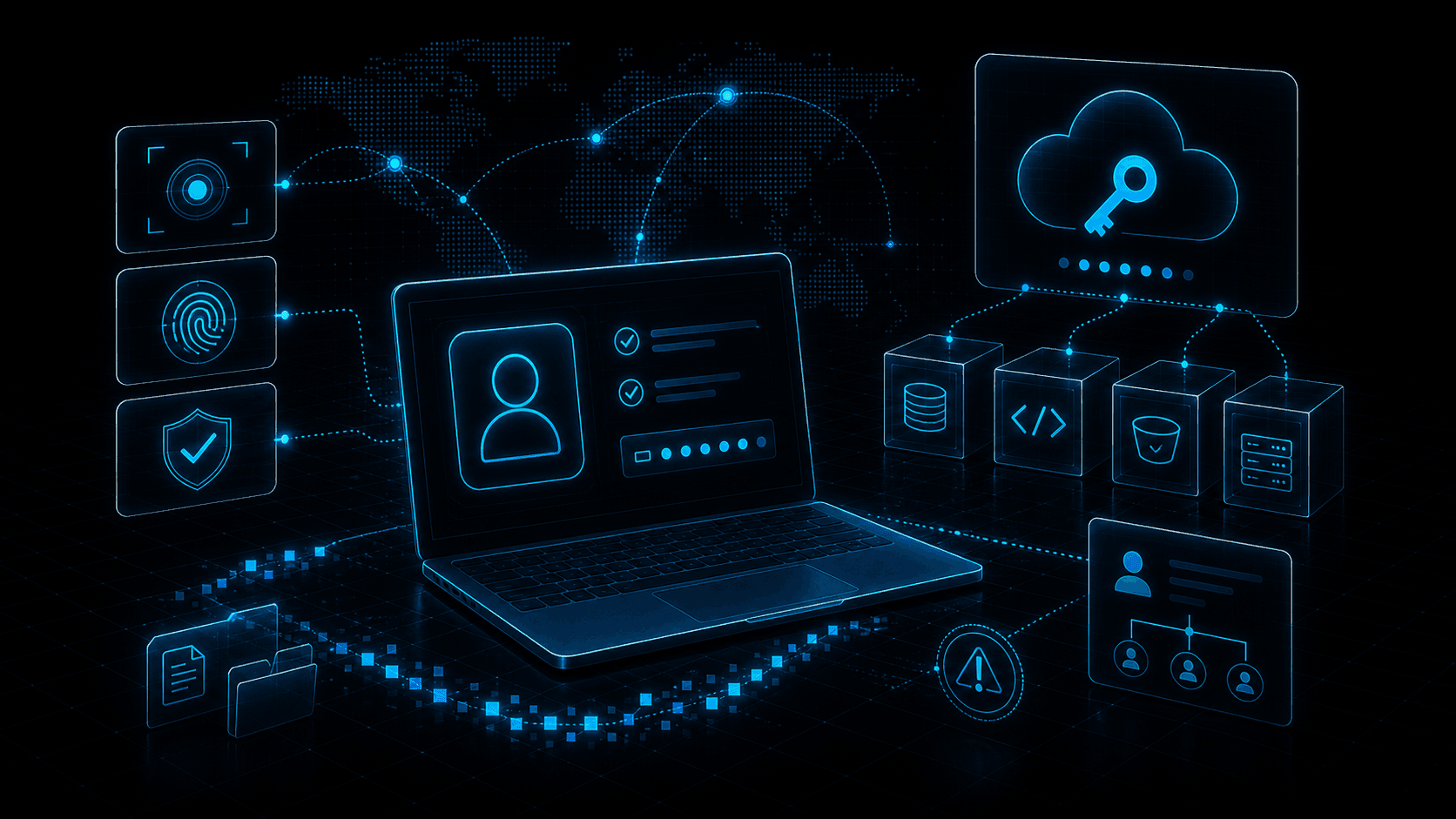 DPRK Remote IT Worker Threat: Identity, Insider Risk, and Cloud Access Abuse
DPRK remote IT worker schemes blend fraud, identity deception, and insider access. Learn how hiring, endpoint, SaaS, and cloud controls can reduce the risk.
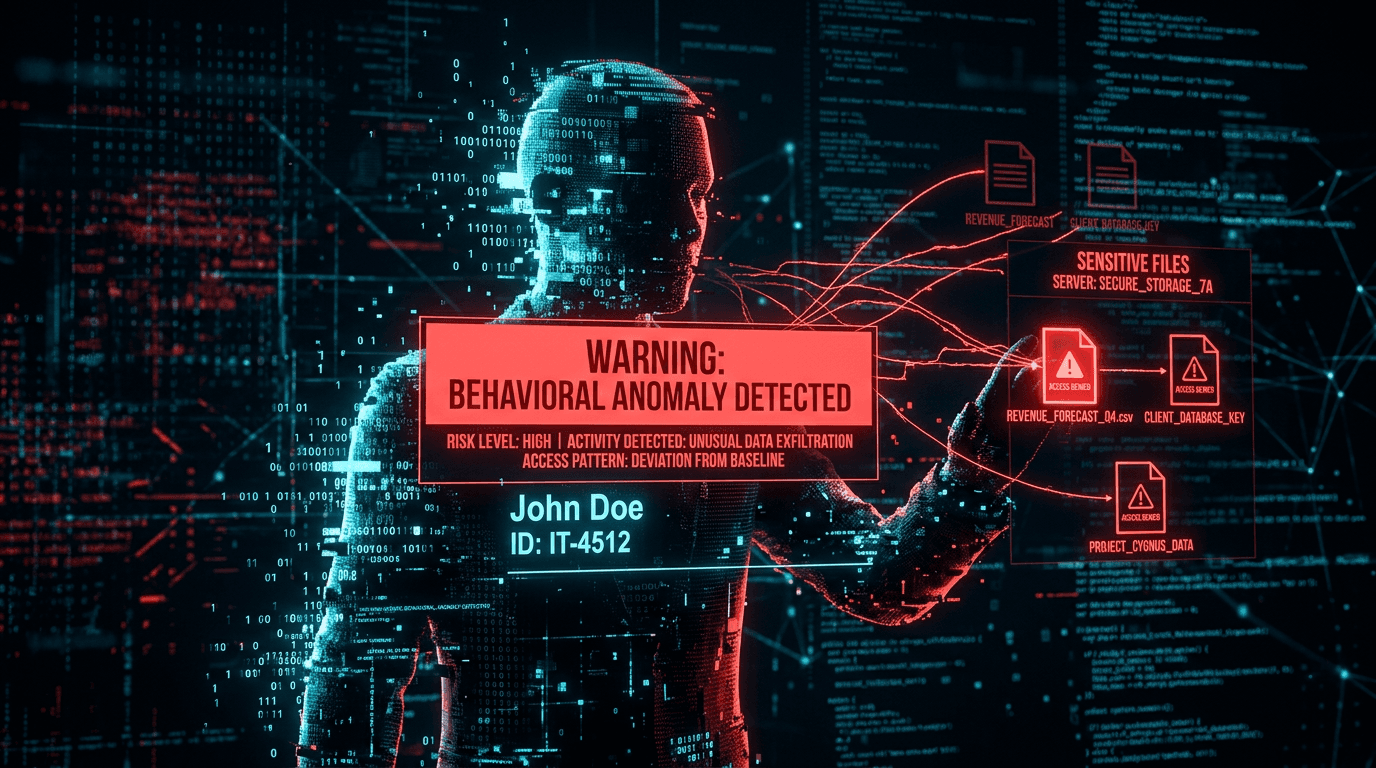 Detecting the Enemy Within: Behavioral Analytics for Insider Threats
Insider threats are notoriously difficult to detect because the actor already has legitimate access. Learn how UEBA can help spot the subtle signs of malicious intent.
Protect Your Infrastructure
Check any IP or domain against our threat intelligence database with indexed records.
Try the IP / Domain Checker