Automated Threat Classification using Machine Learning
Machine Learning is transforming how we classify threats. Discover how AI models can analyze vast amounts of data to categorize attacks instantly.
 IsMalicious Team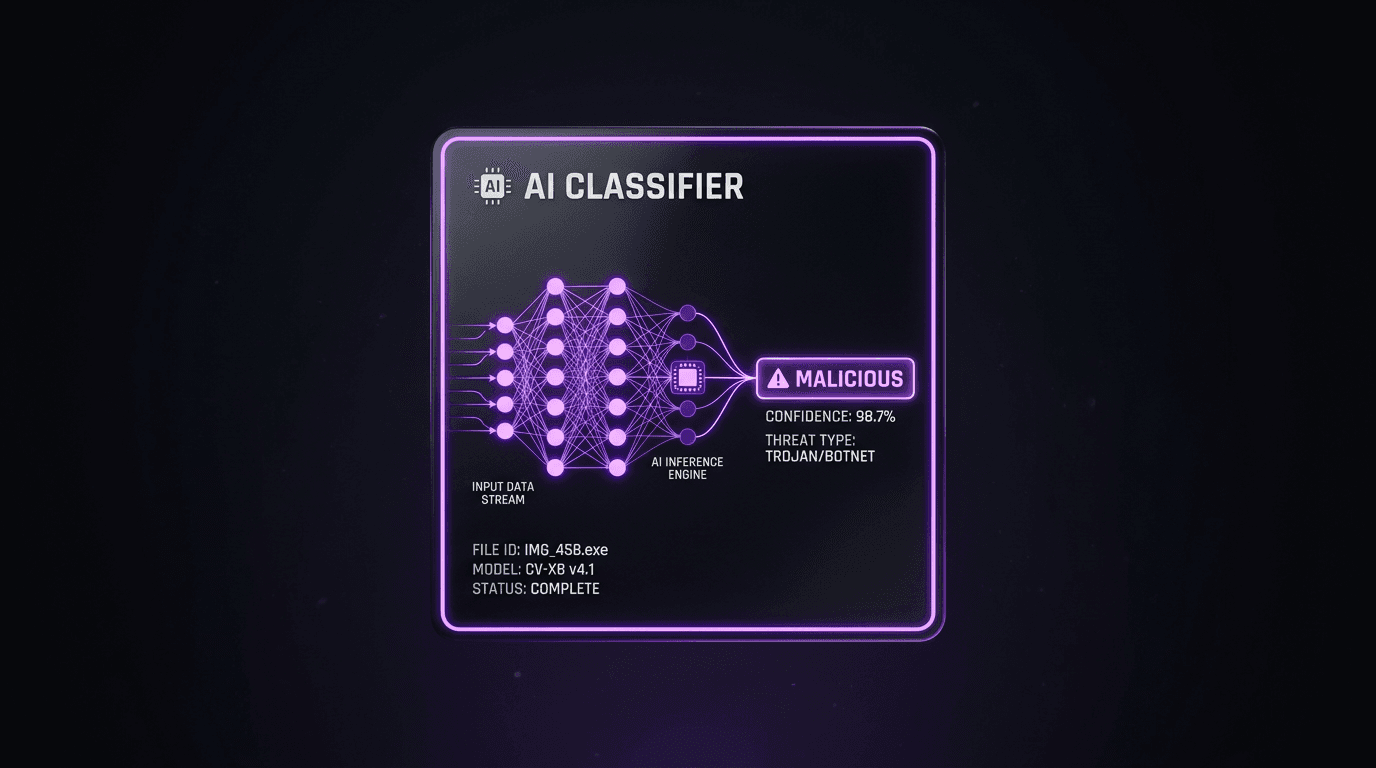
The speed and volume of modern cyber attacks have surpassed human capacity for manual classification. Machine Learning (ML) offers a solution, enabling automated, real-time threat classification at scale.
The Challenge of Manual Classification
Manual analysis is:
- Slow: It takes time to investigate headers, payloads, and behavior.
- Inconsistent: Different analysts may classify the same incident differently.
- Unscalable: You cannot hire enough analysts to review every alert.
How ML Helps
Machine Learning models can be trained on massive datasets of known malicious and benign traffic to identify patterns that humans might miss.
Key Applications
- Phishing Detection: NLP (Natural Language Processing) models analyze email body text and subject lines to detect semantic anomalies indicative of social engineering.
- Malware Classification: Models analyze file characteristics (static analysis) and execution behavior (dynamic analysis) to classify malware families (e.g., Emotet vs. Trickbot).
- DGA Detection: ML algorithms can spot Domain Generation Algorithms (DGAs) used by botnets by analyzing the randomness of domain names.
The Human-in-the-Loop
ML can classify large volumes of observations, but it is not perfect. Effective systems keep a human in the loop (HITL):
- High Confidence: AI automatically blocks and classifies.
- Low Confidence: AI flags for human review.
- Feedback Loop: Human decisions are fed back into the model to improve future accuracy.
Conclusion
Automated threat classification using ML is essential for reducing Mean Time to Respond (MTTR). By offloading the heavy lifting of categorization to AI, human analysts are freed to focus on complex investigations and strategic defense.
Related articles
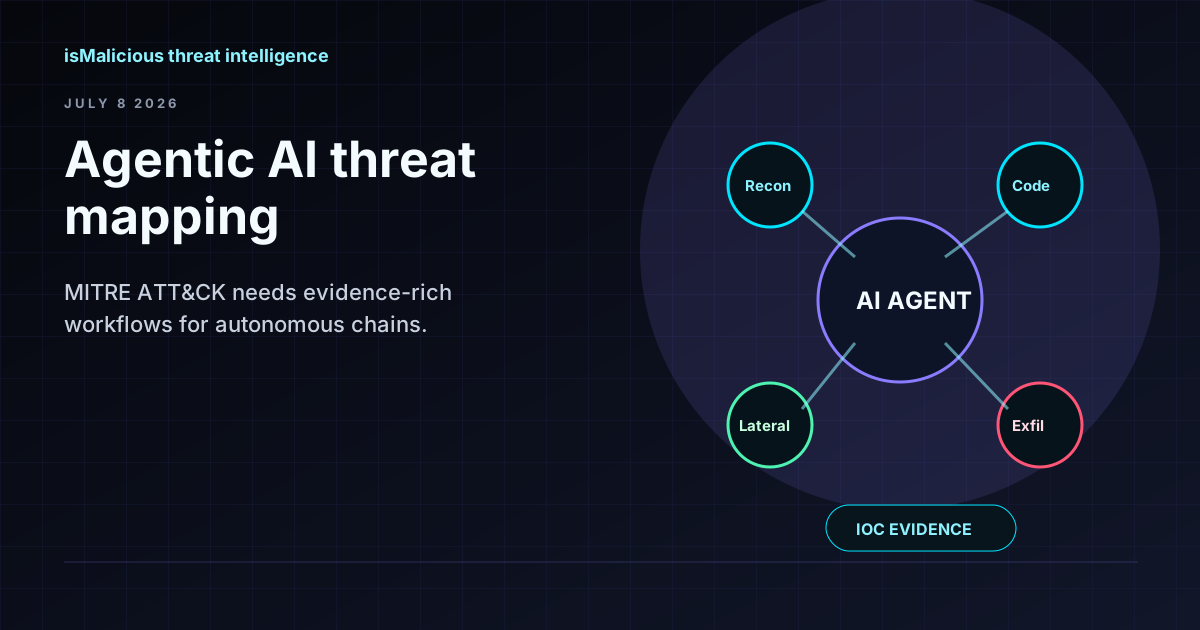 Agentic AI Threat Mapping: MITRE ATT&CK Needs Evidence-Rich Workflows
Anthropic mapped AI-enabled cyber activity to MITRE ATT&CK and found gaps around autonomous orchestration. SOC teams need AI summaries tied to evidence, not unsupported verdicts.
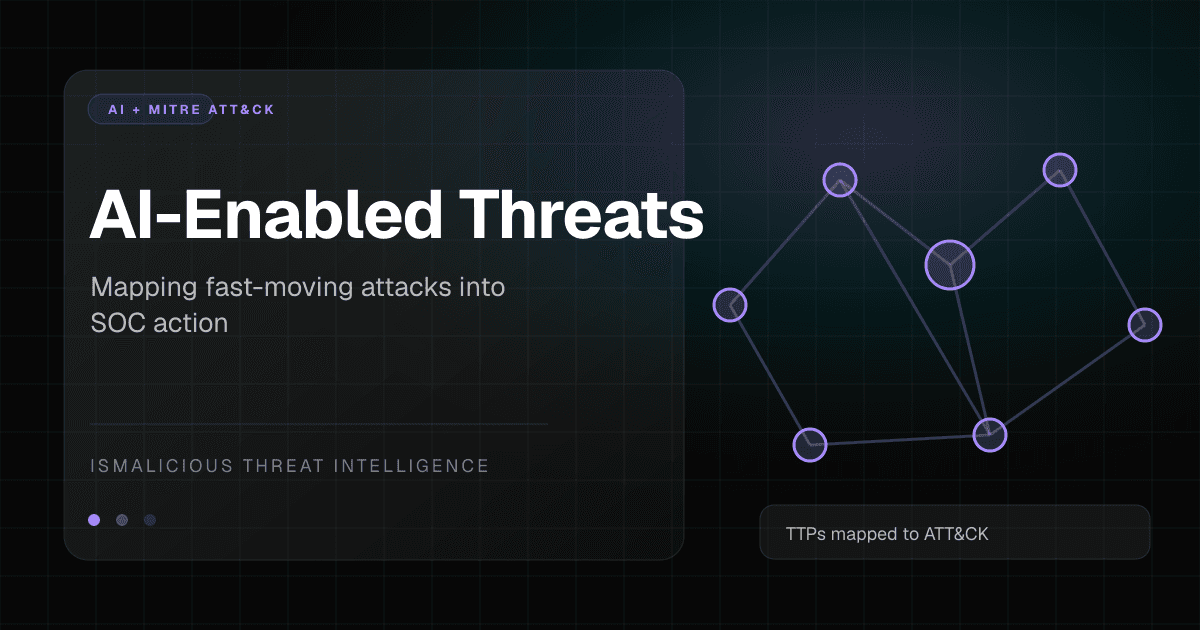 AI-Enabled Cyberattacks and MITRE ATT&CK: Turning New Threat Maps Into SOC Action
AI-enabled threats are being mapped into ATT&CK language, but mapping is only useful when it drives enrichment, detection, triage, and response workflows.
- AI-enabled Cyberattacks: How Threat Actors Use Machine Learning
Cybercriminals are weaponizing artificial intelligence to launch sophisticated attacks at unprecedented scale. Learn how AI-enabled threats work and how threat intelligence can help you defend against them.
Check any IP or domain
See what our indexed threat intelligence records say about it.
Try the IP / Domain Checker