AI-enabled Cyberattacks: How Threat Actors Use Machine Learning
Cybercriminals are weaponizing artificial intelligence to launch sophisticated attacks at unprecedented scale. Learn how AI-enabled threats work and how threat intelligence can help you defend against them.


The cybersecurity landscape shifted dramatically when attackers realized they could turn artificial intelligence against defenders. What once required teams of skilled hackers working around the clock can now be automated, scaled, and executed with terrifying precision. The same machine learning techniques that power your email spam filter are now being weaponized to craft phishing emails so convincing that even security professionals struggle to identify them.
This is not a distant future scenario. It is happening right now, and organizations that fail to adapt their defenses will find themselves outpaced by adversaries who never sleep, never tire, and learn from every failed attempt.
The Rise of AI-Enabled Threats
Traditional cyberattacks followed predictable patterns. Attackers would craft malware, distribute it through known channels, and rely on human error or software vulnerabilities to gain access. Security teams could study these patterns, build signatures, and deploy defenses. The game was slow enough that defenders could keep pace.
Artificial intelligence changed the rules entirely. Machine learning algorithms can now analyze millions of successful attacks, identify what made them work, and generate new attack variants in seconds. They can study a target organization's communication patterns, learn the writing style of executives, and craft messages that bypass both technical filters and human intuition.
The numbers tell a stark story. Security researchers have observed a dramatic increase in AI-generated phishing attempts since large language models became widely available. These are not crude, easily spotted scams. They are polished, contextually aware messages that reference real projects, use appropriate industry jargon, and arrive at exactly the right time to seem legitimate.
How Attackers Weaponize Machine Learning
Understanding how adversaries use AI is the first step toward defending against it. The techniques they employ are sophisticated but follow recognizable patterns.
Automated Phishing at Scale
Traditional phishing campaigns required attackers to manually craft messages, often resulting in grammatical errors and generic content that alert recipients flagged easily. AI-enabled phishing eliminates these weaknesses. Language models can generate thousands of unique, grammatically perfect messages tailored to specific industries, roles, and even individual targets.
An attacker targeting a financial services firm might use AI to analyze publicly available information about the company, its employees, and recent news. The system then generates phishing emails that reference specific deals, use internal terminology, and mimic the communication style of known executives. The result is a message that looks indistinguishable from legitimate internal communication.
Deepfake Voice and Video
Voice cloning technology has advanced to the point where attackers can replicate someone's voice from just a few seconds of audio. This enables a new class of social engineering attacks where employees receive phone calls from what sounds exactly like their CEO or CFO, requesting urgent wire transfers or credential sharing.
Several documented cases have resulted in losses exceeding tens of millions of dollars from single deepfake voice attacks. The technology continues to improve, and the barrier to entry continues to fall as commercial tools become more accessible.
Intelligent Malware Evasion
Security tools rely heavily on signatures and behavioral patterns to detect malware. AI-enabled malware can analyze these detection mechanisms and automatically modify its code to evade them. Some variants monitor their environment and adjust their behavior based on whether they detect security tools, sandboxes, or analysis environments.
This creates an arms race where defenders must constantly update their detection capabilities while attackers use AI to automatically test and refine evasion techniques faster than human analysts can respond.
Credential Stuffing Optimization
When attackers obtain stolen credential databases, they use AI to optimize how they deploy those credentials. Machine learning algorithms can predict which username and password combinations are most likely to work on specific services based on patterns in the data. They can also identify the optimal times to attempt logins, the right pace to avoid triggering rate limits, and the best proxy rotation strategies to evade IP-based blocks.
Vulnerability Discovery
AI systems are increasingly being used to automatically discover software vulnerabilities. These tools can analyze codebases, identify patterns associated with security flaws, and even generate proof-of-concept exploits. While this technology also benefits defenders through automated security testing, attackers with access to the same capabilities can discover and exploit vulnerabilities before patches are developed.
Detecting AI-enabled Attacks
The challenge with AI-generated threats is that they are designed specifically to evade traditional detection methods. However, they are not invisible, and defenders who understand their characteristics can build effective countermeasures.
Behavioral Analysis Over Signatures
Since AI can generate infinite variations of malicious content, signature-based detection becomes increasingly ineffective. The focus must shift to behavioral analysis that identifies suspicious patterns regardless of the specific content or code involved.
For phishing detection, this means analyzing sender behavior patterns, message timing, link destinations, and request types rather than relying solely on content analysis. An email might be perfectly written and contextually appropriate, but if the sender's account suddenly starts requesting credential information or wire transfers, that behavioral change should trigger alerts.
Velocity and Volume Anomalies
AI-enabled attacks often exhibit characteristic patterns in their velocity and volume. A credential stuffing campaign optimized by machine learning might show unusually consistent timing patterns or suspicious geographic distribution. Phishing campaigns might display subtle uniformity in their randomization that betrays their automated origin.
Monitoring for these statistical anomalies requires aggregating data across many events and looking for patterns that individual analysis would miss.
Network Traffic Intelligence
Even the most sophisticated AI-enabled attack must eventually communicate with command-and-control infrastructure, exfiltrate data, or direct victims to malicious domains. This is where threat intelligence becomes invaluable.
Maintaining visibility into known malicious infrastructure allows defenders to detect attacks regardless of how cleverly they evade endpoint detection. An AI-generated phishing email might fool a human recipient, but if the link points to a domain with a poor reputation or known malicious associations, it can still be blocked.
Multi-Factor Verification
For high-risk actions like wire transfers or credential changes, implementing out-of-band verification defeats many AI-enabled social engineering attacks. A deepfake voice call requesting an urgent transfer cannot succeed if company policy requires verification through a separate, pre-established channel.
The Role of Threat Intelligence
Comprehensive threat intelligence provides crucial context for detecting and preventing AI-enabled attacks. While AI can generate new attack content infinitely, the infrastructure supporting those attacks often follows identifiable patterns.
Infrastructure Reputation
Attackers must register domains, provision servers, and establish communication channels to support their campaigns. Even AI-enabled attacks rely on this infrastructure, and newly registered domains, hosting providers with poor abuse records, and IP addresses with malicious history all serve as indicators.
Real-time reputation checking of domains and IP addresses encountered in emails, network traffic, and user interactions provides a layer of defense that operates independently of content analysis. This is particularly valuable against AI-generated content that might defeat traditional filters.
Pattern Recognition Across Campaigns
Threat intelligence platforms aggregate data across many organizations and campaigns. This visibility enables identification of attack patterns that would be invisible to any single organization. When multiple companies report similar AI-generated phishing themes targeting the same industry, that intelligence can be shared to protect others before they are targeted.
Early Warning Systems
Monitoring for newly registered domains that mimic your brand, executive names, or product names provides early warning of potential AI-enabled impersonation campaigns. Attackers typically register infrastructure before launching attacks, creating a window for proactive defense.
How isMalicious Defends Against AI Threats
isMalicious provides critical capabilities for defending against AI-enabled attacks through comprehensive threat intelligence and real-time reputation data.
Real-Time Domain and IP Reputation
When AI-generated phishing emails slip past content filters, the links they contain still need to point somewhere. Checking those destinations against real-time reputation data catches attacks that evade traditional detection. Every URL in incoming email, every IP address attempting authentication, and every domain referenced in communications can be validated instantly.
Newly Registered Domain Detection
AI-enabled phishing campaigns frequently use newly registered domains to avoid reputation-based blocking. Identifying and flagging these domains provides an additional detection layer that operates independently of content analysis.
Command and Control Infrastructure Tracking
Database coverage of known malicious infrastructure including C2 servers, malware distribution sites, and credential harvesting domains helps identify compromised systems reaching out to attacker-controlled servers, regardless of how sophisticated the initial infection vector was.
API Integration for Automated Defense
High-speed API access enables integration of threat intelligence directly into email gateways, web proxies, and authentication systems. Automated checking at machine speed is essential when facing adversaries who can generate and deploy attacks at machine speed.
Building Resilient Defenses
Defending against AI-enabled attacks requires a layered approach that does not rely on any single detection mechanism.
Assume Content Analysis Will Fail
Build your security architecture assuming that some AI-generated malicious content will reach users. This means implementing strong authentication, limiting the blast radius of compromised accounts, and establishing verification procedures for high-risk actions.
Invest in Behavioral Detection
Security tools that analyze behavior patterns across users, systems, and networks provide detection capabilities that remain effective even as attack content becomes indistinguishable from legitimate communication.
Maintain Comprehensive Threat Intelligence
Real-time access to threat intelligence about malicious infrastructure provides detection capabilities independent of content or behavior analysis. This becomes increasingly important as AI enables attackers to defeat other detection methods.
Train Users Differently
Traditional security awareness training that teaches users to look for spelling errors and suspicious formatting is becoming obsolete. Training should focus on verification procedures, skepticism toward urgent requests regardless of how legitimate they appear, and clear escalation paths for suspicious activity.
Prepare for Deepfakes
Establish verification procedures for voice and video communications, particularly for high-risk requests. Consider code words or out-of-band verification for sensitive transactions.
The Path Forward
AI-enabled cyberattacks represent a fundamental shift in the threat landscape. The automation and scale that machine learning enables means defenders face adversaries who can iterate faster, target more precisely, and evade detection more effectively than ever before.
However, the same technologies that enable these attacks also let defenders. Machine learning can analyze network traffic for anomalies, identify patterns across millions of threat indicators, and automate response actions at speeds no human team could match.
The organizations that will thrive in this new landscape are those that recognize the shift happening and adapt their defenses accordingly. Signature-based detection, while still valuable, must be supplemented with behavioral analysis, comprehensive threat intelligence, and security architectures that assume some attacks will succeed.
The tools exist to defend against AI-enabled threats. The question is whether organizations will deploy them before they become the next victim of an attack that was crafted by an algorithm, refined through machine learning, and executed at a scale no human team could achieve.
Start strengthening your defenses against AI-enabled attacks today. isMalicious provides the threat intelligence foundation you need to detect and block sophisticated threats regardless of how they evade traditional security tools. Protect your organization before machine learning becomes your adversary's greatest advantage.
Related articles
 Bulk IP and Domain Lookups: Designing Indicator Enrichment That Survives Real Volume
One incident produces hundreds of indicators, and per-indicator lookups are where triage stalls. Here is how to build a batch enrichment pipeline that respects quotas, deduplicates properly, and fails gracefully.
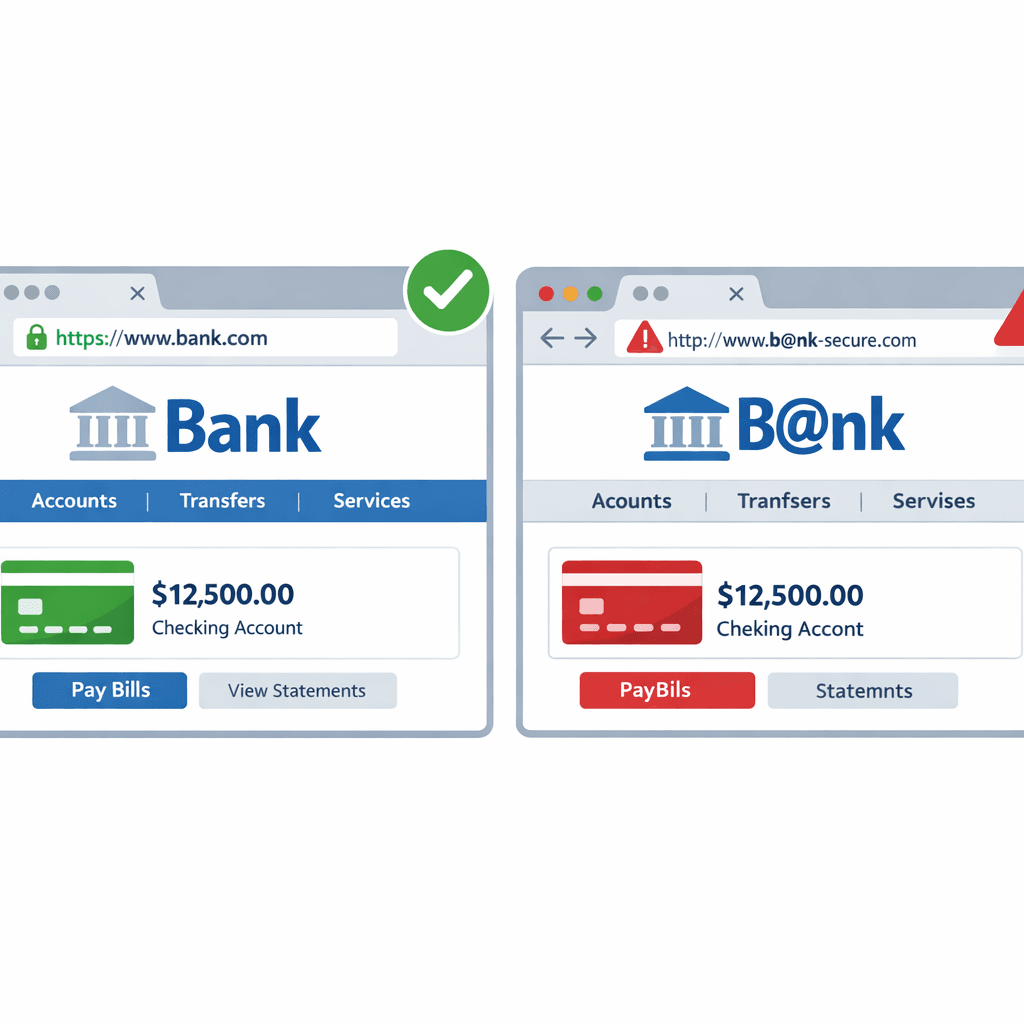 How Hackers Use "Typosquatting" to Trick You (and How to Spot It)
Typosquatting relies on your fingers slipping. Learn how attackers register look-alike domains to steal your data and how to check URLs before you click.
 The Deepfake Threat: Protecting Enterprise Security in the Era of AI
AI-generated video and audio are becoming indistinguishable from reality. Explore the rising threat of deepfakes to enterprise security and how to defend against synthetic media attacks.
Protect Your Infrastructure
Check any IP or domain against our threat intelligence database with indexed records.
Try the IP / Domain Checker