Vulnerability Scanner CVE detection and security assessment
Scan your infrastructure for known vulnerabilities. Detect CVEs, identify misconfigurations, and get remediation guidance with our comprehensive vulnerability scanner.
No credit card required · Free API key
risk score · threat categories · sources · age · confidence — in one request
98K+
CVEs Tracked
Hourly
Database Updates
< 60 s
Scan Time
Non-intrusive
Scanning
Key features.
Available signals and integration options.
CVE Detection
Identify known CVEs affecting your technology stack.
Technology Detection
Fingerprint technologies to find associated vulnerabilities.
Severity Scoring
CVSS scores with exploitability and impact metrics.
Remediation Guidance
Get specific recommendations to fix identified issues.
Continuous Monitoring
Schedule regular scans and get alerted to new vulnerabilities.
Compliance Reports
Generate reports for compliance and audit requirements.
Use cases.
Workflows to evaluate with your existing tools.
Security Teams
Regularly assess your attack surface for vulnerabilities.
DevOps
Integrate vulnerability scanning into CI/CD pipelines.
Compliance
Meet PCI DSS, SOC 2, and other compliance requirements.
Third-Party Risk
Assess vendor security posture before engagement.
Why Vulnerability Scanning is Critical for Security
New vulnerabilities are discovered daily - over 25,000 CVEs were published in 2023 alone. Without continuous vulnerability assessment, organizations risk leaving exploitable weaknesses in their infrastructure that attackers actively scan for. Our vulnerability scanner combines technology fingerprinting with CVE correlation to identify which vulnerabilities actually affect your systems. Rather than overwhelming you with theoretical risks, we focus on specific findings specific to your detected software versions.
How Our Vulnerability Detection Works
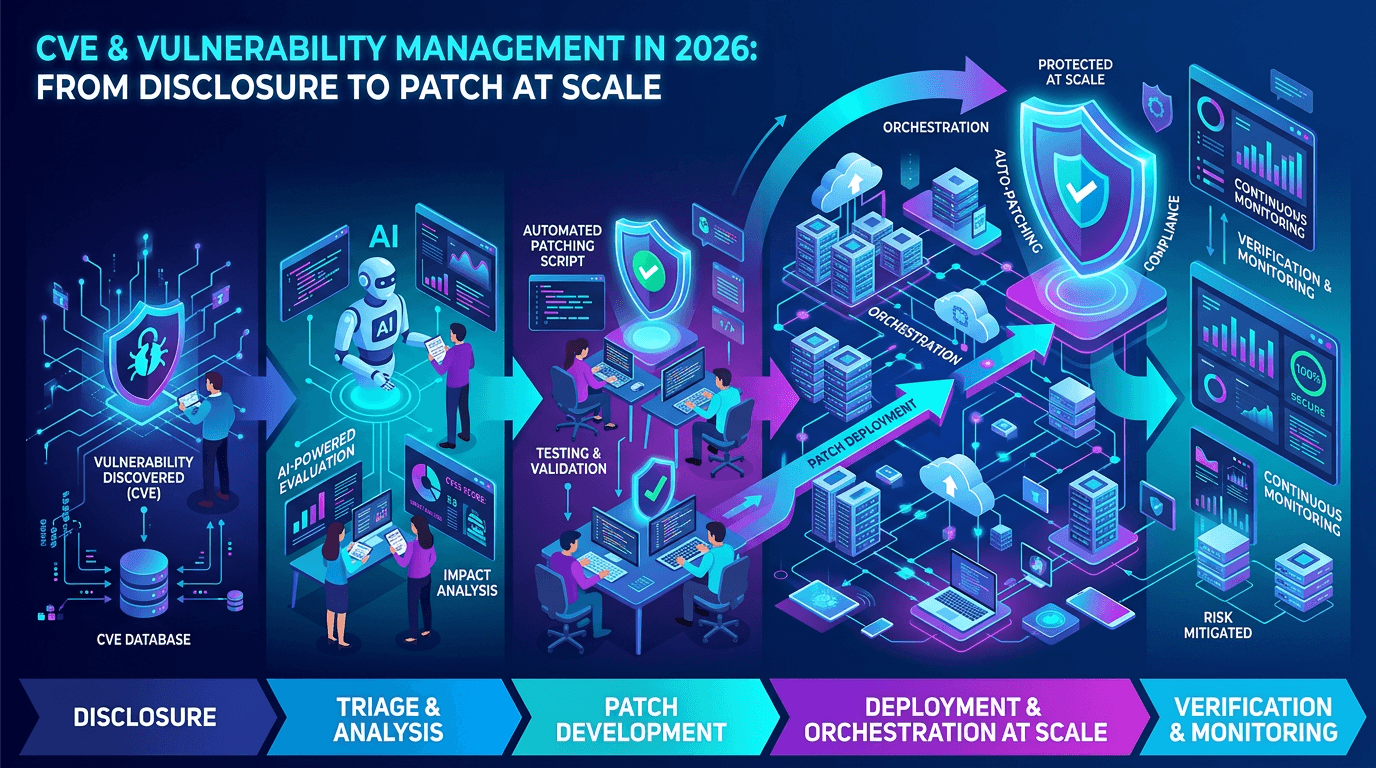
Our scanning process is designed to be thorough yet non-intrusive: 1. **Technology Fingerprinting**: We identify web servers, frameworks, CMS platforms, and other software through headers, responses, and behavioral analysis. 2. **Version Detection**: Where possible, we determine specific software versions to accurately match against CVE databases. 3. **CVE Correlation**: Detected technologies are matched against our continuously updated CVE database from NVD, vendor advisories, and security researchers. 4. **Risk Prioritization**: Results are prioritized by CVSS score, exploit availability, and business impact to help you focus on what matters most. 5. **Remediation Guidance**: Each finding includes specific recommendations for patches, upgrades, or mitigations.
Continuous Vulnerability Monitoring vs Point-in-Time Scans
Point-in-time vulnerability scans quickly become stale as new CVEs are disclosed and your infrastructure changes. Our platform offers continuous monitoring that: - Alerts you when new CVEs affect your detected technology stack - Detects configuration changes that introduce new vulnerabilities - Tracks remediation progress over time - Provides trending data to measure security posture improvement This continuous approach ensures you're always aware of your current risk exposure rather than relying on outdated snapshots.
Integrating Vulnerability Data into Security Workflows
Vulnerability data is most valuable when integrated into your existing security workflows. Our API enables: - Automatic ticket creation in JIRA, ServiceNow, or other issue trackers - Integration with SIEM platforms for correlated alerting - CI/CD pipeline checks to catch vulnerabilities before deployment - Executive dashboards showing vulnerability trends - Compliance reporting for PCI DSS, SOC 2, and other frameworks Whether you're a small team or a large enterprise, vulnerability intelligence should flow directly into your operations.
Frequently asked questions.
What vulnerabilities do you detect?
How often is the vulnerability database updated?
Is scanning safe for production systems?
Can I scan internal systems?
Related articles.
Learn more from our security research blog.
Ready to get started?
Test the available signals in your workflow. Review the sources and limits before integrating.
No credit card required · Free API key