The Evolution of Threat Intelligence in 2026
Threat intelligence has moved beyond simple blocklists. Explore how AI, context, and real-time integration are shaping the future of cyber defense.
 IsMalicious Team
In 2026, Threat Intelligence (TI) is no longer a luxury for elite security teams; it is a fundamental component of every effective cyber defense strategy. But the nature of TI has changed dramatically over the last few years.
From Data to Wisdom
Historically, threat intelligence was often synonymous with "feeds"—massive lists of bad IP addresses and domains. While useful, this raw data often lacked context. Today, the focus has shifted from information to intelligence.
- Context is King: Knowing that an IP is bad is not enough. You need to know why it's bad, who is using it, and what they are targeting.
- Strategic Intelligence: TI is now informing business decisions, not just firewall rules. Boards want to know about geopolitical risks and industry-specific trends.
The Role of Automation
With the sheer volume of threats, manual analysis is impossible.
- Automated Ingestion: SOAR platforms automatically ingest TI feeds and update security controls in real-time.
- Generative AI: AI models are now summarizing complex threat reports and even predicting potential attack vectors based on historical data.
Integration is Key
Threat intelligence does not exist in a vacuum. It must be woven into the fabric of your security stack.
- SIEM Enrichment: Correlating internal logs with external threat data to spot hidden attacks.
- Vulnerability Management: Prioritizing patching based on which vulnerabilities are actually being exploited in the wild (CISA KEV).
Conclusion
The future of threat intelligence is integrated, automated, and highly contextual. Organizations that use modern TI effectively will be able to anticipate attacks rather than just reacting to them.
Related articles
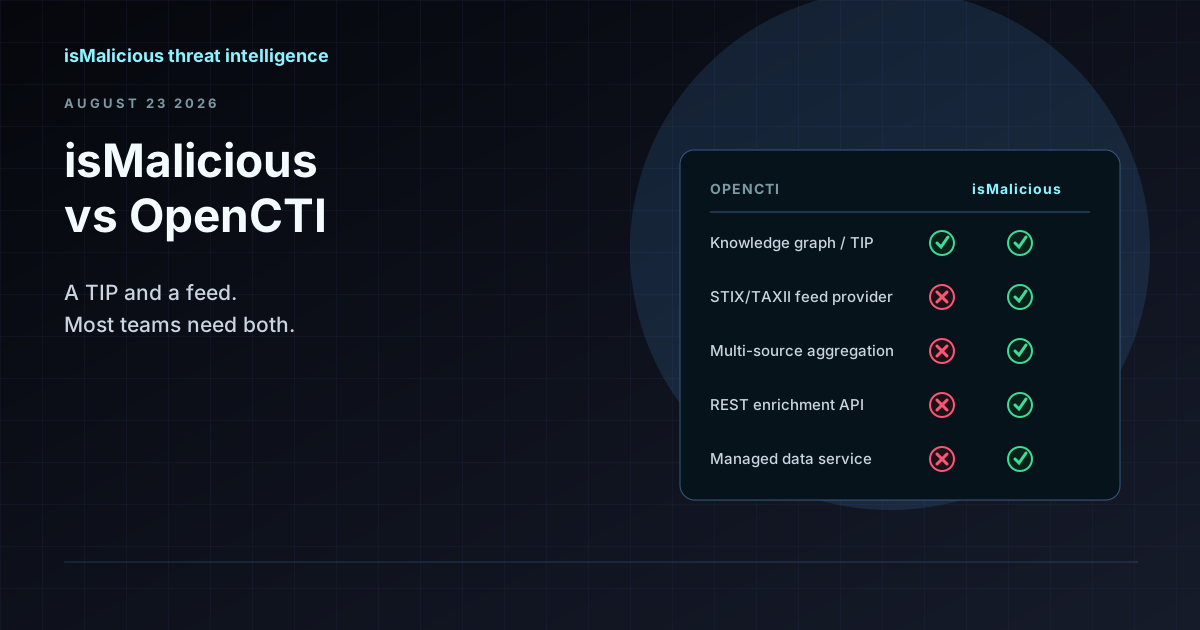 isMalicious vs OpenCTI: Why This Is the Wrong Comparison (and How They Work Together)
OpenCTI is a threat intelligence platform and knowledge graph. isMalicious is a data provider that feeds it. Teams searching for an OpenCTI alternative usually need a feed, not a replacement TIP.
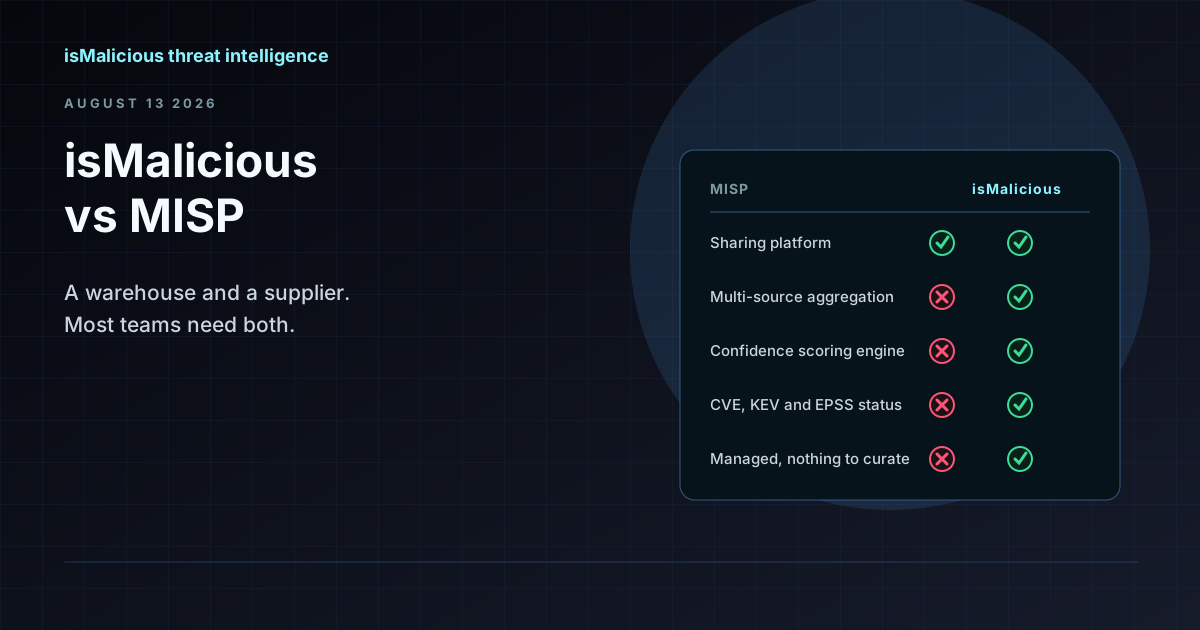 isMalicious vs MISP: Why This Is the Wrong Comparison (and What to Compare Instead)
MISP is where you store and share indicators. isMalicious is where indicators come from. Teams searching for a MISP alternative are usually looking for a feed, not a replacement platform.
 SIEM and SOAR Threat Intelligence Enrichment: Workflows, Field Mapping, and the Metrics That Keep Teams Sane
A SOAR playbook without enrichment is a ticket printer. A SIEM with unbounded threat feeds is a bill. Here is a practical way to design enrichment for Splunk, Sentinel, or Elastic-style stacks—what to store, when to run playbooks, and what to report upward.
Check any IP or domain
See what our indexed threat intelligence records say about it.
Try the IP / Domain Checker