Beyond Phishing: Modern Social Engineering Tactics
Social engineering has evolved beyond simple phishing emails. Discover the latest tactics used by attackers, including vishing, smishing, and pigmenting, and how to spot them.

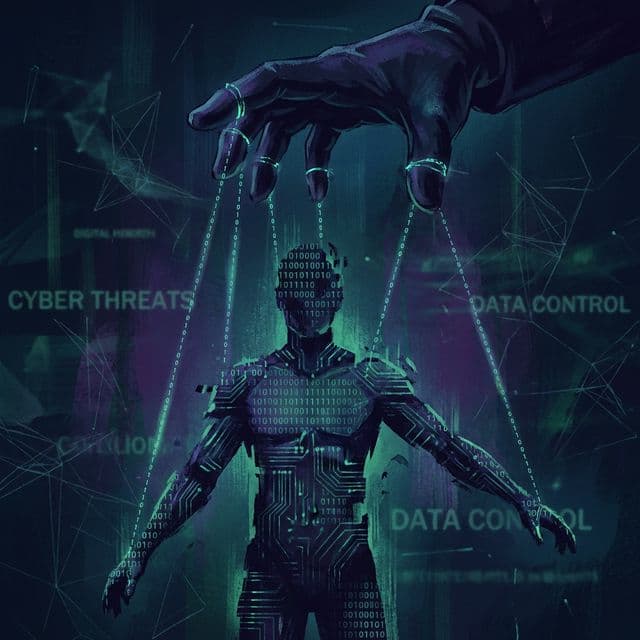
Social engineering remains one of the most effective ways for attackers to breach organizations. Why spend weeks looking for a zero-day vulnerability when you can simply ask an employee for their password? While most security training focuses on traditional email phishing, attackers have evolved their tactics to exploit new communication channels and psychological triggers.
Today's social engineering attacks are multi-channel, highly personalized, and increasingly automated.
The Evolution of Deception
The "Nigerian Prince" scams of the past have been replaced by sophisticated operations that blend into our daily digital lives. Attackers use public information from social media (OSINT) to craft narratives so convincing that even security-savvy individuals fall victim.
Vishing (Voice Phishing)
Vishing involves attackers using phone calls to deceive victims. Modern vishing has been accelerated by AI.
- Deepfake Audio: Attackers can now clone the voice of a CEO or IT director using just a few seconds of sample audio. They call an employee, sounding exactly like their boss, demanding an urgent wire transfer or password reset.
- Hybrid Attacks: A common tactic involves sending a phishing email claiming a subscription is about to renew for a large amount (e.g., "Geek Squad Renewal: $499"). The email contains a phone number to "cancel." When the victim calls, they are vishing the attacker, who then guides them to install remote access software under the guise of "processing a refund."
Smishing (SMS Phishing)
With email filters becoming better, attackers have moved to SMS. Smishing messages often create a sense of urgency:
- "USPS: Your package delivery has failed. Click here to reschedule."
- "Bank Alert: Unauthorized transaction detecting. Reply YES to verify."
These messages link to credential harvesting sites. Since mobile interfaces often hide full URLs, users are less likely to spot the deception.
Pig Butchering (Sha Zhu Pan)
A particularly cruel and long-con form of social engineering is "Pig Butchering." Originating in cryptocurrency scams, it involves building a fake romantic or friendly relationship with a victim over weeks or months.
- The Hook: It starts with a "wrong number" text or a match on a dating app.
- The Grooming: The attacker builds trust, sharing details of their "glamorous" life and successful investments.
- The Slaughter: Once trust is established, they convince the victim to invest in a fake cryptocurrency platform. The victim sees fake gains initially (fattening the pig) and is encouraged to invest more. eventually, the platform vanishes along with the money.
Quid Pro Quo and Pretexting
- Quid Pro Quo: "Something for something." Attackers call random extensions pretending to be IT support, offering to "fix the slow network issue" in exchange for the user disabling their firewall or sharing a password.
- Pretexting: This involves creating a fabricated scenario (the pretext) to steal information. For example, an attacker posing as an HR representative verifying information for a background check.
Defending Against Modern Social Engineering
Technology alone cannot stop social engineering; it requires a combination of technical controls and human vigilance.
1. Verification Procedures
Implement strict verification policies. No sensitive action—like changing bank details or resetting high-privilege passwords—should ever be completed based solely on a phone call or email. Require a secondary verification channel (e.g., calling the known internal number of the requestor).
2. Reduce Your Digital Footprint
Attackers use what you post online. Encourage employees to be mindful of what they share on LinkedIn and social media. Knowing exactly who works in finance and who their boss is makes crafting a spear-phishing email much easier.
3. Advanced Threat Intelligence
Social engineering attacks often rely on malicious infrastructure—fake login pages, typosquatted domains, and C2 servers.
isMalicious helps intercept these attacks by identifying the infrastructure behind them. Even if a user clicks a smishing link, real-time domain reputation checks can block access to the malicious site before credentials are stolen. We track the domains used in "package delivery" scams and "tech support" fraud, protecting your users even when they make a mistake.
Summary
Social engineering targets people and process, not only software. Combine role-specific training with independent verification steps and source-attributed threat intelligence to reduce exposure.
Stay skeptical, verify everything, and remember: if it generates a strong emotional response (fear, urgency, greed), it's likely a trap.
Related articles
 Browser-in-the-Browser Phishing: Detection Guide
Understand browser-in-the-browser phishing, spot fake SSO windows, detect campaign infrastructure, and reduce risk with phishing-resistant authentication.
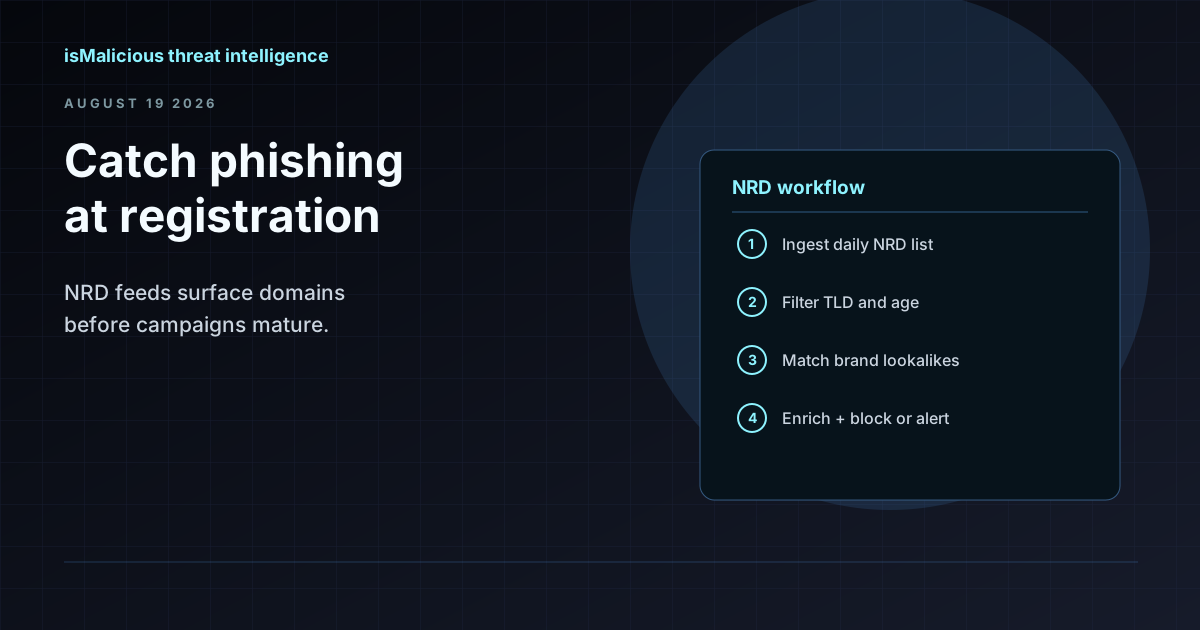 How to Use an NRD Feed to Catch Phishing Before It Lands in the Inbox
Newly registered domains are where most phishing campaigns start. This guide walks through NRD feed workflows for brand monitoring, mail gateway hygiene, and SOC triage — without treating domain age as a blunt block rule.
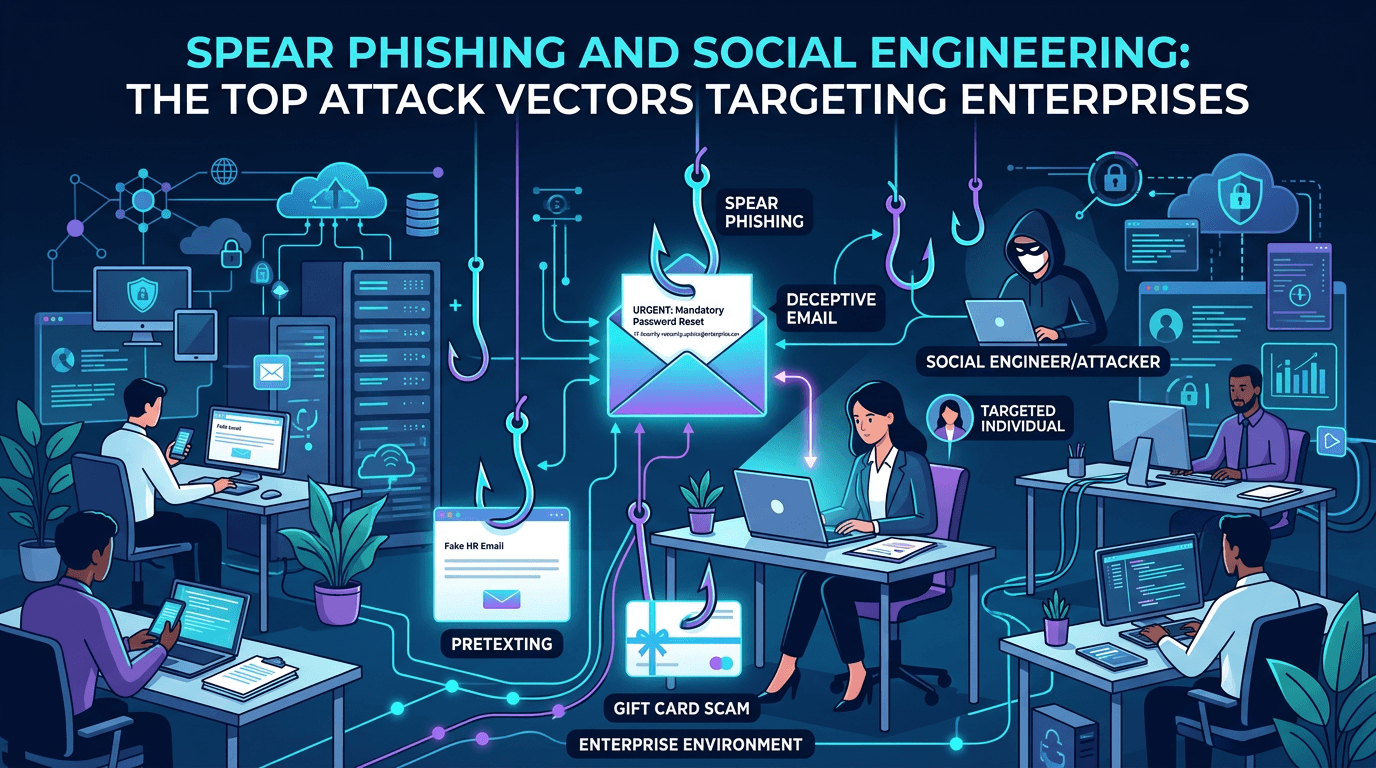 Spear Phishing and Social Engineering: The Top Attack Vectors Targeting Enterprises in 2026
A complete guide to modern spear phishing and social engineering attack vectors—how threat actors plan, lure, and pivot, with detailed defensive controls for email, identity, training, and infrastructure reputation.
Protect Your Infrastructure
Check any IP or domain against our threat intelligence database with indexed records.
Try the IP / Domain Checker