Threat Intelligence for Small Business: Enterprise Security on a Budget
Small businesses face the same cyber threats as enterprises but with a fraction of the resources. Learn how affordable threat intelligence and smart security strategies can level the playing field.


The email arrived on a Tuesday morning, indistinguishable from the dozens of others requesting invoice payments. The accountant at the 15-person manufacturing company processed it as routine, transferring funds to what appeared to be a regular supplier. Two days later, when the real supplier called asking about the overdue payment, the reality became clear: forty thousand dollars had been sent to criminals who had spent months studying the company's payment patterns.
For a large enterprise, this loss would be a rounding error. For this small manufacturer, it represented months of profit and nearly threatened the business's survival.
This scenario plays out thousands of times each year across small businesses worldwide. The attackers do not distinguish between Fortune 500 companies and family-owned shops. The same phishing campaigns, the same malware, the same credential stuffing attacks target everyone. But while enterprises have dedicated security teams, sophisticated tools, and substantial budgets to defend themselves, small businesses typically have none of these resources.
The result is a dangerous asymmetry. Small businesses face production-ready threats with consumer-grade defenses. The statistics reflect this reality: small businesses account for a disproportionate share of cyber incidents, and the consequences are often existential.
This guide explores how small businesses can dramatically improve their security posture without enterprise budgets, using affordable threat intelligence and strategic security investments to protect what they have built.
The Small Business Security Challenge
Small businesses face unique constraints that make cybersecurity particularly difficult.
Limited Resources
Most small businesses cannot justify a dedicated security position. Security responsibilities typically fall to whoever handles IT, often alongside many other responsibilities. There is no security operations center, no incident response team, no dedicated budget for security tools.
This resource constraint means that security solutions must be simple to deploy and maintain. Complex tools that require extensive configuration or ongoing tuning are impractical regardless of their effectiveness.
Attractive Targets
Contrary to the belief that small businesses are too small to interest attackers, they are actually highly attractive targets. Attackers understand that small businesses often lack basic protections, making them easier to compromise than hardened enterprise environments.
Small businesses also serve as entry points into larger targets. Supply chain attacks exploit trusted relationships between small vendors and their larger customers. Compromising a small business can provide access to much more valuable targets.
Existential Stakes
When enterprises suffer breaches, they absorb the costs and continue operating. For small businesses, a significant breach can be fatal. Recovery costs, legal liability, reputational damage, and business disruption combine to threaten businesses operating on thin margins.
The stakes are not just financial. Many small businesses represent lifelong investments by their owners, community institutions, and livelihoods for employees. The human cost of small business failure extends far beyond balance sheets.
High-Impact, Low-Cost Security Measures
Small businesses can achieve significant security improvement through strategic investments in high-impact measures.
Email Security
Email remains the primary attack vector for most threats. Phishing, business email compromise, and malware delivery all predominantly arrive through email. Effective email security provides outsized returns.
Modern email security services provide layered protection at affordable price points. Cloud-based services like Microsoft 365 and Google Workspace include built-in security features that provide substantial protection when properly configured.
Enable multi-factor authentication for all email accounts. A compromised email account enables password resets, business email compromise, and data exfiltration. MFA dramatically reduces account compromise risk.
Configure email authentication protocols including SPF, DKIM, and DMARC. These protocols help prevent domain spoofing and improve deliverability while protecting your brand from impersonation.
DNS-Level Protection
DNS filtering provides network-wide protection with minimal complexity. By configuring your network to use protective DNS services, you block connections to known malicious domains before they can deliver payloads or harvest credentials.
Several services offer free or low-cost protective DNS suitable for small businesses. The protection applies to all devices on the network without requiring installation on individual systems.
Adding threat intelligence blocklists to DNS filtering extends protection to the latest identified threats. Regularly updated blocklists catch malicious infrastructure that default protections might miss.
Password Management
Weak and reused passwords enable many attacks. Password managers make strong, unique passwords practical for all accounts. The investment in a business password manager typically costs less per month than a single compromised account costs to remediate.
Password managers also enable secure password sharing among team members, eliminating insecure practices like shared spreadsheets or sticky notes.
Backup and Recovery
Ransomware attacks have devastated small businesses that lacked reliable backups. Regular, tested backups provide the ultimate protection: even if an attack succeeds, you can recover without paying ransom or losing data.
Follow the 3-2-1 backup rule: three copies of data, on two different media types, with one copy stored offsite. Cloud backup services make this practical for small businesses at affordable price points.
Crucially, test backups regularly. Backups that cannot be restored provide false confidence. Schedule periodic restoration tests to verify that recovery actually works.
Employee Awareness
Most successful attacks exploit human behavior rather than technical vulnerabilities. Training employees to recognize phishing, verify requests, and report suspicious activity provides protection that technical controls cannot.
Security awareness training does not require expensive programs. Free resources, brief regular discussions, and simulated phishing tests build awareness over time. The goal is developing habits, not just checking compliance boxes.
Using Threat Intelligence on a Budget
Enterprise threat intelligence platforms cost hundreds of thousands of dollars annually, far beyond small business reach. However, effective threat intelligence is increasingly accessible at price points appropriate for smaller organizations.
What Threat Intelligence Provides
At its core, threat intelligence answers the question: is this IP address, domain, or indicator associated with malicious activity? This simple question, asked at the right time, can prevent many attacks.
When an email contains a link, checking that domain against threat intelligence identifies phishing sites. When a user visits a website, checking the domain identifies malware distribution sites. When network traffic connects to an external IP, checking that IP identifies command-and-control servers.
This protection does not require security expertise to implement. Simple integrations check indicators automatically, blocking known threats without requiring human analysis.
Free and Affordable Options
Several services provide threat intelligence at price points accessible to small businesses. Free tiers offer enough capability for basic protection, with paid tiers providing expanded access as needs grow.
Community blocklists aggregate threat intelligence from multiple sources, available free for anyone to use. These lists integrate with DNS filtering, firewalls, and other security tools to provide broad protection.
APIs enable automated checking of indicators, integrating threat intelligence into existing workflows. A few API calls can transform basic email filtering into threat-aware protection.
Strategic Application
Limited threat intelligence should be applied where it provides maximum value. Focus on the most common attack vectors and highest-risk activities.
Email security benefits enormously from threat intelligence. Checking every link against domain reputation catches phishing that content analysis misses. This single application of threat intelligence prevents a substantial portion of attacks.
Network perimeter protection benefits similarly. Checking outbound connections against IP reputation identifies compromised systems attempting to reach command-and-control infrastructure.
Authentication systems gain from checking login source IP addresses. Attempts from known malicious infrastructure or unexpected geolocations warrant additional verification.
Building a Security Program That Scales
Small business security should be designed to improve over time as the business grows.
Start with Fundamentals
Begin with the highest-impact, lowest-complexity measures. Email security, MFA, DNS filtering, and backups provide substantial protection with manageable implementation effort.
Do not attempt to implement everything at once. A partially completed complex security program provides less protection than a fully implemented simple one.
Document and Standardize
Even simple security measures benefit from documentation. Written procedures ensure consistency, enable training new employees, and provide foundation for improvement.
Document your backup procedures, your acceptable use policies, and your incident response contacts. These documents do not need to be elaborate. Simple, clear instructions that people actually follow are more valuable than comprehensive policies that gather dust.
Plan for Growth
As your business grows, security needs will expand. Design initial measures to scale. Choose tools that offer growth paths from free to paid tiers. Build processes that can handle increasing complexity.
Consider what your security program needs to look like when you have twice as many employees, three times as many customers, or significantly different technology requirements. Early decisions that account for growth prevent painful migrations later.
Establish Relationships
Before incidents occur, establish relationships with resources you might need. Know who provides your cyber insurance, who you would call for incident response, and what law enforcement contacts are appropriate for your jurisdiction.
These relationships are easier to establish during calm periods than in the chaos of an active incident.
Common Small Business Security Mistakes
Learning from others' mistakes prevents repeating them.
Assuming You Are Not a Target
Every organization connected to the internet is a target. Automated attacks scan continuously, looking for any vulnerable system regardless of its owner's size or profile. The belief that you are too small to attract attention is exactly the complacency that attackers exploit.
Relying on Consumer-Grade Security
Consumer security tools designed for individual home users are insufficient for business use. Business-grade tools provide management capabilities, appropriate licensing, and protection levels matched to business risk.
The price difference between consumer and business tools is typically modest compared to the protection improvement.
Neglecting Updates and Patches
Unpatched systems represent known vulnerabilities that attackers actively exploit. Automatic updates, while occasionally inconvenient, are far preferable to the consequences of exploitation.
For systems that cannot be automatically updated, establish regular manual update schedules and actually follow them.
Ignoring Mobile and Remote Access
Modern businesses operate beyond traditional office boundaries. Mobile devices, home networks, and remote access create attack surface that office-focused security misses.
Ensure security measures extend to all the ways business is actually conducted, not just the ways it was conducted years ago.
No Incident Response Plan
When incidents occur, having a plan prevents panic and ensures appropriate response. Even a simple plan that documents who to call and what steps to take improves outcomes.
Test your plan periodically. Tabletop exercises that walk through scenarios identify gaps before real incidents expose them.
How isMalicious Supports Small Business Security
isMalicious provides threat intelligence accessible to businesses of all sizes.
Free Tier for Basic Protection
A free tier provides enough API access for basic security integration without any cost. Small businesses can implement threat intelligence protection immediately, upgrading only if needs exceed free tier limits.
This enables protection without budget approval cycles or financial commitment. Start protecting your business today and evaluate whether expanded access makes sense for your specific situation.
Simple Integration
API design prioritizes simplicity. Checking an IP address or domain requires a single API call with straightforward response interpretation. Integration does not require security expertise or complex implementation.
Documentation includes examples for common scenarios, enabling implementation even without dedicated development resources.
Coverage across the listed sources
Despite accessibility, the threat intelligence is comprehensive. The same database that protects enterprise customers protects small businesses, providing professional-grade protection at accessible price points.
Blocklist Downloads
Ready-to-use blocklists integrate with DNS filtering, firewalls, and other security tools. Download in your preferred format and implement protection immediately without any development work.
The Path to Better Security
Small business security is not about achieving perfection. It is about progressively reducing risk through practical, sustainable measures. Every improvement makes your business harder to attack and more resilient when attacks occur.
Start with the fundamentals: email security, MFA, DNS filtering, backups. These measures provide substantial protection with modest investment. From this foundation, add threat intelligence integration, employee training, and incident response planning.
The goal is not matching enterprise security programs. The goal is making your business secure enough that attackers move on to easier targets, and resilient enough that successful attacks do not become existential threats.
You do not need an enterprise budget to protect your small business. isMalicious provides the threat intelligence you need to detect and block threats at a price point that makes sense for businesses of any size. Start with our free tier today and build the security program your business deserves.
Related articles
 Threat Intelligence Reports for Executives: A Practical Template
Write a CTI brief executives can use: the required decision, business impact, evidence, uncertainties, options, and follow-up, with a template and worked example.
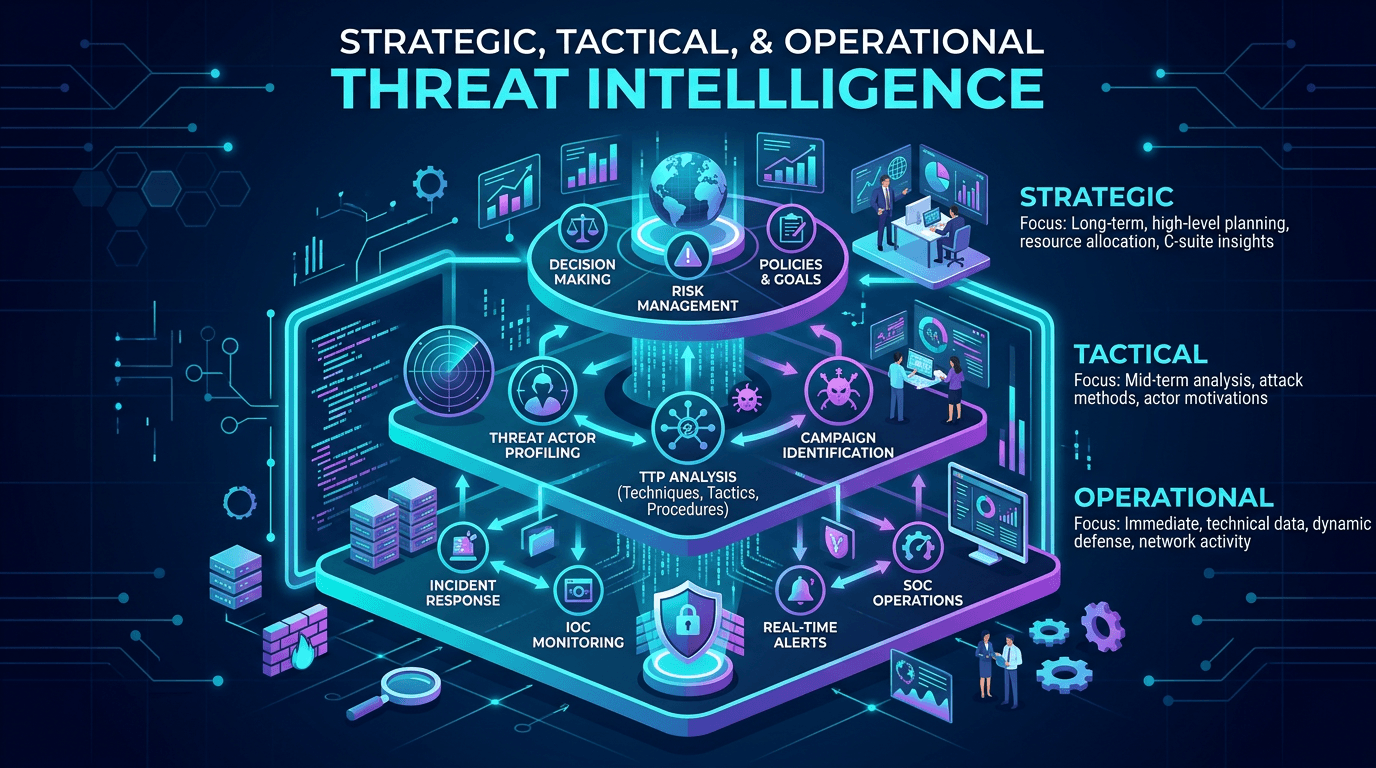 Strategic, Tactical, and Operational Threat Intelligence: Frameworks for Modern Security Programs
Align CTI outputs with audience needs: executive risk narratives, SOC-ready IOCs, and MITRE-mapped TTPs—plus governance models that keep intelligence timely and measurable.
 API Integration for Threat Intelligence: Automate Your Security
Discover how integrating threat intelligence APIs can transform your security infrastructure. Learn best practices for automated threat detection, continuous monitoring, and documented integration with your existing systems.
Protect Your Infrastructure
Check any IP or domain against our threat intelligence database with indexed records.
Try the IP / Domain Checker