Building an Effective Incident Response Plan: A Step-by-Step Guide
When a cyberattack strikes, panic is your enemy. Learn how to create and test an incident response plan to ensure your team knows exactly what to do.

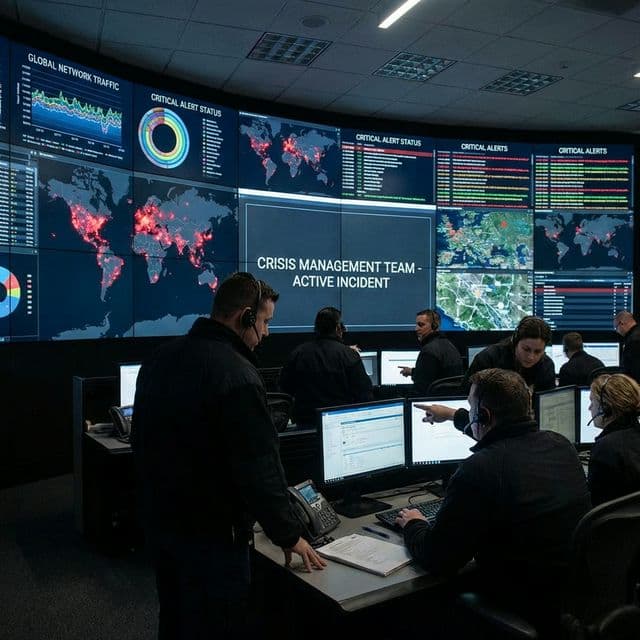
In cybersecurity, the question is not "if" you will be attacked, but "when." When that day comes, the difference between a minor disruption and a catastrophic business failure often comes down to one thing: Preparation.
An Incident Response (IR) plan is a set of instructions that helps IT staff detect, respond to, and recover from network security incidents. It addresses issues like cybercrime, data loss, and service outages that threaten daily work.
The 6 Phases of Incident Response (NIST Framework)
The National Institute of Standards and Technology (NIST) documents a framework for incident response.
1. Preparation
This is the most critical phase. It happens before an incident occurs.
- Establish an IR Team (CSIRT): Define roles and responsibilities. Who makes the decision to shut down the network? Who handles PR? Who talks to legal?
- Documentation: create runbooks for specific scenarios (e.g., Ransomware Runbook, Phishing Runbook).
- Tooling: Ensure you have the necessary tools (EDR, SIEM, logging) deployed and configured.
2. Identification
Determine whether an incident has occurred.
- Monitoring: Analyst alerts from security tools.
- Triage: Determine the scope and severity of the incident. Is it a false positive or a real breach?
- Threat Intelligence: Use external intelligence to understand if the indicators of compromise (IOCs) are part of a known campaign.
3. Containment
Limit the damage and prevent the attacker from moving laterally.
- Short-term containment: Isolate the infected systems from the network immediately.
- Long-term containment: Apply patches to vulnerable systems, change compromised credentials, and block malicious IPs at the firewall.
4. Eradication
Remove the threat from the environment.
- Root Cause Analysis: Find the patient zero and the entry vector.
- Cleanup: Delete malware, remove backdoor accounts, and re-image infected machines.
5. Recovery
Restore systems to normal operation.
- Restoration: Bring systems back online from clean backups.
- Validation: Verify that systems are clean and fully functional before reconnecting them to the internet.
- Monitoring: heightened monitoring for any signs of reinfection.
6. Lessons Learned (Post-Incident Activity)
Review the incident to improve future response.
- Retrospective: What went well? What failed?
- Update the Plan: Revise the IR plan and runbooks based on the findings.
Why Testing Your Plan Matters
A plan on paper is useless if it doesn't work in practice. Regularly conduct Tabletop Exercises (TTX)—simulation scenarios where the team talks through their response to a hypothetical incident.
- "It's 2 AM on a Saturday and the CEO's laptop just started encrypting files. What do we do?"
- These exercises reveal gaps in communication, tooling, and decision-making authority before a real crisis hits.
The Role of Threat Intelligence in IR
During an active incident, speed is everything. Threat intelligence accelerates the Identification and Containment phases.
If you find a suspicious file hash or IP address, isMalicious can instantly tell you if it's associated with a known ransomware gang or C2 infrastructure. This context allows you to prioritize the threat and tailor your response strategy.
Conclusion
An effective Incident Response plan reduces the mean time to detect (MTTD) and mean time to respond (MTTR), directly minimizing the financial and reputational impact of a breach.
Start today. Identify your critical assets, define your team, and draft your first runbook.
Related articles
 HTML Smuggling: Detection and Incident Response
Detect HTML smuggling by correlating browser file creation, JavaScript Blob behavior, download telemetry, endpoint execution, and threat intelligence.
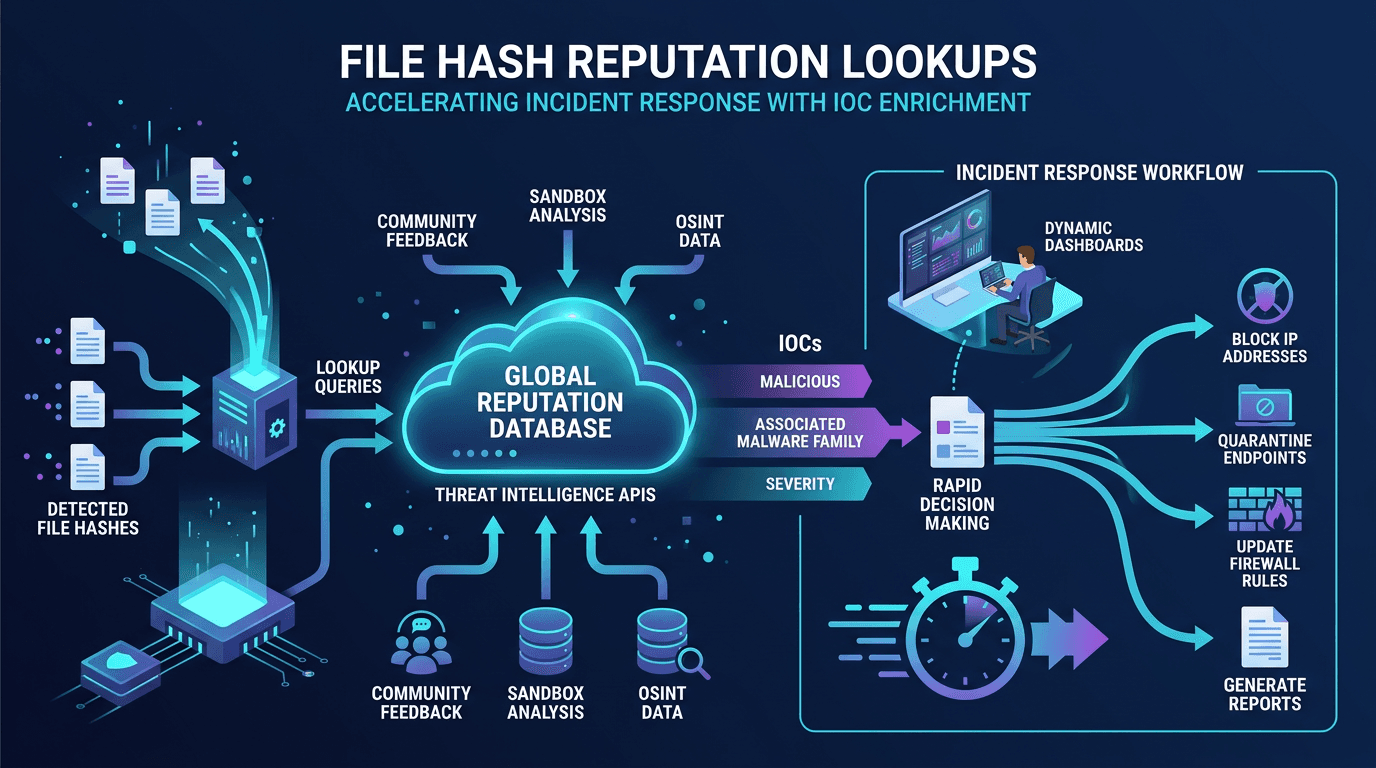 File Hash Reputation Lookups: Accelerating Incident Response With IOC Enrichment
A practitioner's guide to file hash reputation lookups—how they work, which data sources power them, how to build automated IOC enrichment pipelines, and how to integrate hash intelligence into SOC, SOAR, and incident response workflows.
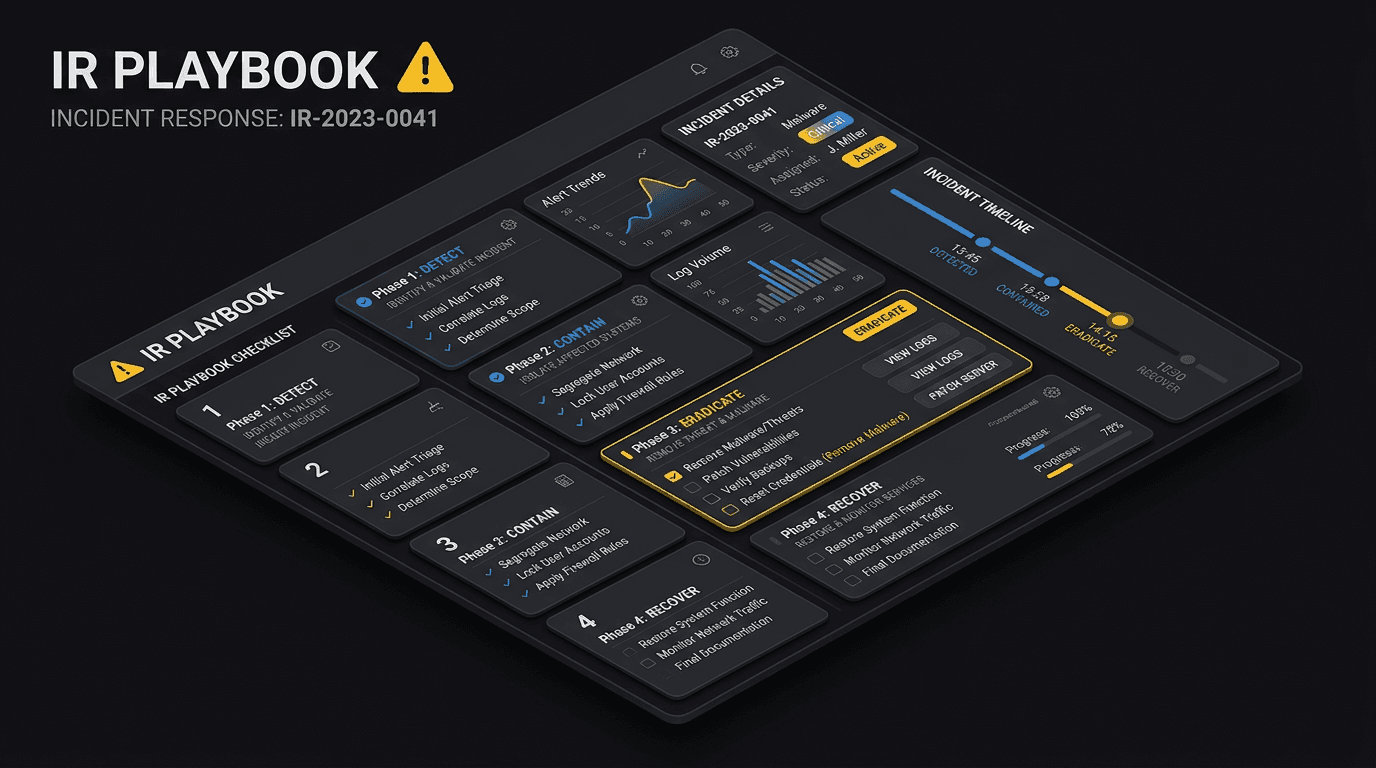 Incident Response Playbooks: Less PDF, More Rehearsal
A playbook nobody has run is fiction. Learn how to build IR phases, roles, and communications that work under pressure—and how to test them.
Protect Your Infrastructure
Check any IP or domain against our threat intelligence database with indexed records.
Try the IP / Domain Checker