The Hidden Cost of Bad IP Reputation: Why Ignoring It Drains Your Budget
Discover how poor IP reputation impacts more than just security—it affects email deliverability, ad spend, and customer trust. Learn why proactive monitoring is a financial necessity.
 Jean-Vincent QUILICHINI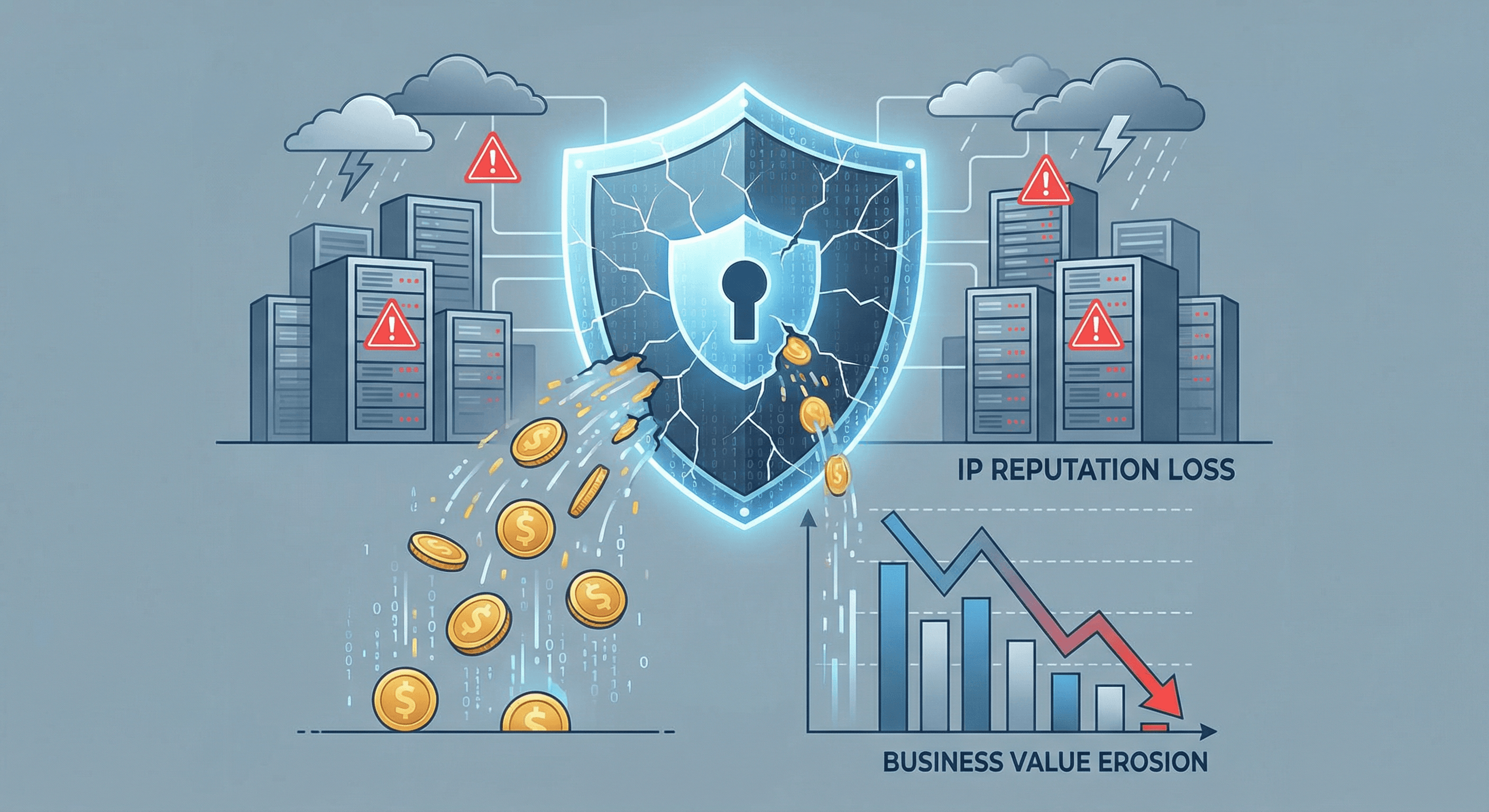
In the world of cybersecurity, we often focus on the immediate threat: the breach, the malware, the unauthorized access. But there's a silent budget killer lurking in your network logs—IP reputation.
For threat intelligence analysts and security teams, IP reputation is usually a metric for blocking bad actors. However, failing to manage the reputation of your own infrastructure or failing to properly vet the IPs you interact with can have cascading financial consequences.
The Deliverability Nightmare
The most direct cost of a tarnished IP reputation is lost communication. If your outbound marketing emails or transactional notifications are routed through an IP that has been flagged by major blocklists (like Spamhaus or Barracuda), your delivery rates plummet.
- Marketing Impact: Lower open rates mean lower ROI on campaigns.
- Operational Impact: Customers don't receive password resets or order confirmations, leading to increased support tickets and churn.
Ad Fraud and Wasted Spend
When you don't filter incoming traffic based on IP reputation, you're opening the door to bot traffic. For marketing teams running PPC campaigns, this is disastrous. You end up paying for clicks from botnets hosted on known malicious IPs.
By integrating threat intelligence feeds that identify datacenter proxies and residential botnets, you can exclude these IPs from your campaigns, ensuring your budget is spent on real humans.
The Cost of Remediation
Recovering from a bad reputation is expensive. It involves:
- Forensics: Identifying which compromised device in your network is spewing spam or malware.
- Delisting: Navigating the bureaucratic and often slow process of getting removed from blocklists.
- Downtime: Pausing operations while you migrate to clean IPs.
Proactive Monitoring is Cheaper
The "check it when it breaks" approach (Trust On First Use) is no longer viable. Continuous monitoring of IP reputation—both ingress and egress—is a financial safeguard.
Tools like isMalicious allow you to automate this process, checking the reputation of every IP that touches your network against real-time threat data. This isn't just security; it's revenue protection.
Conclusion
Don't let bad IP reputation be a line item on your loss report. Treat IP intelligence as a core business asset. By proactively managing reputation, you protect your brand, your budget, and your customer relationships.
Related articles
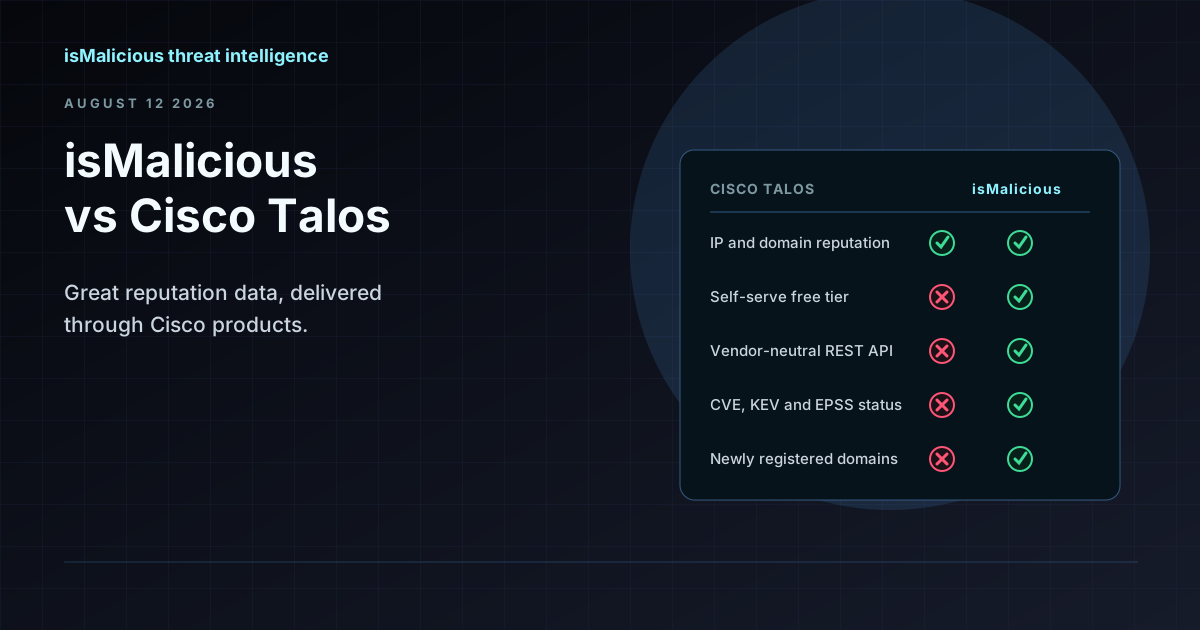 Aug 12, 2026isMalicious vs Cisco Talos: Reputation Lookups Outside the Cisco Stack
Talos reputation is excellent and it lives inside Cisco products. If your stack is not Cisco, or you need an API rather than a web form, that is where the comparison starts.
 Mar 12, 2026Is Your Email Leaking Data? How to Check Email Reputation
Learn why email reputation matters for security and deliverability, and how to check if an email address is compromised or malicious.
 Feb 27, 2026Why Your SaaS Needs to Block Disposable Email Addresses Immediately
Disposable and temporary email addresses can enable fraud, spam, and abuse. Learn how disposable-domain detection supports account controls and sender reputation.
Protect Your Infrastructure
Check any IP or domain against our threat intelligence database with indexed records.
Try the IP / Domain Checker