Enhancing Zero Trust with Malicious IP and Domain Reputation Analysis
Zero Trust security demands constant verification. Discover how integrating malicious IP and domain reputation checks strengthens your threat intelligence and prevents phishing.


The traditional perimeter-based security model is obsolete. In its place, the Zero Trust framework—built on the principle of "never trust, always verify"—has become the standard for modern enterprises. However, verification goes beyond just checking user credentials. To truly secure your infrastructure, you must continuously assess the reputation of the IP addresses and domains interacting with your systems.
The Blind Spot in Authentication
You might have phishing-resistant multi-factor authentication (MFA), but if a user authenticates from an IP address associated with botnet activity, should they be granted access without another check?
Zero Trust requires context. Threat intelligence provides that context. By analyzing the reputation of the connecting IP, you add a critical layer of defense that identity providers alone cannot offer.
Malicious Domains and the Insider Threat
Zero Trust assumes that threats can exist inside the network. One of the most common internal vectors is a user clicking a phishing link that leads to a malicious domain.
If an employee's device attempts to connect to a domain flagged for malware distribution or command-and-control (C2) activities, a Zero Trust architecture must be able to:
- Detect the outbound request to the low-reputation domain.
- Block the connection immediately.
- Isolate the compromised device.
Reputation as a Dynamic Policy Signal
In a Zero Trust model, policies must be dynamic. IP and domain reputation scores are perfect signals for adaptive access control.
- High Trust: User connects from a known corporate IP with a clean history. -> Grant Access.
- Low Trust: User connects from an anonymizing proxy or an IP with a history of malicious behavior. -> Deny Access or Require Step-Up Auth.
Preventing Phishing and Credential Theft
Phishing attacks are the nemesis of Zero Trust because they steal the very credentials used for verification.
By proactively scanning emails and web traffic for malicious domains, you cut off the attack at the source. If the domain used in a phishing link has a poor reputation, the user never reaches the landing page, and their credentials remain safe.
Using IsMalicious for Zero Trust
Implementing this level of granularity requires high-fidelity data. IsMalicious provides real-time API access to global threat data, enabling security teams to verify the reputation of every IP and domain instantly.
Conclusion
Zero Trust is not a product; it's a strategy. And that strategy relies on data. By integrating malicious IP and domain reputation analysis into your security stack, you transform "always verify" from a slogan into a technical reality, effectively neutralizing threats and phishing attempts before they compromise your trust boundary.
Related articles
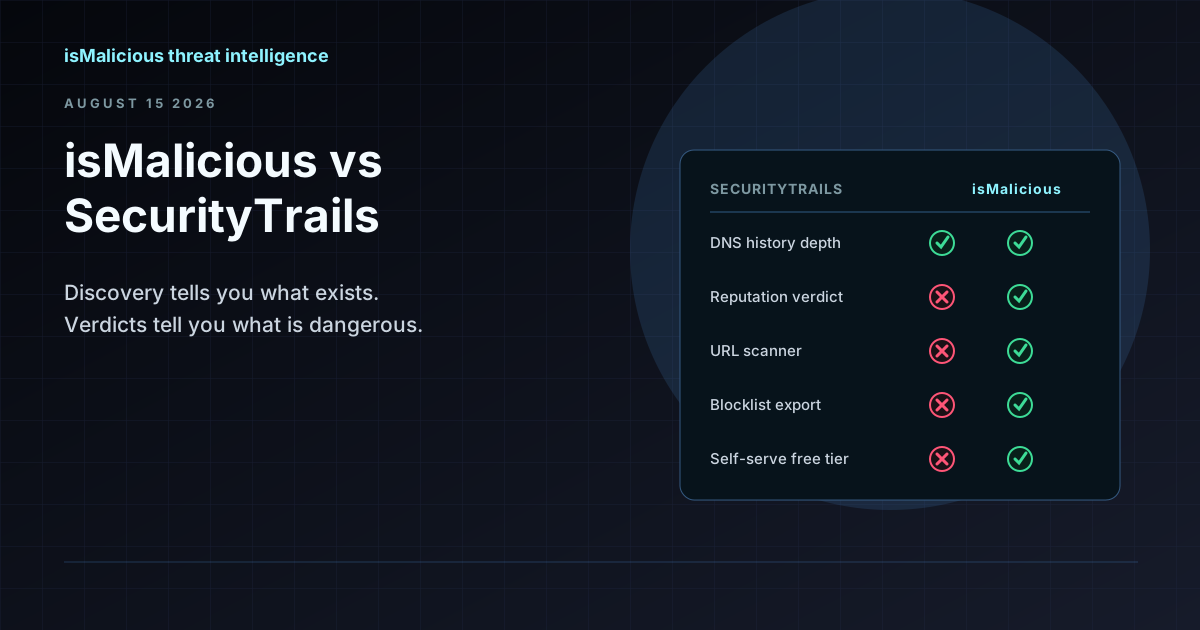 isMalicious vs SecurityTrails: Discovery Data and Reputation Verdicts Are Not the Same Product
SecurityTrails tells you what exists — every subdomain, every historical DNS record. isMalicious tells you what is dangerous. Most teams searching for a SecurityTrails alternative want the second half.
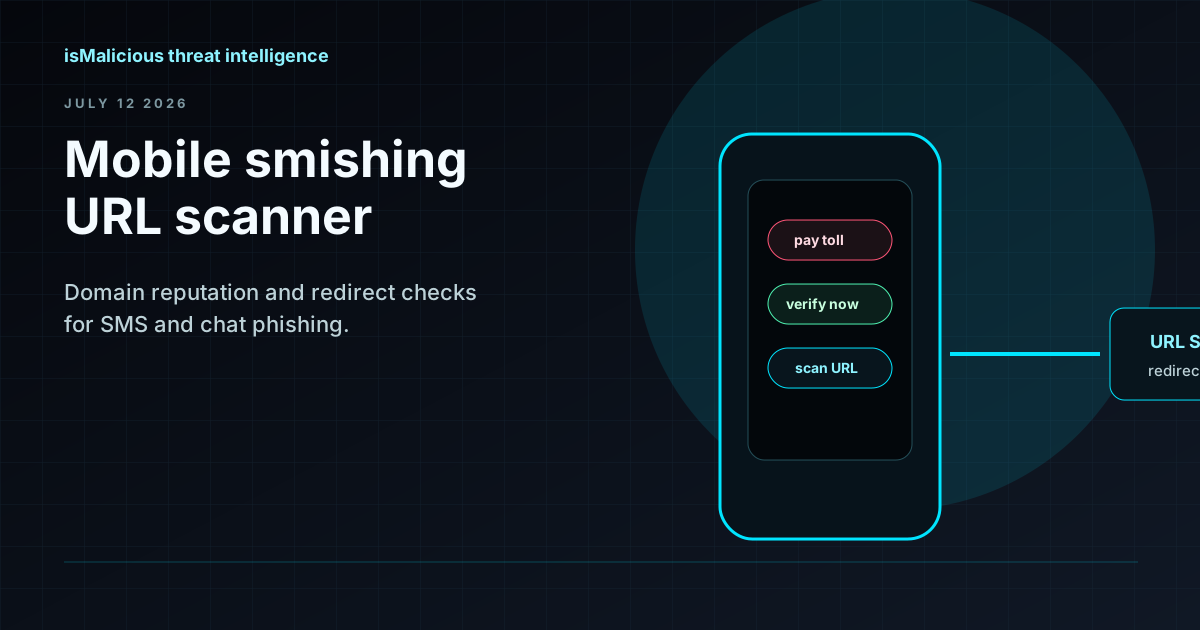 Mobile Smishing Defense: URL Scanners And Domain Reputation For July 2026
Mobile phishing keeps gaining operational relevance. Security teams need URL scanning, domain reputation checks, DNS pivots, and employee reporting workflows built for SMS and chat.
 Implementing Zero Trust: Beyond the Buzzword
Zero Trust is not a product; it is a philosophy. Learn how to move beyond the marketing hype and implement a true "Verify Explicitly" architecture.
Check any IP or domain
See what our indexed threat intelligence records say about it.
Try the IP / Domain Checker