What is EDR? A Guide to Endpoint Detection and Response
Traditional antivirus is no longer enough. Explore why Endpoint Detection and Response (EDR) is essential for modern cybersecurity and how it differs from legacy solutions.


For decades, antivirus (AV) software was the gold standard for endpoint security. If a file matched a known virus signature, it was blocked. Simple. But cybercriminals evolved. They started using fileless malware, living-off-the-land binaries (LOLBins), and polymorphic ransomware that changes its signature with every infection. Traditional AV became blind to these advanced threats.
Enter Endpoint Detection and Response (EDR).
What is EDR?
EDR is a cybersecurity technology that continually monitors end-user devices (computers, servers, mobile devices) to detect and respond to cyber threats like ransomware and malware. Unlike traditional AV, which works on a "pass/fail" basis using signatures, EDR records and analyzes behavior.
Think of AV as a bouncer at a club checking IDs against a list of banned people. If you're not on the list, you get in. EDR is like a security camera system and security team inside the club, watching for anyone starting a fight or stealing drinks, regardless of whether they were on a "banned list" or not.
Key Capabilities of EDR
- Continuous Monitoring: EDR agents record system activities—process creations, registry changes, network connections, file modifications—in real-time.
- Threat Detection: Using behavioral analytics and machine learning, EDR identifies suspicious activity. For example,
powershell.exelaunching a connection to an unknown IP address might detect a threat that has no known file signature. - Automated Response: EDR can automatically take action to contain a threat. It can kill a malicious process, quarantine a file, or isolate an infected endpoint from the network to prevent lateral movement.
- Forensics and Investigation: EDR provides a timeline of the attack. Security analysts can see exactly how the attacker got in, what they touched, and where they went, enabling thorough incident response.
EDR vs. Traditional Antivirus
| Feature | Traditional AV | EDR |
|---|---|---|
| Detection Method | Signatures (DB matching) | Behavioral Analysis & AI |
| Visibility | What blocked files look like | What processes are doing |
| Response | Delete/Quarantine file | Isolate host, Kill process, Rollback |
| Threats Covered | Known Malware | Fileless attacks, Ransomware, Zero-days |
| Forensics | Limited | Comprehensive flight recorder |
Why EDR is Essential Today
1. The Rise of Ransomware
Ransomware attacks are increasingly speed-oriented. Attackers can encrypt a network in minutes. EDR solutions can detect the behavioral pattern of mass file encryption and automatically stop the process and isolate the machine, often saving the organization from a full-blown crisis.
2. Shrinking Dwell Time
"Dwell time" is the time an attacker spends inside a network before detection. EDR significantly reduces this by highlighting suspicious lateral movement and persistence mechanisms that would otherwise go unnoticed for months.
3. Compliance Requirements
Many regulatory frameworks (GDPR, PCI DSS, HIPAA) and cyber insurance policies now effectively mandate the level of visibility and response capability that only EDR provides.
Enhancing EDR with Threat Intelligence
While EDR sees what is happening on the endpoint, it needs context to understand if external connections are malicious. This is where Threat Intelligence plays a vital role.
If an EDR tool sees an endpoint connecting to update-server-win32.com, it might look benign. However, if integrated with a threat intelligence feed like isMalicious, the EDR can instantly know that this domain was registered 2 hours ago and is associated with a known C2 (Command and Control) framework. This context allows the EDR to block the connection immediately.
Conclusion
Endpoint Detection and Response is no longer a luxury for large enterprises; it is a fundamental component of a modern security stack. By moving from signature-based prevention to behavioral-based detection and response, organizations can defend against the sophisticated, evasive threats that define the current cyber landscape.
Implementing EDR gives you the eyes and ears you need to catch attackers before they cause damage.
Related articles
 ASN Reputation for Threat Intelligence: How Autonomous System Intelligence Improves Prioritization and Hunt Programs
An IP address is a snapshot; an autonomous system (ASN) is a neighborhood. Learn how to use ASN context safely for triage, fraud, and security operations—without mistaking a giant cloud for a monolithic "bad host".
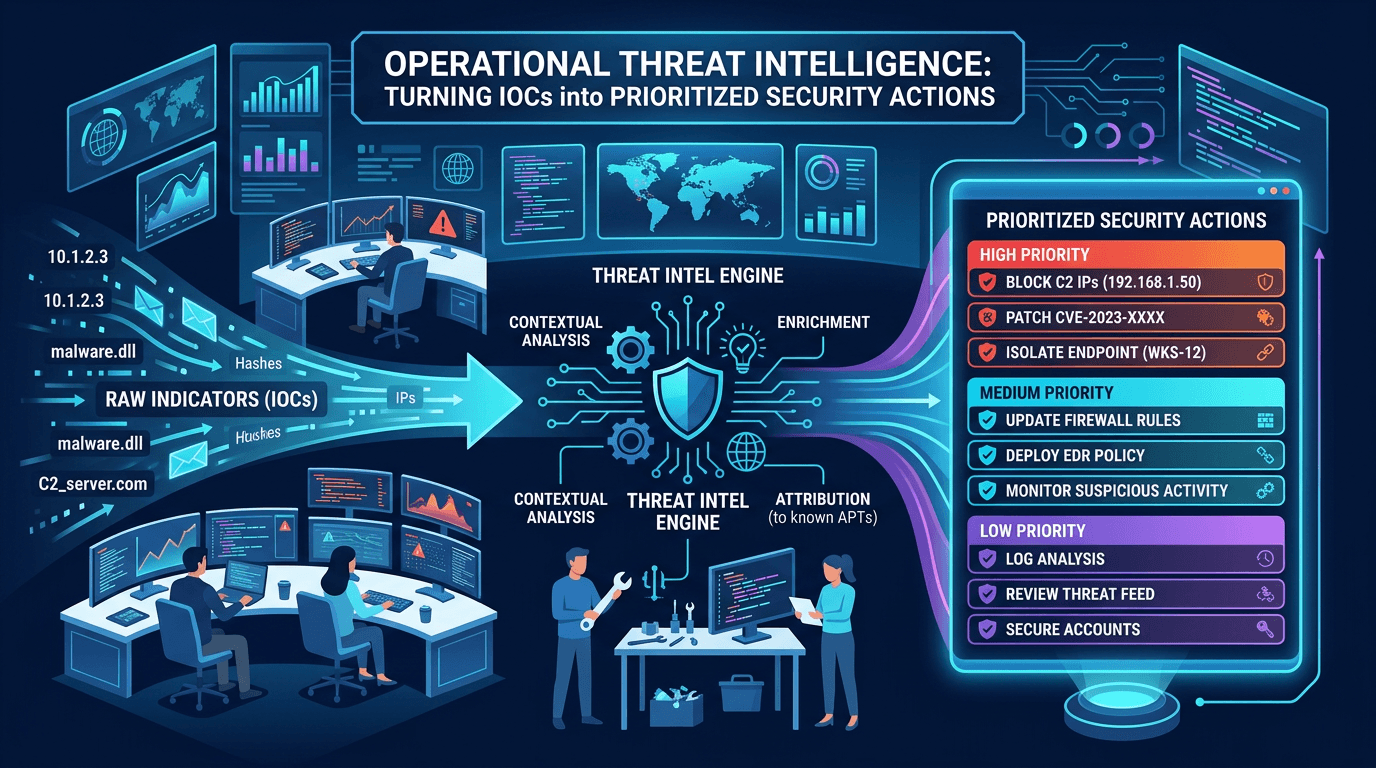 Operational Threat Intelligence: Turning IOCs into Prioritized Security Actions
Define operational CTI that SOC teams can use daily: IOC lifecycle, confidence scoring, feed hygiene, and how to align indicators with detection engineering and incident response.
 IP Lookup for Cyber Threat Detection: A Complete Security Guide
Learn how IP lookup works as a frontline defense against cyber threats. Discover how to use IP reputation data, threat intelligence feeds, and automated checks to block malicious actors before they reach your systems.
Protect Your Infrastructure
Check any IP or domain against our threat intelligence database with indexed records.
Try the IP / Domain Checker