The Dark Web vs. Deep Web: Where Do Cyber Threats Hide?
Confused by the Dark Web and Deep Web? We explain the difference and where cyber threats like stolen credentials and malware actually live.

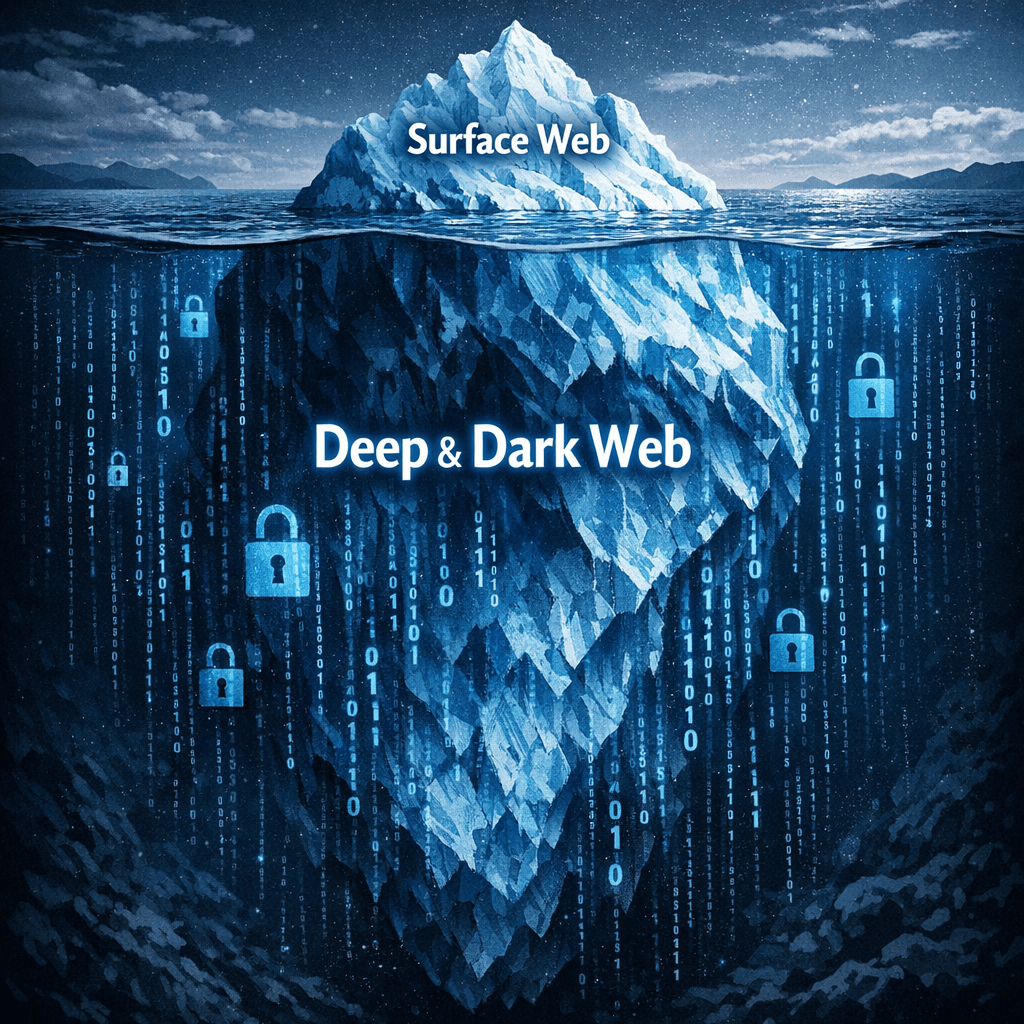
The Iceberg Analogy
You've heard the terms "Deep Web" and "Dark Web" used in scary news reports. Often, they are used interchangeably, but they are very different places. Understanding the distinction is key to understanding modern cyber threats.
The Surface Web (Top of the Iceberg)
This is where you are right now. Google, Amazon, news sites—anything indexed by search engines. It makes up less than 5% of the internet.
The Deep Web (Below the Water)
The Deep Web isn't inherently evil; it's just private. It includes:
- Your online banking dashboard.
- Medical records.
- Company intranets.
- Netflix content (behind a login).
You can't "Google" these pages, but they aren't malicious.
The Dark Web (The Bottom)
The Dark Web is a small slice of the Deep Web that has been intentionally hidden and requires specific software (like Tor) to access. This is where threats thrive:
- Marketplaces: Selling stolen credit cards, hacked accounts, and malware.
- Leak Sites: Ransomware gangs publishing stolen corporate data.
- Forums: Hackers discussing vulnerabilities and selling "Zero-day" exploits.
Monitoring the Depths
You don't need to visit the Dark Web to protect yourself, but you need to know if your data is there.
- Credential Stuffing: If your password leaks on the Dark Web, hackers will try it on every other site you use.
- Threat Intelligence: Tools like IsMalicious monitor these underground sources to flag malicious IPs and domains before they hit the surface web.
The internet is deeper than it looks. Stay safe by using strong, unique passwords and monitoring for breaches.
Related articles
 The Splinternet: Navigating a Fragmented World Wide Web
The global internet is fracturing into regional, regulated intranets. We explore the rise of the "Splinternet" and its impact on cybersecurity and global business.
 Space Systems Cyber Threats: Securing the Final Frontier
As space becomes accessible, it becomes a target. From satellite hijacking to ground station jamming, we analyze the unique threats to orbital assets and how threat intelligence secures the new space race.
 Cyber Threats 101: Understanding Online Dangers
A beginner's guide to common cyber threats. Understand malware, viruses, and hackers, and learn how to protect yourself online.
Protect Your Infrastructure
Check any IP or domain against our threat intelligence database with indexed records.
Try the IP / Domain Checker