Automating Threat Intelligence: Speed is Your Best Defense
Manual analysis cannot keep up with machine-speed attacks. Learn how to automate threat data ingestion and response to block threats in milliseconds, not minutes.


The average time for a ransomware attack to encrypt a network is dropping. The time for a phishing site to go live and harvest credentials is measured in minutes. In this high-speed environment, the "human in the loop" is the bottleneck.
If your threat intelligence process involves an analyst copying an IP from a log, pasting it into a web tool, and waiting for a result, you've already lost. Automation is the only way to match the adversary's tempo.
The API-First Approach
Modern security is built on APIs. Your firewall, your SIEM, your SOAR, and your application code should all be talking to your threat intelligence provider programmatically.
Use Case 1: Dynamic Firewall Rules
Instead of manually updating blocklists, script your firewall to pull the latest "High Confidence" malicious IPs from isMalicious every hour.
- Benefit: Zero-touch protection against emerging botnets.
Use Case 2: Real-Time Signup Screening
When a user signs up for your service, trigger an API call to check their IP and email domain.
- If IP = Datacenter/Proxy: Flag for manual review or require 2FA.
- If Domain = Disposable Email: Reject the signup.
- Benefit: Keep fraud out of your database automatically.
Use Case 3: Incident Enrichment
When your SIEM generates an alert, it should automatically query threat intel APIs to enrich the data.
- Manual: "Alert: Connection to 1.2.3.4" -> Analyst investigates -> "Oh, it's a C2 server." (Time: 15 mins)
- Automated: "Alert: Connection to 1.2.3.4 (Known C2 Server, Confidence 95%)" -> Analyst clicks 'Block'. (Time: 30 seconds)
Reducing Alert Fatigue
Automation doesn't just speed up response; it cleans up the noise. By automatically filtering out known-good IPs (whitelisting) and auto-blocking known-bad ones, your analysts can focus on the gray area—the sophisticated, targeted attacks that require human intuition.
Implementing with isMalicious
isMalicious is built for automation. Our high-performance API is designed to be integrated directly into your data flow.
- Low Latency: Get answers in milliseconds.
- Structured Data: JSON responses that are easy for your SOAR to parse.
- Webhooks: Get notified when an IP you care about changes status.
Conclusion
Speed kills—or saves. By automating your threat intelligence loop, you turn your security posture from reactive to proactive. Don't wait for the report; block the threat while it's still knocking on the door.
Related articles
 Government Threat Intelligence Procurement: A Practical Guide
Specify a public-sector threat intelligence service with clear evidence, data-handling rules, acceptance tests and an exit plan for UK and European teams.
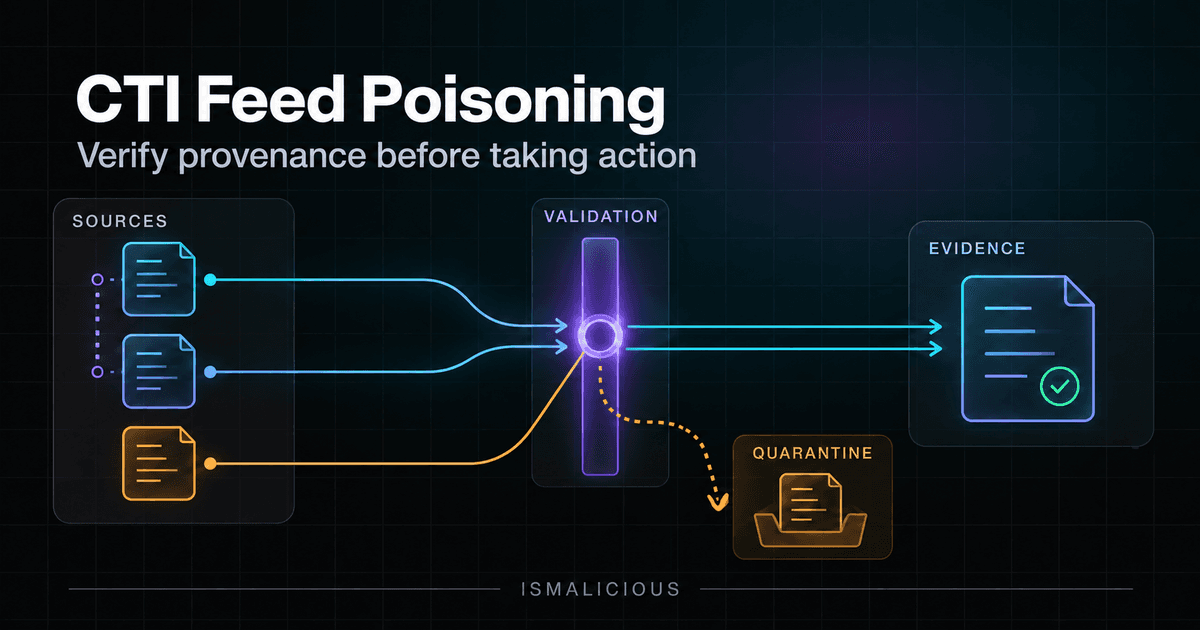 Threat Intelligence Feed Poisoning: Protect Your Evidence
Protect CTI decisions from misleading data with source provenance, mirror detection, contradiction handling, safe ingestion, human review, and tested rollback.
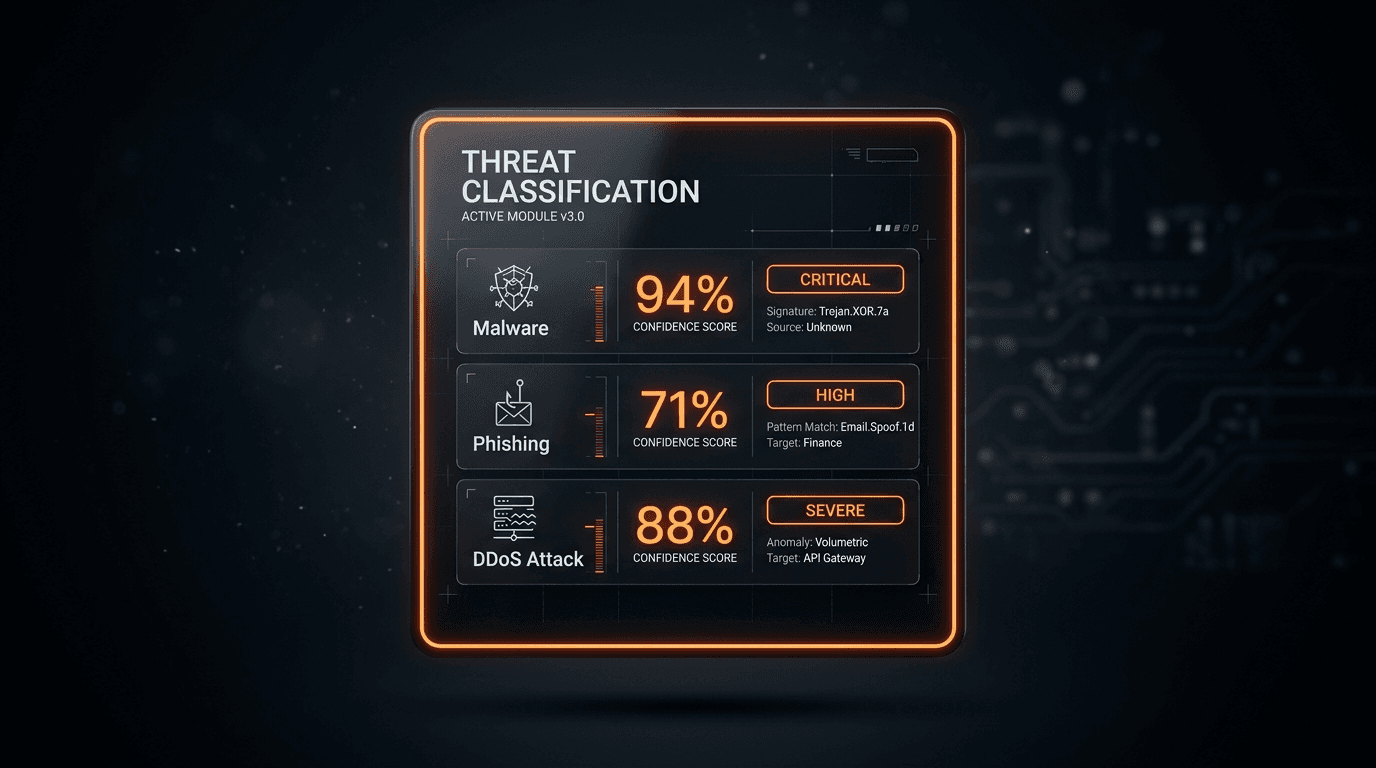 Threat Intelligence Risk Scoring: How to Calibrate Reputation, Reduce False Positives, and Defend Your Decisions
A noisy score is worse than no score. Learn what makes a reputation model trustworthy, how to combine multi-source evidence, and how to communicate uncertainty to your SOC and your executives.
Protect Your Infrastructure
Check any IP or domain against our threat intelligence database with indexed records.
Try the IP / Domain Checker