API Security Best Practices: Defending Against the OWASP Top 10
APIs are the backbone of modern applications but are often left vulnerable. Learn how to secure your APIs against common attacks like broken object level authorization and injection.

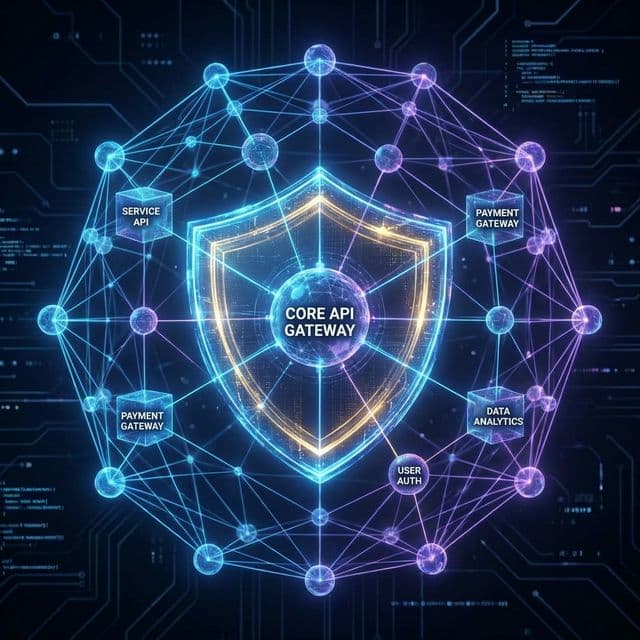
Application Programming Interfaces (APIs) are the plumbing of the modern internet. They allow mobile apps to talk to servers, services to talk to databases, and businesses to connect with partners. Because they expose application logic and sensitive data directly, they are a favorite target for attackers.
Gartner predicted that API abuses would become the most frequent attack vector, and recent high-profile breaches confirm this. Securing APIs requires a different mindset than securing traditional web applications.
The OWASP API Security Top 10
The Open Web Application Security Project (OWASP) maintains a specific list of the most critical API risks. Understanding these is the first step to defense.
1. Broken Object Level Authorization (BOLA)
The King of API Vulnerabilities. This happens when an API endpoint allows a user to access an object (like a photo, invoice, or message) by simply changing the ID in the URL, without checking if the user owns that object.
- Attack: User A is at
/api/receipts/1001. They change it to/api/receipts/1002and see User B's receipt. - Defense: Always implement authorization checks at the object level. Does
current_user.id == receipt.user_id?
2. Broken User Authentication
Weak authentication allows attackers to hijack accounts. This includes allowing weak passwords, failing to validate JWT tokens signature, or insecure password recovery flows.
- Defense: Use standard OAuth2/OpenID Connect flows. Do not invent your own crypto. valid tokens carefully.
3. Broken Object Property Level Allocation (Mass Assignment)
APIs often expose endpoints that accept a JSON object and bind it directly to a database model. If the API doesn't filter the input, an attacker can modify fields they shouldn't access.
- Attack: A user updates their profile sending
{ "username": "admin", "role": "admin" }. If the backend blindly updates therolefield, the user becomes an admin. - Defense: Use Data Transfer Objects (DTOs) or explicit allow-lists for input parameters. Never bind input directly to internal data models.
4. Unrestricted Resource Consumption
APIs are sensitive to Denial of Service (DoS). If an endpoint creates a heavy load (e.g., "generate PDF report"), an attacker can call it thousands of times to crash the server.
- Defense: Implement Rate Limiting and Quotas. Limit payload sizes and execution time.
5. Broken Function Level Authorization
Ideally, administrative functions should be hidden. But often, they are just "obscured." An attacker might guess the API path /api/admin/deleteUser. If the backend doesn't check the user's role, the attack succeeds.
- Defense: Deny by default. explicitly require
Adminrole checks for sensitive endpoints.
Best Practices for API Security
Shift Left with API Security
Don't wait for production to test security.
- Contract Testing: Use OpenAPI (Swagger) specifications to define what is allowed.
- Automated Scanning: Run DAST tools specifically designed for APIs (like StackHawk or OWASP ZAP) in your CI/CD pipeline.
Use an API Gateway
An API Gateway acts as a single entry point for all API traffic. It can enforce rate limiting, authentication, and logging centrally, reducing the burden on individual microservices.
Monitor and Log
You cannot detect what you do not see. Log all API requests (redacting sensitive data). Look for anomalies:
- A single IP accessing thousands of different object IDs (BOLA attempt).
- A sudden spike in 401 Unauthorized errors.
Threat Intelligence for APIs
APIs are often attacked by automated bots. Integrating threat intelligence allows you to block malicious actors before they even reach your application logic.
isMalicious can provide real-time reputation data for IPs connecting to your API. If a request comes from an IP associated with a known botnet or scraper, your API Gateway can reject it immediately, saving resources and protecting data.
Conclusion
APIs often expose privileged operations. Address the OWASP Top 10 with short-lived credentials, explicit authorization checks, schema validation, rate limits, and audit logs.
Related articles
 IOC Enrichment APIs: A Security Operations Guide to Faster Triage, Fewer False Positives, and Measurable ROI
An indicator without context is a ticket without an owner. Learn how IOC enrichment APIs work, which fields SOC teams need at each tier, and how to wire them into case management without building a data swamp.
 The Rise of API Attacks: Protecting the Modern Attack Surface
APIs are the connective tissue of the modern web, and they are under attack. Explore the unique vulnerabilities of APIs and how to secure them.
 Best Threat Intelligence APIs in 2026
isMalicious, VirusTotal, AbuseIPDB, OTX, Shodan, URLhaus — free tiers, rate limits, coverage, and which API fits which job, in one table.
Protect Your Infrastructure
Check any IP or domain against our threat intelligence database with indexed records.
Try the IP / Domain Checker