Anatomy of Phishing Infrastructure: How Attackers Build Their Trap
Peel back the layers of a modern phishing attack. From spoofed domains to SSL certificates, understand the infrastructure attackers use and how to detect it.

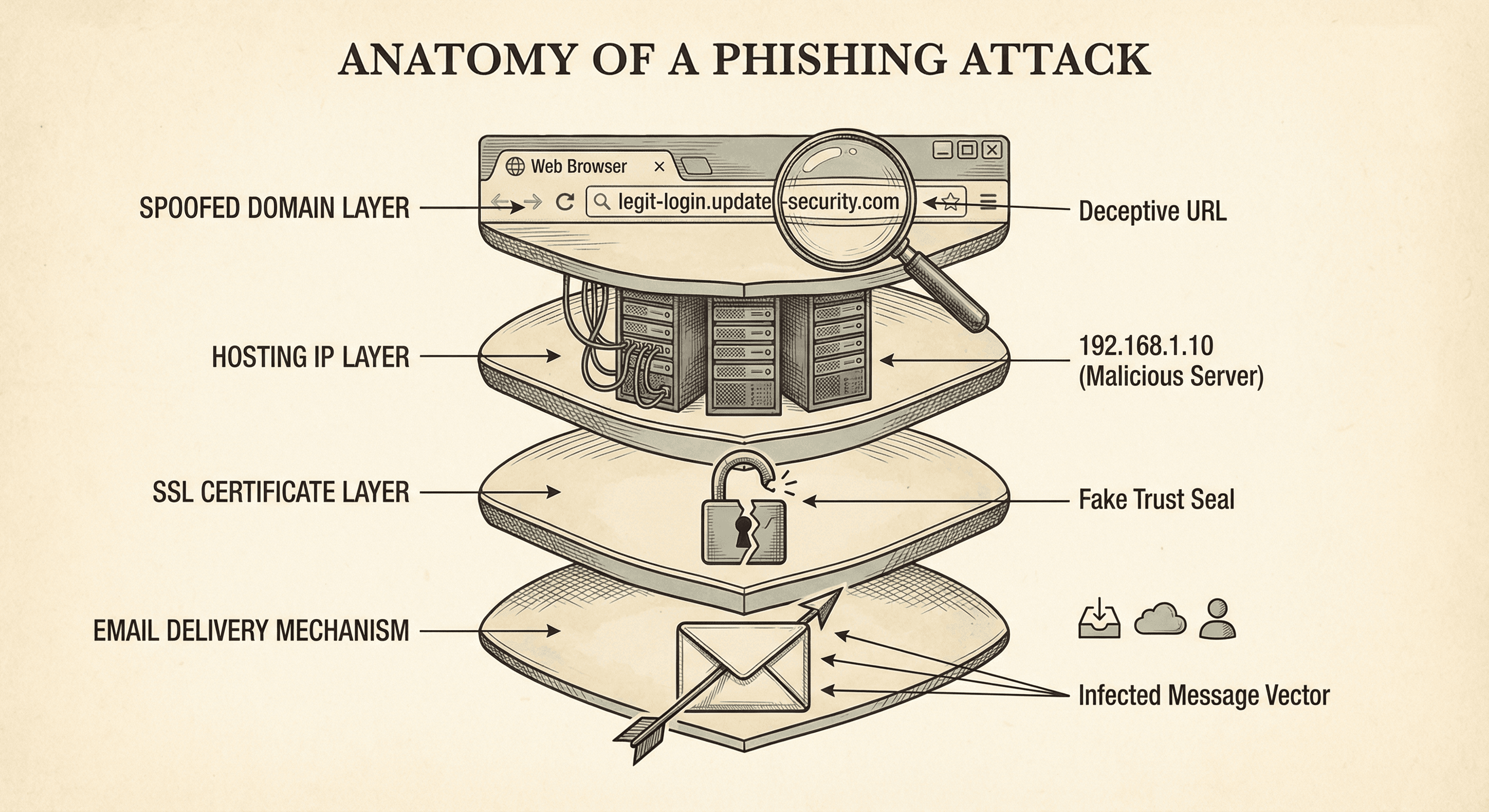
Phishing isn't just a deceptive email; it's a complex web of technical infrastructure designed to bypass filters and fool users. To stop it, you need to understand how it's built. Let's dissect the anatomy of a modern phishing campaign.
Layer 1: The Domain (The Mask)
It starts with the lookalike. Attackers use:
- Typosquatting:
g0ogle.cominstead ofgoogle.com. - Combosquatting:
paypal-secure-login.com. - TLD Abuse: Using cheap TLDs like
.xyz,.top, or.club.
Detection Tip: Look for fuzzy matches against your brand name and monitor newly registered domains that contain your keywords.
Layer 2: The Hosting (The Ground)
Where does the fake site live?
- Compromised CMS: Attackers hack a vulnerable WordPress site and hide their phishing page in a subdirectory (
legit-site.com/wp-content/uploads/login.html). This uses the good reputation of the hacked site. - Bulletproof Hosting: Providers that ignore abuse reports.
- Cloud Functions: Hosting static pages on Azure Blobs or AWS S3 buckets to use the trusted reputation of Microsoft or Amazon domains.
Detection Tip: Analyze the IP reputation and hosting provider. High-risk ASNs are a red flag.
Layer 3: The Certificate (The Lock)
The green padlock is no longer a sign of safety. Thanks to free automated CAs like Let's Encrypt, 80%+ of phishing sites now have valid SSL certificates.
Detection Tip: Don't trust the padlock. Inspect the Certificate Transparency (CT) logs. A certificate issued for a suspicious domain is an early warning sign, often appearing before the spam email is even sent.
Layer 4: The Delivery (The Hook)
This is the email or SMS. It often uses:
- Spoofed Headers: Making the email look like it came from an internal executive.
- Open Redirects: Links that start with a trusted domain but redirect to the malicious one (
google.com/url?q=http://evil.com).
Disruption Strategy
You can't just block the email. You need to dismantle the infrastructure.
- Report the domain to the registrar.
- Report the hosting to the ISP.
- Submit the URL to Safe Browsing lists (Google, Microsoft).
Conclusion
Phishing is an infrastructure play. By monitoring domains, IPs, and certificates, you can spot the construction of the trap before your users step into it. Tools like isMalicious give you the visibility to see these layers and block them at the network level.
Related articles
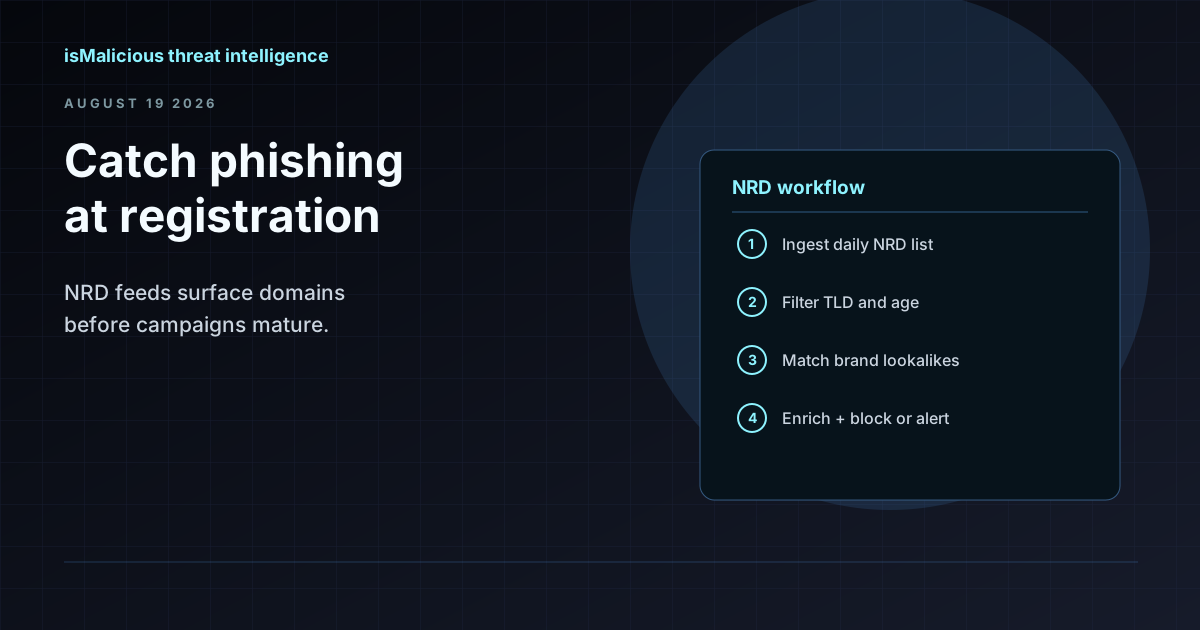 How to Use an NRD Feed to Catch Phishing Before It Lands in the Inbox
Newly registered domains are where most phishing campaigns start. This guide walks through NRD feed workflows for brand monitoring, mail gateway hygiene, and SOC triage — without treating domain age as a blunt block rule.
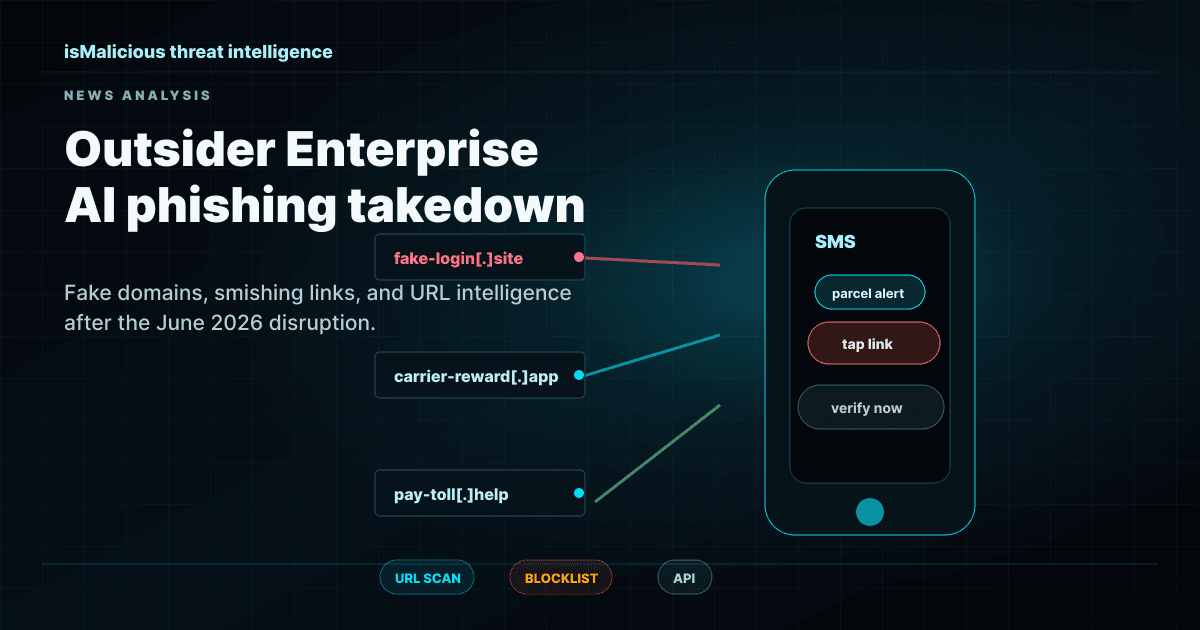 Outsider Enterprise Takedown: AI Phishing Infrastructure Is Now A Domain Reputation Problem
The FBI, Google, and Black Lotus Labs disruption of Outsider Enterprise shows why AI phishing defense needs URL scanning, domain reputation checks, blocklists, and fast API enrichment.
 AI-Enabled Device Code Phishing: How OAuth Tokens Became the New Credential Theft Target
Device code phishing turns a legitimate OAuth flow into a token theft path. Learn how AI-assisted lures, Entra ID abuse, and session token replay change phishing detection in 2026.
Protect Your Infrastructure
Check any IP or domain against our threat intelligence database with indexed records.
Try the IP / Domain Checker